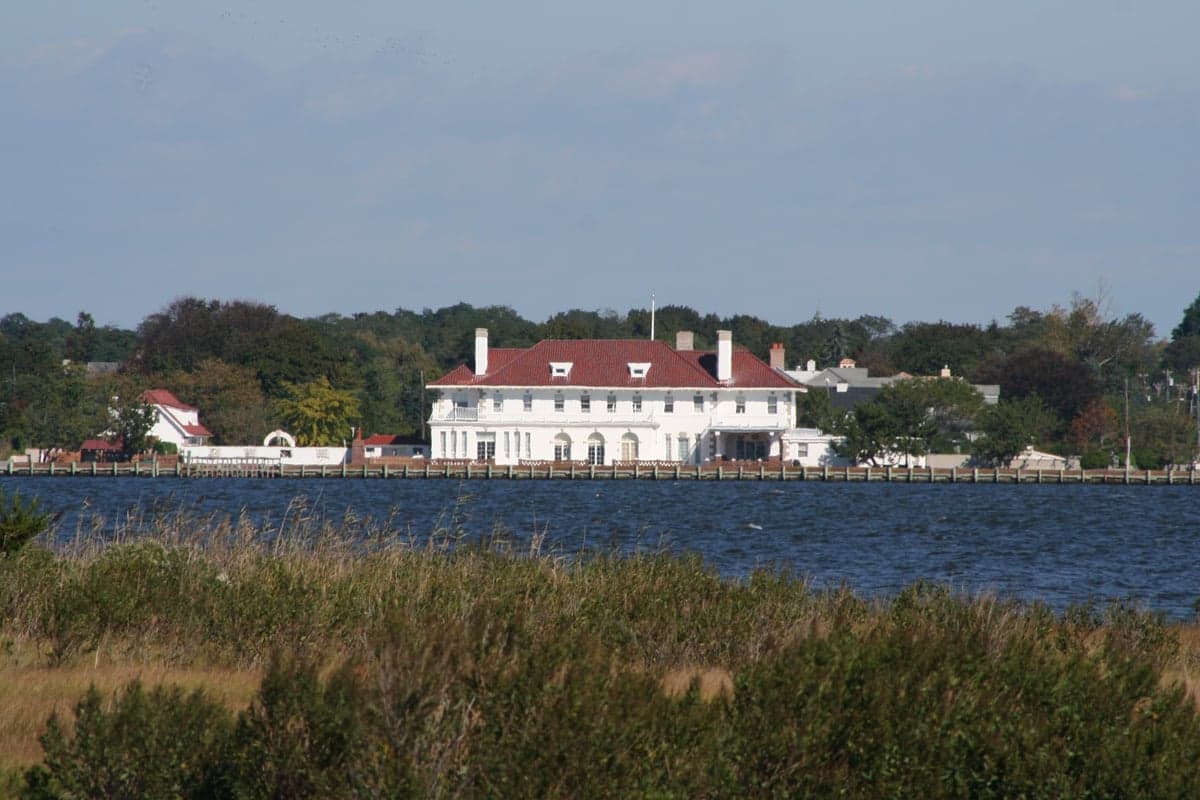
Photo: Wikipedia
Political ClimatePolitical Climate in Westhampton, NY
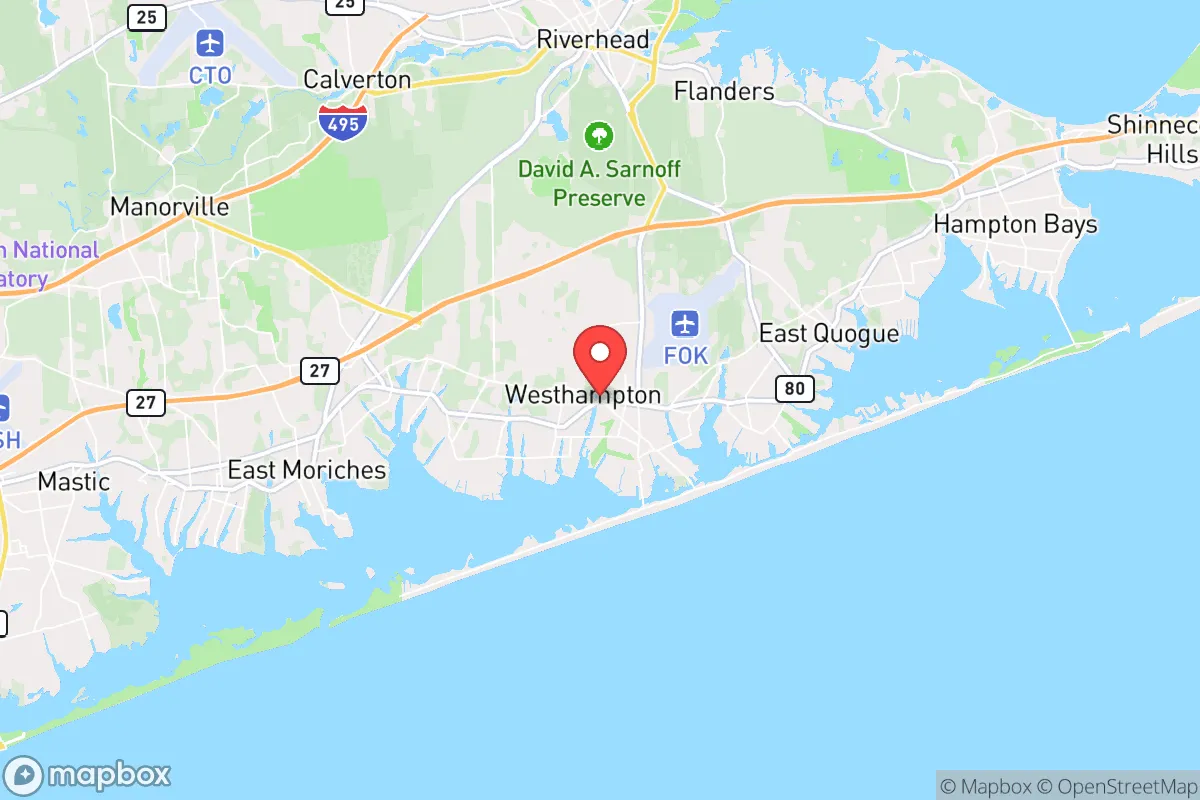
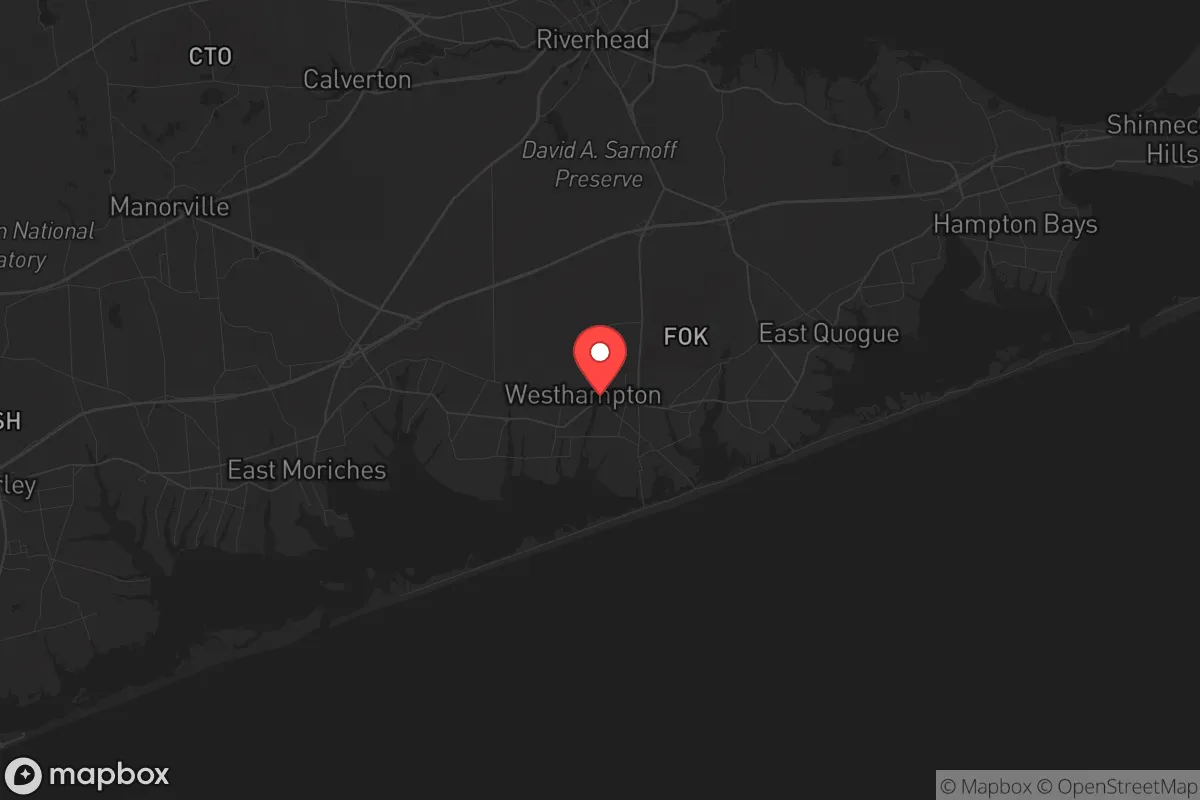
District shown is the primary district for this city’s centroid. Cities may span multiple districts.
Local Political AnalysisPolitical Analysis of Westhampton, NY
Westhampton, NY, has long been a quiet conservative stronghold on the South Fork, and while the area still leans right with a Cook PVI of R+4, you can feel the political winds shifting. For decades, this was a place where folks minded their own business, kept taxes in check, and didn't tolerate much nonsense from Albany. But lately, you see more out-of-state plates and hear talk that would've been laughed out of the local diner ten years ago. The trajectory is concerning — the old-school, live-and-let-live vibe is getting squeezed by a wave of progressive transplants who don't quite get why we value our Second Amendment rights and local control so much.
How it compares
To really understand Westhampton, you have to look at the towns around it. Head west into Riverhead, and you're still in solidly red territory — that's where the working farms and tradespeople are, and they vote accordingly. But drive east into Southampton or East Hampton, and you're in a different world entirely. Those villages have gone full progressive, with strict zoning rules that feel like government overreach, bans on short-term rentals that kill small businesses, and a general attitude that the state knows better than the locals. Westhampton used to be the buffer zone, the place where common sense still held. Now, you see some of that same overreach creeping in — talk of mandatory affordable housing quotas and environmental regulations that tie up property owners for years. It's a slow erosion, but it's real.
What this means for residents
For those of us who've been here a while, the biggest worry is that our personal freedoms are getting chipped away piece by piece. The push for more restrictive building codes and higher property taxes to fund pet projects hits hard when you're just trying to keep a roof over your head. The local school board, once a sleepy affair, is now a battleground over curriculum and parental rights. If you value the ability to make your own choices without a bureaucrat in Albany or a county planner telling you how to live, Westhampton is still better than most places on Long Island, but you have to stay vigilant. The 2024 election results showed the town still votes red, but the margin is tighter than it was in 2016, and that's a red flag.
One thing that still sets Westhampton apart is its stubborn streak of independence. You won't find the same level of government overreach you see in the Hamptons proper — no town-wide bans on gas grills or mandatory electric vehicle charging stations in every new driveway. The local leadership, for now, tends to lean toward fiscal conservatism and limited interference. But the long-term outlook depends on who moves in next. If the trend of wealthy, left-leaning second-home buyers continues, expect more pressure to adopt the same policies that have made neighboring towns feel less like communities and more like government experiments. For now, Westhampton is a place where you can still breathe, but you'd better keep an eye on the horizon.

State Political ClimatePolitical Climate in New York
State Political AnalysisPolitical Environment in the State
New York State has been a solidly blue stronghold for decades, with Democrats controlling both legislative chambers and the governorship since 2019, and the state hasn't voted for a Republican presidential candidate since 1984. The dominant coalition is a mix of New York City's massive progressive base, downstate suburban liberals, and upstate urban centers like Albany, Rochester, and Buffalo. Over the last 10-20 years, the state has lurched sharply leftward, driven by a supermajority in the Assembly and a near-supermajority in the Senate, passing sweeping legislation on taxes, criminal justice, and social policy that has accelerated out-migration to redder states like Florida and Texas.
Urban vs. rural divide
The political map of New York is a tale of two states. New York City's five boroughs alone cast about 40% of the state's vote, and they are overwhelmingly Democratic—Manhattan and Brooklyn routinely give Democrats 80-85% of the vote. The downstate suburbs of Westchester, Nassau, and Suffolk counties have shifted leftward over the past decade, with Nassau flipping from a swing county to reliably blue in presidential races. Upstate, the picture is different: Erie County (Buffalo) and Monroe County (Rochester) are blue islands surrounded by deep-red rural expanses. The Southern Tier, the North Country, and the Finger Lakes region—places like Chautauqua County, Steuben County, and Lewis County—vote Republican by margins of 20-30 points. The divide is stark: in 2024, Manhattan voted +78 for Biden, while rural Wyoming County voted +42 for Trump. The urban-rural chasm is the defining feature of New York politics, and it means state policy is dictated by downstate priorities that often frustrate upstate residents.
Policy environment
New York's policy environment is among the most progressive in the nation, and it shows in the tax code. The state has a progressive income tax with a top rate of 10.9% for income over $25 million, but even middle-class earners face rates of 5.5-6.5%. Property taxes are among the highest in the country—the median effective rate is around 1.7%, but in places like Westchester County, it can exceed 2.5%. The regulatory posture is heavy: the state has a strict rent stabilization regime in NYC, a ban on natural gas hookups in new buildings starting in 2026, and a Climate Leadership and Community Protection Act that mandates 70% renewable energy by 2030 and zero emissions by 2050. Education policy is dominated by the teachers' unions, with per-pupil spending exceeding $28,000—the highest in the nation—but with mediocre outcomes in many districts. Healthcare is heavily regulated, with a state-run health exchange and a recent law requiring private insurers to cover abortion and gender-affirming care without cost-sharing. Election laws are among the most permissive: no-excuse absentee voting, early voting, automatic voter registration, and same-day registration. The state also passed the John R. Lewis Voting Rights Act of New York in 2022, which imposes preclearance requirements on local election changes in counties with a history of discrimination.
Trajectory & freedom
Over the past five years, New York has become less free across multiple dimensions. On gun rights, the state passed the Concealed Carry Improvement Act (CCIA) in 2022 after the Bruen decision, which banned firearms in "sensitive locations" like Times Square and subways, required a 16-hour training course, and mandated social media review for applicants—a law that has been partially blocked by courts but remains largely in effect. On parental rights, the state passed a law in 2022 requiring schools to allow students to use their chosen name and pronouns without parental consent, and the New York State Education Department has issued guidance that effectively bans parental opt-outs from LGBTQ-inclusive curriculum. On medical autonomy, the state expanded abortion access with the Reproductive Health Act of 2019, which removed criminal penalties for late-term abortions and allowed non-physicians to perform them. On property rights, the state's Housing Stability and Tenant Protection Act of 2019 severely limited rent increases and evictions, effectively creating a landlord-tenant regime that favors tenants. On taxation, the state has not cut income tax rates since 2016, and the millionaire's tax was made permanent in 2021. The trajectory is clear: more regulation, higher taxes, and less individual autonomy.
Civil unrest & political movements
New York has been a flashpoint for political activism on both sides. The Black Lives Matter protests of 2020 were massive in NYC, with nightly demonstrations that sometimes turned violent, leading to a $1 billion cut to the NYPD budget that was later partially restored. The state's sanctuary policies are among the strongest in the nation: the Green Light Law of 2019 allows undocumented immigrants to obtain driver's licenses and prohibits state agencies from cooperating with federal immigration enforcement except in limited circumstances. This has created tension with upstate counties like Orange County, whose sheriff has publicly refused to comply with some aspects of the law. On the right, the New York State Rifle & Pistol Association has been the lead plaintiff in multiple successful Second Amendment lawsuits, including the Bruen case that originated in the state. The parental rights movement has been active in school board races in places like Suffolk County and Westchester County, where parents have protested LGBTQ-inclusive curriculum and mask mandates. Election integrity has been a flashpoint: the state's 2020 election saw widespread use of absentee ballots due to COVID, and the state's Board of Elections has been criticized for mismanagement, including a 2022 ballot design error that invalidated thousands of votes in a congressional primary. The secession movement in upstate New York—the "New York State of Mind" proposal to split the state into two—has gained some traction but remains a fringe idea.
Projection
Over the next 5-10 years, New York is likely to become even more progressive, driven by demographic trends. The state is losing population—about 600,000 residents between 2020 and 2024—and those leaving are disproportionately upstate conservatives and middle-class families from the suburbs. The remaining population is increasingly concentrated in NYC and its immediate suburbs, which are becoming more diverse and more liberal. In-migration from abroad, particularly from Asia and Latin America, is replacing domestic out-migration, and these new arrivals tend to vote Democratic. The state's Democratic supermajority is likely to persist, and we can expect further leftward moves: a single-payer healthcare bill (the New York Health Act) has been introduced repeatedly and could pass if the state finds a funding mechanism; a public bank proposal is gaining steam; and the state's rent control laws will likely be expanded to upstate cities. The congestion pricing plan in Manhattan, which took effect in 2024, will likely be extended to other boroughs. For a conservative-leaning newcomer, the state will feel increasingly hostile to traditional values and economic freedom.
For a new resident, the bottom line is this: New York is a state where your taxes will be high, your property rights limited, and your ability to opt out of progressive social policies constrained. If you're moving here, you're likely doing so for a job, family, or lifestyle reason that outweighs the political climate. The best bet for a conservative-leaning family is to target upstate counties like Livingston County or Ontario County, where local governments are more aligned with your values, but be prepared to fight state-level policies that will trickle down. The state is not going to flip red in your lifetime, and the trajectory is toward more government involvement in your daily life.
* Values derived from national, state, county, city and local statistics and may differ in a specific area. Last updated: 2026-04-24T01:46:36.000Z
Narrative content on this page is AI-generated and may contain mistakes. Verify any details that matter before acting on them.
ReloMaps may earn a commission from affiliate links at no extra cost to you.

