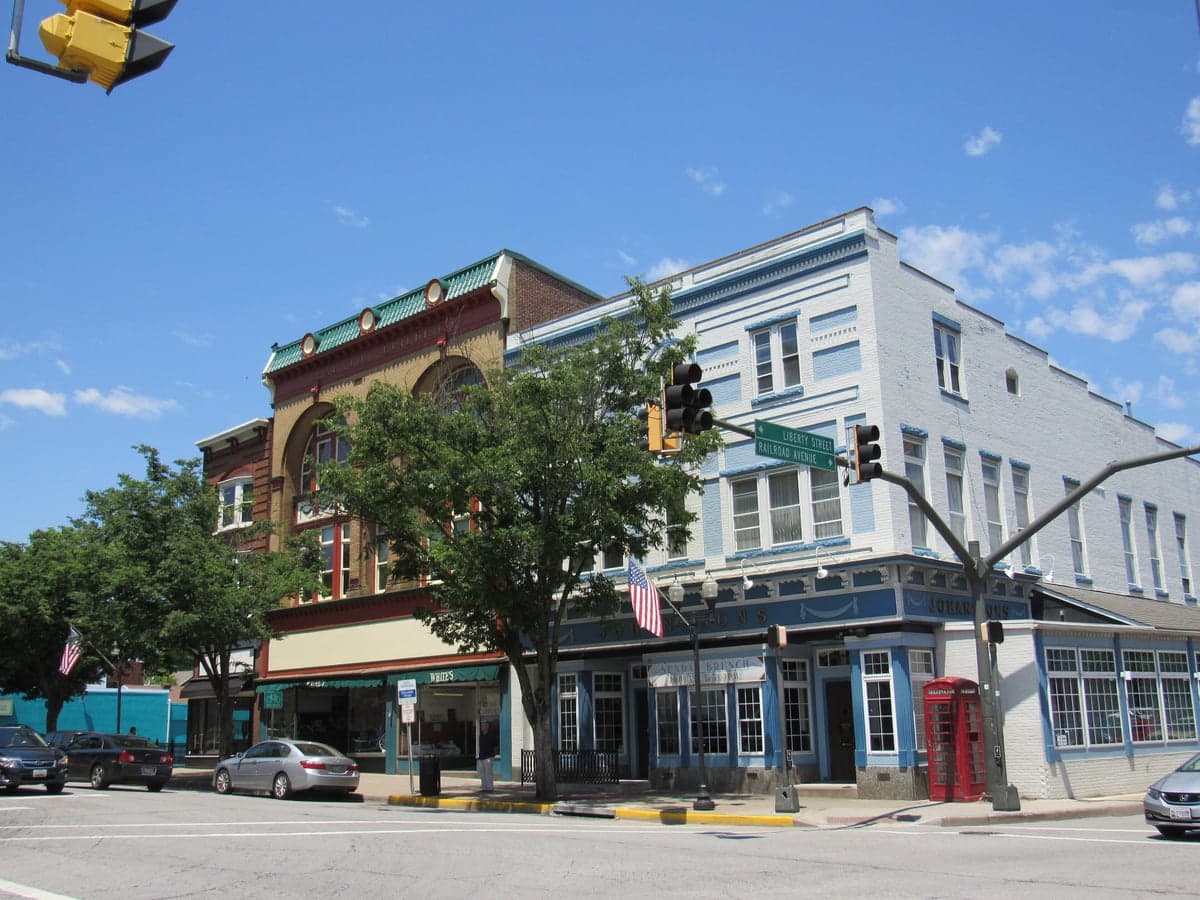
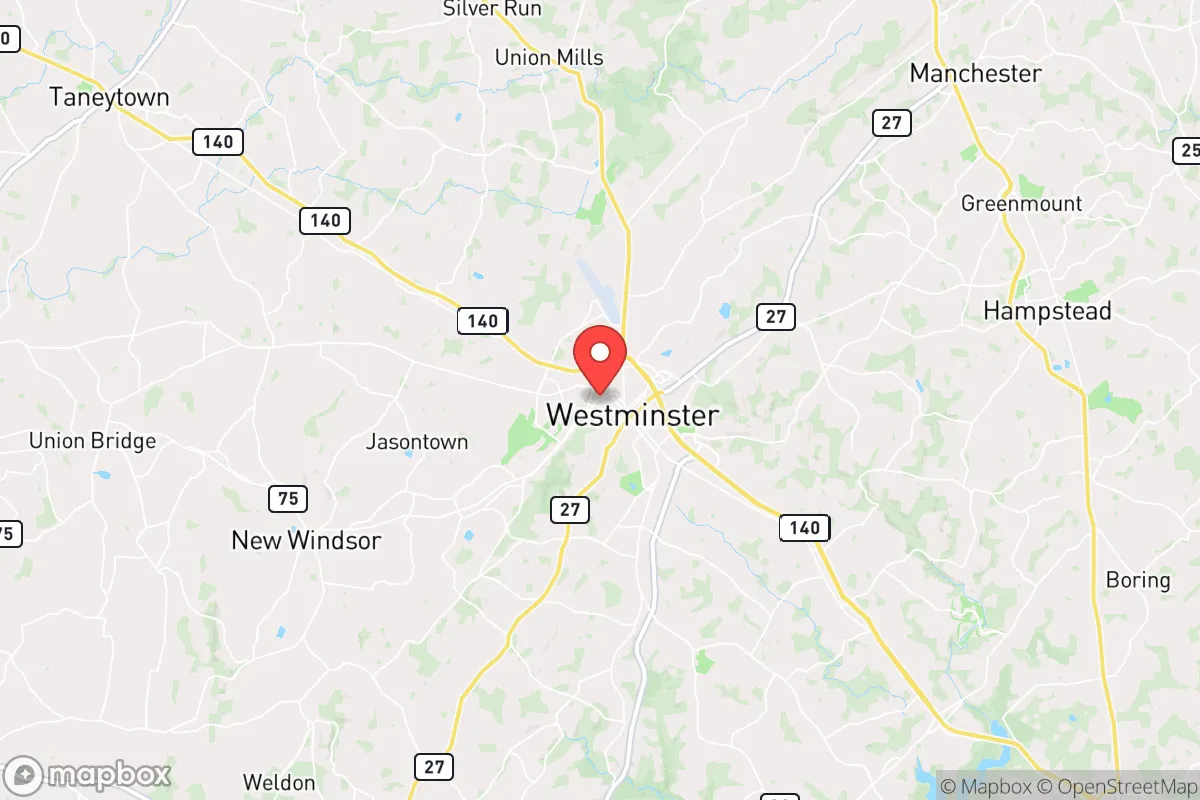
Photo: Wikipedia
Personal Sovereignty in Westminster, MD
Viable for self-reliance. Generally workable, though some barriers may limit total independence.
What does Personal Sovereignty tell us?
Personal Sovereignty measures your capacity for self-reliance and independence with minimal government friction. Higher scores mean fewer barriers between you and the way you want to live... but it assumes you have the space you need and good neighbors.
What does this tell us?
Personal Sovereignty measures your capacity for self-reliance and independence with minimal government friction. Higher scores mean fewer barriers between you and the way you want to live... but it assumes you have the space you need and good neighbors.
State Policy
Energy independence: Importer (8% of energy produced in-state)
Personal Liberty
Homesteading

Personal Liberty Analysis
Westminster, Maryland, offers a mixed bag for those prioritizing personal sovereignty, operating within a state that leans heavily toward progressive governance while the local Carroll County environment pushes back with a more independent, rural character. For the survivalist or prepper, the key takeaway is that you’ll be fighting an uphill battle against Annapolis’s regulatory appetite, but the local culture and geography provide some breathing room for self-reliance. The autonomy environment here is defined by a constant tension: state-level mandates on everything from firearms to land use versus a community that values individual choice and preparedness.
Tax burden and regulatory posture: How much does the state take and control?
Maryland’s tax burden is among the highest in the nation, and Westminster residents feel it directly. The state income tax ranges from 2% to 5.75%, and Carroll County adds a local income tax of 3.05%, bringing the combined top marginal rate to nearly 8.8%. Property taxes are also notable, with Carroll County levying about $1.01 per $100 of assessed value, plus a state property tax of $0.112 per $100. For a $350,000 home, that’s roughly $3,900 annually in property taxes alone. The regulatory posture is equally aggressive: Maryland has a strict environmental review process for any new construction, and the state’s energy code is one of the most stringent in the country, driving up building costs for anyone looking to put up a workshop, barn, or off-grid cabin. The state also mandates that all new residential construction meet specific energy efficiency standards that can complicate solar panel or generator integration. For the prepper, this means every dollar earned is heavily taxed, and every project faces bureaucratic hurdles that can delay or kill self-sufficiency plans. The local Carroll County government is generally more business-friendly than the state, but it cannot override Annapolis’s reach.
Self-defense and gun law specifics: What are the real restrictions?
This is the most critical sovereignty issue in Westminster, and the news is not good for the liberty-minded. Maryland is a “may issue” state for concealed carry, meaning the state police have discretion to deny permits even after the Bruen decision, though the process has become slightly more accessible. However, the state’s Firearm Safety Act of 2013 bans a wide range of “assault weapons” by name, including popular AR-15 and AK-47 platforms, and limits magazine capacity to 10 rounds. You cannot purchase a handgun without a seven-day waiting period and a state-issued Handgun Qualification License, which requires a training course and fingerprinting. Private firearm sales are illegal without a background check through a licensed dealer. For the survivalist, this means building a serious defensive arsenal is legally difficult and expensive. You can still own bolt-action rifles, shotguns, and many handguns, but the state’s registry and licensing system creates a paper trail that could be used against you in a future crisis. Carroll County’s sheriff is generally supportive of Second Amendment rights, but he cannot override state law. If you’re moving here, plan to invest in legal compliance and consider that your defensive capabilities will be capped by state mandate. Stand-your-ground laws do not exist in Maryland; you have a duty to retreat if possible before using deadly force, which is a significant legal risk in a home defense scenario.
Self-reliance and homesteading viability: Lot sizes, zoning, and off-grid feasibility
Westminster’s rural fringe offers genuine opportunities for homesteading, but the zoning code is a minefield. The city itself has minimum lot sizes of 10,000 to 20,000 square feet in most residential zones, which is enough for a large garden and a few chickens, but not for serious livestock or a full-scale homestead. Outside the city limits, in Carroll County’s agricultural zones, you can find parcels of 2 to 10 acres, where chickens, goats, and even a cow or two are permitted. However, the county requires a minimum of 2 acres for keeping livestock, and you’ll need a well and septic system for any dwelling. Off-grid feasibility is severely limited: Maryland law requires all new homes to be connected to the electrical grid, and solar panels must be grid-tied unless you can prove a hardship exemption. Rainwater collection is legal but restricted to non-potable uses, and you cannot disconnect from the municipal water supply if it’s available. Composting toilets are not permitted as a primary sanitation system. For the prepper, this means true off-grid living is effectively illegal. You can supplement with solar, a backup generator, and a well, but you must remain connected to the grid and subject to utility company oversight. The best strategy is to buy a larger parcel in the county’s agricultural zone, build a conventional home with a robust backup system, and keep your homesteading activities within the letter of the law to avoid fines or forced compliance.
Personal liberties: Parental rights, medical autonomy, speech, and property
Parental rights in Maryland are under increasing pressure. The state has a universal school curriculum that includes comprehensive sex education and social-emotional learning standards that many conservative parents find objectionable. While Carroll County Public Schools has a more conservative school board than many districts, parents still face a fight to opt their children out of specific lessons. Medical autonomy is also constrained: Maryland has a vaccine mandate for school attendance, with only narrow religious exemptions that are frequently challenged. The state also has a prescription drug monitoring program that tracks all controlled substance prescriptions, and medical marijuana is legal but heavily regulated. Free speech is protected under the First Amendment, but Maryland has a “hate speech” law that can be used to prosecute threats or harassment, and local ordinances in Westminster prohibit disorderly conduct in ways that could be used against political protesters. Property rights are the brightest spot: Carroll County has relatively few zoning overlays compared to the D.C. suburbs, and you can generally build a fence, store a boat, or run a small home business without excessive permits. However, the state’s environmental regulations can restrict what you do with wetlands or forested areas on your property. For the sovereignty-minded, the takeaway is that you can live quietly and keep to yourself, but any attempt to assert your rights publicly—whether by homeschooling, refusing a vaccine, or building a bunker—will invite scrutiny.
Overall, Westminster offers a moderate level of personal sovereignty compared to the rest of Maryland, but it falls far short of the freedom found in states like Texas, Idaho, or Montana. The local culture is supportive of self-reliance, and the rural landscape provides space for homesteading, but the state’s tax burden, gun laws, and regulatory reach are significant constraints. For the survivalist or prepper, Westminster is a compromise: you can build a resilient lifestyle within the system, but you cannot escape it entirely. If you’re willing to navigate the bureaucracy and keep a low profile, you can carve out a degree of autonomy here. But if you’re looking for a place where you can truly live free from government overreach, you’ll need to look further west.

* Values derived from national, state, county, city and local statistics and may differ in a specific area. Last updated: 2026-04-22T04:15:27.000Z
Narrative content on this page is AI-generated and may contain mistakes. Verify any details that matter before acting on them.
ReloMaps may earn a commission from affiliate links at no extra cost to you.

