Photo: Wikipedia
Political ClimatePolitical Climate in Westminster, MD
District shown is the primary district for this city’s centroid. Cities may span multiple districts.
Local Political AnalysisPolitical Analysis of Westminster, MD
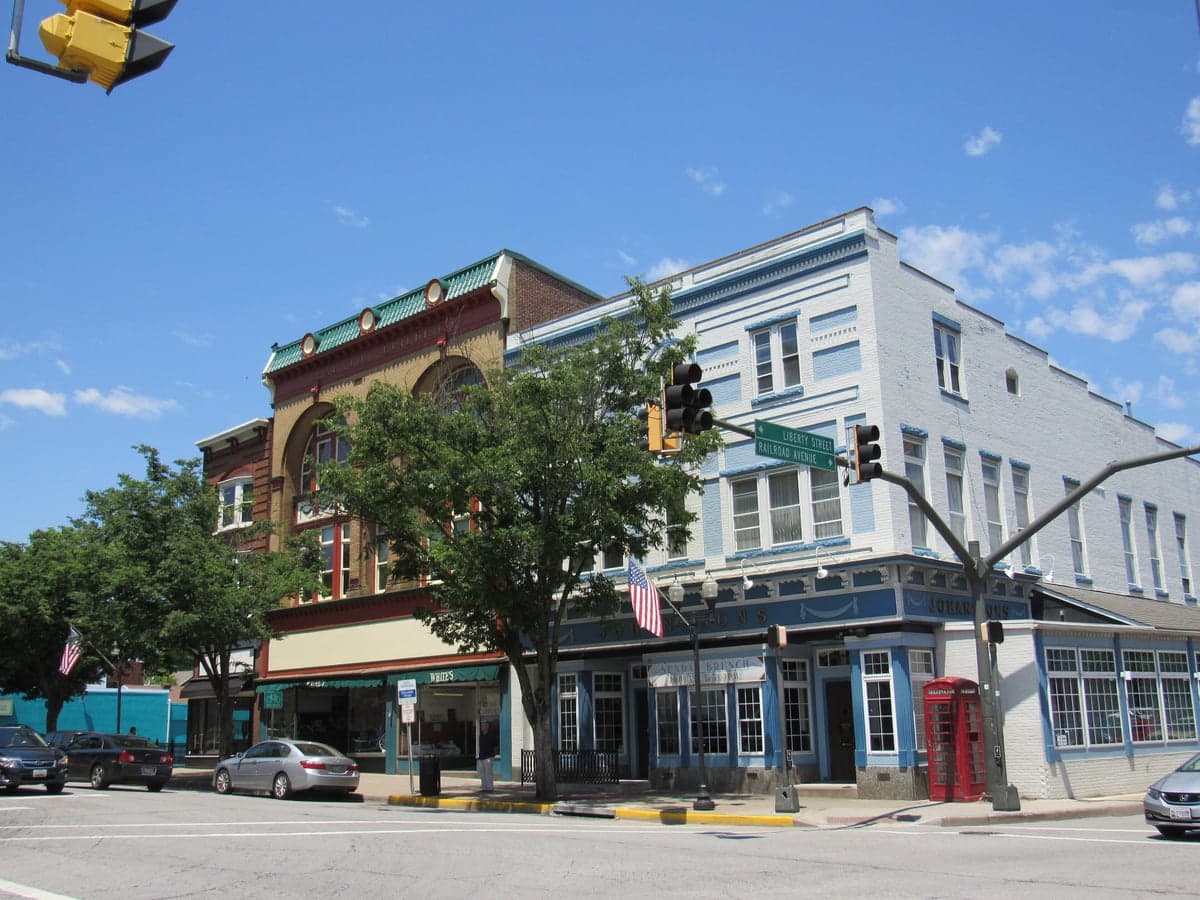
Westminster, Maryland, has always had a bit of a split personality politically, but the needle has moved hard to the left in recent years. The Cook PVI now sits at D+10, which tells you this isn't your granddad's Carroll County anymore. While the surrounding county still leans red, Westminster itself has become a Democratic stronghold, driven largely by an influx of folks from Baltimore and D.C. looking for cheaper housing. The trajectory is clear: what was once a reliably conservative town is now trending progressive, and that shift is accelerating with each election cycle.
How it compares
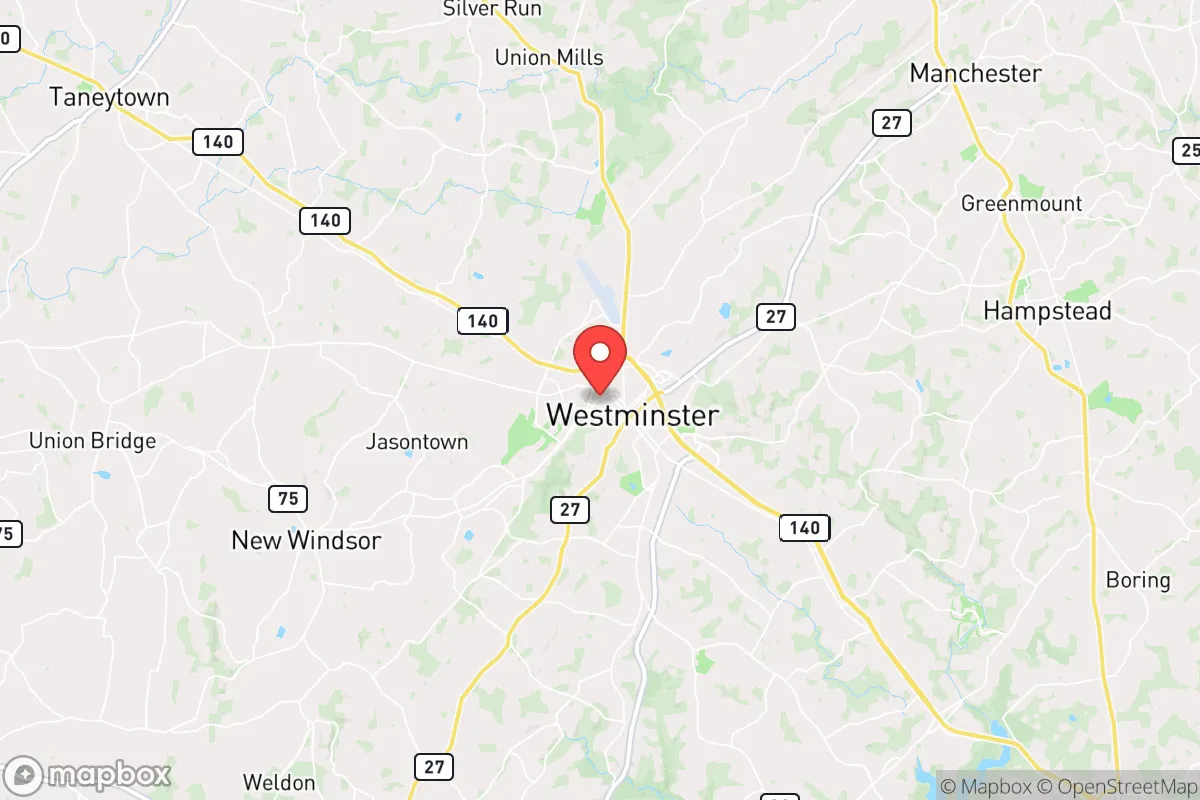
To really get the picture, you gotta look at the towns around us. Head ten miles east to Hampstead, and you'll find a place that still feels like old-school Carroll County—more pickup trucks, more churchgoers, and a voting record that leans solidly Republican. Same goes for Manchester to the north. But Westminster? It's the outlier. It's the county seat, home to McDaniel College, and that academic influence plus the bedroom-commuter crowd has turned it into a blue island in a red sea. The contrast is stark: you can drive from a Trump sign-heavy neighborhood in Finksburg straight into a yard full of Harris-Walz signs in Westminster. It's like crossing a border without leaving the county.
What this means for residents
For those of us who value personal freedoms and limited government, the shift is concerning. The local government has gotten more comfortable with overreach—think mask mandates that lingered longer than necessary, zoning rules that make it harder to run a small business out of your home, and a school board that's more focused on DEI initiatives than on teaching kids how to read and do math. Property taxes have crept up to fund these new priorities, and there's a growing sense that if you don't fit the progressive mold, your voice gets drowned out at town hall meetings. The long-time residents I know are either digging in or quietly planning their exit to places like Taneytown or New Windsor, where the government still remembers it works for the people, not the other way around.
Cultural and policy distinctions
One of the biggest cultural shifts is how the town handles public events and public space. The annual Fallfest used to be a straightforward community gathering; now there's pressure to make every event a platform for social messaging. The library board has faced debates over drag queen story hours, and the city council has entertained resolutions on state-level gun control that have no business in a town that still has a strong hunting and sport-shooting tradition. On the policy side, Westminster has embraced "complete streets" initiatives that prioritize bike lanes and bus stops over car traffic, which sounds nice in theory but in practice means more congestion and less parking for folks who just want to run errands. If you're a conservative who believes in live-and-let-live, you can still get by here, but you'll feel increasingly like a stranger in your own hometown. The next five years will tell whether this is a temporary trend or a permanent transformation.

State Political ClimatePolitical Climate in Maryland
State Political AnalysisPolitical Environment in the State
Maryland has long been a solidly blue state, but its political reality is far more complex than a simple partisan label suggests. The state’s Democratic lean is driven overwhelmingly by the Washington, D.C. suburbs and Baltimore City, while the rest of the state—particularly the Eastern Shore, Western Maryland, and much of Southern Maryland—votes reliably Republican. Over the last 20 years, the state has shifted leftward on social and economic policy, but the 2024 election revealed a growing rural backlash, with counties like Garrett and Allegany voting over 70% Republican, while Montgomery and Prince George’s counties delivered margins exceeding 70% for Democrats. For a conservative considering relocation, the key question is whether you can find a pocket of freedom within a state whose legislature and governor’s mansion are firmly controlled by progressive majorities.
Urban vs. rural divide
The political map of Maryland is a textbook case of the urban-rural chasm. The Baltimore-Washington corridor—including Montgomery County, Prince George’s County, Howard County, and Baltimore City—produces roughly 60% of the state’s vote and is overwhelmingly Democratic. These areas are home to federal employees, tech workers, and a large minority population that consistently votes blue. In contrast, the rural west and east are Republican strongholds. Garrett County in the far west is the most conservative county in the state, often voting 75%+ Republican. Allegany County (Cumberland) and Washington County (Hagerstown) are also deeply red. On the Eastern Shore, Caroline County and Talbot County lean Republican, though the Shore has seen some suburbanization from D.C. transplants. The most interesting battleground is Anne Arundel County (Annapolis) and Frederick County—both have trended purple, with Frederick County flipping from red to blue in recent presidential cycles as D.C. exurbs expand. If you’re a conservative looking for like-minded neighbors, the western mountains and the rural Eastern Shore are your best bets, but you’ll still be governed by a legislature dominated by the Baltimore-D.C. axis.
Policy environment
Maryland’s policy environment is a mixed bag for conservatives, with some bright spots but a clear progressive trajectory. On taxes, the state has a progressive income tax system with rates up to 5.75%, plus a local “piggyback” tax that can push the combined rate over 8% in high-tax counties like Montgomery. Property taxes are high, especially in the D.C. suburbs. The state also has a 6% sales tax. However, there is no state tax on Social Security benefits, and retirees get a modest exemption on other retirement income. On regulation, Maryland is business-friendly in some sectors (biotech, cybersecurity) but heavily regulated in others (energy, housing, firearms). Education policy is a flashpoint: the state has a strong teachers’ union, and the 2021 Blueprint for Maryland’s Future law poured billions into public schools but also mandated progressive curricula and expanded collective bargaining. School choice is limited—charter schools are few and weak, and there is no robust voucher program. On election law, Maryland has no-excuse mail-in voting, same-day registration, and early voting, which conservatives argue reduces election integrity. The state also has some of the strictest gun laws in the nation, including a ban on “assault weapons,” a handgun permit requirement (though the Supreme Court’s Bruen decision loosened that), and a 10-round magazine limit. For a conservative, the policy environment feels like a slow squeeze: you can live your life, but the state is constantly adding new regulations and taxes.
Trajectory & freedom
Maryland is becoming less free by any objective measure, especially for gun owners, parents, and taxpayers. The most significant recent contraction of liberty came with the 2023 passage of the Maryland Gun Safety Act, which banned firearms in “sensitive places” like hospitals, parks, and public transportation, and required a state police-issued permit to carry in many locations. This law is being challenged in court, but it signals the legislature’s intent to restrict the Second Amendment as much as possible. On parental rights, the state has moved in the opposite direction of Florida and Texas: in 2023, the legislature passed a law requiring school districts to adopt policies that “affirm” LGBTQ+ students, including allowing students to use preferred names and pronouns without parental consent. This has sparked fierce backlash in rural counties, with some school boards refusing to comply. On medical freedom, Maryland was an early adopter of COVID vaccine mandates for healthcare workers and state employees, and it has not repealed them. On property rights, the state’s zoning laws are notoriously restrictive, especially in the D.C. suburbs, where single-family zoning is still the norm despite a 2024 law allowing accessory dwelling units. The overall trajectory is clear: the legislature is using its supermajority to push progressive policies on guns, education, and health, while rural conservatives are left to fight rearguard actions in court and at the ballot box.
Civil unrest & political movements
Maryland has a history of civil unrest, most notably the 2015 Baltimore riots after the death of Freddie Gray, which left a lasting scar on the city’s reputation and accelerated suburban flight. Since then, political activism has been more organized but less violent. On the left, groups like Indivisible and Maryland for Democracy are active in the D.C. suburbs, pushing for stricter gun laws, abortion rights, and climate action. On the right, the Maryland Republican Party has been revitalized by grassroots groups like Moms for Liberty (which has chapters in Anne Arundel and Frederick counties) and the Maryland Shall Issue gun rights organization. Immigration politics are a flashpoint: Maryland is a sanctuary state, with a 2023 law prohibiting state and local law enforcement from cooperating with federal immigration authorities in most cases. This has led to tensions in counties like Harford and Carroll, where sheriffs have resisted. Election integrity remains a hot-button issue: the 2020 election saw widespread use of mail-in ballots, and the state’s automatic voter registration system has been criticized by conservatives for potential inaccuracies. The most visible flashpoint for a new resident would be the constant debate over school boards—these nonpartisan elections have become battlegrounds for parental rights, critical race theory, and LGBTQ+ policies, especially in Frederick and Anne Arundel counties.
Projection
Over the next 5-10 years, Maryland will likely become more progressive at the state level, but the rural-urban divide will deepen. Demographic trends favor the Democrats: the D.C. suburbs are growing faster than the rest of the state, and in-migration from other blue states (especially California and New York) is reinforcing the progressive tilt. The Republican Party is increasingly confined to the rural west and Eastern Shore, and its statewide candidates struggle to break 40%. However, there is a wild card: if the Supreme Court strikes down Maryland’s gun laws or if a national conservative wave hits, the state could see a modest rightward shift. For a conservative moving in now, expect to live in a county that votes red but is governed by a blue state. That means higher taxes, more regulations, and a constant cultural battle over schools and guns. The best-case scenario is that you find a like-minded community in Garrett County or the Eastern Shore, but you’ll still pay state income tax and deal with a legislature that doesn’t represent you.
Bottom line: If you’re a conservative considering Maryland, you need to be realistic. You can find a good life in the rural parts of the state—beautiful landscapes, lower crime, and strong communities—but you will be swimming against the political tide. The state government will continue to push policies you disagree with, and your vote will be diluted by the Baltimore-D.C. metroplex. If you value low taxes, gun rights, and local control above all else, look at West Virginia or Pennsylvania instead. But if you have a job in the D.C. area and want to live in a red county with decent schools, places like Frederick or Carroll County offer a compromise—just know that the compromise is getting harder every year.
* Values derived from national, state, county, city and local statistics and may differ in a specific area. Last updated: 2026-04-22T04:15:27.000Z
Narrative content on this page is AI-generated and may contain mistakes. Verify any details that matter before acting on them.
ReloMaps may earn a commission from affiliate links at no extra cost to you.

