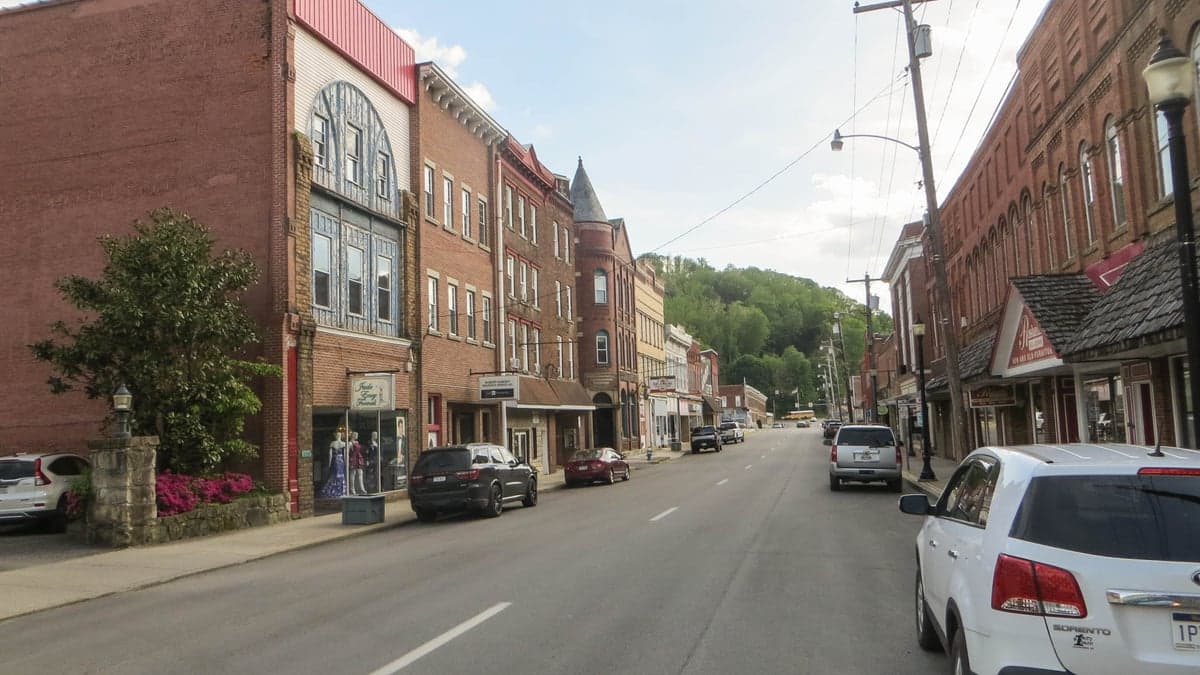
Photo: Wikipedia
Political ClimatePolitical Climate in Weston, WV
District shown is the primary district for this city’s centroid. Cities may span multiple districts.
Local Political AnalysisPolitical Analysis of Weston, WV
Weston, West Virginia, sits deep in solidly conservative territory, and that’s not changing anytime soon. The Cook Partisan Voting Index (PVI) for the area is R+20, meaning it votes about 20 points more Republican than the national average. That’s not just a number—it reflects a community where traditional values, personal responsibility, and a healthy skepticism of government overreach are still the norm. You don’t see the kind of progressive drift here that’s creeping into places like Morgantown or even parts of Charleston; Weston has held the line, and most folks intend to keep it that way.
How it compares
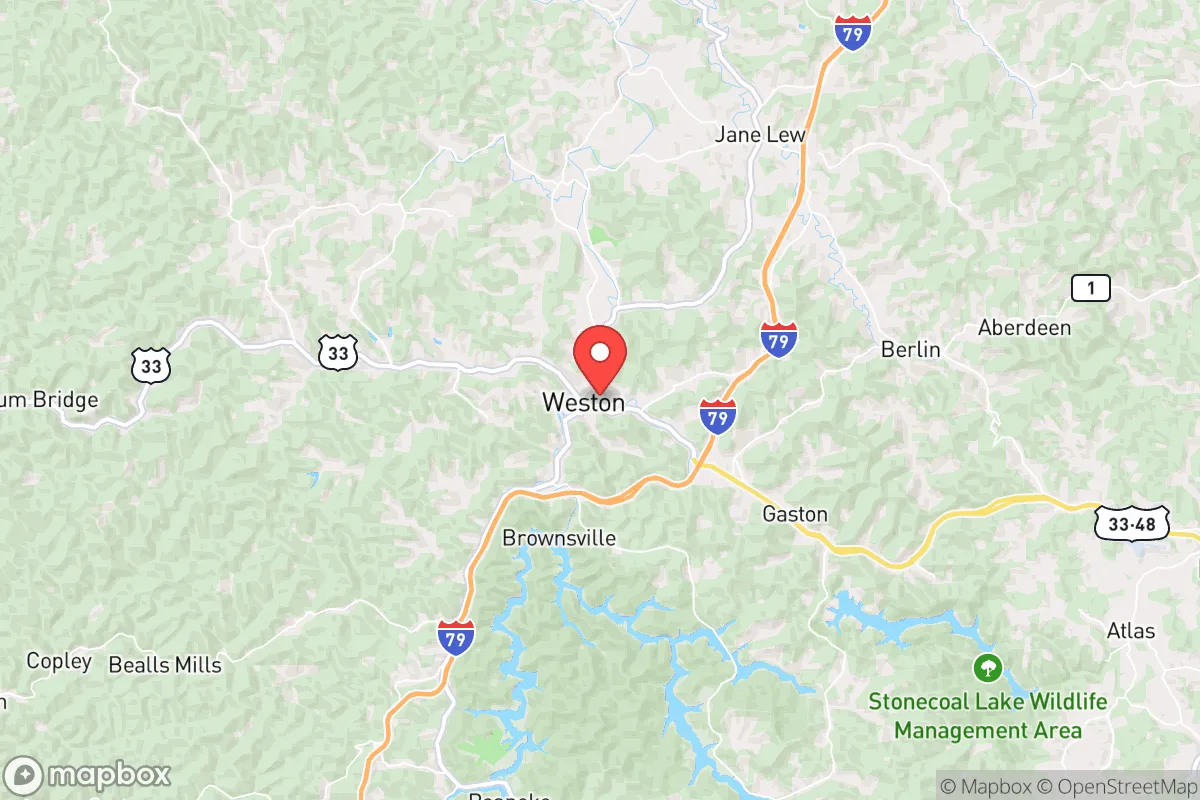
Drive thirty miles north to Clarksburg, and you’ll find a similar conservative bent, though it’s a bit more mixed with union and old-school Democratic holdouts. Head east toward Elkins, and you’re still in red territory, but the vibe shifts—more college-town influence from Davis & Elkins College, which can bring a slightly more moderate tone. The real contrast is with Morgantown, about 90 miles northeast, where West Virginia University’s presence has pushed the area toward a purple-leaning-blue tilt in recent years. Weston, by contrast, feels like a time capsule of what West Virginia used to be politically: no-nonsense, pro-Second Amendment, and wary of any government program that sounds like it’s trying to manage people’s lives. The R+20 rating isn’t just a statistic; it’s a statement that this community isn’t interested in the kind of top-down social engineering you see in bigger cities.
What this means for residents
For someone living in Weston, the political climate means you can generally expect local and state policies to align with personal freedoms—lower taxes, fewer regulations, and a government that stays out of your business. You won’t find the kind of overreach you hear about in places like California or New York, where mandates and restrictions seem to multiply every year. That said, there’s a growing concern among longtime residents that even here, the pressure to adopt progressive policies is creeping in from the state level—things like diversity initiatives in schools or environmental rules that could hurt the local coal and gas industries. The worry is that if we’re not careful, Weston could start looking like those places we moved away from. So far, the community pushes back hard, but it’s something to keep an eye on.
Culturally, Weston still holds onto its Appalachian roots—church suppers, hunting seasons, and a general distrust of outsiders telling locals how to live. The Lewis County Commission and local school board tend to reflect that, with most members running on platforms of fiscal restraint and traditional values. There’s no real push for things like sanctuary city policies or defunding the police here; the sheriff’s office is well-supported, and the biggest political fights are usually about tax rates or road maintenance. If you’re looking for a place where you can live your life without a lot of government interference, Weston is still that place. But the long-term trend is something to watch—if the state keeps shifting left, even a stronghold like this could feel the pressure. For now, though, it’s about as solid as it gets.

State Political ClimatePolitical Climate in West Virginia
State Political AnalysisPolitical Environment in the State
West Virginia has long been one of the most reliably Republican states in the nation, but that wasn't always the case. As recently as the 1990s, the Mountain State was a Democratic stronghold at the local level, with registered Democrats outnumbering Republicans by a wide margin. However, a seismic shift began in the early 2000s, driven by cultural and economic realignment. By 2024, Donald Trump carried the state with over 68% of the vote, and Republicans now hold supermajorities in both chambers of the state legislature. The dominant coalition today is a mix of rural, working-class voters, coal country conservatives, and evangelical Christians, with the state's overall partisan lean now roughly R+30 in federal elections. This trajectory has been remarkably consistent: West Virginia has not voted for a Democratic presidential candidate since 1996, and the state has become a national bellwether for the populist, America First wing of the GOP.
Urban vs. rural divide
The political map of West Virginia is starkly divided between its few small urban centers and the vast, deeply conservative rural expanse. The state's largest city, Charleston, and its surrounding Kanawha County are the most politically competitive area, often voting within a few points of the national average. In 2024, Kanawha County went for Trump by about 12 points, a far cry from the 40-point margins seen in rural counties. Morgantown, home to West Virginia University, is the state's most liberal enclave, with Monongalia County often voting within single digits of the Democratic candidate. Huntington and Cabell County lean Republican but are less conservative than the rest of the state, with Trump winning by about 20 points there. Meanwhile, the rural southern coalfields—places like Logan, Mingo, and McDowell counties—are among the most Republican in the nation, routinely delivering 75-80% of the vote to GOP candidates. The eastern panhandle, including Martinsburg and Berkeley County, has seen an influx of former Washington D.C. area residents, making it slightly more moderate but still reliably Republican. The divide isn't just about population density; it's about economic dependence on coal, natural gas, and timber versus the service and education sectors in the cities.
Policy environment
West Virginia's policy environment is aggressively conservative, reflecting the state's deep-red lean. The state has no personal income tax on Social Security benefits and has been phasing down its personal income tax—a top priority for the GOP supermajority. In 2023, the legislature passed a 21% across-the-board income tax cut, with plans to eventually eliminate it entirely. The corporate tax rate is a flat 6.5%, and the state has a right-to-work law, making it a low-regulation environment for businesses. On education, the state passed a robust school choice law in 2021, creating the Hope Scholarship program, which allows parents to use state education dollars for private school tuition, homeschooling, or other educational expenses. This was a major win for parental rights advocates. Healthcare is a mixed bag: West Virginia expanded Medicaid under the Affordable Care Act in 2014, a decision that remains controversial among conservatives, but the state has also passed laws restricting abortion to the first 8 weeks of pregnancy, with no exceptions for rape or incest. Election laws are among the most secure in the nation: the state requires voter ID, has strict absentee ballot verification, and does not allow no-excuse mail-in voting. The legislature has also passed laws banning ballot drop boxes and limiting early voting to in-person only.
Trajectory & freedom
West Virginia is moving decisively toward greater personal freedom in several key areas, though some trends are concerning. On the positive side, the state has become a national leader in gun rights. In 2023, the legislature passed a permitless carry law, allowing any law-abiding adult to carry a concealed firearm without a permit. The state also has strong castle doctrine and stand-your-ground laws. Parental rights have been strengthened through the Hope Scholarship and a 2024 law requiring schools to notify parents of any curriculum changes involving sexuality or gender identity. On the medical front, the state has resisted federal vaccine mandates and passed a law in 2022 prohibiting employers from requiring COVID-19 vaccinations as a condition of employment. Property rights are generally strong, with no state-level property tax on personal property (like cars or boats), though local property taxes on real estate remain. However, there are red flags. The state's heavy reliance on federal funding—roughly 40% of the state budget comes from Washington D.C.—creates a vulnerability to federal overreach. Additionally, the state has seen a concerning expansion of government surveillance, with the West Virginia State Police using automated license plate readers and the state joining the FBI's Joint Terrorism Task Force. The opioid crisis has also led to increased government intervention in healthcare, with the state creating a prescription drug monitoring program that some conservatives view as an overreach into the doctor-patient relationship.
Civil unrest & political movements
West Virginia has a history of labor activism, particularly in the coal fields, but modern political movements are overwhelmingly conservative. The state was a flashpoint during the 2018 teacher strikes, when educators walked out for nine days over pay and benefits, eventually winning a 5% raise. This was a rare moment of cross-ideological unity, with both conservative and liberal teachers participating. More recently, the state has seen organized opposition to federal vaccine mandates, with large rallies at the state capitol in Charleston in 2021 and 2022. The "Don't Tread on Me" sentiment runs deep here. There have been no significant sanctuary city movements; in fact, the legislature passed a law in 2020 requiring local law enforcement to cooperate with federal immigration authorities. Election integrity has been a major focus, with the state conducting a forensic audit of the 2020 election results in 2021—finding no evidence of widespread fraud, but leading to tighter laws nonetheless. The state has also seen a rise in "constitutional sheriff" movements, with several county sheriffs publicly stating they will not enforce federal gun laws they deem unconstitutional. There is a small but vocal secessionist movement in the eastern panhandle, where some residents have proposed breaking away to form a new state called "West Virginia, Part 2" or joining neighboring Maryland, though this remains fringe. Overall, the political climate is stable but vigilant, with a strong undercurrent of distrust toward federal authority.
Projection
Over the next 5-10 years, West Virginia is likely to become even more conservative, but with some important caveats. The state's population is aging and shrinking—it lost roughly 3% of its population between 2020 and 2024—which means the electorate is becoming older and whiter, reinforcing the GOP's dominance. However, the eastern panhandle is growing due to an influx of former D.C. area residents, who tend to be more moderate and could shift the political balance in that region over time. The state's heavy reliance on federal funding is a ticking time bomb; if the federal government ever cuts back on Medicaid, highway funding, or Social Security, West Virginia's economy would be devastated, potentially leading to a populist backlash against both parties. The income tax elimination plan is popular but could strain state services, particularly in education and infrastructure. On the cultural front, expect continued battles over school curriculum, transgender rights, and gun laws, with the legislature likely to pass further restrictions on abortion and expand school choice. The state's political trajectory is clear: it will remain one of the most conservative states in the union, but the specific flavor of that conservatism may shift from coal-country populism to a more suburban, anti-federal government libertarianism as the eastern panhandle grows in influence.
For a conservative-leaning individual or family considering a move to West Virginia, the bottom line is this: you will find a state that largely shares your values on guns, taxes, education, and family. The cost of living is low, the outdoor recreation is world-class, and the pace of life is slower. However, you should be aware of the state's economic fragility—job opportunities are limited outside of healthcare, education, and energy—and the aging infrastructure. The political climate is stable and friendly to your worldview, but the state's dependence on federal money creates a long-term vulnerability that could lead to future fiscal crises. If you value personal freedom, low taxes, and a community that respects traditional values, West Virginia is a strong choice. Just be prepared for a slower economy and a population that is, frankly, getting older. The state is a haven for those who want to be left alone, but it's not a place for those seeking rapid economic growth or cultural diversity.
* Values derived from national, state, county, city and local statistics and may differ in a specific area. Last updated: 2026-05-01T06:56:29.000Z
Narrative content on this page is AI-generated and may contain mistakes. Verify any details that matter before acting on them.
ReloMaps may earn a commission from affiliate links at no extra cost to you.

