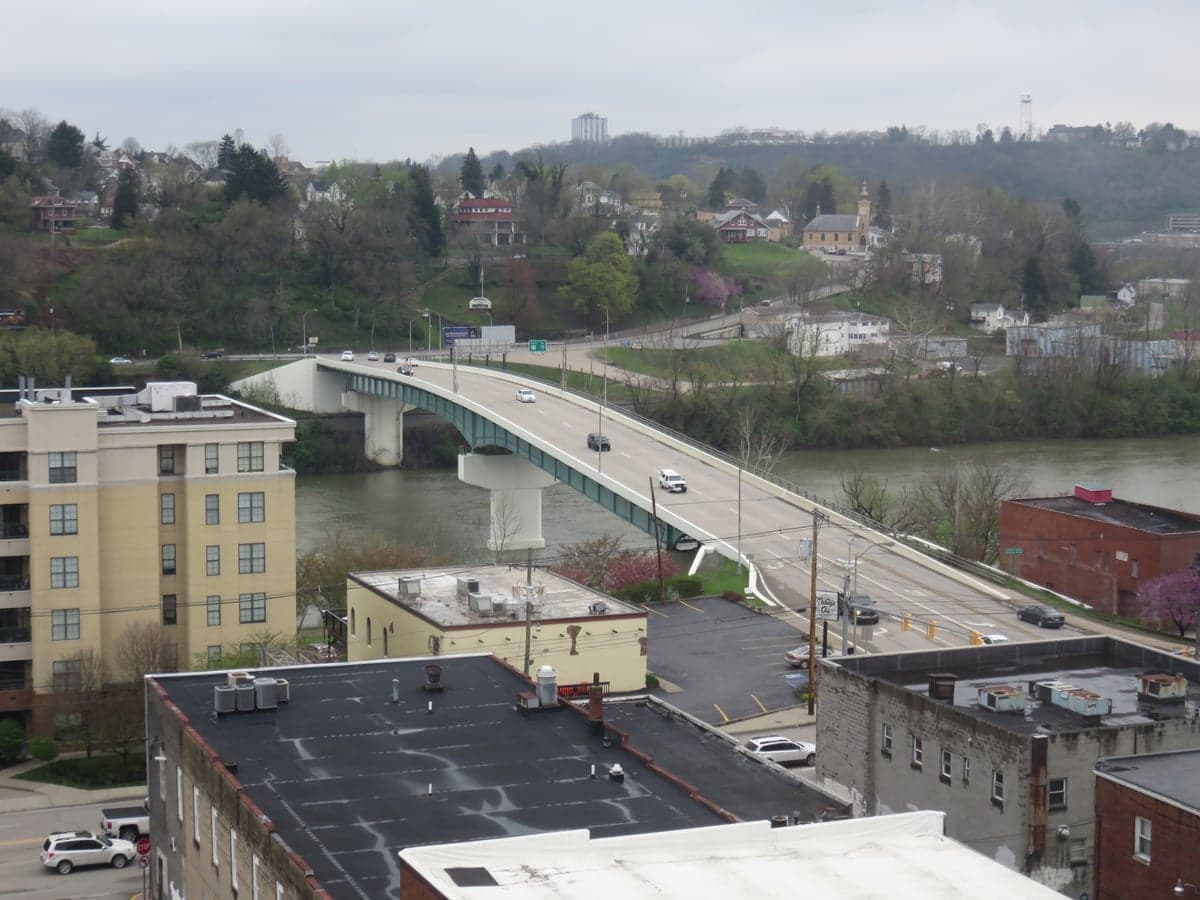
Photo: Wikipedia
Political ClimatePolitical Climate in Westover, WV
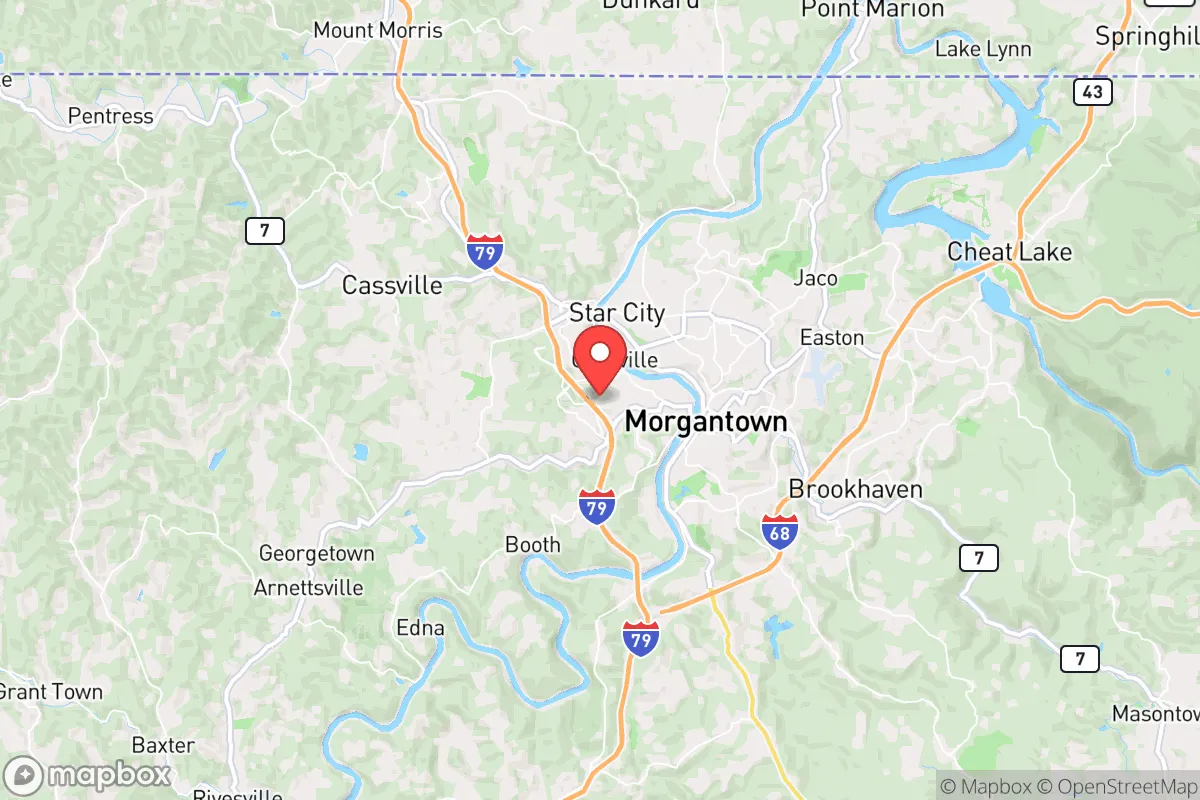
District shown is the primary district for this city’s centroid. Cities may span multiple districts.
Local Political AnalysisPolitical Analysis of Westover, WV
Westover, West Virginia, sits firmly in the red, with a Cook Partisan Voting Index of R+20, meaning it’s about 20 points more Republican than the national average. That’s not just a number—it reflects a community that has consistently voted for conservative candidates and values, and it’s been that way for as long as most folks around here can remember. The political lean here is deeply rooted in a preference for limited government, personal responsibility, and a healthy skepticism of federal overreach, especially when it comes to things like gun rights, energy policy, and local land use. If you’re looking for a place where the political winds haven’t shifted dramatically toward progressive ideology, Westover is still holding the line, though you can feel the pressure from nearby Morgantown, which is a whole different animal politically.
How it compares
Drive ten minutes north into Morgantown, home of West Virginia University, and you’re in a blue bubble—a college town where progressive politics dominate local elections and cultural attitudes. Westover, by contrast, feels like a different world. While Morgantown has seen pushes for more government involvement in housing, zoning, and even local business regulations, Westover residents tend to view those moves as unnecessary meddling. Surrounding Monongalia County as a whole leans red, but Westover is the anchor of that conservative base, standing in stark contrast to the university crowd. Places like Star City and Granville are more mixed, but Westover remains reliably conservative, with voters here consistently rejecting tax hikes and new regulations that would expand government’s role in daily life. It’s a quiet reminder that not everyone in this part of the state bought into the progressive shift.
What this means for residents
For the people living here, the political climate means fewer headaches from government overreach. You’re not going to see the kind of strict zoning laws or business mandates that pop up in Morgantown. Property rights are taken seriously, and there’s a general trust that local leaders will keep their hands off your personal choices—whether that’s how you use your land, what you do with your firearms, or how you run your small business. The downside? If you’re hoping for big government-funded projects or rapid social policy changes, you’ll be disappointed. But for most folks, that’s a feature, not a bug. The community values stability and predictability over experimentation, and that’s reflected in low turnover among local officials and a general resistance to outside pressure to adopt progressive policies. It’s a place where you can still feel like your vote actually matters, because it’s not drowned out by a wave of transient college voters.
Culturally, Westover holds onto a few distinctions that set it apart. There’s a strong sense of local identity tied to the coal and natural gas industries, even as those sectors have declined. You’ll hear folks talk about the importance of energy independence and the dangers of federal environmental regulations that kill jobs. Gun rights are a given—open carry is common, and there’s no appetite for red flag laws or waiting periods. The local schools and churches reinforce these values, and community events like the annual Westover Day celebration are more about family and tradition than political activism. Looking ahead, the concern is that as Morgantown expands and more people move in from out of state, the political balance could tip. But for now, Westover remains a stronghold where conservative principles still guide the way of life, and most residents intend to keep it that way.

State Political ClimatePolitical Climate in West Virginia
State Political AnalysisPolitical Environment in the State
West Virginia has long been one of the most reliably Republican states in the nation, but that wasn't always the case. As recently as the 1990s, the Mountain State was a Democratic stronghold at the state and local level, with registered Democrats outnumbering Republicans by a wide margin. That flipped decisively starting around 2000, and by 2024, Donald Trump carried the state with over 68% of the vote — his strongest margin in the country. The shift is driven by a working-class, rural electorate that feels abandoned by the national Democratic Party on coal, energy, and cultural issues. Today, the dominant coalition is a mix of old-school union Democrats who switched parties, evangelical conservatives, and libertarian-leaning independents. The state legislature is supermajority Republican, and the governor's mansion has been red since 2017.
Urban vs. rural divide
The political map of West Virginia is starkly divided between a handful of small urban centers and the vast rural expanse. The state's largest city, Charleston, is a Democratic-leaning island in a sea of red, though even here the margin has narrowed — Biden won Kanawha County by just 2 points in 2020 after Hillary Clinton carried it by 8 in 2016. Morgantown, home to West Virginia University, is the most reliably blue city in the state, driven by a younger, more educated population and a sizable academic workforce. Monongalia County went for Biden by 7 points in 2020. Huntington and Wheeling are more purple, with working-class voters split between cultural conservatism and lingering union loyalty. The real story is the rural counties: places like Mingo, Logan, and McDowell in the southern coalfields, which were once Democratic bastions, now vote Republican by 50-60 point margins. The Eastern Panhandle — including Berkeley and Jefferson counties — is a fast-growing region that leans Republican but is more moderate, influenced by commuters to the D.C. metro area. If you're moving to West Virginia, your political experience will depend heavily on whether you land in Morgantown, Charleston, or a rural county like Pocahontas.
Policy environment
West Virginia's policy environment is aggressively conservative by national standards, though it retains some populist and libertarian quirks. The state has no personal income tax on Social Security benefits and has been phasing out its personal income tax — the rate was cut from 6.5% to 3.99% in 2023, with a path to elimination by 2026 if revenue targets are met. Sales tax is 6%, with no local add-ons. Property taxes are among the lowest in the nation, capped by the state constitution at 1% of assessed value for most property. The regulatory climate is business-friendly, with a right-to-work law (passed in 2016) and a tort reform system that caps non-economic damages. Education policy is a flashpoint: the state passed a school choice law in 2021 that created Education Savings Accounts (ESAs) for all students, one of the most expansive programs in the country. However, the state also saw a massive teachers' strike in 2018 that shut down schools for two weeks and forced a 5% pay raise — a reminder that union power isn't dead. On healthcare, West Virginia expanded Medicaid under the ACA in 2014, a decision that remains popular even among conservatives. Election laws are moderately strict: voter ID is required, but the state offers early voting and no-excuse absentee voting. There's no ballot harvesting, and the state uses paper ballots with auditable results.
Trajectory & freedom
West Virginia is moving in a decidedly more libertarian direction on most fronts, but not without some concerning countercurrents. On the positive side, the state passed constitutional carry (permitless concealed carry) in 2016, and in 2023 expanded it to allow firearms in vehicles on school property. The state also passed a Parental Bill of Rights in 2021, requiring schools to notify parents of any curriculum changes and to get consent before providing medical or mental health services. Medical marijuana was legalized in 2017, though the program is slow to roll out. On the concerning side, the state has seen a push for vaccine mandates in healthcare settings — a 2023 law requires hospital workers to get the flu shot or wear a mask, which drew backlash from medical freedom advocates. The state also has a broad anti-abortion law (triggered after Dobbs) that bans the procedure with narrow exceptions, which most conservatives support but some libertarians view as government overreach. Property rights are strong: the state has a Stand Your Ground law and a Castle Doctrine statute. Overall, the trajectory is toward more personal freedom on guns, education, and taxes, but with some friction on medical mandates and abortion.
Civil unrest & political movements
West Virginia has a history of labor militancy that occasionally flares into broader political activism. The 2018 teachers' strike was the most significant protest in recent memory, with 20,000 educators walking out and shutting down schools in all 55 counties. It was a rare moment of cross-party unity — rural conservatives and union Democrats stood together. More recently, the state saw anti-lockdown protests in 2020, with armed demonstrators at the state capitol in Charleston opposing Governor Jim Justice's COVID restrictions. The Mountain State Patriots and other local militia groups have been active, particularly around Second Amendment rallies. On the left, the West Virginia Can't Wait movement has pushed for progressive candidates in Democratic primaries, with limited success. Immigration politics are muted — West Virginia has one of the smallest foreign-born populations in the country (about 1.5%), so the issue is more symbolic than practical. There's been no serious sanctuary city movement. Election integrity is a live issue: the state passed a Voter ID law in 2016 and a ballot security bill in 2021 that banned ballot drop boxes and limited mail-in voting. No major controversies have erupted, but the issue remains a talking point for conservative activists. A new resident would notice a general distrust of federal authority, especially around environmental regulations and gun control.
Projection
Over the next 5-10 years, West Virginia is likely to become even more Republican and more libertarian, but with some demographic wrinkles. The state is aging faster than almost any other — median age is 43, and the population has been declining since 2010. Young people continue to leave for job opportunities elsewhere, which reinforces the conservative tilt. However, the Eastern Panhandle is growing, attracting remote workers and retirees from the D.C. area who bring moderate-to-conservative politics but also demand better services. The personal income tax phase-out will likely be completed by 2028, making the state even more attractive to high-income earners and retirees. The school choice program will expand, potentially drawing families from neighboring states. The biggest wildcard is the energy transition: as coal continues to decline, the state will need to diversify its economy. If it succeeds in attracting manufacturing, data centers, or outdoor recreation, it could see a modest influx of new residents. If it doesn't, the population decline will accelerate, making the state even more rural and conservative. Either way, expect the political culture to remain deeply skeptical of federal power, culturally traditional, and increasingly focused on tax competition with neighboring states like Virginia and Ohio.
For someone moving to West Virginia today, the bottom line is this: you'll find a state that largely leaves you alone on guns, taxes, and school choice, but you'll also deal with a shrinking population, limited economic opportunity outside a few pockets, and a political culture that is intensely local and suspicious of outsiders. If you're looking for a place where your personal freedoms are respected and your voice matters more than in a coastal metro, West Virginia delivers. Just be prepared for a slower pace, fewer amenities, and a community that expects you to earn your place.
* Values derived from national, state, county, city and local statistics and may differ in a specific area. Last updated: 2026-04-23T05:52:09.000Z
Narrative content on this page is AI-generated and may contain mistakes. Verify any details that matter before acting on them.
ReloMaps may earn a commission from affiliate links at no extra cost to you.

