
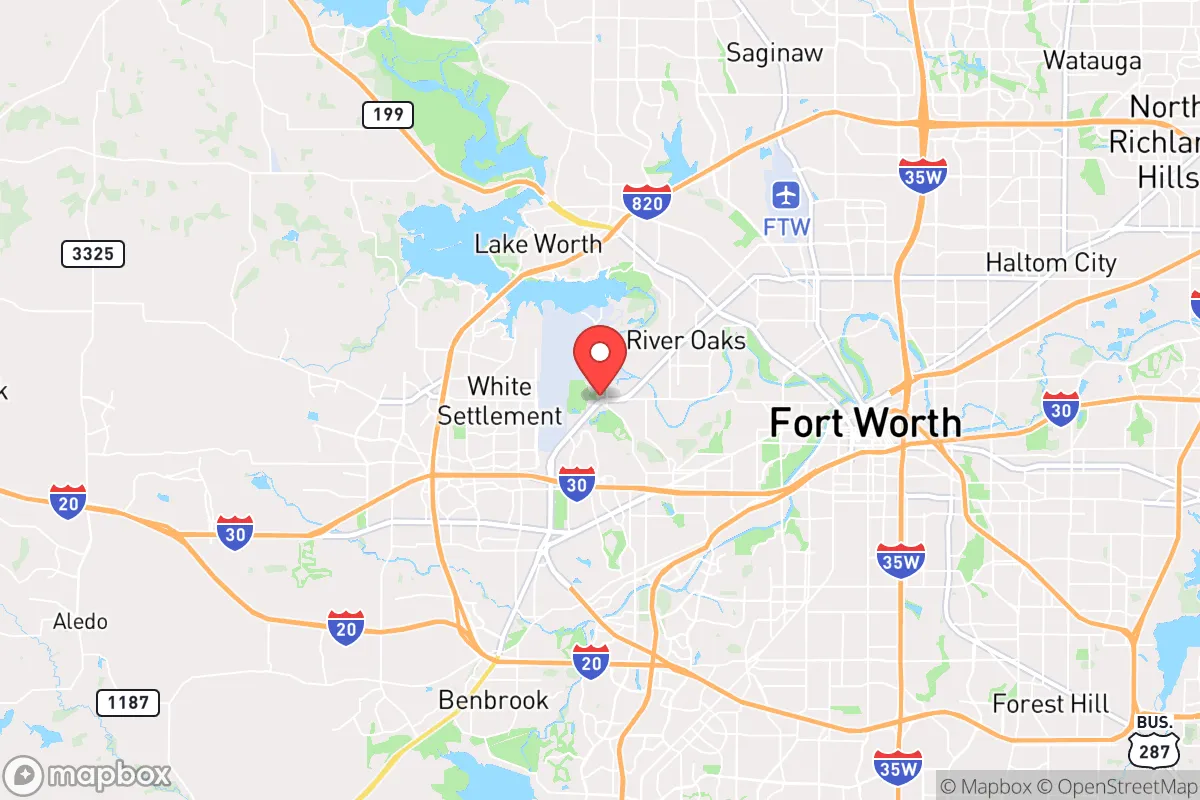
Demographics of Westworth Village, TX
Affluence Level in Westworth Village, TX
An upper-middle-class area. Household wealth, education levels, and homeownership run ahead of national benchmarks.
People of Westworth Village, TX
Westworth Village, Texas, is a small, landlocked city of 2,618 residents that blends suburban stability with a distinctly conservative, family-oriented character. Its population is predominantly White (57.9%) with a significant Hispanic minority (28.4%), a small Black community (3.6%), and a modest East/Southeast Asian presence (1.6%), while the foreign-born share is very low at 2.8%. The city feels like a quiet, older suburb—dense by Tarrant County standards, with a strong sense of local identity and a median age that skews toward established homeowners rather than young renters. For those seeking a predictable, low-turnover community with deep roots in the region’s post-war suburban expansion, Westworth Village offers a distinct alternative to the fast-growing, more transient suburbs farther out.
How the city was settled and grew
Westworth Village was not a pioneer settlement or a railroad town; it was a deliberate, post-World War II suburban creation. The land was originally part of the vast Peters Colony land grants, but the area remained sparsely populated ranchland until the 1950s. The city was officially incorporated in 1955, driven by a wave of white, middle-class families leaving Fort Worth’s urban core for affordable, single-family homes on larger lots. The original settlers were predominantly native-born Texans and transplants from the broader South and Midwest, drawn by the promise of new schools, low crime, and a self-governing small town. The earliest homes clustered around the original core, now known as Old Westworth, a neighborhood of modest 1950s ranch-style houses along Westworth Boulevard and the streets immediately north of it. A second early pocket, River Oaks Estates (a small subdivision within the city’s limits), attracted slightly more affluent families who wanted access to the Trinity River greenbelt. These two neighborhoods formed the demographic backbone of the city for its first two decades: almost entirely white, with a sprinkling of returning WWII and Korean War veterans using VA loans.
Modern era (post-1965)
The 1965 Hart-Cellar Act had minimal direct impact on Westworth Village, as the city’s small size and lack of rental housing stock made it a low-priority destination for new immigrant groups. Instead, the major demographic shift came from domestic in-migration and natural growth. During the 1970s and 1980s, as Fort Worth’s white middle class continued its outward push, Westworth Village filled in its remaining vacant lots. The Westworth Hills subdivision, developed in the late 1970s, attracted a mix of white professionals and a growing number of Hispanic families—many of whom were second- or third-generation Texans moving from older Fort Worth neighborhoods like the North Side. By the 1990s, the Hispanic share had risen to roughly 15%, concentrated in the slightly newer housing stock of Westworth Hills and the Trinity Terrace area near the river. The Black population remained small (under 5%) and dispersed, with no single neighborhood of concentration. The East/Southeast Asian community, almost entirely Vietnamese and Korean families, arrived in the 1990s and 2000s, settling primarily in the Westworth Place townhome development, attracted by its affordability and proximity to the Haltom City Asian commercial corridor. Today, the city’s racial geography is subtle: Old Westworth and River Oaks Estates remain overwhelmingly white and older (median age over 50), while Westworth Hills and Trinity Terrace are more mixed, with Hispanic families making up a third to half of those blocks. The college-educated share (31.0%) is modest, reflecting a workforce heavy in trades, municipal services, and small business ownership rather than white-collar professions.
The future
Westworth Village is not homogenizing; it is slowly diversifying along predictable lines of housing age and price. The city is essentially built out—no large tracts of vacant land remain—so future population change will come from redevelopment, teardowns, and generational turnover. The Hispanic share is likely to continue its gradual rise, approaching 35-40% over the next decade, as older white homeowners sell to younger Hispanic families seeking established neighborhoods with good schools (Westworth Village is served by the highly regarded Castleberry ISD). The East/Southeast Asian population is plateauing, as the townhome stock in Westworth Place ages and newer Asian arrivals prefer larger, newer suburbs like North Richland Hills or Keller. The Black and Indian-subcontinent shares are expected to remain negligible, as the city lacks the rental diversity and job base that attract those groups. The foreign-born share will likely stay below 5%, as the city’s housing costs (median home value around $220,000) and lack of apartment complexes filter out most new immigrant households. The most significant demographic trend is aging: the white population in Old Westworth is shrinking naturally, while the Hispanic population in Westworth Hills is younger and has more children, slowly lowering the median age.
For a conservative-leaning individual or parent considering a move, Westworth Village is becoming a more diverse but still deeply traditional community—a place where the old guard is gradually giving way to a younger, more Hispanic middle class that shares the same values of homeownership, local control, and low taxes. The city is not trending toward tribalism; rather, it is experiencing a quiet, organic replacement of one stable population with another. The next 20 years will likely see Westworth Village remain a small, safe, family-oriented enclave, with a slightly browner and younger face but the same essential character. For someone moving in now, the city offers a rare combination: a known quantity with a predictable future, where the neighbors may change but the neighborhood’s ethos does not.

* Values derived from national, state, county, city and local statistics and may differ in a specific area. Last updated: 2026-04-24T06:13:33.000Z
Narrative content on this page is AI-generated and may contain mistakes. Verify any details that matter before acting on them.
ReloMaps may earn a commission from affiliate links at no extra cost to you.

