
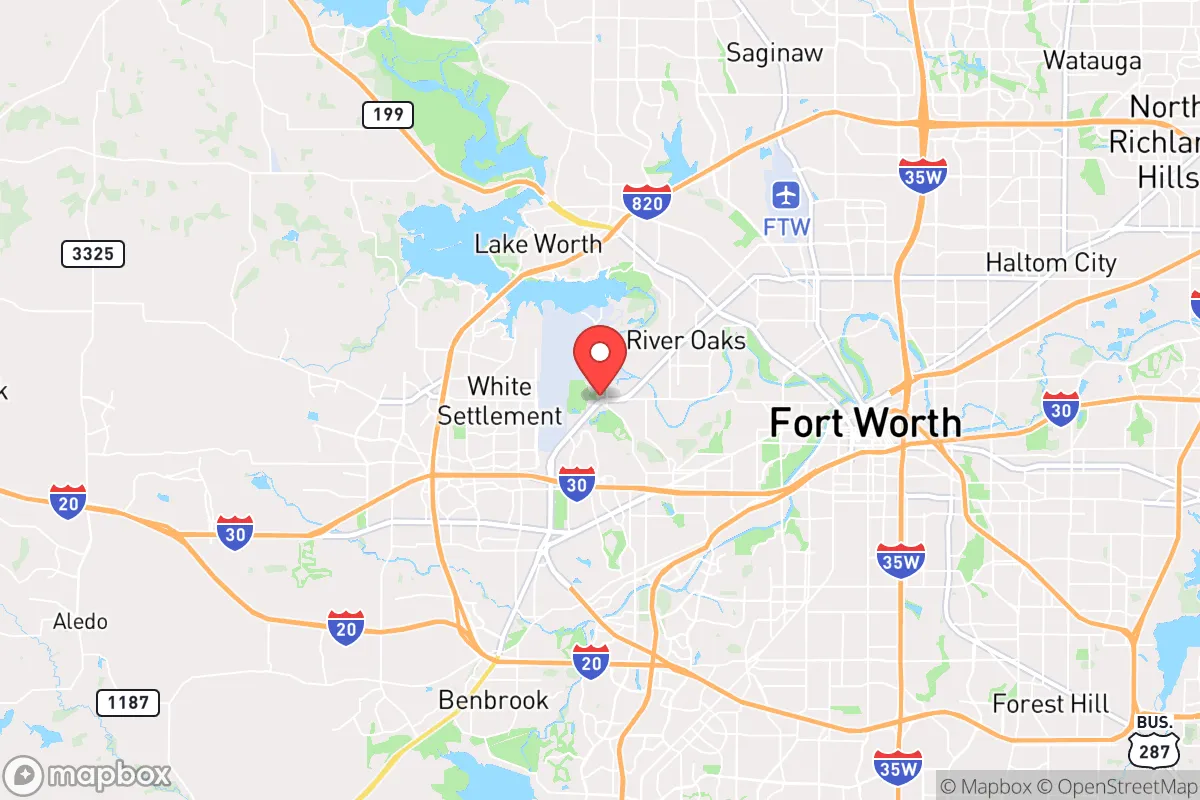
Political ClimatePolitical Climate in Westworth Village, TX
District shown is the primary district for this city’s centroid. Cities may span multiple districts.
Local Political AnalysisPolitical Analysis of Westworth Village, TX
Westworth Village has long been a solidly conservative pocket in Tarrant County, and that hasn't changed much over the years. With a Cook Partisan Voting Index of R+11, this small city leans about 11 points more Republican than the national average, and that number feels about right if you've spent any time here. The local elections and general sentiment have stayed reliably red, though you can see the edges starting to fray a little as the Metroplex grows and younger folks move in from bluer areas like Dallas or even parts of Fort Worth proper. The trajectory is still conservative, but it's a more defensive, watchful kind of conservatism than the easy-going one we had twenty years ago.
How it compares
Compared to its immediate neighbors, Westworth Village is a bit of a conservative island. Drive east into Fort Worth's near-west side or south into Benbrook, and you'll find a mix of purple and even some blue precincts, especially around the cultural districts and newer apartment complexes. Head west toward Aledo or Weatherford, and you're back in deep-red territory, where the R+11 here would look almost moderate. The contrast is sharpest with the city of Fort Worth itself, which has been trending leftward for a decade, particularly on social and fiscal issues. Westworth Village residents tend to see that shift as a cautionary tale—a reminder that local control and limited government can slip away fast if you're not paying attention.
What this means for residents
For the people who live here, the political climate means a few concrete things. Property taxes are a constant topic, and the local council generally leans toward keeping them as low as possible, resisting the urge to expand services or staff that would require more revenue. Zoning and land use decisions tend to favor homeowners over developers, which keeps the small-town feel intact but can frustrate folks looking for more rental options or commercial growth. There's also a strong preference for local police and fire departments to operate without state or federal mandates—the kind of "we know our own community best" attitude that runs deep here. If you're worried about government overreach, whether it's vaccine mandates, school curriculum battles, or environmental regulations that don't fit a small city, Westworth Village is a place where those concerns are taken seriously by elected officials.
One thing that stands out culturally is the lack of a strong progressive activist presence. You don't see many yard signs for national Democratic candidates, and local school board races are usually decided by conservative slates. That said, the city isn't immune to the broader cultural shifts. There's been a quiet but noticeable push from some residents for more "equity" initiatives in the local library and parks programming, which has raised eyebrows among those who see it as creeping ideology. The general attitude among long-timers is one of cautious vigilance: keep an eye on what's coming out of Austin and Washington, and make sure Westworth Village stays the kind of place where you can raise a family without the government getting in the way of how you do it. It's still a good place to live if you value that independence, but you've got to stay engaged to keep it that way.

State Political ClimatePolitical Climate in Texas
State Political AnalysisPolitical Environment in the State
Texas has been a reliably Republican state for decades, but the political reality on the ground is more complex than a simple red-state label. The dominant coalition is a mix of rural conservatives, suburban moderates, and a growing number of Hispanic voters who lean right on economics and social issues. Over the last 10-20 years, the state has shifted from a solid +12-point Republican advantage in presidential races to a narrower +5 or +6 point margin, driven largely by explosive growth in the blue-leaning metros of Austin, Dallas, Houston, and San Antonio. However, the GOP still holds every statewide office and both chambers of the legislature, and the 2024 election saw Donald Trump carry the state by roughly 5.5 points, a slight improvement over 2020. The key story is that while the urban cores are getting bluer, the exurbs and rural areas are getting redder, and the state’s political future hinges on which trend wins out.
Urban vs. rural divide
The political map of Texas is a tale of two landscapes. The major metros — Austin, Dallas, Houston, San Antonio, and El Paso — are the Democratic strongholds. Travis County (Austin) voted for Joe Biden by a staggering 56 points in 2020, while Harris County (Houston) went for Biden by 13 points. These areas are powered by a mix of young professionals, tech transplants, and minority voters who lean left on social issues. In contrast, the rest of the state is deeply Republican. The Panhandle, West Texas, and most of East Texas are reliably red, with counties like Lubbock’s Lubbock County and Midland’s Midland County routinely voting +30 to +40 points Republican. The real battleground is the suburbs. Places like Collin County (north of Dallas) and Fort Bend County (southwest of Houston) have been trending purple. Collin County, once a GOP fortress, went for Trump by only 8 points in 2020, down from a 30-point margin in 2012. Meanwhile, rural counties like Gillespie County (Fredericksburg) have become even more conservative, with Trump winning it by 50 points. The divide isn’t just geographic — it’s cultural, with urban areas embracing progressive values while rural and exurban Texans prioritize gun rights, low taxes, and traditional family structures.
Policy environment
Texas’s policy environment is a conservative’s dream in many respects, but with some notable caveats. The state has no personal income tax, which is a massive draw for high-earners and businesses. Property taxes are high — averaging around 1.6% of home value — but the legislature has been chipping away at them, with a 2023 law that cut property taxes by $18 billion through higher homestead exemptions and a compression of school tax rates. The regulatory posture is business-friendly, with minimal zoning in most cities and a right-to-work law that keeps unions weak. On education, Texas has a robust school choice movement: the 2023 legislative session saw a push for education savings accounts (ESAs) that would let parents use state funds for private or homeschool expenses, though it failed in the House due to rural Republican opposition. Expect this to pass in 2025. Healthcare is a mixed bag: the state refused to expand Medicaid under Obamacare, leaving 1.5 million uninsured, but it has strong protections for religious freedom and conscience rights for medical providers. Election laws tightened after 2020 with Senate Bill 1, which banned drive-through voting, added ID requirements for mail ballots, and restricted early voting hours. For conservatives, this is a state that generally respects personal liberty, but the property tax burden and lack of school choice are ongoing frustrations.
Trajectory & freedom
On the freedom front, Texas has been a mixed bag over the last five years. On the positive side, the state has expanded gun rights significantly: in 2021, permitless carry (HB 1927) became law, allowing any law-abiding adult to carry a handgun without a license. Parental rights were strengthened with the 2023 passage of the Parental Bill of Rights (HB 900), which requires schools to get parental consent before providing sex education or mental health services. Medical autonomy took a hit with the 2021 abortion ban (SB 8), which outlawed abortion after six weeks and allowed private citizens to sue violators — a move that conservatives see as protecting life but progressives view as government overreach. On the negative side, property rights have been eroded by the state’s aggressive use of eminent domain for infrastructure projects, particularly the controversial Trans-Texas Corridor (now defunct) and ongoing highway expansions. Taxation remains a concern: while there’s no income tax, the state’s reliance on property and sales taxes means that homeowners and low-income families bear a disproportionate burden. The 2023 property tax cut was a step in the right direction, but it’s a temporary fix, not a structural reform. Overall, Texas is becoming more free on cultural and Second Amendment issues, but less free on economic and property fronts — a tension that long-time residents feel keenly.
Civil unrest & political movements
Texas has seen its share of political flashpoints. The 2020 Black Lives Matter protests in Austin and Dallas were large and sometimes violent, leading to property damage and a subsequent backlash that helped fuel the 2021 passage of a law increasing penalties for rioting. The immigration crisis at the southern border has been a constant source of tension. Governor Greg Abbott’s Operation Lone Star, launched in 2021, deployed state troopers and National Guard to the border, bused migrants to sanctuary cities like New York and Chicago, and installed razor wire along the Rio Grande. This has been wildly popular with conservatives but has drawn lawsuits from the Biden administration and civil rights groups. On the left, activist groups like Moms Demand Action and Texas Organizing Project push for gun control and expanded welfare, but they’ve had little legislative success. Election integrity remains a hot-button issue: the 2020 election saw allegations of irregularities in Harris County, leading to the passage of SB 1 and a 2023 law that abolished the county’s elections administrator position. Secession talk is mostly fringe, but the Texas Nationalist Movement has a small but vocal following. For a new resident, the most visible flashpoint is likely the border — you’ll see state troopers and National Guard at rest stops and checkpoints near the Rio Grande, and the issue dominates local news.
Projection
Over the next 5-10 years, Texas is likely to remain a Republican-leaning state, but the margin will continue to narrow. The key demographic driver is in-migration: roughly 1,000 people move to Texas every day, many from blue states like California and New York. These transplants tend to be moderate to conservative on economics but more liberal on social issues, which could push the suburbs leftward. However, the state’s Hispanic population — which makes up 40% of residents — is not monolithic. In 2024, Trump improved his performance among Hispanic voters in Texas, particularly in the Rio Grande Valley, where counties like Starr County flipped from Biden to Trump. If this trend continues, the GOP could offset losses in the suburbs with gains in the borderlands. The legislature will likely pass school choice in 2025, which could solidify suburban support. The biggest wildcard is the border: if the federal government fails to secure it, Texas will continue to assert state-level authority, which could lead to a constitutional showdown. For someone moving in now, expect a state that remains culturally conservative but increasingly contested, with a political environment that rewards engagement — your vote will matter more here than in a deep-blue or deep-red state.
For a new resident, the bottom line is this: Texas offers a high degree of personal freedom on guns, speech, and religion, but you’ll pay for it through property taxes and a limited social safety net. The political climate is vibrant and often contentious, but it’s a place where your voice can actually make a difference. If you value low regulation, strong Second Amendment protections, and a government that generally stays out of your family’s business, Texas is a solid bet. Just be prepared for the heat — both the weather and the political debate.
* Values derived from national, state, county, city and local statistics and may differ in a specific area. Last updated: 2026-04-24T06:13:33.000Z
Narrative content on this page is AI-generated and may contain mistakes. Verify any details that matter before acting on them.
ReloMaps may earn a commission from affiliate links at no extra cost to you.

