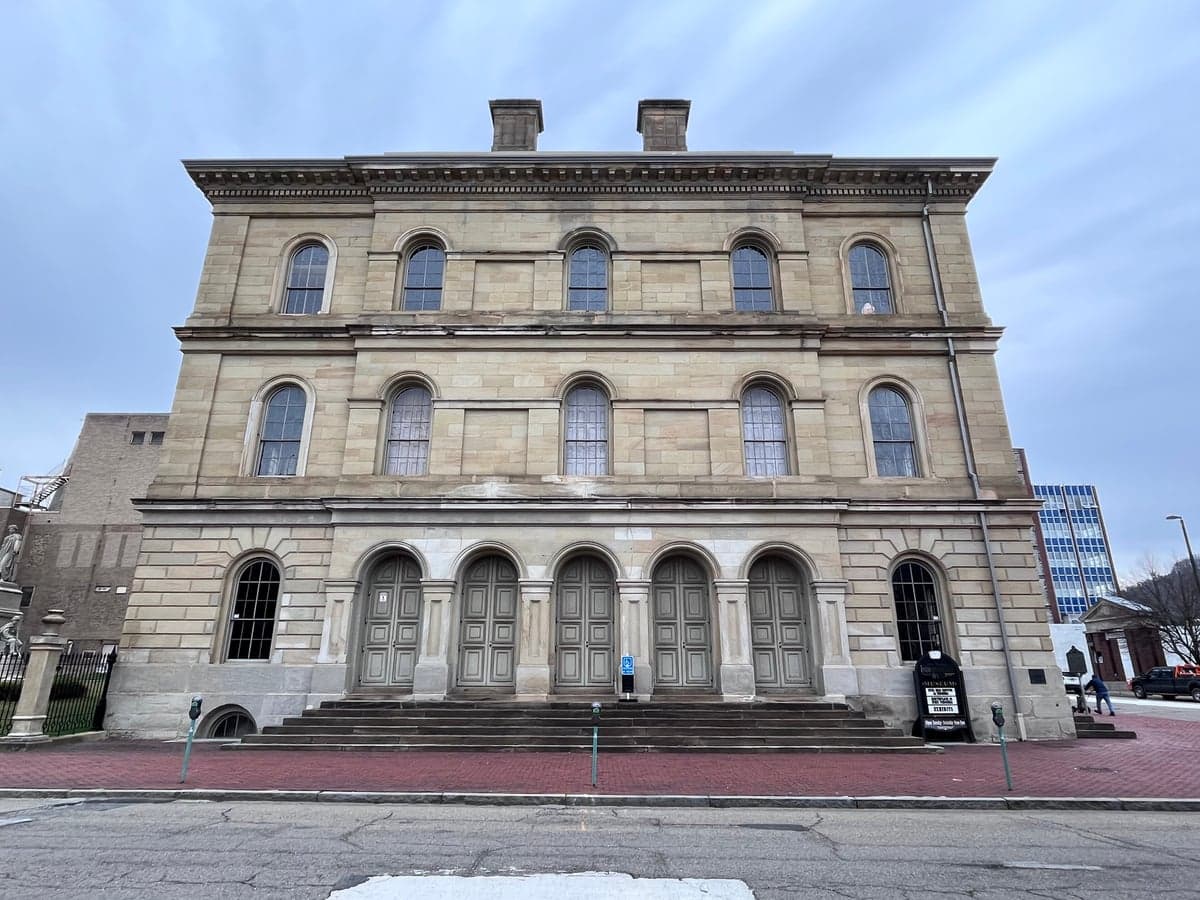
Photo: Wikipedia
Personal Sovereignty in Wheeling, WV
Strong independent fundamentals that actively favor personal liberty and low regulation.
What does Personal Sovereignty tell us?
Personal Sovereignty measures your capacity for self-reliance and independence with minimal government friction. Higher scores mean fewer barriers between you and the way you want to live... but it assumes you have the space you need and good neighbors.
What does this tell us?
Personal Sovereignty measures your capacity for self-reliance and independence with minimal government friction. Higher scores mean fewer barriers between you and the way you want to live... but it assumes you have the space you need and good neighbors.
State Policy
Energy independence: Net exporter (200% of energy produced in-state)
Personal Liberty
Homesteading

Personal Liberty Analysis
Wheeling, West Virginia, offers a notably high degree of personal sovereignty compared to most of the United States, particularly for those who prioritize minimal government interference in daily life. The state’s constitutional and legislative framework consistently favors individual autonomy over collective mandates, making the Ohio Valley a strategic location for those seeking to reduce their exposure to federal and state overreach. For a survivalist or prepper mindset, the key metrics are clear: low taxes, permissive gun laws, minimal zoning restrictions, and strong protections for parental and medical choice. This analysis breaks down the specific areas where Wheeling delivers on personal freedom and where potential friction points remain.
Tax burden and regulatory posture: how West Virginia keeps government off your back
West Virginia’s tax and regulatory environment is among the most favorable in the nation for individuals seeking to keep more of their own resources. The state has no personal property tax on vehicles or business inventory, and its income tax is a flat 3.0% as of 2026, down from a progressive rate just a few years prior. Property taxes are exceptionally low, with effective rates around 0.5% to 0.7% of assessed value, meaning a $150,000 home in Wheeling might carry an annual tax bill of roughly $750 to $1,050. This is a fraction of what you’d pay in neighboring Pennsylvania or Ohio. Sales tax is 6%, with no local add-ons, and food is exempt. For a prepper, this low tax burden means more capital for supplies, land, and self-sufficiency projects. The regulatory posture is equally light: West Virginia is a right-to-work state with minimal business licensing hurdles, and the state government has actively rolled back environmental and land-use regulations over the past decade. While some federal oversight remains (EPA, ATF), the state-level apparatus is notably thin, giving residents more breathing room to operate independently.
Self-defense and gun law specifics: what you can carry and where
West Virginia is a constitutional carry state, meaning no permit is required to carry a concealed firearm for anyone legally allowed to possess one. This went into effect in 2016 and has not been rolled back. In Wheeling, you can carry openly or concealed without a license, and there is no state-level requirement to register firearms or ammunition. The state also preempts local gun ordinances, so Wheeling city council cannot impose its own restrictions beyond state law. Stand-your-ground laws are in full effect, with no duty to retreat in any place you are lawfully present. For preppers, this is critical: you can defend your home, vehicle, or person without fear of prosecution for using force. Magazine capacity is unrestricted, and suppressors are legal with a federal tax stamp. The only notable limitation is that carrying in schools, courthouses, and certain government buildings is restricted, but these are standard exceptions. Compared to states like New York or California, West Virginia’s gun laws are among the most permissive in the country, and Wheeling’s local enforcement tends to be non-intrusive.
Self-reliance and homesteading viability: lot sizes, zoning, and off-grid feasibility
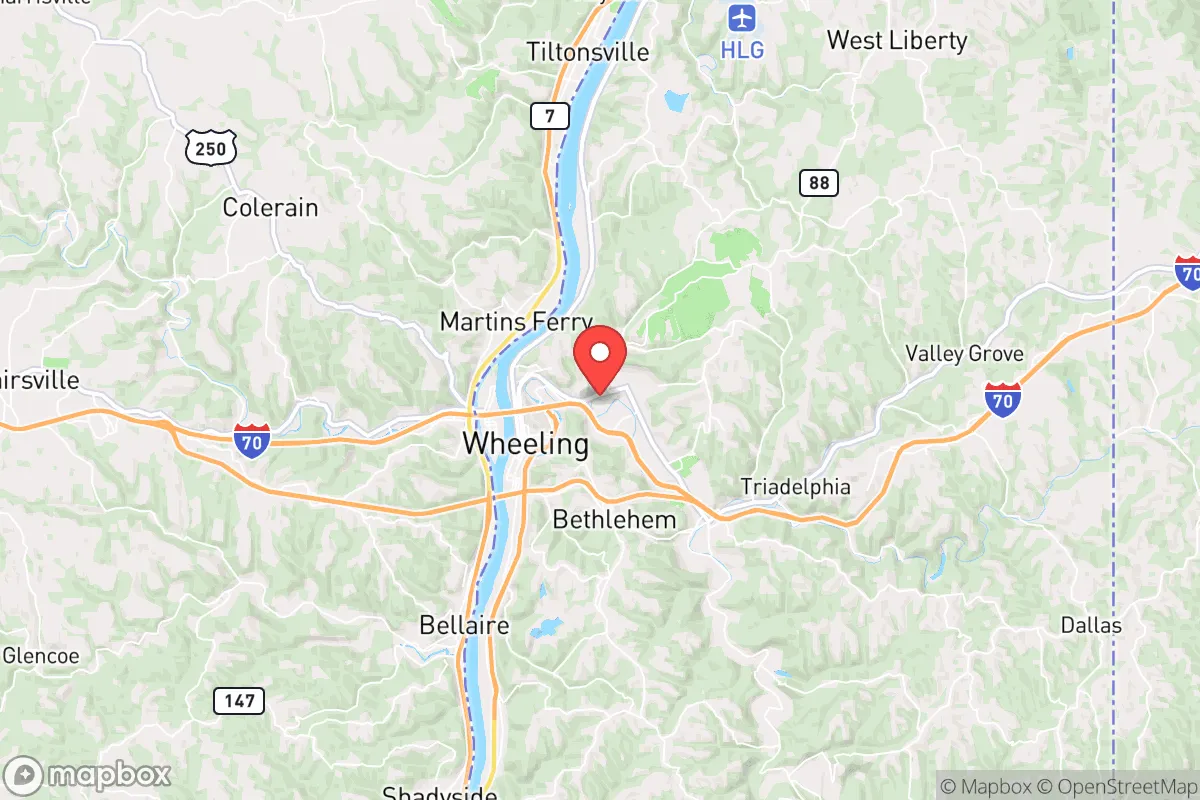
Wheeling’s geography and zoning codes make it a strong candidate for homesteading and off-grid living, especially in the outlying areas of Ohio County. Within the city limits, lot sizes vary widely, but many residential parcels are 0.25 to 0.5 acres, and some neighborhoods still have larger lots from the pre-war era. However, the real opportunity lies in the unincorporated areas just outside Wheeling, such as Triadelphia, Valley Grove, and along Route 88. Here, zoning is minimal or nonexistent, and you can find 1- to 5-acre parcels for $10,000 to $30,000. Building codes are relatively lax—no statewide building code is enforced in rural areas, though local health departments require septic permits. Off-grid feasibility is high: solar panels are legal without special permits, rainwater collection is unrestricted, and there are no state-level bans on composting toilets or alternative energy systems. The main practical constraint is the hilly terrain, which can complicate septic and driveway installation, but this is manageable with proper planning. For a prepper, the ability to raise chickens, keep bees, or even hunt on your own land is straightforward, as Ohio County has no restrictive agricultural ordinances. The only potential friction is with the city’s historic district regulations in downtown Wheeling, but these don’t affect rural parcels.
Personal liberties: parental rights, medical autonomy, speech, and property
West Virginia has strong legal protections for parental rights, particularly in education and healthcare. The state passed a Parents’ Bill of Rights in 2021, which requires schools to notify parents of any medical or mental health services offered to minors and prohibits instruction on sexual orientation in grades K-5. Medical autonomy is also robust: there is no state-level vaccine mandate for adults, and while some childhood vaccines are required for school attendance, medical and religious exemptions are available and not overly burdensome. The state does not have a red-flag law, meaning your firearms cannot be seized without a criminal conviction or mental health adjudication. Free speech is protected under the state constitution, and there are no hate speech laws that could be used to suppress political or religious expression. Property rights are strong, with no statewide rent control, no forced annexation without a vote, and a relatively low rate of eminent domain abuse. The one area where West Virginia falls short for some preppers is medical marijuana: the state has a limited program, but recreational use remains illegal, and possession can still lead to charges. However, enforcement is generally lenient for small amounts. Overall, the legal environment in Wheeling gives individuals wide latitude to live according to their own values without fear of government intrusion.
In the broader context of the United States, Wheeling and West Virginia rank among the top states for personal sovereignty, especially when compared to the Northeast or West Coast. The combination of low taxes, constitutional carry, minimal zoning, and strong parental rights creates a buffer against federal overreach that is increasingly rare. For a survivalist or prepper, the main trade-offs are the state’s economic challenges—lower median income and limited job diversity—but these are offset by the low cost of living and the ability to live largely on your own terms. If your priority is maximizing individual freedom and minimizing government control, Wheeling is a strategic choice that delivers on nearly every front.

* Values derived from national, state, county, city and local statistics and may differ in a specific area. Last updated: 2026-05-02T09:36:10.000Z
Narrative content on this page is AI-generated and may contain mistakes. Verify any details that matter before acting on them.
ReloMaps may earn a commission from affiliate links at no extra cost to you.

