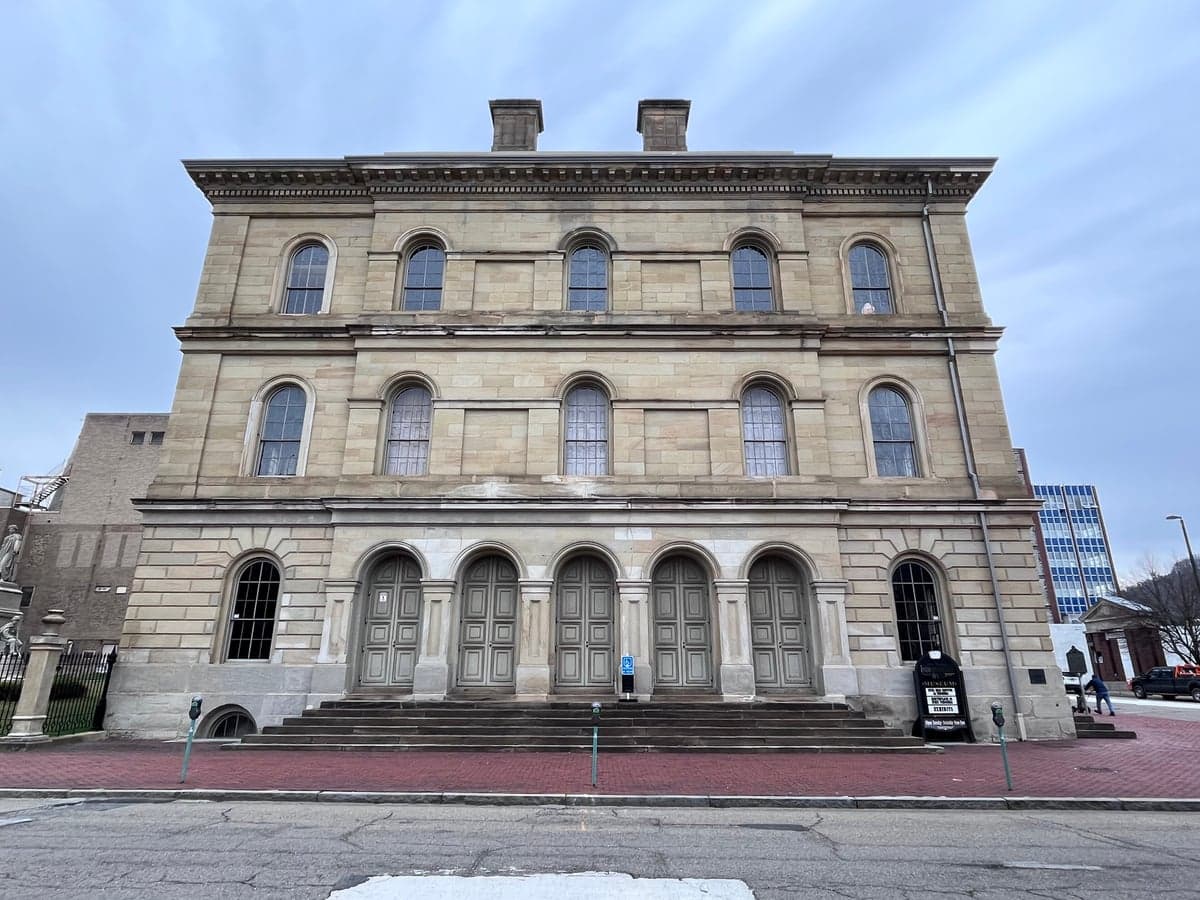
Photo: Wikipedia
Political ClimatePolitical Climate in Wheeling, WV
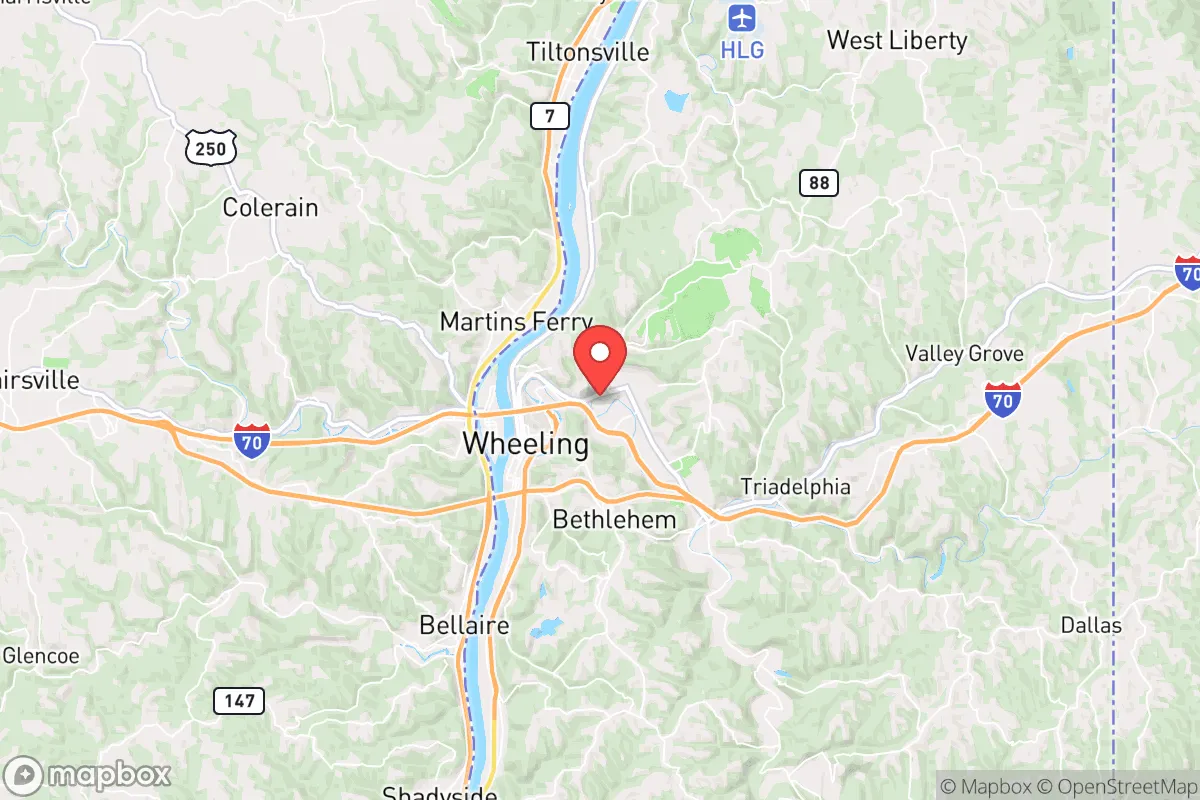
District shown is the primary district for this city’s centroid. Cities may span multiple districts.
Local Political AnalysisPolitical Analysis of Wheeling, WV
Wheeling, West Virginia, sits deep in reliably conservative territory, with a Cook PVI of R+20 that reflects decades of consistent Republican voting at the federal level. The Ohio Valley has long been a place where folks value self-reliance, local control, and a government that stays out of their business—and Wheeling is no exception. While the city itself has a more moderate history than the surrounding rural counties, the overall political trajectory has been steadily red for the past two cycles, with Trump winning Ohio County by double digits in both 2016 and 2020. That said, there are some subtle shifts happening beneath the surface that long-time residents are keeping an eye on.
How it compares
If you drive 15 minutes south to Moundsville, you’ll find an even deeper shade of red—those folks vote like it’s their civic duty to keep the government off their land. Head east toward Morgantown, and you’re in a different world entirely: a college town that leans blue, with younger voters and university staff pushing progressive policies on housing and zoning. Wheeling sits in the middle, politically speaking, but it’s not immune to the creeping influence of outside money and activist groups that try to import big-city ideas into a small-town setting. The contrast is sharpest when you look at local school board races or city council elections—Wheeling still elects conservatives, but the margins have tightened in some wards as new residents from Pittsburgh and DC bring their coastal sensibilities with them.
What this means for residents
For the average Wheeling resident, the political climate means you can generally expect low taxes, minimal red tape on property improvements, and a sheriff’s office that focuses on real crime rather than enforcing ideological mandates. The Second Amendment is still respected here—you won’t find the kind of magazine bans or waiting periods that plague states like New York or California. But there are warning signs: the city council has flirted with inclusionary zoning proposals and diversity-equity-inclusion training for public employees, which many locals see as government overreach into private business and personal beliefs. The real concern is that as Wheeling tries to attract remote workers and retirees, it might adopt policies that erode the very freedoms that make this area livable—like allowing noise ordinances to be weaponized against backyard gatherings or pushing for higher property taxes to fund pet projects.
Culturally, Wheeling still feels like a place where your word is your bond and neighbors help each other without a government program. The annual Italian Festival and the Christmas parade draw crowds that reflect the community’s traditional values—faith, family, and hard work. But there’s a quiet tension between the old guard who remember when the steel mills ran 24/7 and the newcomers who want bike lanes and artisanal coffee shops. The policy distinction that matters most is zoning: Wheeling has kept its residential areas largely free of the kind of high-density development that brings crime and traffic, but there’s pressure from developers to relax those rules. If you’re looking for a place where you can live your life without a bureaucrat telling you how to mow your lawn or what flag you can fly, Wheeling is still that place—for now. Just keep an eye on city council meetings, because the fight for local control is never really over.

State Political ClimatePolitical Climate in West Virginia
State Political AnalysisPolitical Environment in the State
West Virginia has long been one of the most reliably Republican states in the nation, but that wasn't always the case. As recently as the 1990s, it was a Democratic stronghold, but a massive realignment over the past two decades has flipped it hard red. In 2024, Donald Trump won the state by nearly 40 points, and every statewide office is held by a Republican. The dominant coalition is a mix of rural conservatives, working-class voters who abandoned the national Democratic Party over energy and cultural issues, and a growing number of out-of-state transplants seeking lower taxes and fewer restrictions. The trajectory has been a steady march rightward, with no sign of slowing down.
Urban vs. rural divide
The political map of West Virginia is starkly divided between a handful of small urban centers and the vast, deeply red rural countryside. Charleston, the capital and largest city, is the only real blue dot, with Kanawha County often voting within a few points of the national average. Morgantown, home to West Virginia University, leans left due to the academic population, but the surrounding Monongalia County is still competitive. Huntington and Wheeling are more purple but trending red as their industrial bases shrink. Outside these pockets, the state is overwhelmingly conservative. Berkeley County in the Eastern Panhandle has become a Republican stronghold, fueled by transplants from the D.C. suburbs seeking lower taxes and more space. Greenbrier County and Fayette County are reliably red, driven by coal and tourism economies. The rural-urban divide here isn't about big cities vs. farmland—it's about small towns vs. even smaller towns, with the latter dominating every election.
Policy environment
West Virginia's policy environment is aggressively conservative, especially compared to its neighbors. The state has no personal income tax on Social Security benefits, and the corporate net income tax was cut to 6.5% in 2023, with further reductions planned. Property taxes are among the lowest in the nation, capped by the state constitution at 1% of assessed value for owner-occupied homes. The regulatory posture is business-friendly, with right-to-work laws and a weak labor union presence outside of public sector workers. Education policy has shifted sharply: the state passed a universal school choice law in 2021, allowing education savings accounts for all students, and charter schools were legalized in 2019. Healthcare is a mixed bag—Medicaid expansion was accepted under the ACA, but the state has not expanded abortion access and passed a near-total ban in 2022. Election laws are strict: voter ID is required, early voting is limited to 10 days, and absentee voting requires an excuse. Governor Jim Justice, a Republican, has signed all of these measures, making the state a laboratory for conservative governance.
Trajectory & freedom
West Virginia is becoming more free in several key areas, particularly for gun owners and parents. In 2021, the state passed constitutional carry, allowing permitless concealed carry for anyone 21 or older. The same year, the legislature passed a "Second Amendment Sanctuary" resolution, though it's symbolic. On parental rights, the state enacted a Parents' Bill of Rights in 2022, requiring schools to notify parents of any medical or mental health services offered to students and to obtain consent for sex education. Medical autonomy has seen a mixed record: the state banned nearly all abortions in 2022, but also expanded telehealth access for rural residents. Property rights are strong, with no state income tax on most retirement income and a homestead exemption for seniors. However, the state has not fully embraced medical marijuana—a limited program exists but is heavily regulated. The biggest freedom concern is the state's heavy reliance on federal funding, which makes up over 40% of the budget, creating a long-term dependency that could limit future tax cuts.
Civil unrest & political movements
West Virginia has a history of labor unrest, but modern political movements are more focused on cultural issues. The 2018 teachers' strike shut down schools across the state for nine days, but it was a rare moment of left-leaning activism that hasn't been repeated. Today, the most visible movements are on the right: the West Virginia Patriot movement is active in counties like Wood County and Raleigh County, organizing around election integrity and Second Amendment rights. There have been no major sanctuary city policies—in fact, the state passed a law in 2024 banning sanctuary policies outright. Immigration politics are muted, as the state has one of the smallest foreign-born populations in the country. Election integrity controversies flared in 2020, with some local GOP officials questioning Dominion voting machines, but no major fraud was found. The most visible flashpoint for a new resident would be the ubiquitous "Don't Tread on Me" flags and pro-Trump signage, especially in rural areas. There is no serious secession or nullification rhetoric, though some counties have passed resolutions asserting local control over federal land management.
Projection
Over the next 5-10 years, West Virginia will likely become even more conservative, driven by two trends: out-migration of younger, more liberal residents and in-migration of older, wealthier conservatives from the Northeast and Mid-Atlantic. The Eastern Panhandle, particularly Jefferson County and Berkeley County, will continue to grow as D.C. refugees seek lower taxes and more space, reinforcing the state's red tilt. The coal industry will continue to decline, but the state is pivoting to natural gas and tourism, which don't carry the same political baggage. The biggest risk is demographic: the state is aging and losing population, which could strain the budget and limit future tax cuts. However, the political culture is so deeply entrenched that even a wave of new residents won't flip it blue—they'll likely be conservatives themselves. Someone moving in now should expect a state that is stable, predictable, and increasingly aligned with traditional values, but with a shrinking tax base that may force tough choices on services.
For a conservative-leaning individual or family, West Virginia offers a rare combination of low taxes, strong gun rights, and a culture that values self-reliance and community. The trade-off is a slower economy, limited job opportunities outside of energy and healthcare, and a state government that is heavily dependent on federal dollars. If you're looking for a place where your vote actually matters and your values are reflected in the laws, West Virginia is one of the safest bets in the country. Just be prepared for a slower pace of life and a population that is aging and shrinking—the freedom you gain in policy comes with a quieter, more isolated lifestyle.
* Values derived from national, state, county, city and local statistics and may differ in a specific area. Last updated: 2026-05-02T09:36:10.000Z
Narrative content on this page is AI-generated and may contain mistakes. Verify any details that matter before acting on them.
ReloMaps may earn a commission from affiliate links at no extra cost to you.

