
Photo by John Kostyk on Unsplash
Demographics of Whitehall, PA
Affluence Level in Whitehall, PA
A middle-class area roughly in line with national averages across income, home values, education, and employment.
People of Whitehall, PA
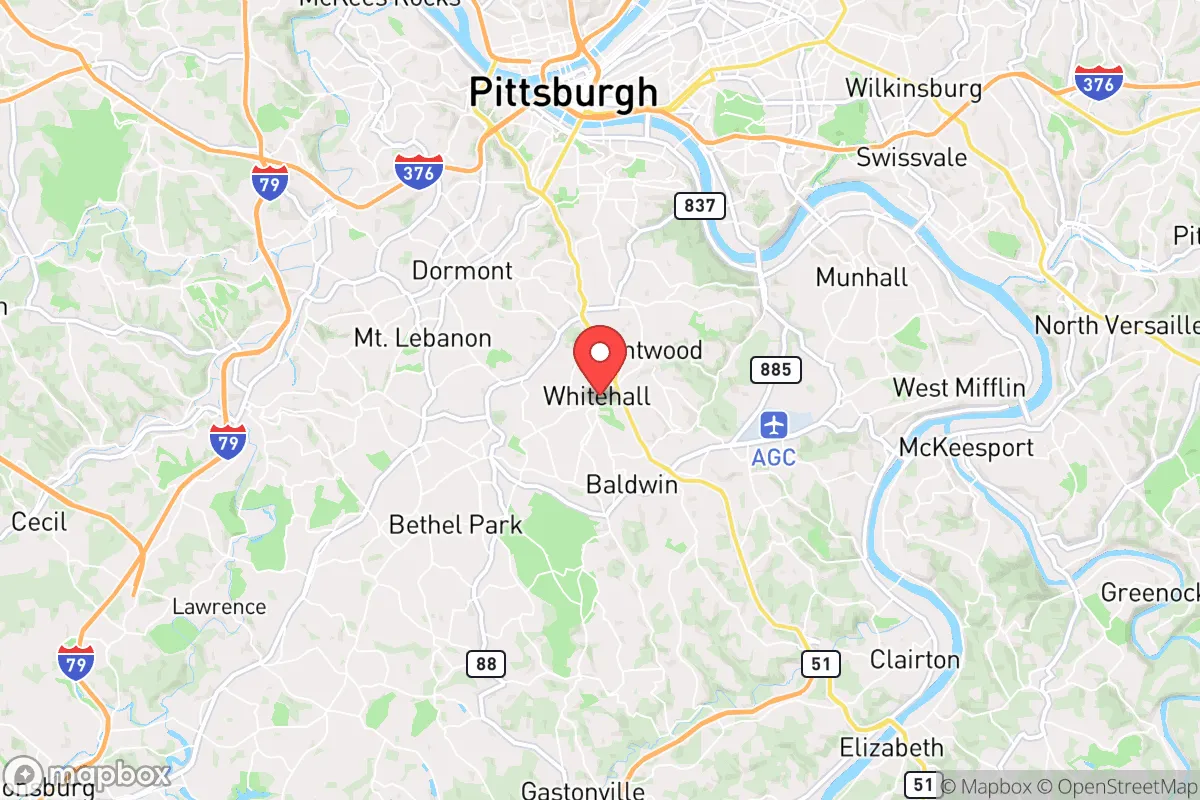
Whitehall, Pennsylvania, is a compact, densely settled borough of roughly 14,863 residents that blends historic blue-collar roots with a growing professional class. The population is predominantly White (80.6%), but the borough stands out for its substantial Indian-subcontinent community (11.9%), a group that has reshaped neighborhoods and local commerce over the past two decades. With a college-educated rate of 41.5% and a foreign-born share of 5.5%, Whitehall today is a stable, family-oriented suburb where older ethnic enclaves coexist with newer immigrant-driven growth.
How the city was settled and grew
Whitehall’s human history begins in the early 20th century, not the colonial era. The borough was incorporated in 1948 from parts of Whitehall Township, but its population base formed during the 1920s–1940s as a working-class suburb of Allentown and Bethlehem. The original settlers were largely German and Eastern European Catholics and Protestants—Pennsylvania Dutch farmers, Slovak steelworkers, and Polish laborers—drawn by jobs at Bethlehem Steel and the Lehigh Valley’s cement mills. These groups built the modest single-family homes and rowhouses that still define the Fullerton and Hokendauqua neighborhoods, where surnames like Yandrisevits and Kromer remain common. A second wave arrived after World War II, when returning GIs used VA loans to buy homes in the Mickleys and Coplay border areas, expanding the borough’s grid of tree-lined streets. By 1960, Whitehall was a nearly all-white, blue-collar town of about 12,000, anchored by local parishes and volunteer fire companies.
Modern era (post-1965)
The 1965 Hart-Cellar Act had little immediate effect on Whitehall; the borough remained overwhelmingly White through the 1980s. The first significant non-European arrivals were Indian-subcontinent professionals—doctors, engineers, and IT workers—who began moving in during the late 1990s and early 2000s, drawn by affordable housing, good schools, and proximity to Lehigh Valley Hospital and the region’s growing logistics and healthcare sectors. This community concentrated in the Strawberry Hill and West Catasauqua sections, where newer subdivisions and townhouses offered move-in-ready homes. By 2020, Indian-subcontinent residents made up roughly 12% of the population, a share that has held steady. The Black population (4.2%) and Hispanic population (1.2%) are smaller and more dispersed, with Black families concentrated in the Fullerton area near the Allentown line and Hispanic residents scattered across the borough’s older housing stock. East/Southeast Asian residents (0.3%) remain a tiny presence, mostly Korean and Vietnamese families in the Mickleys corridor. The White population has declined from over 95% in 1990 to 80.6% today, but the borough has not experienced the rapid racial turnover seen in nearby Allentown; instead, Whitehall has absorbed its diversity gradually, with Indian families integrating into the same schools, churches, and civic organizations that earlier generations built.
The future
Whitehall’s demographic trajectory points toward slow, steady diversification rather than dramatic change. The Indian-subcontinent community appears to be plateauing rather than growing rapidly, as many families are now second-generation and assimilating into the broader professional class. The White population is aging in place, with younger White families often priced out by rising home values in the $250,000–$350,000 range. The borough is not tribalizing into distinct ethnic enclaves—Indian families live alongside White neighbors in Strawberry Hill and West Catasauqua, and the public schools report no significant segregation. However, the Hispanic and Black shares are likely to grow modestly over the next decade as Allentown’s expanding Latino population pushes northward into Whitehall’s older, more affordable housing stock. The foreign-born share (5.5%) is below the national average and unlikely to spike, as the borough lacks the rental density or transit links that attract large new immigrant waves. Over the next 10–20 years, Whitehall will probably become slightly more diverse—perhaps 70–75% White, 15% Indian, 5–7% Hispanic, and 5% Black—while retaining its character as a quiet, middle-class suburb where homeownership and family stability remain the norm.
For someone moving in now, Whitehall offers a stable, low-crime environment with a noticeable Indian-subcontinent cultural presence—seen in restaurants, temples, and medical practices—but without the ethnic friction or rapid change found in larger cities. The borough is becoming a place where older white ethnic traditions and newer immigrant success stories coexist, anchored by good schools and a strong sense of local identity. It is not a melting pot in the classic sense, but a layered community where each wave has found its niche without displacing the last.

* Values derived from national, state, county, city and local statistics and may differ in a specific area. Last updated: 2026-05-01T10:55:07.000Z
Narrative content on this page is AI-generated and may contain mistakes. Verify any details that matter before acting on them.
ReloMaps may earn a commission from affiliate links at no extra cost to you.

