
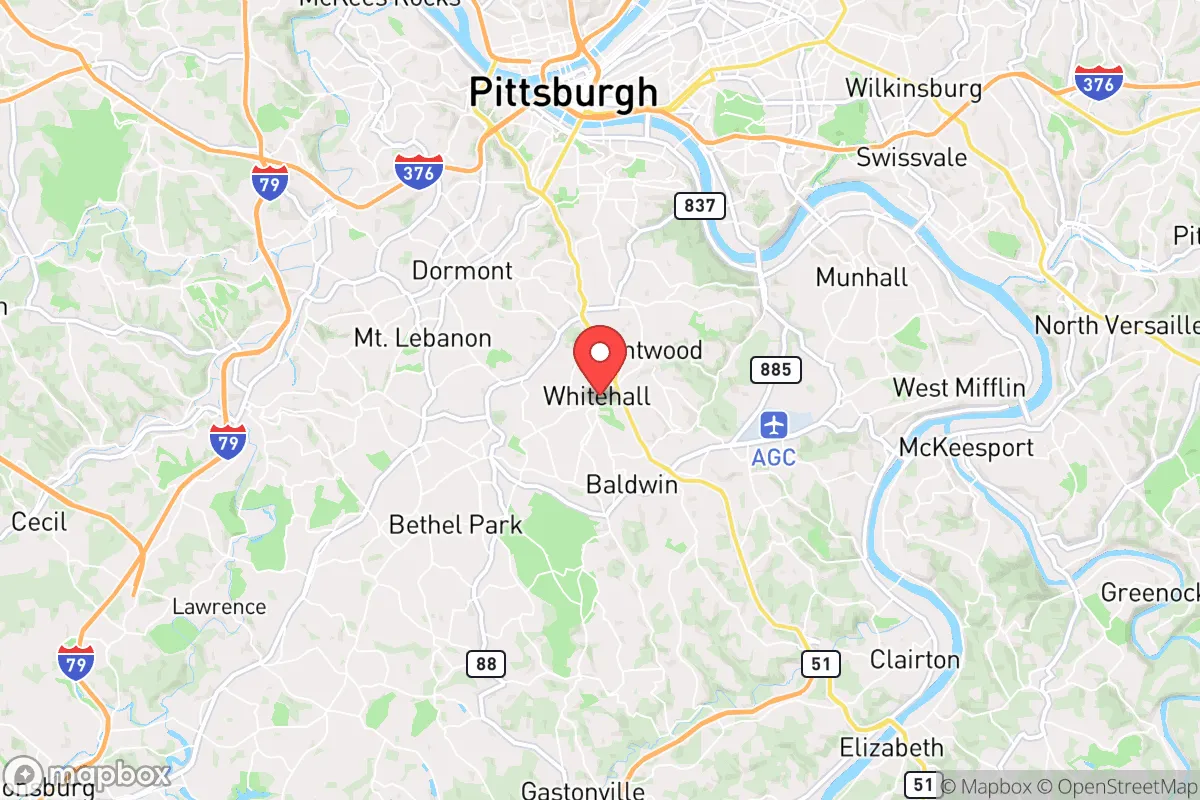
Photo by John Kostyk on Unsplash
Personal Sovereignty in Whitehall, PA
Strong independent fundamentals that actively favor personal liberty and low regulation.
What does Personal Sovereignty tell us?
Personal Sovereignty measures your capacity for self-reliance and independence with minimal government friction. Higher scores mean fewer barriers between you and the way you want to live... but it assumes you have the space you need and good neighbors.
What does this tell us?
Personal Sovereignty measures your capacity for self-reliance and independence with minimal government friction. Higher scores mean fewer barriers between you and the way you want to live... but it assumes you have the space you need and good neighbors.
State Policy
Energy independence: Net exporter (150% of energy produced in-state)
Personal Liberty
Homesteading

Personal Liberty Analysis
Whitehall, Pennsylvania, offers a mixed bag for those prioritizing personal sovereignty, but with strategic positioning, it can serve as a viable base for a self-reliant lifestyle. While the state-level framework imposes notable constraints—particularly in taxation and regulatory reach—the local environment in Lehigh County provides a degree of practical autonomy that appeals to those wary of government overreach. For the survivalist or prepper mindset, the key is understanding where the cracks in the system allow for genuine freedom, and where the state’s hand is heaviest.
Tax burden and regulatory posture: how Pennsylvania compares to neighboring states
Pennsylvania’s tax structure is a double-edged sword for the sovereignty-minded. The state levies a flat 3.07% personal income tax—one of the lowest flat rates in the Northeast—and does not tax retirement income, including Social Security, pensions, and 401(k) withdrawals. This is a significant advantage for those looking to minimize government claims on their earnings. However, property taxes in Whitehall are a different story. Lehigh County’s average effective property tax rate hovers around 1.8%, which is above the national average, and combined with local school district taxes, the total burden can feel heavy. The regulatory posture at the state level is moderate: Pennsylvania is not a right-to-work state, and it has a prevailing wage law that inflates construction costs. But for the prepper, the lack of a state-level income tax on retirement income and the relatively low sales tax (6%) mean more capital stays in your hands. Compared to New Jersey or New York, the tax climate here is a clear win, but it’s not the libertarian paradise of a no-income-tax state like Texas or Florida.
Self-defense and gun law specifics: what you need to know before moving
Pennsylvania is a shall-issue state for concealed carry, and Whitehall residents can obtain a License to Carry Firearms (LTCF) with a straightforward process—no permit required to open carry, though local ordinances may apply. The state preempts most local gun laws, meaning Whitehall cannot enact its own bans or restrictions that exceed state law. This is a critical protection against municipal overreach. No universal background checks for private sales, no registration of long guns, and no waiting periods for handgun purchases (beyond the federal NICS check). Stand-your-ground laws are in effect, and the Castle Doctrine applies to both homes and vehicles. For the survivalist, this is a solid legal foundation. However, be aware that Pennsylvania does have a firearm storage law that could be used against you if a minor gains access to an unsecured weapon. Also, the state’s Uniform Firearms Act prohibits carrying in certain locations like courthouses and schools, but these are standard restrictions. Overall, Whitehall sits in a county where sheriff’s office attitudes toward permits are generally pro-Second Amendment, and the legal environment supports self-defense without excessive bureaucratic hurdles.
Self-reliance and homesteading viability: lot sizes, zoning, and off-grid feasibility
Whitehall is a suburban township with a mix of older homes on smaller lots and newer developments on larger parcels. The typical residential lot size ranges from 0.25 to 0.5 acres, which limits large-scale homesteading but still allows for substantial gardening, small livestock (chickens are permitted in many areas), and rainwater collection. Zoning is the primary constraint: the township’s code restricts agricultural uses, and you’ll need to check specific districts for allowances on goats, bees, or larger animals. Off-grid feasibility is limited by building codes that require connection to municipal water and sewer in most developed areas. However, the surrounding Lehigh County countryside—just a 10-15 minute drive—opens up properties with 2-5 acre lots where more serious self-reliance is possible. For the prepper, Whitehall itself is best viewed as a staging ground: good for a suburban retreat with a garden and a workshop, but not for full off-grid living. The real opportunity lies in buying land in the more rural townships to the north and west, where zoning is looser and building codes less intrusive. Solar panels are permitted, but net metering rules are state-controlled and generally favorable. Water rights are tied to the property, and well drilling is possible on larger parcels.
Personal liberties: parental rights, medical autonomy, speech, and property
Pennsylvania has a mixed record on personal liberties that directly affect the sovereignty-minded. Parental rights are protected under state law, with a strong presumption that parents have the right to direct their children’s education, medical care, and religious upbringing. The state does not have a universal vaccine mandate for schoolchildren, though certain vaccines are required for attendance with opt-out provisions for medical, religious, or philosophical reasons. This is a meaningful win for those concerned about medical autonomy. On medical freedom, Pennsylvania is not a leader: it has not passed broad right-to-try legislation beyond federal standards, and the state’s health department has significant authority during public health emergencies. The COVID-era restrictions were moderate compared to blue states, but still intrusive. Free speech is protected under the First Amendment, and Whitehall has no local ordinances that restrict political expression or assembly beyond standard time-place-manner rules. Property rights are generally respected, but eminent domain is a concern: the state’s redevelopment authorities have used it for private development projects in the past, though this is rare in Whitehall specifically. The biggest threat to property sovereignty is the township’s zoning code, which can be restrictive for home-based businesses or alternative housing like tiny homes or RVs. For the prepper, the key is to buy in an area with minimal HOA restrictions and to understand the township’s nuisance ordinances, which can be used against visible preparedness activities like stockpiling or defensive landscaping.
Overall sovereignty relative to other areas: a strategic assessment
Whitehall offers a moderate-to-strong sovereignty profile when compared to the rest of the Northeast. It beats New Jersey, New York, and Maryland on nearly every metric: lower taxes, better gun laws, and fewer restrictions on personal conduct. It falls short of states like New Hampshire, Idaho, or Texas, where income tax is zero and regulatory burdens are lighter. For the conservative-leaning individual or family looking to relocate, Whitehall is a pragmatic choice—it’s not a freedom haven, but it’s a defensible position in a region that is otherwise hostile to self-reliance. The real advantage is proximity to rural escape routes and the ability to leverage Pennsylvania’s relatively strong property rights and gun laws while still having access to jobs and infrastructure. If you’re willing to navigate the zoning and tax landscape, Whitehall can be a solid base for building a life that minimizes government interference. Just don’t expect to go fully off-grid within the township limits—that requires a move to the surrounding countryside, which is only a short drive away.

* Values derived from national, state, county, city and local statistics and may differ in a specific area. Last updated: 2026-05-01T10:55:07.000Z
Narrative content on this page is AI-generated and may contain mistakes. Verify any details that matter before acting on them.
ReloMaps may earn a commission from affiliate links at no extra cost to you.

