
Photo by John Kostyk on Unsplash
Political ClimatePolitical Climate in Whitehall, PA
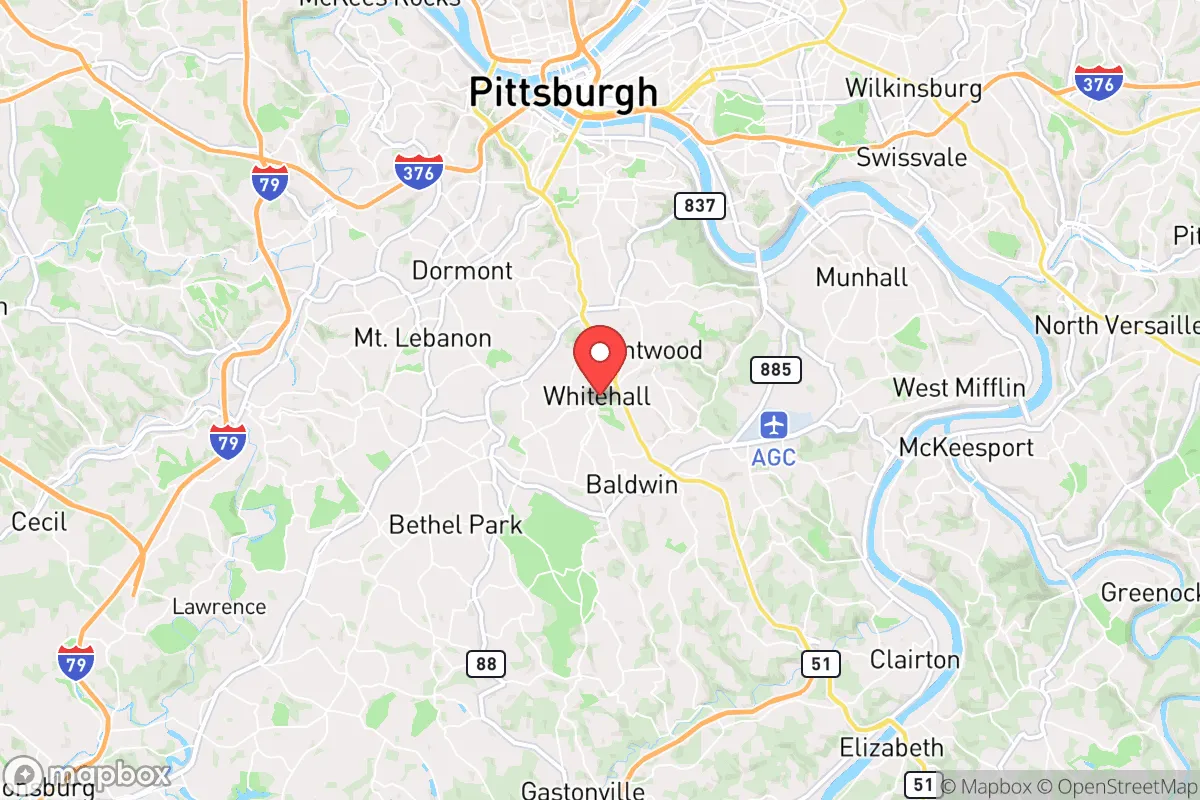
District shown is the primary district for this city’s centroid. Cities may span multiple districts.
Local Political AnalysisPolitical Analysis of Whitehall, PA
Whitehall, Pennsylvania, has a Cook PVI of D+10, meaning it leans significantly more Democratic than the nation as a whole, and that shift has been pretty noticeable over the last decade or so. It wasn't always this way—this used to be a solidly working-class, blue-collar area where folks voted for the person, not the party, and you'd see a lot of split-ticket voting. But lately, the political winds have blown hard left, and a lot of us who’ve lived here for years are watching the local government get more comfortable with policies that feel like they’re creeping into our personal lives, from zoning rules to school mandates.
How it compares
If you drive ten minutes north to Allentown, you’ll find a similar D+12 vibe, but it’s even more urban and progressive—think higher taxes and more aggressive social programs. Head west to Emmaus or Macungie, and you’ll hit towns that are still pretty red, with a lot of folks who keep their politics to themselves and value low regulation. The contrast is stark: in Whitehall, you’ll see more yard signs for progressive candidates, and the school board has been pushing curriculum changes that raise eyebrows among parents who just want their kids to learn the basics without the political baggage. Surrounding Lehigh County as a whole is purple-ish, but Whitehall is a real outlier—it’s become a hub for the kind of top-down decision-making that makes you wonder if the people in charge trust us to run our own lives.
What this means for residents
For the average family here, the political tilt means you’re dealing with more local ordinances that feel like overreach—things like stricter noise complaints, tighter leash laws, and a growing list of permits for simple home repairs. The tax burden has crept up, too, because the county keeps adding programs that sound good on paper but hit your wallet hard. If you value personal freedom—like the right to modify your property without a committee’s approval or to opt your kid out of certain school activities without a fight—you’ll find yourself butting heads with the local bureaucracy more often than you’d like. The long-term trend is concerning: as the area gets younger and more transient, the voting base shifts toward folks who are fine with more government involvement in daily life, and that’s a tough thing to reverse once it’s baked into the system.
Culturally, Whitehall still has its roots in the old Pennsylvania Dutch and Eastern European immigrant communities, where self-reliance and minding your own business were the unwritten rules. But you can feel that fading. The local government has started pushing initiatives like complete streets and equity audits that sound harmless but often come with new fees and compliance headaches. The school district, for instance, has adopted policies that prioritize social-emotional learning over core academics, and parents who push back are often labeled as troublemakers. If you’re looking for a place where the government stays out of your way and lets you live as you see fit, Whitehall might feel like it’s slowly slipping away from that ideal. The next few election cycles will tell us whether this is a permanent shift or just a phase, but for now, it’s a place where you need to keep an eye on the ballot box if you want to protect your personal freedoms.

State Political ClimatePolitical Climate in Pennsylvania
State Political AnalysisPolitical Environment in the State
Pennsylvania has long been the quintessential swing state, but over the past decade it has shifted from a classic purple battleground to a state where the urban-rural divide is sharper than ever, with the commonwealth now leaning slightly Democratic in statewide elections due to the sheer weight of Philadelphia and its suburbs. The 2020 and 2024 presidential cycles saw margins of less than 2 points, but the underlying coalition has changed: Democrats now rely almost entirely on the southeastern corridor and a few mid-sized cities, while the vast rural and exurban expanse has become deeply Republican. For a conservative considering relocation, the state offers a mixed bag—strong Second Amendment protections and low property taxes in many counties, but a growing progressive policy machine in Harrisburg that is pushing higher taxes, energy restrictions, and education mandates.
Urban vs. rural divide
The political map of Pennsylvania is essentially two states. The southeastern quadrant—Philadelphia, its collar counties (Montgomery, Delaware, Chester, Bucks), and the Lehigh Valley (Allentown, Bethlehem, Easton)—delivers roughly 40% of the state’s vote and is overwhelmingly Democratic. Philadelphia itself is a deep-blue city where progressive prosecutors and a powerful municipal union machine dominate. In contrast, the vast central and northern tier—places like Tioga, Potter, Bradford, and Lycoming counties—routinely vote 70-80% Republican. The southwestern corner, anchored by Pittsburgh, is more nuanced: Allegheny County is blue, but the surrounding coal and gas counties (Washington, Greene, Westmoreland) have trended hard red. The key battlegrounds are the “collar counties” around Philadelphia, which flipped from red to blue between 2000 and 2020, and the old industrial towns like Scranton and Wilkes-Barre in the northeast, which are now competitive but leaning Republican as union loyalty fades. A conservative moving to Pennsylvania should understand that your vote and your local government’s character depend almost entirely on whether you choose a rural township or a suburban Philadelphia school district.
Policy environment
Pennsylvania’s state-level policy is a tug-of-war between a Republican-controlled state Senate and a Democratic governor (Josh Shapiro, elected 2022) and state House. The tax structure is relatively friendly: the state personal income tax is a flat 3.07%, one of the lowest flat rates in the nation, and the state sales tax is 6% (no tax on clothing or groceries). Property taxes vary wildly—rural counties like Juniata or Perry have effective rates around 1.2%, while Philadelphia and some suburban districts push 2.0% or higher. The regulatory posture is mixed: Pennsylvania is a major natural gas producer (Marcellus Shale), and the industry faces a moderate regulatory burden, but the Shapiro administration has proposed a carbon tax and stricter methane rules. Education policy is a flashpoint: the state funds schools through local property taxes, leading to massive disparities, and a 2023 court ruling declared the system unconstitutional, which could lead to a statewide property tax hike. Election laws are relatively stable—no-excuse mail-in voting was enacted in 2019 and survived a court challenge—but voter ID requirements are minimal (first-time voters must show ID, but no photo ID is required for regular voting). For a conservative, the biggest red flag is the growing influence of the Philadelphia Democratic machine on statewide policy, particularly on energy and education.
Trajectory & freedom
Over the last five years, Pennsylvania has seen a clear erosion of certain personal liberties, particularly in the areas of medical freedom and parental rights. In 2021, the state legislature passed Act 66, which expanded mail-in voting and made it easier to vote without ID, a move many conservatives view as a weakening of election integrity. On the medical front, Governor Shapiro issued an executive order in 2023 protecting access to gender transition procedures for minors, overriding parental consent laws that some counties had attempted to pass. Gun rights remain relatively strong—Pennsylvania is a “shall issue” state for concealed carry, and there is no state-level assault weapons ban or magazine capacity limit—but Philadelphia and Pittsburgh have passed their own local gun ordinances, which are currently being litigated. Property rights are generally respected, but the state’s Act 13 (2012), which limited local zoning restrictions on oil and gas drilling, was partially struck down by the state Supreme Court, giving municipalities more power to ban fracking. The trajectory is concerning: the Democratic trifecta in the executive and House is pushing for a state-level carbon tax, expanded background checks on private gun sales, and a “clean slate” criminal justice reform that reduces penalties for certain offenses. A conservative moving here should expect the policy pendulum to swing left as long as Philadelphia and its suburbs continue to grow in population and political influence.
Civil unrest & political movements
Pennsylvania has seen its share of political flashpoints. The 2020 election aftermath was particularly intense in Philadelphia, where Republican poll watchers alleged irregularities and the city’s counting process was criticized for lack of transparency. This led to a wave of election integrity activism in rural counties, with several counties (including Tioga and Franklin) passing resolutions calling for a forensic audit of the 2020 results. In 2022, a conservative activist group called “Pennsylvania Stands Up” organized protests against vaccine mandates and school closures, drawing thousands to the state capitol in Harrisburg. Immigration politics are less visible than in border states, but Philadelphia’s sanctuary city policy (enacted in 2017) has been a persistent source of tension, with the state legislature passing a bill in 2023 to withhold state funds from sanctuary cities—only to have it vetoed by Governor Shapiro. The most visible movement on the right is the growing “Second Amendment sanctuary” movement: over 40 counties have passed resolutions declaring themselves sanctuaries from state or federal gun laws they deem unconstitutional. On the left, the “Moms for Liberty” counter-movement has been active in school board races in Bucks and Chester counties, fighting against critical race theory and LGBTQ curriculum. A new resident will notice that political signs and flags are ubiquitous in rural areas, and that local township meetings can be surprisingly contentious, especially over land use and school policies.
Projection
Over the next 5-10 years, Pennsylvania is likely to become more polarized, with the southeastern corridor continuing to grow and the rural population slowly declining. The 2020 census showed that Philadelphia and its suburbs gained population while most rural counties lost residents, a trend that will only accelerate as remote work allows more people to move to the state’s few urban centers. This demographic shift means that statewide elections will likely remain Democratic-leaning, but the state legislature will stay Republican due to gerrymandered districts (though a 2022 redistricting gave Democrats a fairer map). The biggest wildcard is the energy transition: if the state imposes a carbon tax or strict methane regulations, the natural gas industry in the southwest and north-central regions could collapse, devastating local economies and accelerating rural depopulation. On the cultural front, expect continued battles over school curriculum, parental rights, and transgender policies, with the state Supreme Court (currently 5-2 Democratic) likely to rule against conservative local ordinances. A conservative moving to Pennsylvania now should expect to live in a state where your local community may reflect your values, but the state government in Harrisburg will increasingly push policies you oppose. The best bet for a conservative is to choose a rural or exurban county with strong local governance and low property taxes, and to get involved in township and school board elections to preserve local control.
Bottom line for a new resident: Pennsylvania is a state of stark contrasts—you can find a low-tax, gun-friendly, conservative community in the northern tier or the southwest, but you will be living under a state government that is trending left on energy, education, and election laws. If you value local control and are willing to fight for it at the township and county level, Pennsylvania can still offer a good quality of life. But if you want a state where the entire government shares your values, you may want to look further west. The key is to choose your county carefully—places like Butler County (north of Pittsburgh), York County (south of Harrisburg), or Bradford County (in the northern tier) offer a much different political reality than Philadelphia or its inner suburbs. Just know that the state-level headwinds are real, and they are not going away.
* Values derived from national, state, county, city and local statistics and may differ in a specific area. Last updated: 2026-05-01T10:55:07.000Z
Narrative content on this page is AI-generated and may contain mistakes. Verify any details that matter before acting on them.
ReloMaps may earn a commission from affiliate links at no extra cost to you.

