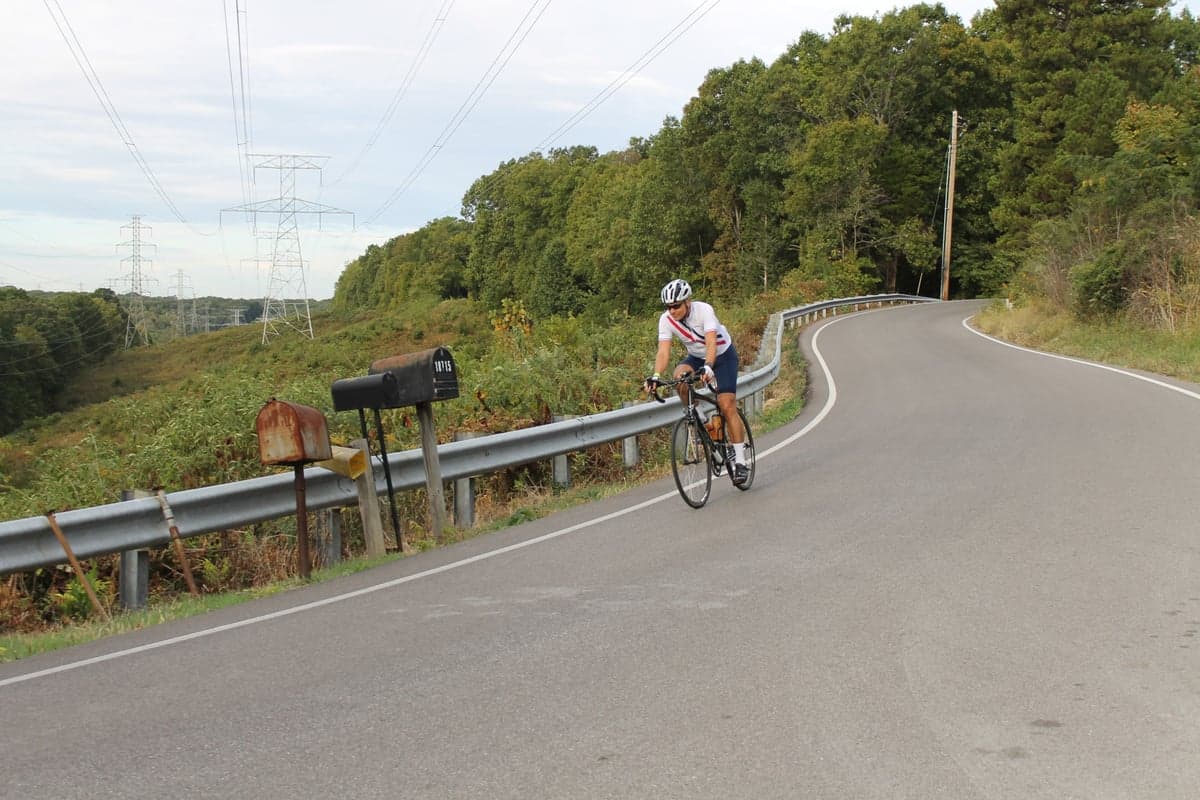
Photo: Wikipedia
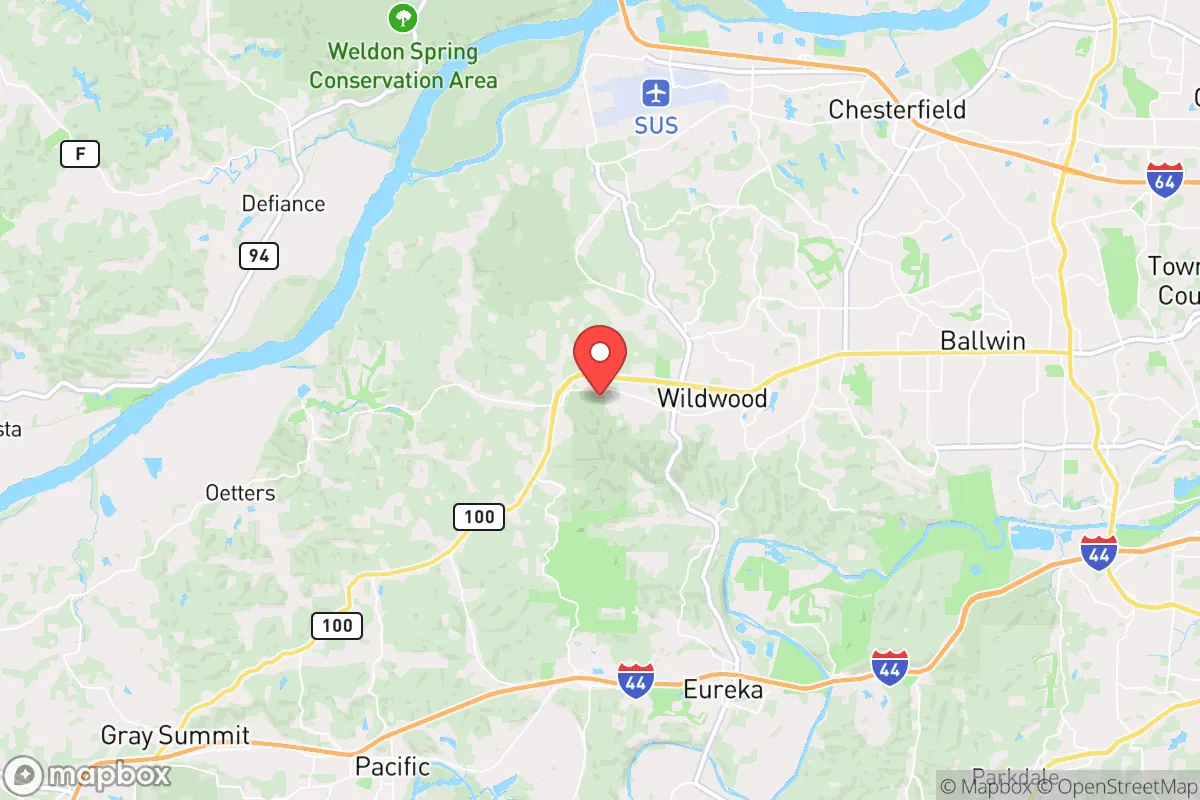
Personal Sovereignty in Wildwood, MO
Strong independent fundamentals that actively favor personal liberty and low regulation.
What does Personal Sovereignty tell us?
Personal Sovereignty measures your capacity for self-reliance and independence with minimal government friction. Higher scores mean fewer barriers between you and the way you want to live... but it assumes you have the space you need and good neighbors.
What does this tell us?
Personal Sovereignty measures your capacity for self-reliance and independence with minimal government friction. Higher scores mean fewer barriers between you and the way you want to live... but it assumes you have the space you need and good neighbors.
State Policy
Energy independence: Importer (15% of energy produced in-state)
Personal Liberty
Homesteading

Personal Liberty Analysis
Wildwood, Missouri, offers a notably high degree of personal sovereignty for those prioritizing autonomy, particularly when compared to the regulatory density of nearby St. Louis County or the coastal states many relocating families are leaving. The city’s governance model leans heavily on local control and property rights, creating an environment where self-reliance is not just tolerated but structurally enabled. For the survivalist or prepper mindset, the key question isn’t whether the state will leave you alone—it’s whether the local zoning and tax code will let you build the life you want without bureaucratic friction. The answer here is largely yes, with specific caveats around suburban density and county-level ordinances that reward due diligence.
Tax burden and regulatory posture: how much the state takes and how much it interferes
Missouri’s overall tax climate is a significant draw for those seeking to keep more of their earnings and reduce government footprint in daily life. The state levies a flat income tax rate of 4.95% as of 2026, with no progressive brackets that penalize higher earners or small business owners. Property taxes in Wildwood are moderate, typically landing between 0.8% and 1.1% of assessed value, which is well below the national average and far less than what you’d face in Illinois or California. The city itself imposes no additional municipal income tax, and sales tax in Wildwood hovers around 8.1%—reasonable for the region. On the regulatory front, Missouri is a right-to-work state, meaning union membership cannot be forced as a condition of employment, and it has some of the loosest occupational licensing requirements in the country. This translates to fewer barriers for starting a home-based business, offering firearm training, or running a small-scale trade operation from your property. The state’s general posture is one of “leave us alone,” and Wildwood’s local government largely mirrors that ethos, though you’ll still need to navigate standard building permits and HOA covenants in certain subdivisions.
Self-defense and gun law specifics: what you can own, carry, and do without permission
Missouri is a constitutional carry state, meaning no permit is required to carry a concealed firearm for anyone legally allowed to possess a gun. Wildwood residents enjoy this right without additional local restrictions—the city does not impose its own gun control ordinances beyond state law. You can own standard-capacity magazines, suppressors (with a federal tax stamp), and any rifle or pistol not banned by federal law. Stand-your-ground laws are fully in effect: there is no duty to retreat before using deadly force if you are lawfully present and reasonably believe force is necessary to prevent death, great bodily harm, or a forcible felony. Castle doctrine protections extend to your home, vehicle, and occupied structure. For preppers, this means you can maintain a robust personal armory without worrying about local registration, waiting periods, or “assault weapon” bans that plague states like New York or California. The only practical limitation is that discharging a firearm within Wildwood city limits is restricted except on designated shooting ranges or in lawful self-defense, so you’ll need to plan for training off-site or in a rural county property.
Self-reliance and homesteading viability: lot sizes, zoning, and off-grid feasibility
Wildwood’s zoning is a mixed bag for serious homesteaders, but the potential is there if you choose the right parcel. The city was designed with large-lot zoning as a core principle—minimum lot sizes in many residential districts are one to three acres, with some areas allowing five-acre or larger tracts. This immediately gives you room for a substantial garden, small livestock (chickens, goats, rabbits), and rainwater catchment systems. The city code explicitly permits “agricultural uses” on parcels of three acres or more, including the keeping of horses, cattle, and other farm animals. However, off-grid living faces hurdles: the county requires connection to a septic system (no composting toilets without a variance), and while solar panels are allowed, you cannot legally disconnect from the electrical grid unless you meet strict self-generation and backup requirements. Rainwater collection is unrestricted, and you can drill a well on most properties. For the prepper, the sweet spot is a three-to-five-acre lot in the western part of Wildwood, near the Meramec River corridor, where you can achieve meaningful food production and water independence while still being 30 minutes from St. Louis for supply runs. The city’s comprehensive plan is generally supportive of “rural character,” so you won’t face the kind of suburban HOA tyranny that bans clotheslines or vegetable gardens.
Personal liberties: parental rights, medical autonomy, speech, and property
Missouri has become a stronghold for parental rights in education. Parents have explicit statutory authority to review all instructional materials, opt their children out of any curriculum they find objectionable, and are guaranteed a role in school district decisions. Wildwood is served by the Rockwood School District, which, despite being a large suburban system, has generally respected these state-level protections. Medical autonomy is more complex: Missouri does not have a state-level vaccine mandate for adults, but certain employers and healthcare facilities may require them. The state passed a law in 2022 prohibiting COVID-19 vaccine mandates for public employees and students, and it has a broad religious exemption statute for other immunizations. For those concerned about medical privacy, Missouri’s health records laws are standard, but the state does not have a specific “right to try” law for experimental treatments beyond the federal framework. Free speech protections are robust—Missouri is not a “hate speech” state, and public expression, including political signage on your property, is broadly protected. Property rights are a standout: Missouri has strong eminent domain protections, requiring “public use” (not just “public benefit”) for takings, and Wildwood’s zoning board is known for being responsive to property owners rather than developers. You can build fences, outbuildings, and workshops without excessive red tape, provided you stay within setback and height limits.
Overall, Wildwood ranks among the more sovereignty-friendly suburbs in the Midwest for those who value personal autonomy over convenience. The combination of constitutional carry, low taxes, large-lot zoning, and strong parental rights creates a foundation for self-reliant living that is increasingly rare in metropolitan areas. The trade-offs are real: you’re still within a county that has some urban-style regulations on noise, waste disposal, and building codes, and you won’t find the total freedom of rural Montana or Idaho. But for a strategic relocation that balances proximity to infrastructure with a high degree of personal control, Wildwood offers a solid middle ground—one where the government’s default answer to most questions is “yes, unless there’s a clear safety reason not to.” That’s a posture worth serious consideration for anyone looking to build a resilient, independent life in an uncertain future.

* Values derived from national, state, county, city and local statistics and may differ in a specific area. Last updated: 2026-04-29T19:23:09.000Z
Narrative content on this page is AI-generated and may contain mistakes. Verify any details that matter before acting on them.
ReloMaps may earn a commission from affiliate links at no extra cost to you.

