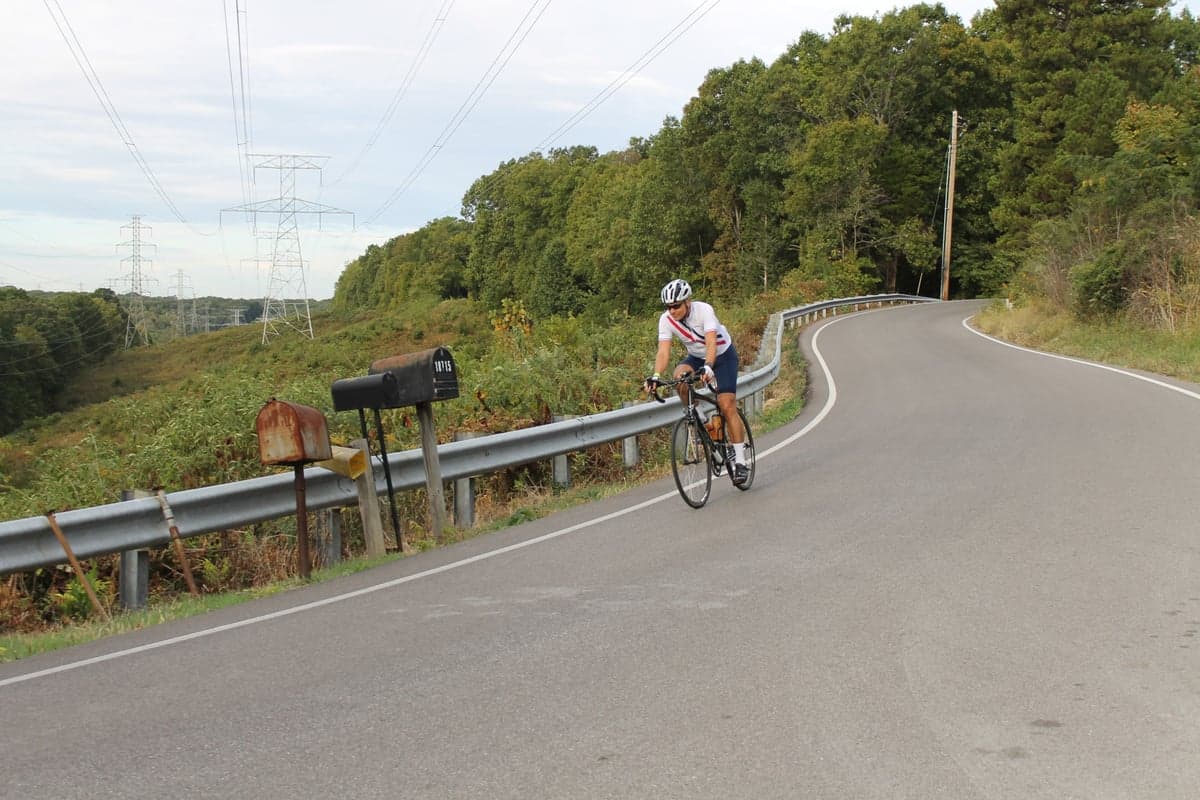
Photo: Wikipedia
Strategic Assessment of Wildwood, MO
Workable tactical position. Some exposure to population density or targets, but generally defensible in a crisis.
What does the Strategic Assessment tell us?
Our Strategic Assessment grades tactical survivability of an area. Major population centers, military targets, fallout zones, natural disasters, and border exposure all drive risk — lower exposure means a more defensible position in a crisis.
This is heavily inspired by Joel Skousen's Strategic Relocation book. Highly recommended you checkout the book ($)What does this tell us?
Our Strategic Assessment grades tactical survivability of an area. Major population centers, military targets, fallout zones, natural disasters, and border exposure all drive risk — lower exposure means a more defensible position in a crisis.
This is heavily inspired by Joel Skousen's Strategic Relocation book. Highly recommended you checkout the book ($)Strategic Pillars

Key Distances
Regional Safe Places
Below is our recommended "safe zones" in Missouri and the surrounding area based on our strategic heuristics. For most people, it's unrealistic to live in a “safe zone” full-time due to work, family or other personal reasons. They tend to be more rural. However, many of these areas are perfect for second homes and retreat properties that double as a vacation home or even a short-term rental.


Important Note: For informational purposes only. This does not mean nothing bad ever happens in the green zones. Please use common sense. This is based on public data and modeled with AI. We tried to take a conservative approach but mistakes happen. We update this regularly as new information becomes available.
Solar Generator Recommendations
Backup power matters more here than in safer locations. We've picked three solar generators across budgets and capacity tiers — start with the budget unit if you only need a few essentials, or step up if you want to run a fridge and HVAC for days at a time.

Jackery Portable Power Station Explorer 300
Budget OptionPower on the Go: Weighing only 11 lbs, it's convenient to set up and store with book-sized foldable solar panels

BLUETTI Portable Power Station AC180
Designed for both indoor and outdoor scenarios, AC180 is highly capable as it has a robost capacity and continuous output power.

EF ECOFLOW DELTA Pro Ultra Power Station
Upgraded PickEcoFlow DELTA Pro Ultra is a whole-home energy system designed to grow with your family. Integrated with the Smart Home Panel 2, it scales to meet your evolving energy needs — keeping your home powered, intelligent, and secure through every stage of life.
We earn a commission, at no additional cost to you.
Strategic Assessment Analysis
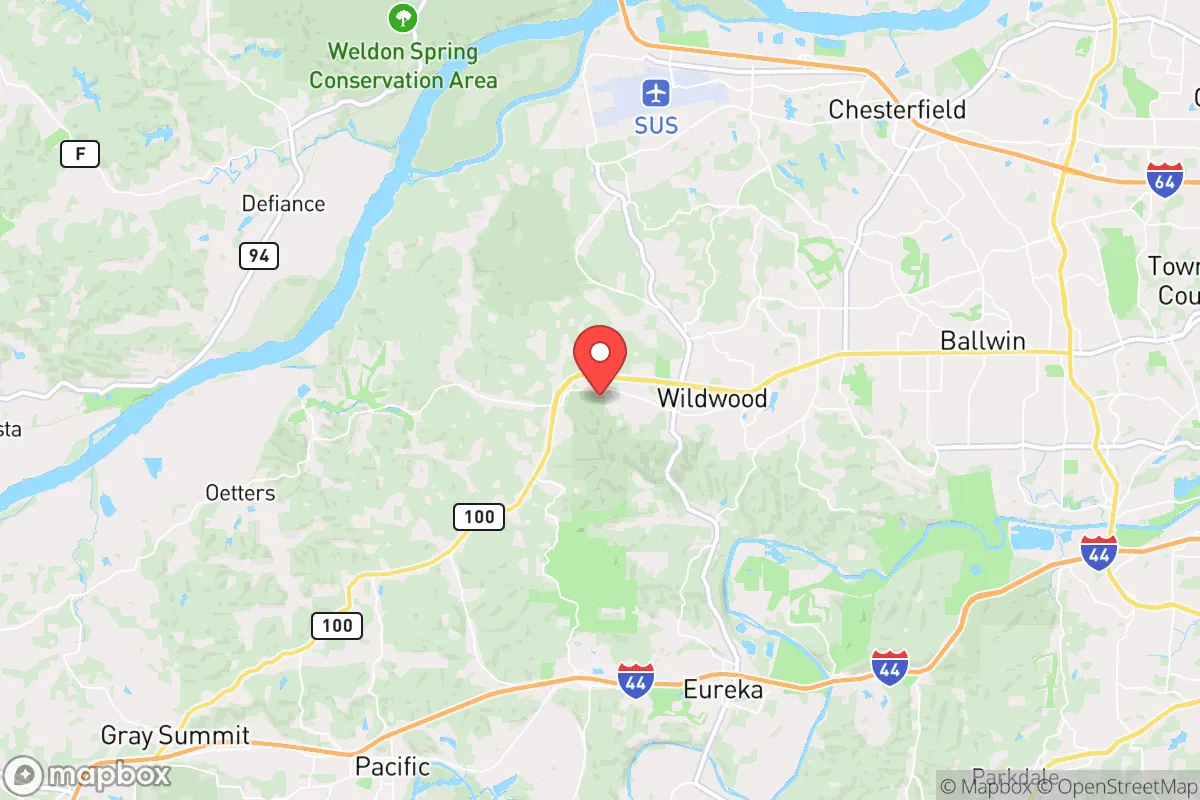
Wildwood, Missouri, offers a compelling strategic position for those prioritizing resilience, sitting roughly 30 miles west of downtown St. Louis in a corridor that blends suburban infrastructure with rural buffer zones. Its location on the western edge of the St. Louis metro area provides a critical advantage: you are close enough to access regional resources, medical centers, and supply chains, yet far enough from the urban core to avoid the worst of civil unrest, gridlock, or a mass casualty event’s immediate fallout. The city’s layout—winding roads, wooded lots, and low-density zoning—was designed for privacy and space, not for crowds, which aligns directly with a prepper’s need for defensibility and low profile.
Geographic position and natural advantages for long-term security
Wildwood sits atop the rolling hills of the Missouri Ozark border region, a landscape that naturally discourages large-scale movement and provides excellent vantage points. The area is part of the Meramec River watershed, with numerous creeks and springs that offer reliable water sources—a critical factor for any long-term survival scenario. The local geology is primarily limestone and dolomite, which means good drainage and stable ground for building underground storage or bunkers. Unlike flood-prone river bottoms, Wildwood’s elevation (averaging 800–900 feet) keeps it safe from the kind of catastrophic flooding that has devastated parts of Missouri in recent years. The surrounding Mark Twain National Forest and numerous conservation areas (like Rockwoods Reservation and Babler State Park) create a natural buffer zone, making it harder for large groups to approach unnoticed and providing a ready source of game, timber, and forage. For a relocator, this geography means you are not just buying a house—you are buying a position that is inherently harder to overrun or isolate.
Risks, exposures, and proximity to fallout-relevant landmarks
No location is perfect, and Wildwood has specific vulnerabilities that a strategic relocator must account for. The most obvious risk is its proximity to St. Louis—a major city that has experienced significant civil unrest, including the 2014 Ferguson riots and 2020 protests that turned violent. In a mass casualty event or societal breakdown, St. Louis could become a source of refugees, looters, or organized groups moving west along I-44 and I-64. Wildwood is directly in that path, with I-44 running just south of the city and I-64 (US-40) to the north. These highways are double-edged swords: they give you quick access to supplies now, but they also create a funnel for trouble later. Additionally, the St. Louis area hosts several high-value targets: Lambert International Airport, major rail yards, the Anheuser-Busch brewery, and multiple chemical plants along the Mississippi River. A coordinated attack or EMP event could cripple these facilities, creating secondary hazards like chemical releases or supply chain collapse. Wildwood is far enough to avoid the blast radius of a conventional strike, but close enough to feel the ripple effects of a regional disaster. The city’s own infrastructure—power lines, water treatment, and internet—is tied to the St. Louis grid, meaning a city-wide failure would hit Wildwood within hours.
Practical resilience for a relocator: food, water, energy, and defensibility
For the individual or family looking to hunker down, Wildwood’s practical resilience is above average for a suburban area but requires deliberate preparation. Water is the biggest win: the Meramec River and its tributaries (like the Bourbeuse and Big River) are within a 15-minute drive, and many properties have private wells. The city’s zoning allows for rainwater catchment and small-scale agriculture, so you can legally set up a cistern and a garden without drawing attention. Food-wise, the local soil is decent for vegetables, and the surrounding forests support deer, turkey, and small game. There are also several local farms and farmers’ markets (e.g., Wildwood Farmers Market) that can serve as supply lines before things go south. Energy is the weak point: the grid is above-ground and vulnerable to storms, ice, and sabotage. Solar panels are a viable option, but the area’s tree cover means you’ll need a clearing or a ground-mounted array. Propane tanks and generators are common among locals, and there are no HOA restrictions that outright ban them in most subdivisions. Defensibility is where Wildwood shines: the winding, dead-end roads and large lots (many 1–5 acres) make it easy to control access. A single vehicle checkpoint on a private road can stop a column of vehicles. The community is also relatively homogeneous and family-oriented, which means neighbors are more likely to band together than to turn on each other—a factor that cannot be overstated in a collapse scenario. However, do not mistake this for a rural fortress; you are still in a suburb, and a determined group with vehicles can reach you. The key is to build relationships with nearby landowners and establish a mutual defense plan before trouble arrives.
The overall strategic picture for Wildwood is one of calculated risk. It is not a remote survivalist compound—you are within an hour of a major city that could become a death trap in a crisis. But that proximity also gives you access to medical care, hardware stores, and supply chains that a truly isolated location lacks. For a conservative-leaning relocator who wants to be prepared without going off-grid entirely, Wildwood offers a balance: enough space to store supplies and grow food, enough distance to avoid the initial chaos, and enough community to form a defense network. The real threat is not the location itself, but the complacency that comes with living in a quiet suburb. If you treat Wildwood as a base to be hardened—stockpiling water, installing solar, securing your perimeter, and knowing your neighbors—it can serve as a solid fallback position. If you treat it as just another safe suburb, you will be caught flat-footed when the power goes out and the roads fill with people fleeing the city. The choice is yours, but the geography is already in your favor.

* Values derived from national, state, county, city and local statistics and may differ in a specific area. Last updated: 2026-04-29T19:23:09.000Z
Narrative content on this page is AI-generated and may contain mistakes. Verify any details that matter before acting on them.
ReloMaps may earn a commission from affiliate links at no extra cost to you.

