
Photo: Wikipedia
Personal Sovereignty in Williamsport, PA
Strong independent fundamentals that actively favor personal liberty and low regulation.
What does Personal Sovereignty tell us?
Personal Sovereignty measures your capacity for self-reliance and independence with minimal government friction. Higher scores mean fewer barriers between you and the way you want to live... but it assumes you have the space you need and good neighbors.
What does this tell us?
Personal Sovereignty measures your capacity for self-reliance and independence with minimal government friction. Higher scores mean fewer barriers between you and the way you want to live... but it assumes you have the space you need and good neighbors.
State Policy
Energy independence: Net exporter (150% of energy produced in-state)
Personal Liberty
Homesteading

Personal Liberty Analysis
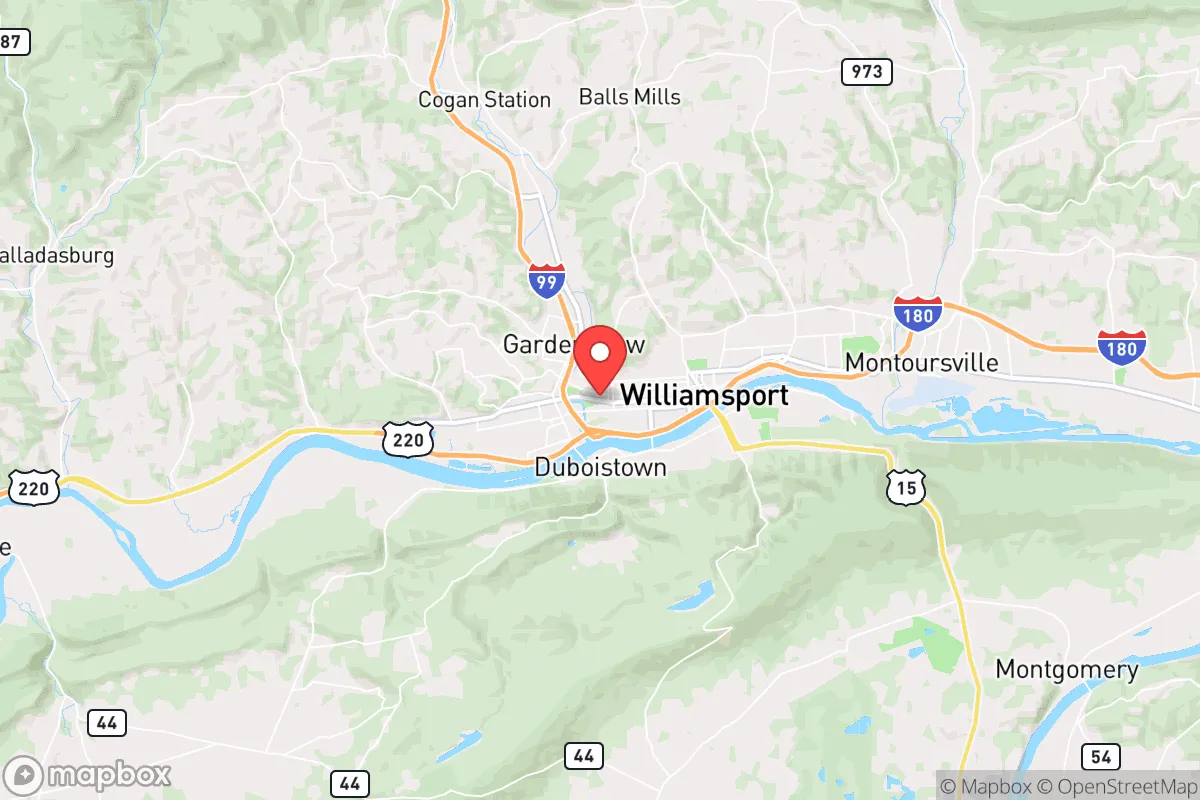
For the liberty-minded individual or family evaluating Williamsport, Pennsylvania, as a relocation destination, the personal sovereignty environment presents a mixed but workable picture. While Pennsylvania is not a free-for-all libertarian enclave—it carries a moderate state-level tax burden and some regulatory friction—Williamsport itself offers a tangible sense of personal space, a lower cost of living that reduces dependency on the state, and a community culture that still values self-reliance. The key is understanding where the state overreaches and where local conditions allow you to carve out genuine autonomy, particularly in the realms of self-defense, property use, and family decision-making.
Tax burden and regulatory posture: how much the state takes and controls
Pennsylvania's tax structure is a double-edged sword for those seeking financial sovereignty. The state levies a flat 3.07% personal income tax—one of the lowest flat rates in the nation—and does not tax retirement income, which is a significant advantage for preppers building long-term resilience. However, the property tax burden is among the highest in the country, with Lycoming County's effective rate hovering around 1.8% of assessed home value. For a $200,000 home, that's roughly $3,600 annually, a real cost that funds local schools and services you may not fully control. Sales tax is a moderate 6%, with no local add-ons in Williamsport. On the regulatory front, Pennsylvania is not a "business-friendly" standout; occupational licensing requirements are above the national average, and the state maintains a prevailing wage law that inflates construction costs for any project involving public funds. For the homesteader or small-scale contractor, this means more paperwork and higher costs for permitted work. The state also has a Uniform Construction Code that applies to most residential building, limiting truly unpermitted DIY structures. The net effect: you keep more of your income than in high-tax states like New York or California, but the state extracts its pound of flesh through property taxes and regulatory compliance, making it essential to factor these into any self-sufficiency budget.
Self-defense and gun law specifics: what you can carry and where
For the survivalist, Pennsylvania's firearm laws are a bright spot. The state is a "shall-issue" jurisdiction for concealed carry permits, meaning the Lycoming County Sheriff's Office must issue a License to Carry Firearms (LTCF) to any qualified applicant—no subjective "good cause" requirement, no discretionary denial. The process is straightforward: a background check, a modest fee (around $20), and a wait of typically 30-45 days. Open carry is legal without a permit for anyone 18 or older who can legally possess a firearm, though it's wise to check local ordinances in Williamsport proper. There is no state-level assault weapons ban, no magazine capacity limit, and no universal background check law for private sales. Stand-your-ground protections are in place via case law and statute, meaning you have no duty to retreat before using deadly force in any place you are lawfully present. The state preempts local gun ordinances, so Williamsport cannot enact its own bans. However, Pennsylvania does have a Firearm Owner Identification (FOID) card system—a "License to Purchase" requirement for handguns and a background check for long guns from dealers—which is an infringement on the 2nd Amendment that preppers should note. Private long-gun sales between individuals are legal without a background check, but handgun transfers must go through a dealer with a background check. For the self-reliant individual, the ability to carry, own standard-capacity magazines, and defend your home without retreat is solid, but the FOID requirement is an annoyance that adds a layer of state control.
Self-reliance and homesteading viability: lot sizes, zoning, and off-grid feasibility
Williamsport and its surrounding townships offer genuine opportunities for self-reliance, but the devil is in the zoning details. Within the city limits, lots are typically small (0.1-0.25 acres), and the city's zoning code restricts keeping livestock, limits accessory structures, and requires connection to municipal water and sewer. For true homesteading—raising chickens, goats, or maintaining a large garden—you need to look outside the city in townships like Loyalsock, Armstrong, or Hepburn. Here, lot sizes of 1-5 acres are common and affordable, with many properties under $150,000. Zoning in these areas is generally more permissive: chickens are allowed, and some townships permit small-scale livestock with minimal setbacks. Off-grid feasibility is limited by state and local codes. Pennsylvania requires all new dwellings to connect to an approved water supply and sewage system—either municipal or a permitted well and septic. Solar panels are legal and net metering is available, but the state's building code mandates grid interconnection for new homes, making true off-grid living (no utility connection) difficult to achieve legally. Rainwater collection is legal but restricted to non-potable uses in most areas. For the prepper, the best strategy is to buy an existing older home on acreage in a township with lax enforcement, then gradually add solar, a backup generator, and a large garden without triggering permits. The region's growing season is about 150 days (May to October), suitable for cold-hardy crops, and the abundant local timber provides heating fuel. The Susquehanna River and nearby state forests offer foraging and hunting opportunities, but you'll need a Pennsylvania hunting license and must follow state game laws.
Personal liberties: parental rights, medical autonomy, speech, and property
On the broader front of personal liberties, Pennsylvania is a mixed bag. Parental rights are generally strong—the state has no universal vaccine mandate for schoolchildren (though specific vaccines are required for attendance, with medical and religious exemptions available). Homeschooling is legal and relatively straightforward: you must file a notarized affidavit with the local school district each year, maintain a portfolio, and have an annual evaluation. This is more bureaucratic than states like Texas or Idaho, but it is workable and does not require state-approved curriculum. Medical autonomy is under pressure. Pennsylvania has a COVID-19 vaccine mandate for healthcare workers that remains in effect, and the state's emergency powers during the pandemic were broad, leading to business closures and gathering restrictions that many conservatives viewed as overreach. The state does not have a "Right to Try" law for experimental treatments as robust as some other states, and the medical marijuana program is tightly controlled. On speech and property, Pennsylvania's protections are solid. There is no state-level "hate speech" law that criminalizes protected speech, and property rights are protected by the Eminent Domain Code, which requires just compensation and a public purpose. However, the state's Clean and Green program offers tax breaks for agricultural land but comes with a rollback penalty if you develop it, effectively locking in land use. For the liberty-minded, the biggest concern is the state's willingness to use emergency powers—a pattern that could repeat in any future crisis, threatening both your business and your medical choices.
Compared to the heavily regulated Northeast corridor or the West Coast, Williamsport offers a meaningful degree of personal sovereignty at a price point that allows financial independence. The tax burden is manageable, gun laws are among the best in the region, and the rural townships provide room for self-reliance. The trade-offs are a state that still believes in licensing, building codes, and emergency mandates—a reminder that no location is a true "free state." For the survivalist or prepper, Williamsport is a solid base of operations, not a utopia. It gives you the space and legal latitude to prepare, but you must remain vigilant about local and state overreach, particularly in the areas of property taxes and emergency powers. If you can navigate those, the area offers a level of autonomy that is increasingly rare in modern America.

* Values derived from national, state, county, city and local statistics and may differ in a specific area. Last updated: 2026-04-24T12:07:30.000Z
Narrative content on this page is AI-generated and may contain mistakes. Verify any details that matter before acting on them.
ReloMaps may earn a commission from affiliate links at no extra cost to you.

