
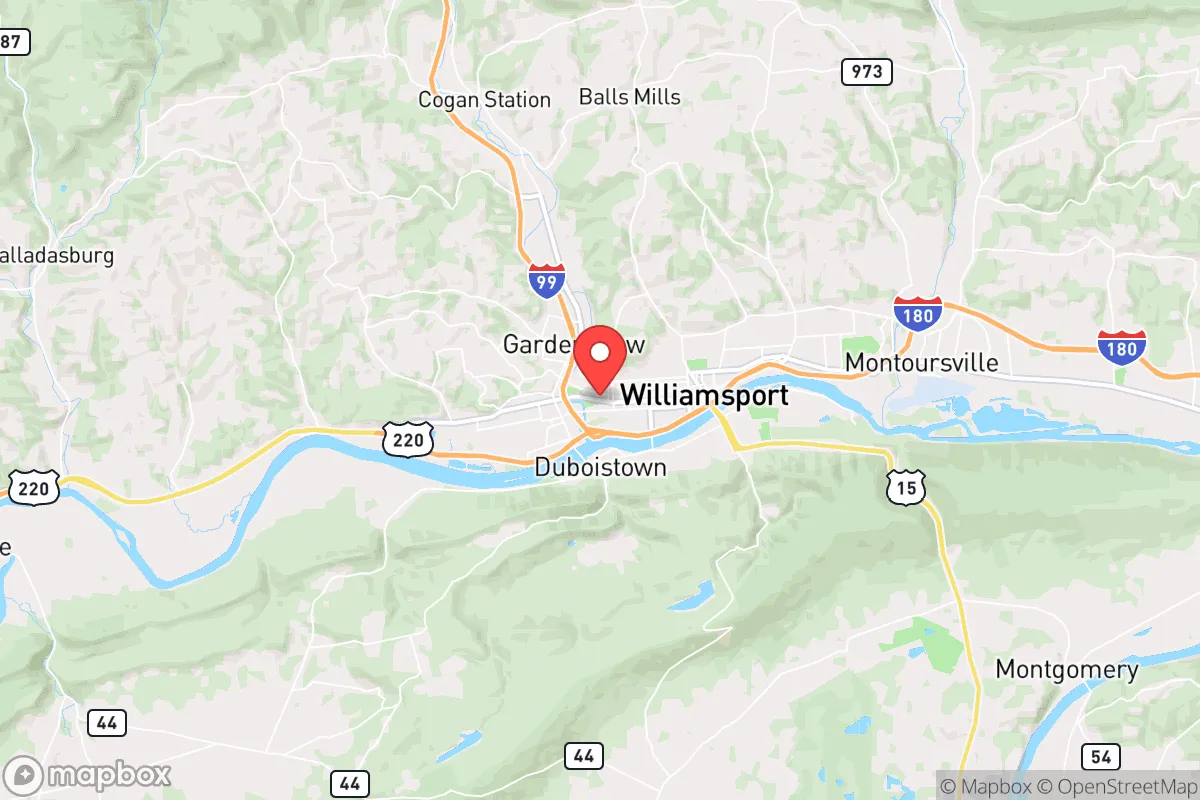
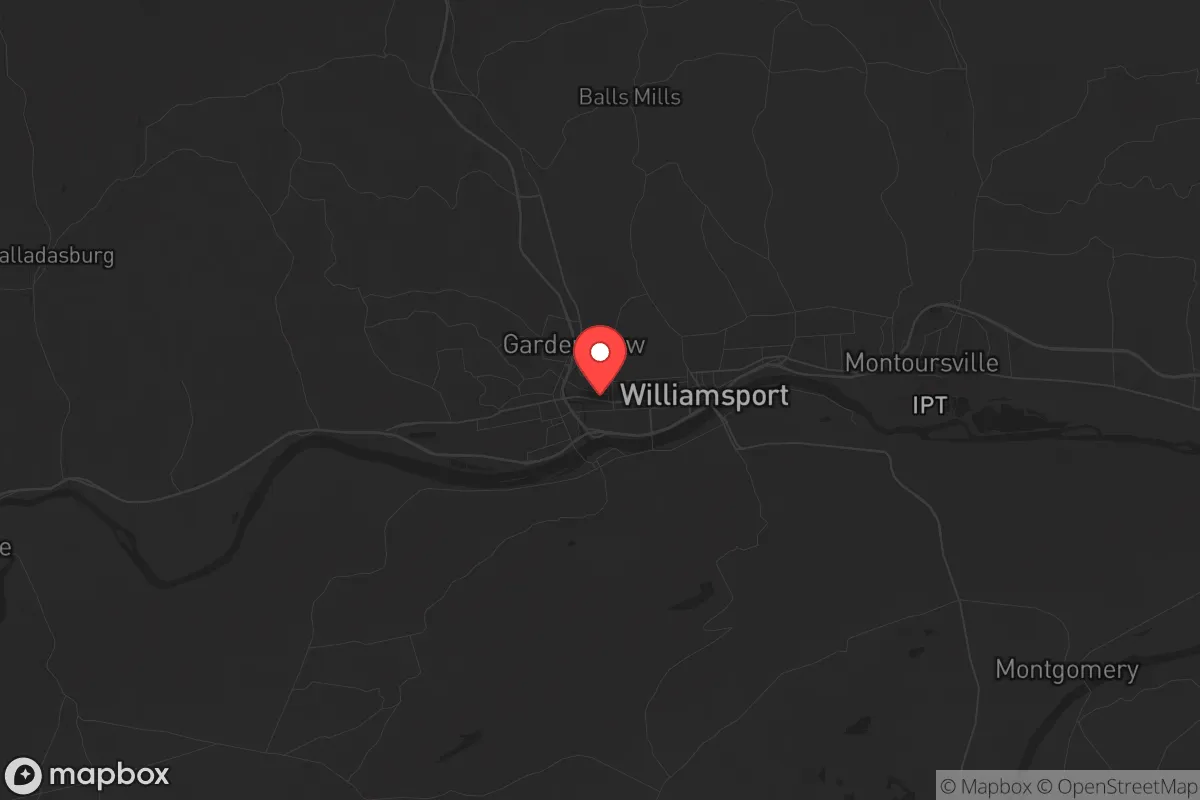
Photo: Wikipedia
Strategic Assessment of Williamsport, PA
Meaningful friction. Expect exposure to either population pressure, blast zones, or natural disaster risk. Consider buying a retreat property.
What does the Strategic Assessment tell us?
Our Strategic Assessment grades tactical survivability of an area. Major population centers, military targets, fallout zones, natural disasters, and border exposure all drive risk — lower exposure means a more defensible position in a crisis.
This is heavily inspired by Joel Skousen's Strategic Relocation book. Highly recommended you checkout the book ($)What does this tell us?
Our Strategic Assessment grades tactical survivability of an area. Major population centers, military targets, fallout zones, natural disasters, and border exposure all drive risk — lower exposure means a more defensible position in a crisis.
This is heavily inspired by Joel Skousen's Strategic Relocation book. Highly recommended you checkout the book ($)Strategic Pillars

Key Distances
Regional Safe Places
Below is our recommended "safe zones" in Pennsylvania and the surrounding area based on our strategic heuristics. For most people, it's unrealistic to live in a “safe zone” full-time due to work, family or other personal reasons. They tend to be more rural. However, many of these areas are perfect for second homes and retreat properties that double as a vacation home or even a short-term rental.
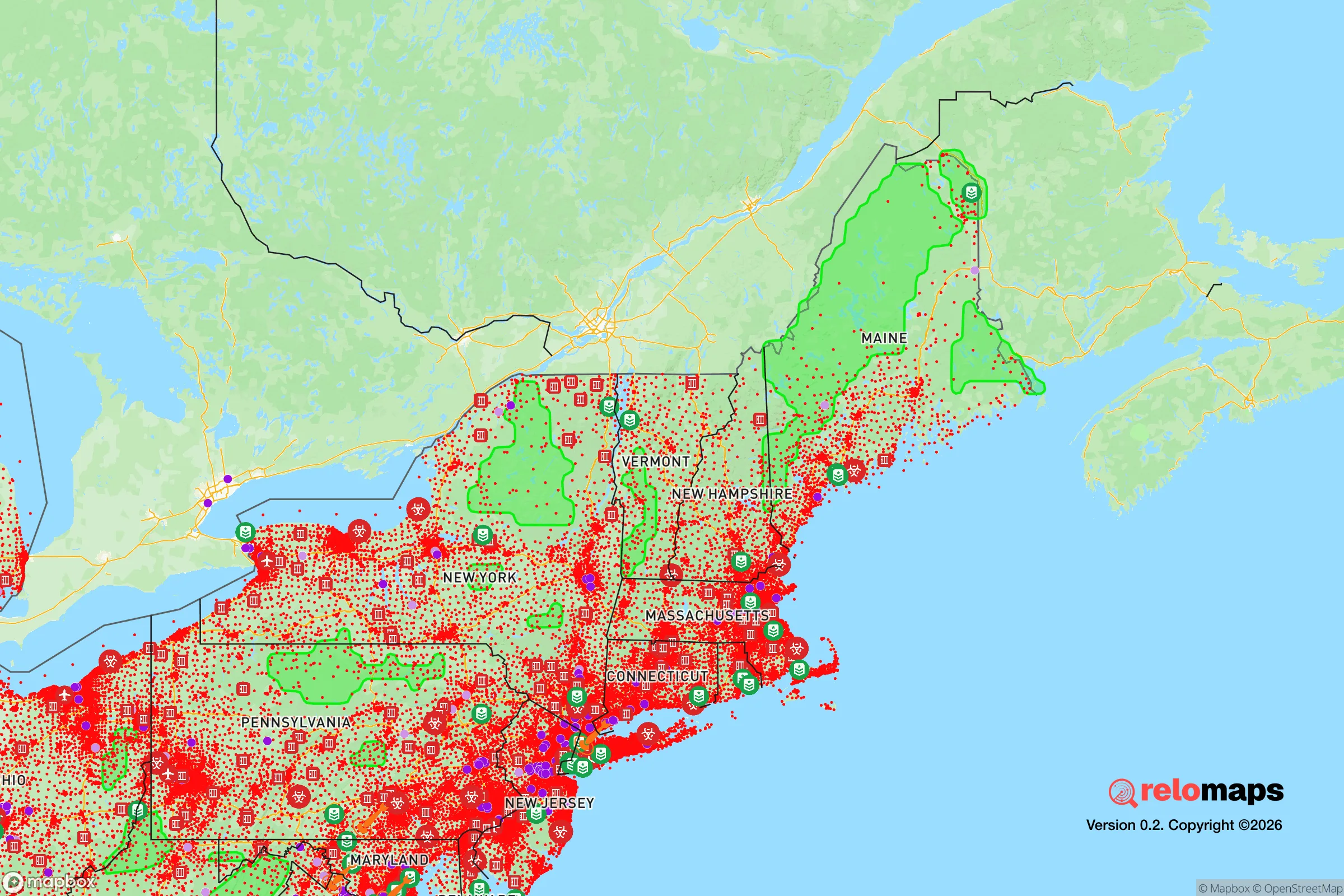
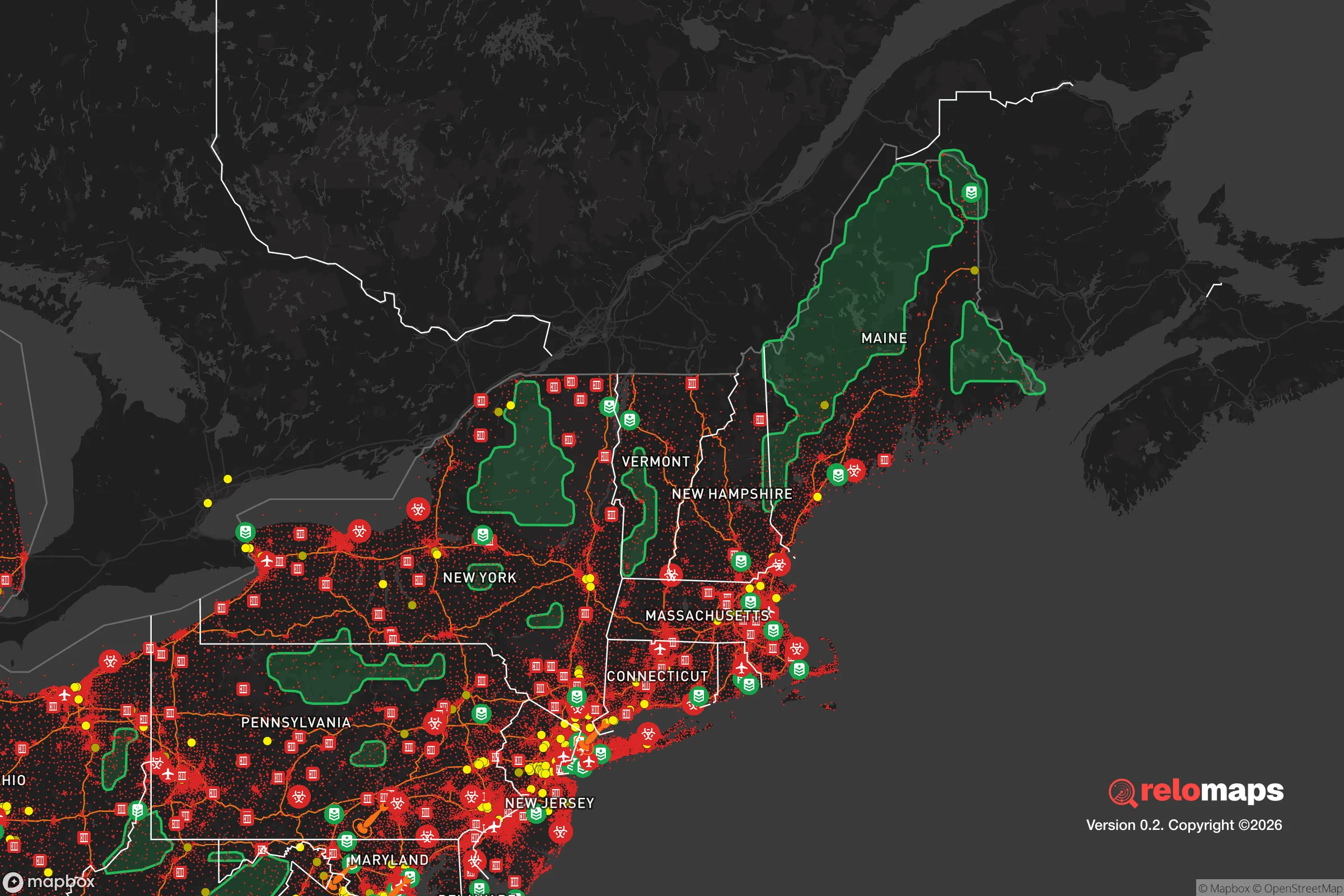


Important Note: For informational purposes only. This does not mean nothing bad ever happens in the green zones. Please use common sense. This is based on public data and modeled with AI. We tried to take a conservative approach but mistakes happen. We update this regularly as new information becomes available.
Solar Generator Recommendations
Backup power matters more here than in safer locations. We've picked three solar generators across budgets and capacity tiers — start with the budget unit if you only need a few essentials, or step up if you want to run a fridge and HVAC for days at a time.

Jackery Portable Power Station Explorer 300
Budget OptionPower on the Go: Weighing only 11 lbs, it's convenient to set up and store with book-sized foldable solar panels

BLUETTI Portable Power Station AC180
Designed for both indoor and outdoor scenarios, AC180 is highly capable as it has a robost capacity and continuous output power.

EF ECOFLOW DELTA Pro Ultra Power Station
Upgraded PickEcoFlow DELTA Pro Ultra is a whole-home energy system designed to grow with your family. Integrated with the Smart Home Panel 2, it scales to meet your evolving energy needs — keeping your home powered, intelligent, and secure through every stage of life.
We earn a commission, at no additional cost to you.
Strategic Assessment Analysis
Williamsport, Pennsylvania, often overlooked in favor of the state’s larger metros, presents a surprisingly strong case for the strategic relocator who values resilience, geographic buffer, and a community that hasn’t yet been hollowed out by the chaos of the coastal megacities. Nestled in the West Branch Susquehanna River Valley, this former lumber capital offers a blend of industrial backbone, rural adjacency, and a population that still largely understands self-reliance. For someone thinking in terms of decades, not election cycles, Williamsport’s location—roughly equidistant from the I-81 and I-80 corridors—provides a solid foundation for a long-term posture of preparedness without the suffocating proximity to primary fallout zones or the constant noise of urban collapse.
Geographic position and natural advantages for long-term security
Williamsport sits in a natural bowl formed by the Allegheny Plateau, with the river cutting through the center. This topography offers a genuine defensive advantage: the surrounding ridges—Bald Eagle Mountain to the south, the dissected plateau to the north—create natural chokepoints and observation positions. The area is far enough from the major Eastern Seaboard population centers (roughly 200 miles from Philadelphia, 180 from Baltimore, 130 from Harrisburg) to avoid the immediate crush of a regional evacuation or a nuclear event targeting the I-95 corridor. Yet it remains close enough to access those markets for trade or resupply in stable times. The river itself is a reliable water source, and the valley’s agricultural history means the soil, while not the richest in the state, can support market gardens and small-scale livestock operations. The region’s elevation (roughly 500-1,200 feet) keeps it out of the worst flood zones of the lower Susquehanna, though the West Branch has its own flood history—something a prepper should account for with proper site selection on higher ground.
Risks, exposures, and proximity to fallout-relevant landmarks
No location is without risk, and Williamsport has its share. The most immediate concern is the proximity to the Susquehanna Steam Electric Station (the Berwick nuclear plant), about 60 miles downstream. While 60 miles provides a significant buffer against a direct plume in most wind scenarios, a major release could still affect the valley depending on weather patterns. The area also sits within 100 miles of the Pennsylvania-New Jersey grid interconnects and major natural gas pipelines running through the Marcellus Shale region—critical infrastructure that could become a target during civil unrest or cyberattacks. On the plus side, Williamsport is far from any major military installations that would be primary nuclear targets (no bases within 100 miles), and the nearest major population centers (Scranton/Wilkes-Barre, Harrisburg) are not high-value first-strike targets. The real risk here is less a direct hit and more the secondary effects: refugees from the I-81 corridor flooding west, or supply chain disruptions hitting a town that relies on trucked-in goods for its supermarkets. The local hospital, UPMC Williamsport, is a Level II trauma center—adequate for most scenarios, but a mass casualty event would overwhelm it quickly.
Practical resilience for a relocator: food, water, energy, and defensibility
For the individual or family looking to build a resilient homestead, Williamsport’s practical assets are solid. The water situation is favorable: the West Branch Susquehanna is a perennial river, and the area’s groundwater is generally good, though well drilling can be expensive in the rocky uplands. Municipal water comes from the river and is treated, but a prepper should have a backup filtration system (Berkey or similar) and a plan for catchment. Food security is achievable: the surrounding Lycoming County has active farms, and the local farmers’ market (the Williamsport Growers Market) runs year-round. For those willing to put in work, the growing season is about 150 days, suitable for cold-hardy crops like potatoes, squash, and brassicas. Energy is a mixed bag. The grid is served by PPL Electric Utilities, which has a decent reliability record but is vulnerable to ice storms and cyber threats. Solar is viable—the area gets about 200 sunny days per year—but the valley’s frequent cloud cover means battery storage is essential. Wood heat is the most practical backup, with abundant hardwood forests on the surrounding public lands (Tioga State Forest, Loyalsock State Forest). Defensibility is where Williamsport shines: the valley’s limited road access (primarily US-15, PA-14, and PA-87) means you can monitor movement in and out of the area. A property on a ridge or a dead-end road off the main drag gives you natural security. The local gun culture is strong—Lycoming County is a Second Amendment sanctuary—and the sheriff’s office is generally supportive of responsible firearm ownership. That said, the town itself has a higher crime rate than the surrounding rural areas, so a relocator should prioritize acreage outside the city limits, ideally in the townships to the north or west (e.g., Loyalsock, Armstrong, or Hepburn).
The overall strategic picture for Williamsport is one of a solid B-tier relocation option for the conservative prepper. It lacks the extreme isolation of, say, the Idaho panhandle or the Upper Peninsula, but it compensates with better access to medical care, a functioning local economy (the lumber and manufacturing sectors are still alive, and the Pennsylvania College of Technology provides a skilled workforce), and a community that hasn’t been fully captured by the coastal cultural rot. The biggest downside is the proximity to the I-81 corridor—if things go truly sideways, you’ll see a wave of refugees from the Scranton/Harrisburg axis. But if you’re looking for a place where you can buy a house on a few acres for under $200,000, dig a well, put up solar panels, and still be within a day’s drive of the Northeast’s resources, Williamsport deserves a serious look. It’s not a bug-out location for the end of the world—it’s a live-in location for the slow unraveling, and that’s exactly the kind of thinking that keeps you ahead of the curve.

* Values derived from national, state, county, city and local statistics and may differ in a specific area. Last updated: 2026-04-24T12:07:30.000Z
Narrative content on this page is AI-generated and may contain mistakes. Verify any details that matter before acting on them.
ReloMaps may earn a commission from affiliate links at no extra cost to you.

