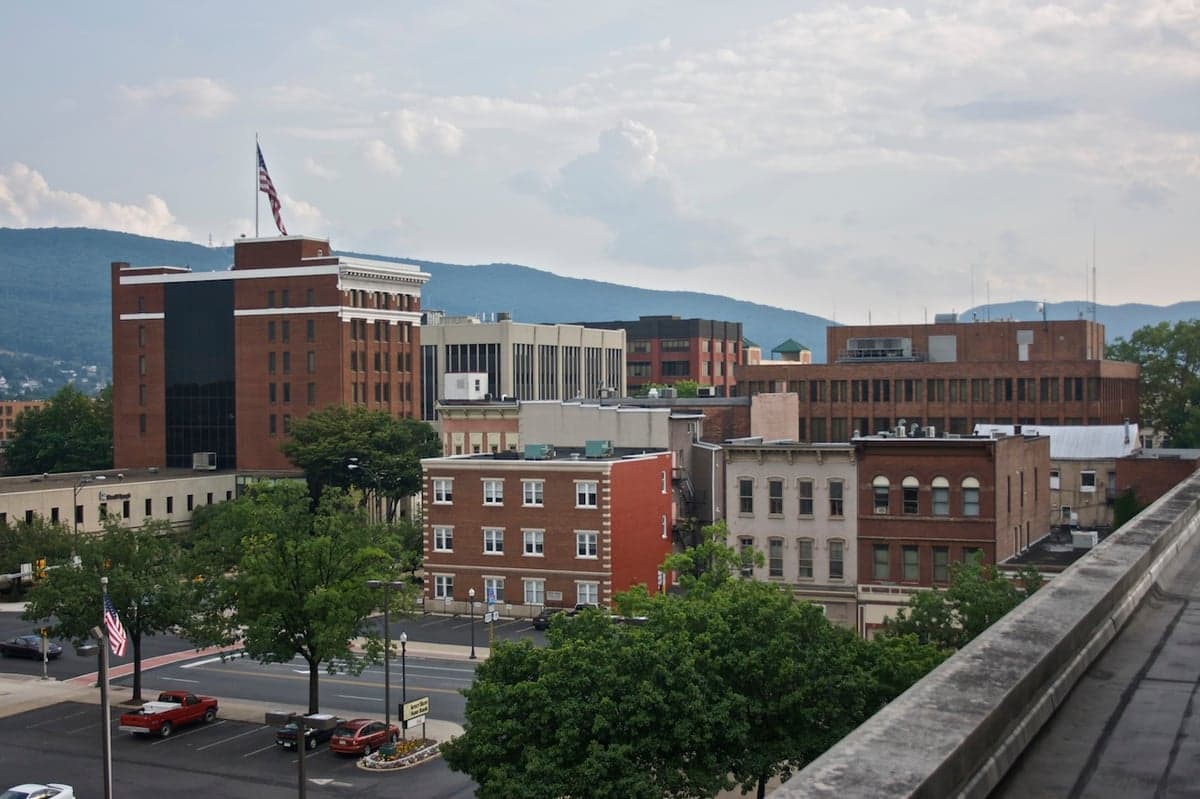
Photo: Wikipedia
Political ClimatePolitical Climate in Williamsport, PA
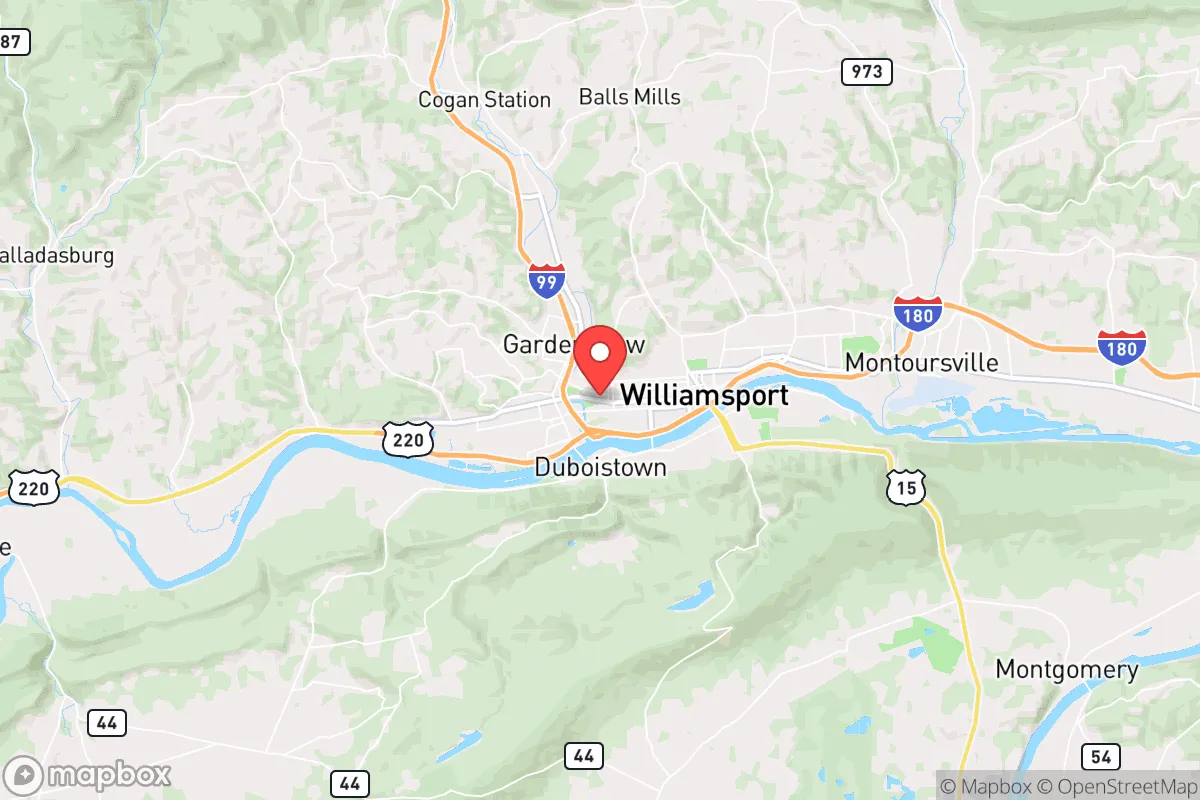
District shown is the primary district for this city’s centroid. Cities may span multiple districts.
Local Political AnalysisPolitical Analysis of Williamsport, PA
Williamsport, Pennsylvania, has long been a solidly conservative stronghold, and that hasn't changed much despite some national trends. The Cook PVI rating of R+19 tells you everything you need to know about the area's political lean—it's deep red, and it's been that way for generations. You'll find a lot of folks here who remember when the town was a bustling lumber and manufacturing hub, and that independent, self-reliant spirit still runs deep. The trajectory is pretty stable, though you do see some younger families moving in from more progressive areas like State College or even Philadelphia, which brings a slight shift, but the core values here are rooted in personal responsibility and limited government interference.
How it compares
When you look at the surrounding counties, Williamsport sits in Lycoming County, which is reliably conservative, but it's not as extreme as some of the rural areas further north. Drive an hour east to Lewisburg or Selinsgrove, and you'll hit Union and Snyder counties, which are even more conservative—think R+25 or higher. But the real contrast is with places like State College, about an hour southwest. That's a university town with a very different vibe—more progressive, more government-centric, and frankly, a lot of folks here see that as a cautionary tale of what happens when you let ideology override common sense. Williamsport, by contrast, still values the Second Amendment, local control over schools, and keeping taxes low. The city itself has a slightly more moderate feel than the outlying townships, but the county as a whole votes overwhelmingly Republican, and that's not likely to change anytime soon.
What this means for residents
For someone living here, the political climate means you're generally left alone to live your life without a lot of government overreach. The local government tends to stay out of personal decisions—whether it's about homeschooling, running a small business, or how you choose to use your property. You won't see the kind of zoning battles or mask mandates that plague bigger cities. Property taxes are reasonable compared to the rest of Pennsylvania, and there's a strong sense that your vote actually counts. The downside? If you're hoping for big public investments in things like bike lanes or public transit, you'll be disappointed. The focus is on keeping the budget balanced and not borrowing for pet projects. The long-term concern here is that as the state government in Harrisburg gets more progressive, they'll try to impose mandates on local communities—things like gun control or energy regulations—that don't reflect what people here actually want. That's the real threat: not local politics, but the creeping influence from outside.
Culturally, Williamsport is still a place where the Little League World Series is the biggest event of the year, and that says a lot. It's family-oriented, church-going, and community-driven. You won't find many pride flags or "defund the police" signs here. The policy distinctions are clear: the local school board focuses on academic basics, not social experiments, and the county commissioners prioritize road maintenance and public safety over diversity initiatives. If you're looking for a place where you can raise a family without constant political noise, this is it. Just keep an eye on Harrisburg—that's where the real battles are fought.

State Political ClimatePolitical Climate in Pennsylvania
State Political AnalysisPolitical Environment in the State
Pennsylvania has long been the quintessential swing state, but over the past decade it has shifted from a classic purple battleground to a state where the urban-rural chasm is so deep it feels like two different countries. The state’s overall partisan lean is a razor-thin Democratic tilt in presidential elections (Biden won by just 1.2 points in 2020), but the real story is the accelerating divergence: Philadelphia and its collar counties have become deep blue strongholds, while the vast rural interior and the northern tier have swung hard red. Over the last 20 years, the state has lost its moderate, union-Democrat backbone, replaced by a polarized map where your ZIP code almost perfectly predicts your vote. For a conservative considering relocation, the picture is mixed—there are genuine havens of freedom, but the state government in Harrisburg is increasingly controlled by a progressive coalition that views personal liberty as an obstacle.
Urban vs. rural divide
The political map of Pennsylvania is a tale of two extremes. The southeastern corner—Philadelphia, its suburbs like Bucks County and Montgomery County, and the city of Pittsburgh in the west—generates massive Democratic margins. Philadelphia alone delivers about 80% of its vote to Democrats, and the surrounding collar counties have flipped from Republican-leaning to solid blue over the past two cycles. In contrast, the vast central and northern regions—places like Lancaster County, York County, and the rural expanse around Williamsport—vote Republican by 60-70% margins. The real battlegrounds have shrunk to a handful of suburban counties like Erie County in the northwest and Northampton County in the Lehigh Valley, which still swing. But the trend is clear: the rural areas are getting redder, the cities bluer, and the middle is vanishing. A conservative moving to Pennsylvania should understand that living in a small town like Gettysburg or State College (home to Penn State) means being in a deep red environment, while settling in the Philly suburbs means constant exposure to progressive governance.
Policy environment
Pennsylvania’s state-level policy is a study in contradiction. The state has a flat income tax of 3.07%, which is relatively low and hasn’t been raised in years—a win for fiscal conservatives. However, property taxes are among the highest in the nation, averaging over $3,000 per year, and they fund a school system that is heavily controlled by Harrisburg mandates. The regulatory posture is mixed: the state has a robust oil and gas industry in the Marcellus Shale, but the Department of Environmental Protection has become increasingly aggressive under Governor Josh Shapiro, imposing new permitting hurdles on drilling. On education, the state just saw a court ruling that declared its school funding system unconstitutional, which is likely to lead to massive tax increases to funnel money to failing Philadelphia schools. Election laws are a flashpoint: Pennsylvania has no voter ID requirement for in-person voting, and mail-in voting was expanded in 2019 under Act 77, which conservatives view as a recipe for fraud. The state also has a Democratic governor who vetoed a bill requiring voter ID in 2023. For a conservative, the policy environment feels like a slow creep toward California-style governance, with high property taxes, weak election security, and a regulatory apparatus that favors urban interests over rural ones.
Trajectory & freedom
The trajectory of freedom in Pennsylvania is concerning. On the positive side, the state is a “shall issue” state for concealed carry permits, and there is no permit required to open carry. However, in 2022, the legislature passed a preemption law (Act 79) that prevents local municipalities from enacting their own gun restrictions—a win for Second Amendment advocates. But the Shapiro administration has been hostile to gun rights, pushing for “red flag” laws and universal background checks, which have so far been blocked by the Republican-controlled state House. On medical freedom, Pennsylvania was one of the most aggressive states in imposing COVID-19 mandates, including school closures that lasted longer than almost any other state. The state still has a mask mandate for healthcare settings, and there is no law protecting medical conscience rights for doctors. Parental rights took a hit in 2023 when the state board of education adopted new sex education standards that include LGBTQ+ topics in elementary school, without an opt-out provision for parents. Property rights are under threat from a growing trend of “environmental justice” zoning that restricts development in rural areas. The overall direction is clear: the state government is expanding its reach into personal decisions, and the only check is the Republican legislature, which is fighting a rearguard action.
Civil unrest & political movements
Pennsylvania has seen its share of political flashpoints. The 2020 election aftermath was particularly intense in Philadelphia, where Republican poll watchers were allegedly barred from observing ballot counting, leading to years of litigation and distrust. The state was a hotspot for the “Stop the Steal” movement, with large rallies in Harrisburg and outside the state capitol. On the left, the Black Lives Matter protests in Philadelphia in 2020 resulted in widespread looting and property destruction, with the city’s progressive district attorney, Larry Krasner, declining to prosecute many offenders. Immigration politics are a growing issue: Philadelphia is a self-declared “sanctuary city,” and the state has a law (Act 40) that attempts to limit sanctuary policies, but it has been largely ignored by the city. There is a visible secessionist sentiment in rural counties like Bradford County and Tioga County, where local officials have passed resolutions calling for a “breakaway” state of Northern Pennsylvania, though it remains symbolic. A new resident would notice the tension immediately: drive 30 minutes west of Philadelphia and you’ll see Trump flags on every other farm; drive 30 minutes east of Pittsburgh and you’ll see “Defund the Police” signs in city windows. The state is a powder keg of cultural conflict.
Projection
Over the next 5-10 years, Pennsylvania is likely to continue its polarization, with the urban centers growing bluer and the rural areas redder. The key demographic shift is the influx of out-of-state migrants from New York and New Jersey into the Lehigh Valley and the Poconos, which is turning those areas from purple to light blue. Meanwhile, the rural population is aging and shrinking, which could reduce the Republican base. The state’s electoral votes will remain competitive, but the state government will likely stay divided, with a Democratic governor and a Republican legislature, leading to gridlock on most issues. However, the progressive agenda will continue to advance through the courts and executive orders, particularly on education and environmental regulation. For a conservative moving in now, the expectation should be that the state will become less free over time, with higher taxes, more mandates, and a culture war that never ends. The best bet is to settle in a deep red county like Franklin County or Butler County, where local governance can buffer some of the state-level overreach.
Bottom line for a new resident: Pennsylvania is a state of stark contrasts where your quality of life depends almost entirely on which county you choose. If you value low taxes, gun rights, and local control, you can find that in the rural interior, but you’ll be fighting a constant battle against a Harrisburg government that doesn’t share your values. If you move to the Philly suburbs, you’ll get high taxes, weak election security, and progressive school boards. The state is not a lost cause, but it’s a place where conservatives must be strategic about where they plant roots—and prepared for a long-term fight to preserve their freedoms.
* Values derived from national, state, county, city and local statistics and may differ in a specific area. Last updated: 2026-04-24T12:07:30.000Z
Narrative content on this page is AI-generated and may contain mistakes. Verify any details that matter before acting on them.
ReloMaps may earn a commission from affiliate links at no extra cost to you.

