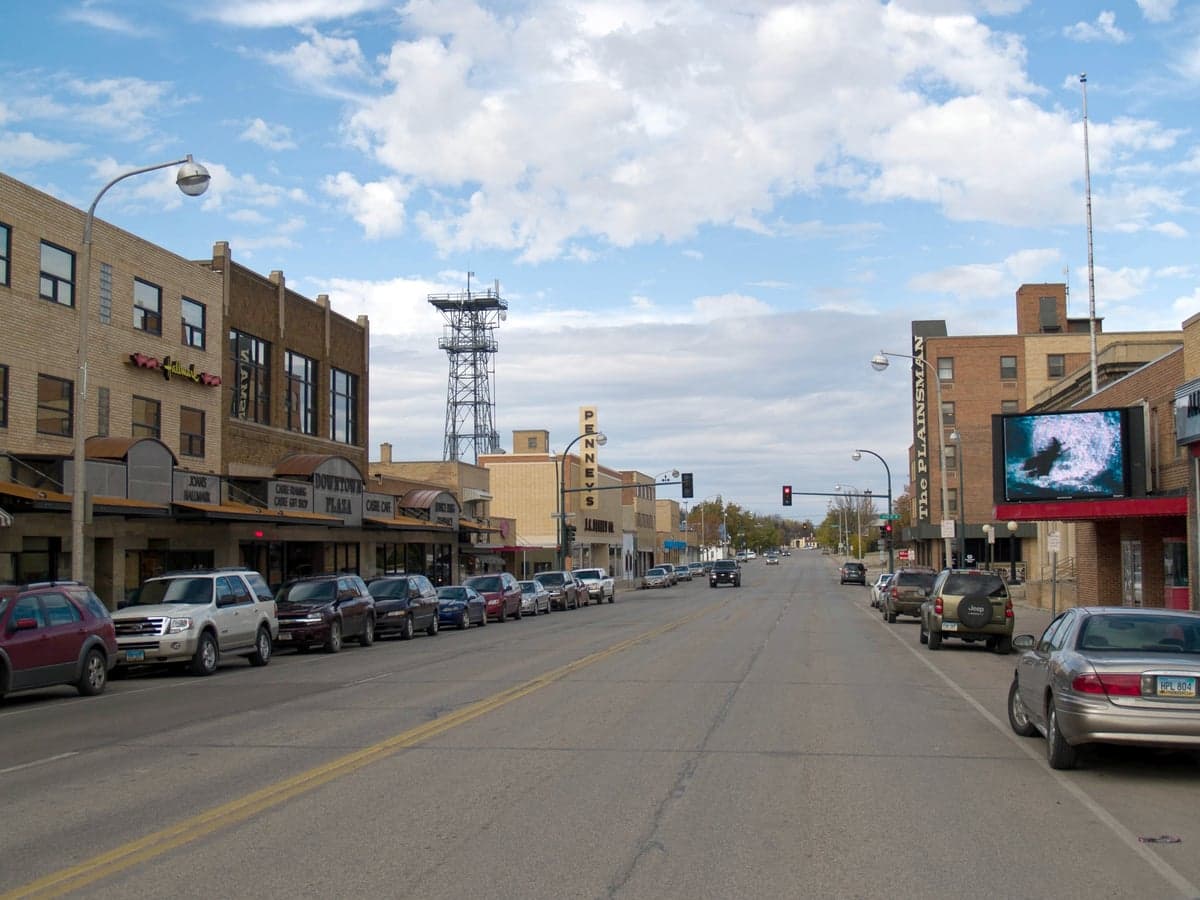
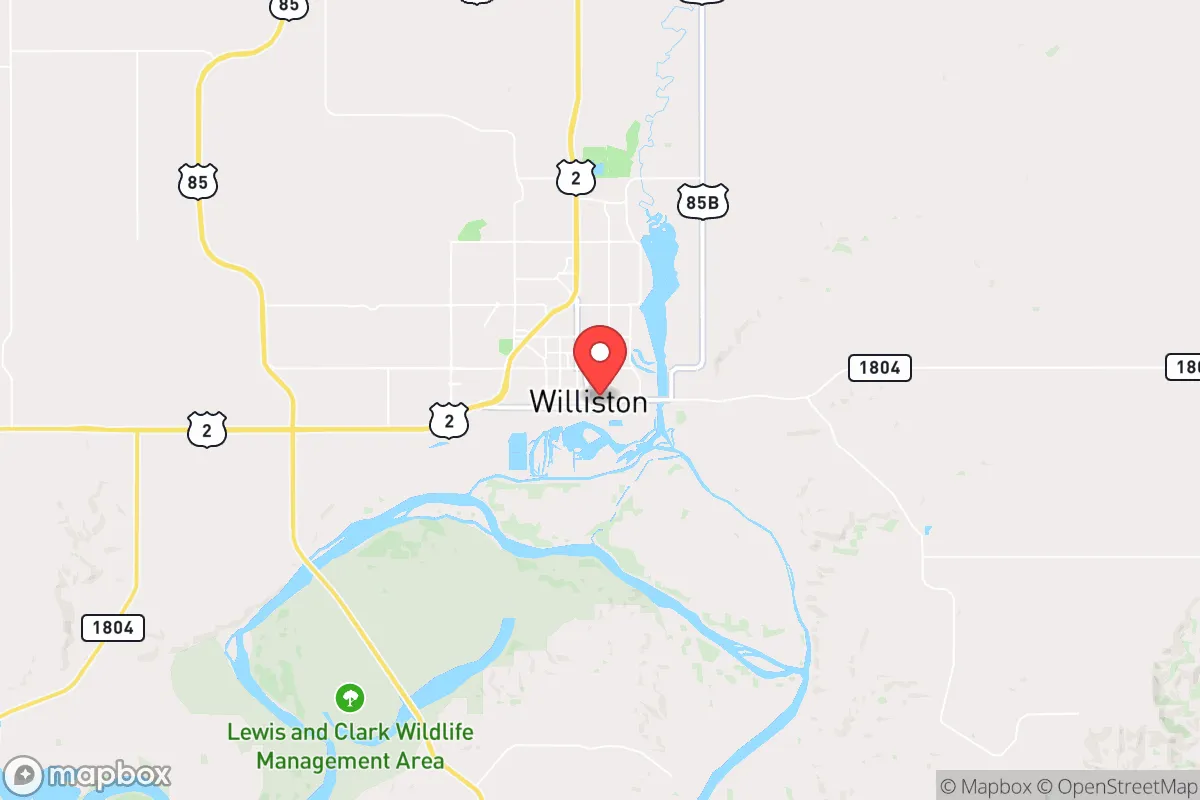
Photo: Wikipedia
Personal Sovereignty in Williston, ND
Viable for self-reliance. Generally workable, though some barriers may limit total independence.
What does Personal Sovereignty tell us?
Personal Sovereignty measures your capacity for self-reliance and independence with minimal government friction. Higher scores mean fewer barriers between you and the way you want to live... but it assumes you have the space you need and good neighbors.
What does this tell us?
Personal Sovereignty measures your capacity for self-reliance and independence with minimal government friction. Higher scores mean fewer barriers between you and the way you want to live... but it assumes you have the space you need and good neighbors.
State Policy
Energy independence: Net exporter (500% of energy produced in-state)
Personal Liberty
Homesteading

Personal Liberty Analysis
For the individual or family prioritizing maximum personal sovereignty, Williston, North Dakota, offers a rare environment where state-level protections and a rugged local culture combine to minimize government overreach. The Bakken oil boom created a community that values self-reliance out of necessity, and North Dakota’s legal framework consistently ranks among the most liberty-respecting in the nation. Here, the default assumption is that you can manage your own affairs—from your property to your personal safety—without asking for permission from a distant bureaucracy. This is not a place of passive compliance; it is a place where the burden of proof falls on the government to justify its interference in your life.
Tax burden and regulatory posture: keeping more of what you earn
Williston’s tax environment is a direct reflection of a state that trusts its citizens more than its treasury. North Dakota has no state income tax on wages, meaning every dollar you earn stays in your pocket—no state-level withholding for the government to spend on programs you may not support. The state’s corporate income tax is a flat 4.31%, but for most self-employed individuals or small business owners in Williston, the effective rate is negligible. Property taxes are locally set and can vary, but Williams County’s mill levies are moderate compared to the oil-boom counties of Texas or Colorado. More importantly, North Dakota’s regulatory posture is deliberately light: there is no state-level occupational licensing for many trades, no state-level rent control, and no state-level gun registration. The state legislature has actively pushed back against federal overreach, passing laws that nullify certain federal mandates on firearms and agricultural land use. For a prepper or survivalist, this means less paperwork, fewer fees, and a government that generally stays out of your business—unless you give it a reason to get involved.
Self-defense and gun law specifics: constitutional carry and castle doctrine
If personal security is a non-negotiable priority, Williston sits in one of the strongest Second Amendment sanctuaries in the country. North Dakota is a constitutional carry state—no permit required to carry a concealed firearm for anyone legally allowed to possess one. The state also has a robust “stand your ground” law with no duty to retreat, and a castle doctrine that explicitly covers your home, vehicle, and place of business. This means if someone unlawfully enters your space, you are legally presumed to have a reasonable fear of death or great bodily harm, and you can use deadly force without facing prosecution. Williston’s local sheriff’s office and police department are generally supportive of gun rights, and there are no local ordinances that restrict magazine capacity, firearm types, or ammunition sales. The nearest gun ranges are within a 15-minute drive, and private land shooting is common with landowner permission. For the survivalist, this is not just about recreation—it is about maintaining the ability to defend your family and your supplies in a crisis without legal second-guessing.
Self-reliance and homesteading viability: lot sizes, zoning, and off-grid feasibility
Williston’s zoning and land-use policies are among the most permissive in the upper Midwest, making it a viable location for those who want to live off-grid or build a self-sufficient homestead. Within the city limits, residential lots typically range from 6,000 to 10,000 square feet, but many newer subdivisions allow for larger parcels if you buy on the outskirts. The real opportunity lies in the unincorporated areas of Williams County, where minimum lot sizes can be as small as one acre with no county-level building codes for owner-occupied structures. Off-grid living is legally straightforward: there are no state laws prohibiting rainwater collection, and solar panel installation requires no special permits beyond standard electrical work. Composting toilets and greywater systems are allowed under state health department guidelines, though you will need to register a septic system if you plan to discharge blackwater. The local climate—long, harsh winters with temperatures dropping to -30°F—means you will need serious infrastructure: a wood stove, a backup generator, and a well-insulated structure. But the legal framework does not fight you. You can raise chickens, keep bees, and even own a few goats on a standard residential lot without a special permit. For the prepper, this is a place where you can build a retreat without constantly looking over your shoulder for code enforcement.
Personal liberties: parental rights, medical autonomy, speech, and property
North Dakota’s legal culture strongly favors parental authority and individual medical choice. The state has a parental bill of rights that explicitly affirms parents’ control over their children’s education, healthcare, and religious upbringing. School boards in Williston are locally elected and generally responsive to conservative values; there is no state-level mandate for critical race theory or gender ideology in K-12 curricula. Medical autonomy is protected by state law that prohibits mandatory vaccinations for adults and allows for broad religious and philosophical exemptions for children. The state also has a “right to try” law for terminally ill patients and a medical freedom act that prevents discrimination against those who decline certain treatments. On speech and property, North Dakota is a right-to-work state, meaning you cannot be forced to join a union as a condition of employment. Property rights are further protected by a state law that requires just compensation for any regulatory taking—if a new zoning rule reduces your property value, you can sue for damages. Williston’s local government has a reputation for being pragmatic rather than ideological; they are more concerned with infrastructure and public safety than with enforcing cultural mandates. This is not a place where you will face fines for not composting or for flying a political flag on your porch.
Compared to the coastal states or even the more urbanized parts of the Midwest, Williston offers a level of personal sovereignty that is increasingly rare. The combination of no state income tax, constitutional carry, permissive zoning for homesteading, and strong parental rights creates a legal environment where the individual is the primary decision-maker. The trade-offs are real—extreme winters, limited healthcare specialists, and a 90-minute drive to the nearest major airport—but for those who value freedom over convenience, Williston stands as one of the last places in the lower 48 where you can truly live on your own terms. If the country continues its trajectory toward centralized control, this corner of North Dakota will likely remain a refuge for those who refuse to comply.

* Values derived from national, state, county, city and local statistics and may differ in a specific area. Last updated: 2026-04-19T06:51:42.000Z
Narrative content on this page is AI-generated and may contain mistakes. Verify any details that matter before acting on them.
ReloMaps may earn a commission from affiliate links at no extra cost to you.

