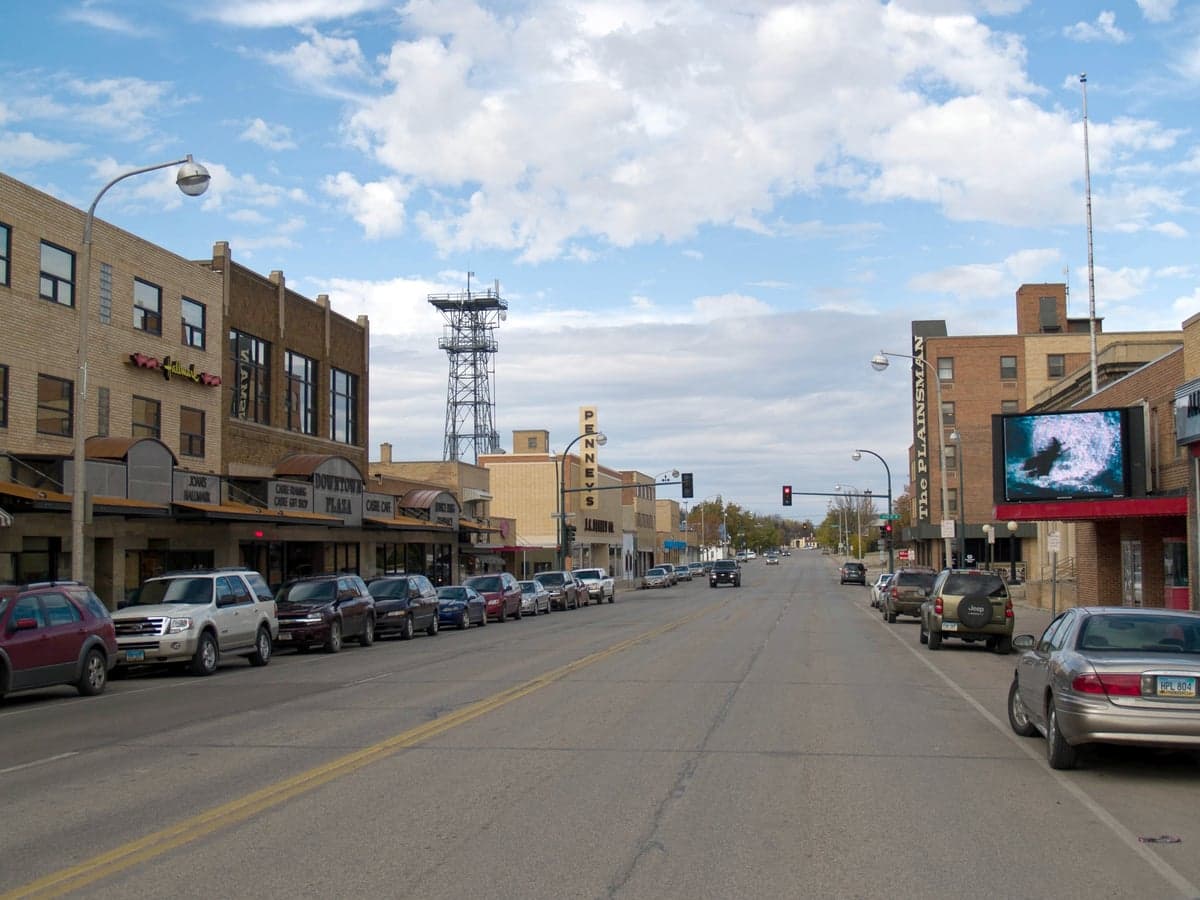
Photo: Wikipedia
Strategic Assessment of Williston, ND
Workable tactical position. Some exposure to population density or targets, but generally defensible in a crisis.
What does the Strategic Assessment tell us?
Our Strategic Assessment grades tactical survivability of an area. Major population centers, military targets, fallout zones, natural disasters, and border exposure all drive risk — lower exposure means a more defensible position in a crisis.
This is heavily inspired by Joel Skousen's Strategic Relocation book. Highly recommended you checkout the book ($)What does this tell us?
Our Strategic Assessment grades tactical survivability of an area. Major population centers, military targets, fallout zones, natural disasters, and border exposure all drive risk — lower exposure means a more defensible position in a crisis.
This is heavily inspired by Joel Skousen's Strategic Relocation book. Highly recommended you checkout the book ($)Strategic Pillars

Key Distances
Regional Safe Places
Below is our recommended "safe zones" in North Dakota and the surrounding area based on our strategic heuristics. For most people, it's unrealistic to live in a “safe zone” full-time due to work, family or other personal reasons. They tend to be more rural. However, many of these areas are perfect for second homes and retreat properties that double as a vacation home or even a short-term rental.
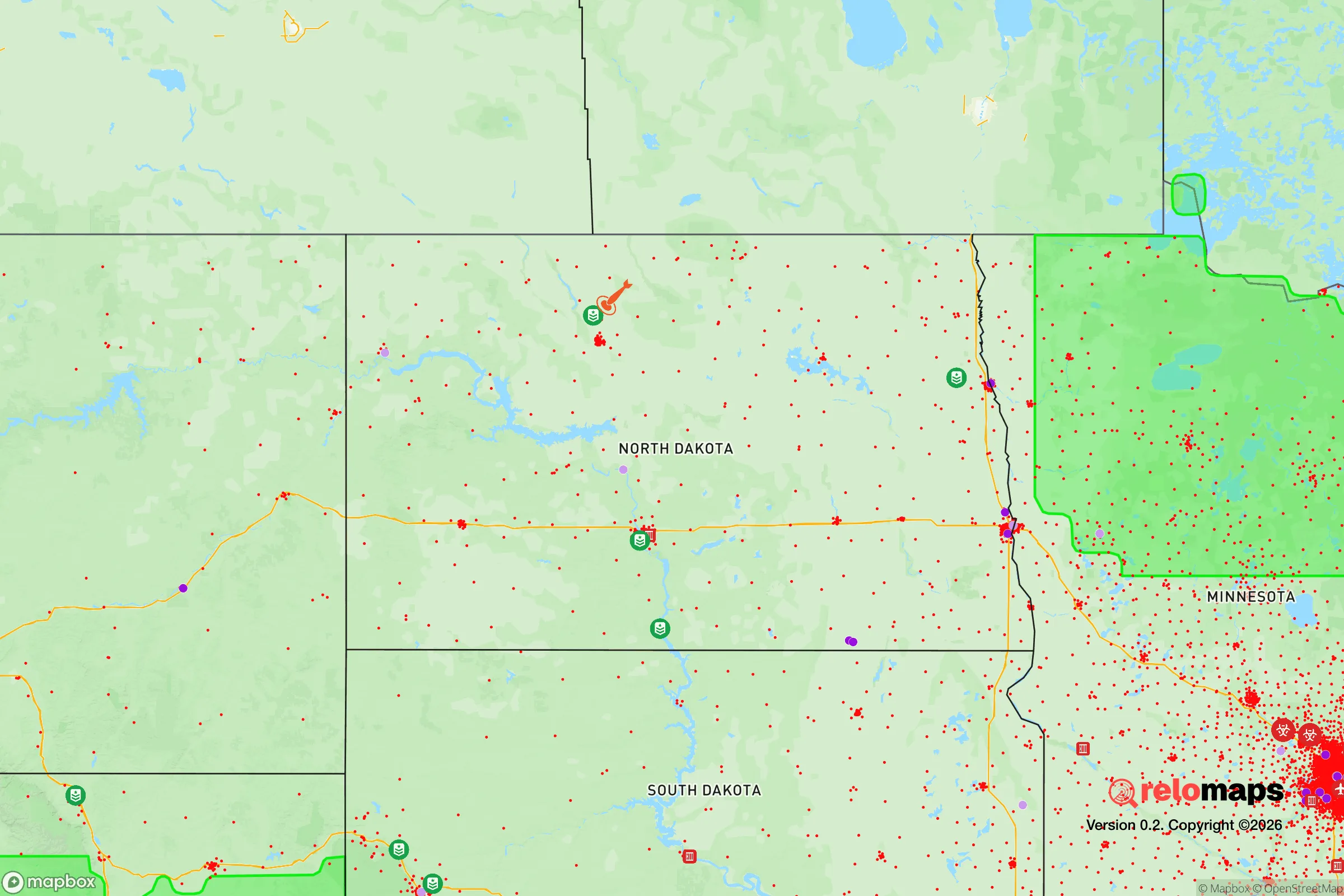
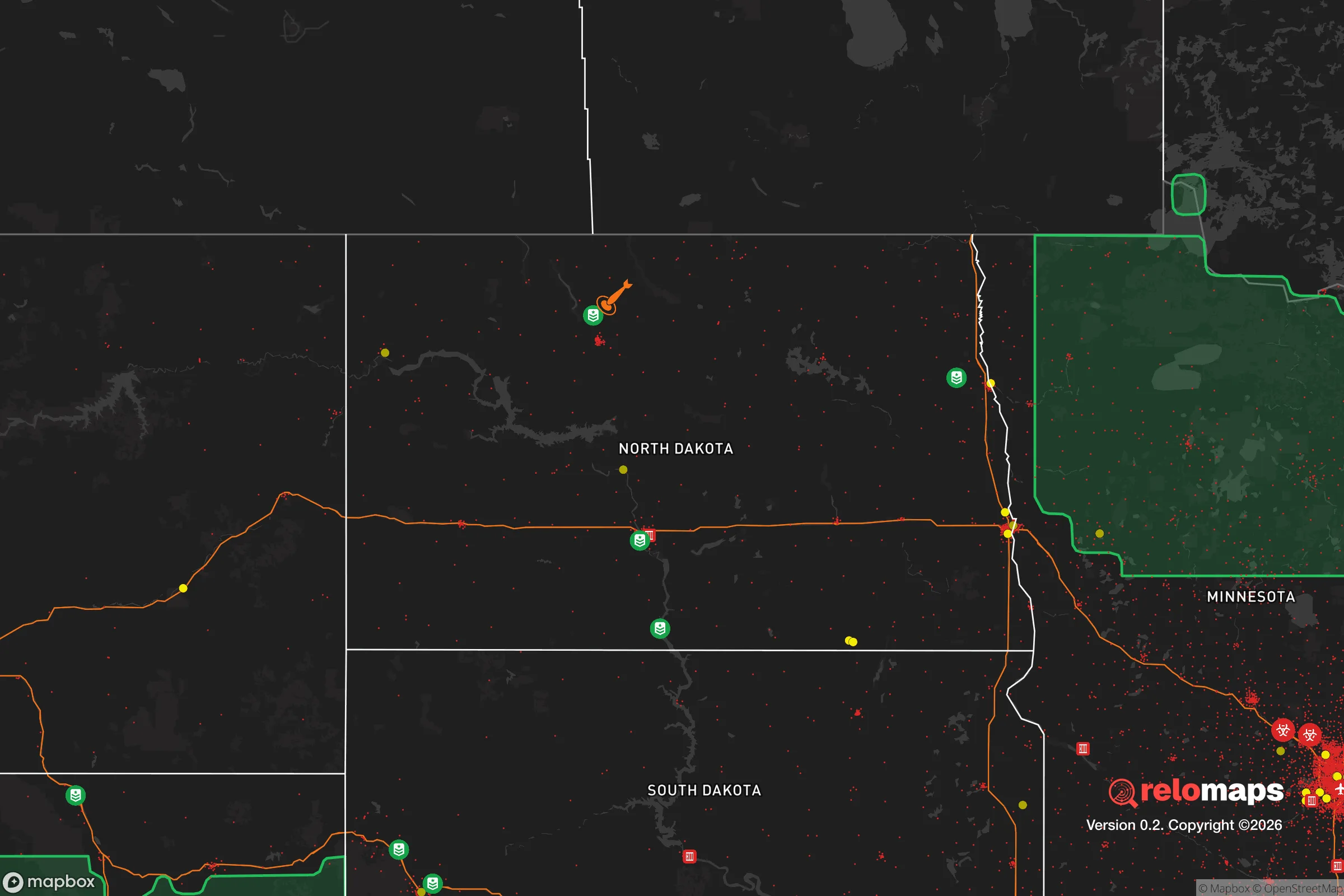


Important Note: For informational purposes only. This does not mean nothing bad ever happens in the green zones. Please use common sense. This is based on public data and modeled with AI. We tried to take a conservative approach but mistakes happen. We update this regularly as new information becomes available.
Solar Generator Recommendations
Backup power matters more here than in safer locations. We've picked three solar generators across budgets and capacity tiers — start with the budget unit if you only need a few essentials, or step up if you want to run a fridge and HVAC for days at a time.

Jackery Portable Power Station Explorer 300
Budget OptionPower on the Go: Weighing only 11 lbs, it's convenient to set up and store with book-sized foldable solar panels

BLUETTI Portable Power Station AC180
Designed for both indoor and outdoor scenarios, AC180 is highly capable as it has a robost capacity and continuous output power.

EF ECOFLOW DELTA Pro Ultra Power Station
Upgraded PickEcoFlow DELTA Pro Ultra is a whole-home energy system designed to grow with your family. Integrated with the Smart Home Panel 2, it scales to meet your evolving energy needs — keeping your home powered, intelligent, and secure through every stage of life.
We earn a commission, at no additional cost to you.
Strategic Assessment Analysis
Williston, North Dakota, sits as one of the most strategically resilient relocation options in the continental United States for those prioritizing distance from population centers, energy independence, and geographic defensibility. Its position in the heart of the Bakken oil field provides a built-in economic buffer against national instability, while its extreme low population density and remote location offer a natural shield against the cascading effects of urban unrest, supply chain disruptions, or mass casualty events. For the conservative-minded prepper or survivalist, Williston represents a rare combination of resource abundance and isolation that is increasingly difficult to find in the lower 48.
Geographic isolation and natural defensive advantages of the Bakken region
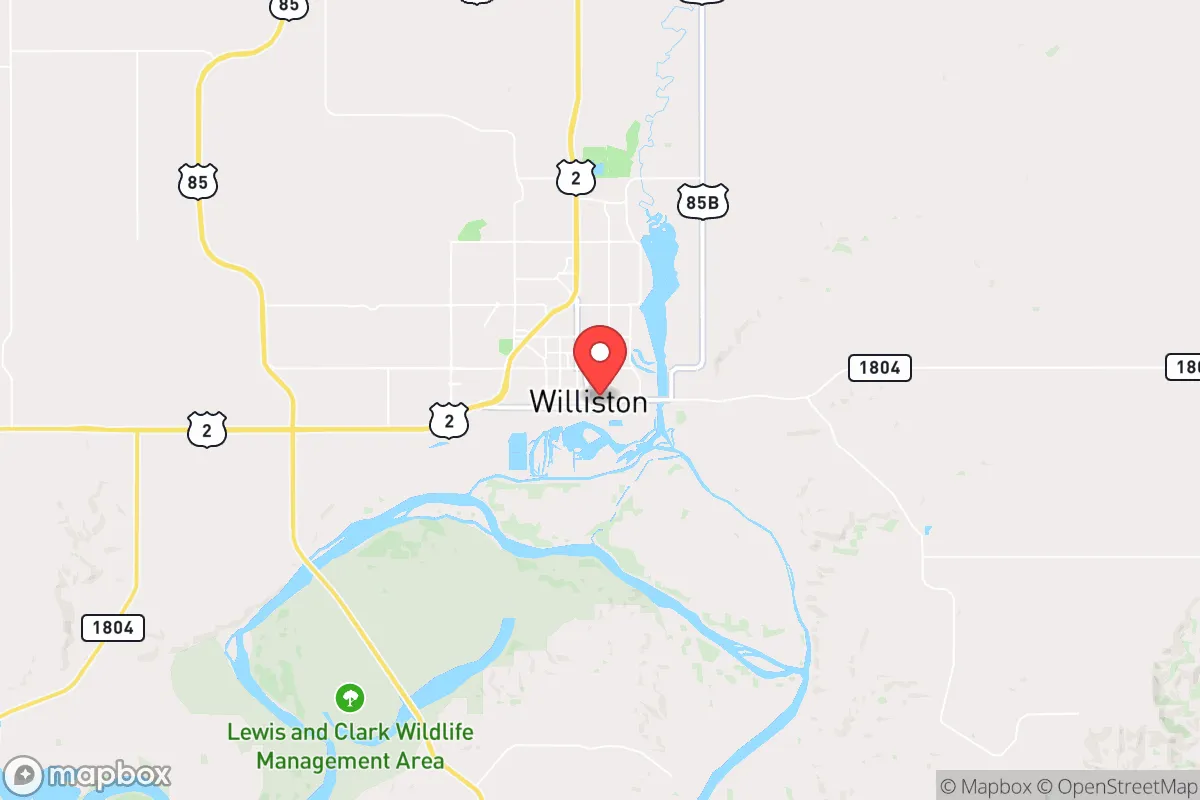
Williston’s primary strategic asset is its location in the far northwestern corner of North Dakota, roughly 20 miles from the Montana border and over 100 miles from the nearest city of significant size (Minot, population ~50,000). The nearest major metropolitan area, Billings, Montana, is over 300 miles away, and Minneapolis–Saint Paul is nearly 600 miles distant. This isolation means that any civil unrest, pandemic-driven evacuation, or mass casualty event originating in a coastal or urban center will take days or weeks to reach Williston—if it ever does. The surrounding terrain is flat to gently rolling prairie, offering long sightlines and limited cover for any approaching threat, which is a defensive advantage for those who know the land. The area is also far from any known nuclear fallout targets: no major military bases, no strategic command centers, no large ports or rail hubs within a 200-mile radius. The closest potential fallout-relevant landmark is Minot Air Force Base, home to nuclear-capable B-52s and missile silos, but it is over 100 miles east and downwind patterns typically carry fallout away from Williston. The region’s sparse population—fewer than 3 people per square mile in the surrounding county—means that even a localized disaster would not create the secondary crises of looting, refugee flows, or resource competition seen in denser areas.
Key risks and exposure to fallout-relevant infrastructure
No location is risk-free, and Williston has specific vulnerabilities that a relocator must weigh. The most significant is the presence of the Bakken oil fields themselves: while the energy infrastructure is a boon for fuel availability, it also makes the area a potential target for sabotage or terrorism. Pipeline hubs, rail loading terminals, and storage facilities near Williston could be disrupted by coordinated attacks, though the dispersed nature of the field (hundreds of wells spread over thousands of square miles) makes a single point of failure unlikely. The harsh winter climate is a constant risk—temperatures can drop to -40°F with wind chills, and blizzards can isolate the town for days. This is not a location for the unprepared; winter survival skills and a robust heating plan are non-negotiable. Proximity to the Canadian border (about 30 miles north) is a double-edged sword: it offers an escape route or resupply corridor if the U.S. situation deteriorates, but it also means potential border closures or restrictions during a national emergency. The nearest Level 1 trauma center is in Minot, over an hour away, so medical emergencies during a grid-down scenario would require self-sufficiency or a long, dangerous drive. Finally, the area sits on the Missouri River watershed, which provides ample water but also carries flood risk in spring thaw—though Williston itself is on high ground relative to the river.
Practical resilience for daily life: food, water, energy, and defensibility
For a relocator focused on long-term survival, Williston excels in the four pillars of resilience. Energy is the strongest asset: the Bakken field produces over 1.2 million barrels of oil per day, and natural gas is flared in such quantities that local residents can often negotiate free or heavily discounted propane and heating fuel. Solar and wind potential are moderate but viable, with over 200 sunny days per year and consistent prairie winds. Water is abundant via the Missouri River and the Lake Sakakawea reservoir, which holds over 24 million acre-feet of water—enough to supply the region for decades even during drought. Groundwater is accessible via wells, though drilling depth varies. Food production is the weak link: the growing season is short (90–110 days) and the soil is heavy clay, making traditional gardening challenging. However, the area is surrounded by cattle ranches and wheat farms, and local meat and grain are available through direct farm purchases. Greenhouse or hoop-house growing is essential for year-round vegetables. Defensibility is high due to the low population density and the “small town” culture where everyone knows each other. Outsiders are noticed quickly, and the local sheriff’s office (Williams County) maintains a visible presence. Property with a good well, a backup generator, and a clear line of sight to the main road is the ideal setup. The town itself has a population of about 30,000, which is small enough to avoid the anonymity that enables crime but large enough to have a hardware store, a hospital, and a Walmart—all critical for pre-disaster stocking.
The overall strategic picture for Williston is one of high reward with moderate, manageable risk. It is not a bug-out location for the weekend warrior; it is a permanent relocation for those willing to endure harsh winters and cultural isolation in exchange for genuine security. The area’s energy wealth, water access, and distance from fallout zones make it one of the few places in the lower 48 where a family could realistically ride out a long-term national crisis without relying on government aid or fleeing to a bunker. The conservative values of self-reliance, community, and minimal government interference are already baked into the local culture—this is not a place where you will be lectured about your generator or your firearm collection. The trade-offs are real: you will be far from specialized medical care, entertainment, and the conveniences of urban life. But for those who see the writing on the wall and want a base that can withstand the storm, Williston deserves a top spot on the short list.

* Values derived from national, state, county, city and local statistics and may differ in a specific area. Last updated: 2026-04-19T06:51:42.000Z
Narrative content on this page is AI-generated and may contain mistakes. Verify any details that matter before acting on them.
ReloMaps may earn a commission from affiliate links at no extra cost to you.

