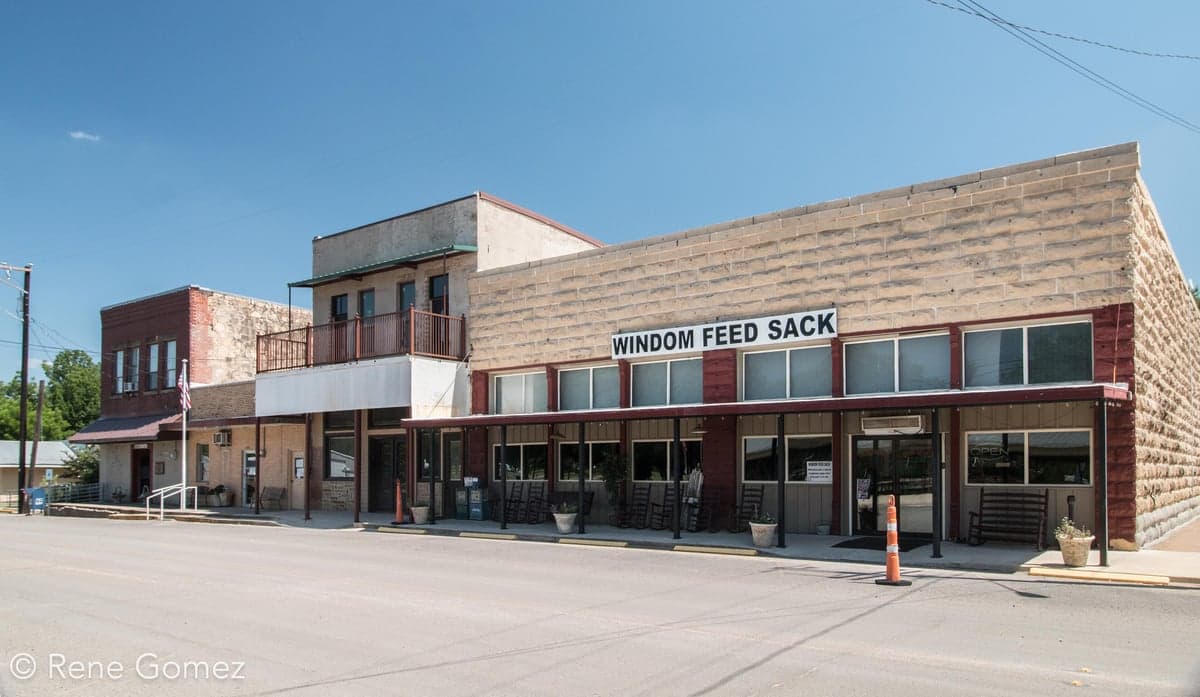
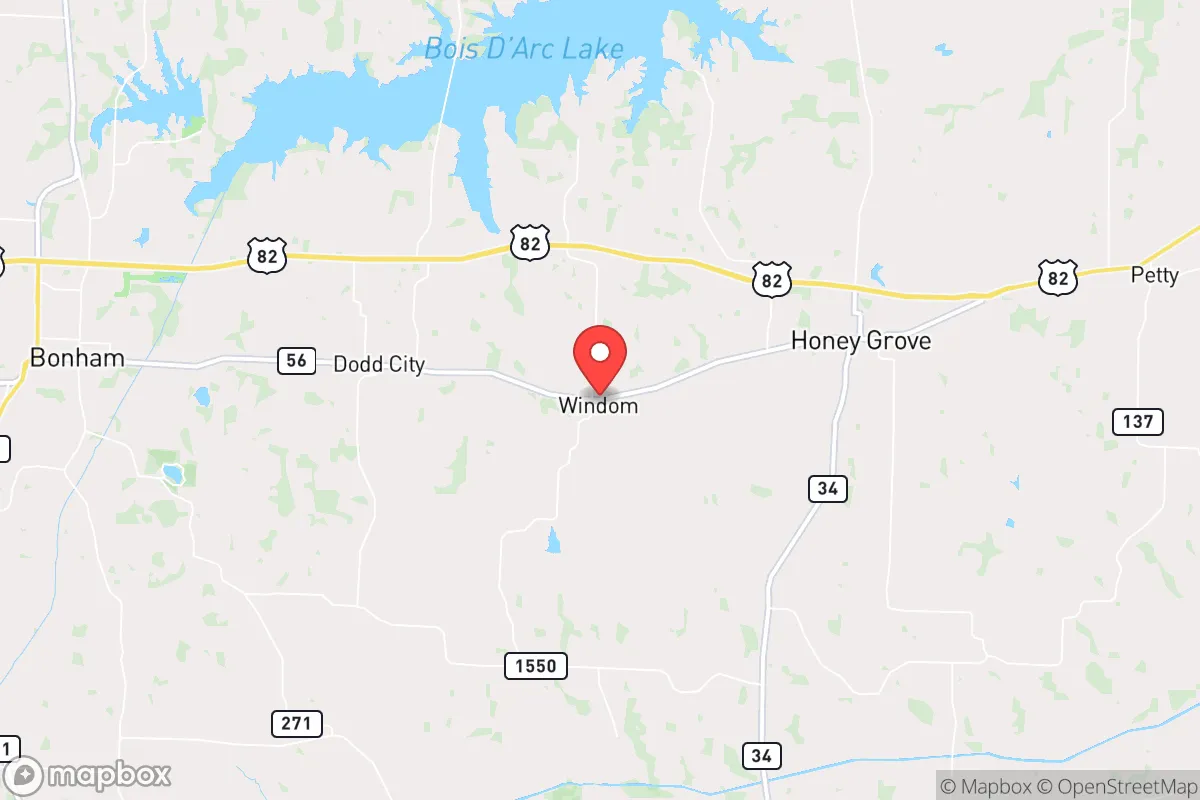
Photo: Wikipedia
Demographics of Windom, TX
Affluence Level in Windom, TX
A middle-class area roughly in line with national averages across income, home values, education, and employment.
People of Windom, TX
Windom, Texas, is a tiny, deeply rural community of 77 residents where the population is overwhelmingly White (94.8%) and nearly entirely native-born (0.0% foreign-born). With a minuscule 2.6% Black share and no recorded Hispanic, Asian, or Indian residents, the city’s human history is one of near-total demographic stasis — a place that has seen almost no in-migration for generations. The population is older, with only 5.0% holding a college degree, reflecting a community built on agricultural roots and sustained by family ties rather than economic opportunity.
How the city was settled and grew
Windom was founded in the late 19th century as a railroad stop along the Missouri-Kansas-Texas (Katy) line, drawing its first residents — primarily Anglo-American farmers and ranchers — from the surrounding Blackland Prairie. The original settlers were largely of German and Scots-Irish descent, arriving from other parts of Texas and the U.S. South to take advantage of land grants and the new rail connection for cotton and grain shipping. The historic core, known simply as Old Town Windom, clustered around the depot and the single main street, where a general store, a cotton gin, and a small Baptist church served the community. A second informal neighborhood, Railroad Flats, grew up just south of the tracks, housing the depot agent, section hands, and a few Black families who worked as sharecroppers on nearby farms — the only non-White presence in the town’s early decades. By 1920, Windom had peaked at roughly 200 residents, but the Great Depression and the mechanization of cotton farming triggered a slow decline, with many families leaving for larger cities like Dallas and Sherman.
Modern era (post-1965)
The post-1965 period, which saw massive demographic change across the U.S. via the Hart-Cellar Act, had virtually no impact on Windom. The city recorded zero foreign-born residents in 2020 data, and its racial composition has remained static: White share has hovered near 95% since the 1970s, with the Black population shrinking from a small handful to just 2.6% today. The few Black families who remained after the 1960s lived in a pocket called East Windom, a cluster of homes along the county road leading to the now-defunct schoolhouse; that area has since depopulated, with most descendants moving to larger towns. The rest of Windom’s housing stock — scattered farmhouses and a handful of 1970s-era mobile homes along County Road 1120 — is occupied by aging White residents who inherited family land. No new subdivisions, apartment complexes, or commercial developments have been built in the city since the 1950s, and the population has steadily declined from 150 in 1980 to 77 today.
The future
Windom’s demographic trajectory points toward continued shrinkage and homogenization. With no foreign-born population and no Hispanic, Asian, or Indian communities to drive growth, the city is entirely dependent on natural increase — and the median age is likely above 50, given the low college attainment and lack of young families. The few children in town attend schools in nearby Fannin County, and most leave for college or jobs and never return. The city’s housing stock is aging and largely unmarketable to outsiders, as there are no jobs, no rental units, and no amenities within the city limits. Over the next 10–20 years, Windom will likely see its population drop below 50, with the remaining residents concentrated in the Old Town core and a few surviving farmsteads along FM 1396. The only potential for change would come from annexation by a growing nearby town — such as Bonham or Honey Grove — but no such plans are active.
For someone moving in now, Windom offers extreme rural isolation and a population that is almost entirely White, native-born, and aging. It is not a place of demographic change or growth; it is a place where the population is quietly contracting, and where new residents would need to be self-sufficient and comfortable with a community that has seen little new blood in decades.

* Values derived from national, state, county, city and local statistics and may differ in a specific area. Last updated: 2026-04-17T23:45:33.000Z
Narrative content on this page is AI-generated and may contain mistakes. Verify any details that matter before acting on them.
ReloMaps may earn a commission from affiliate links at no extra cost to you.

