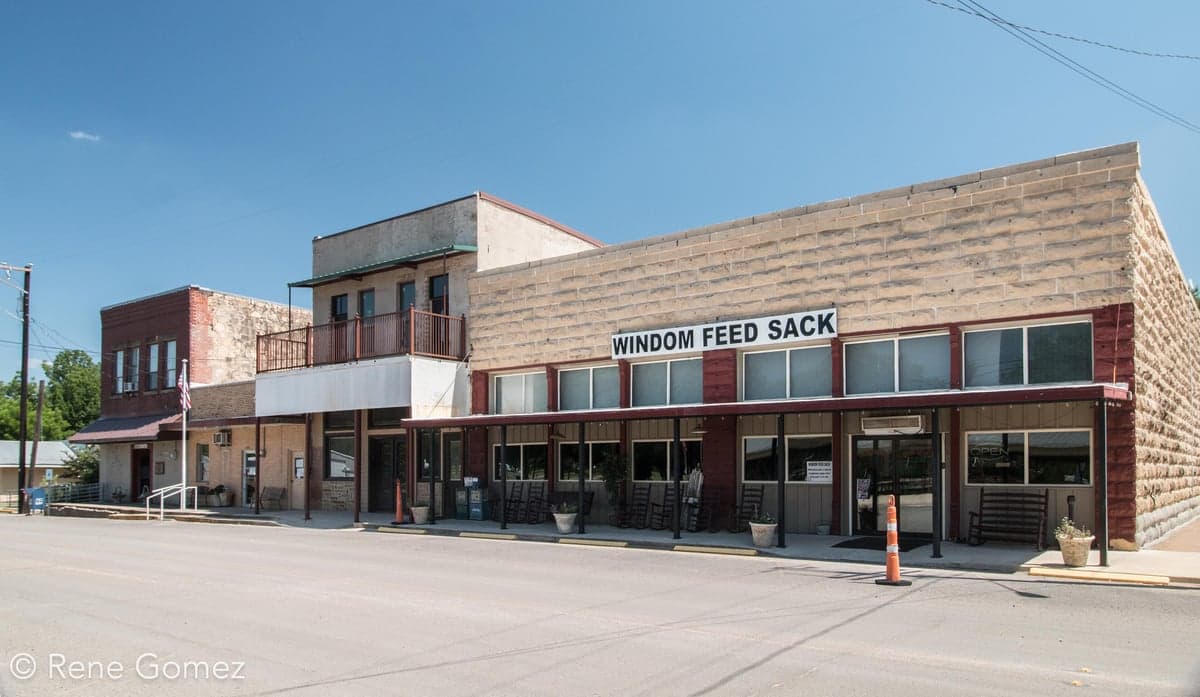
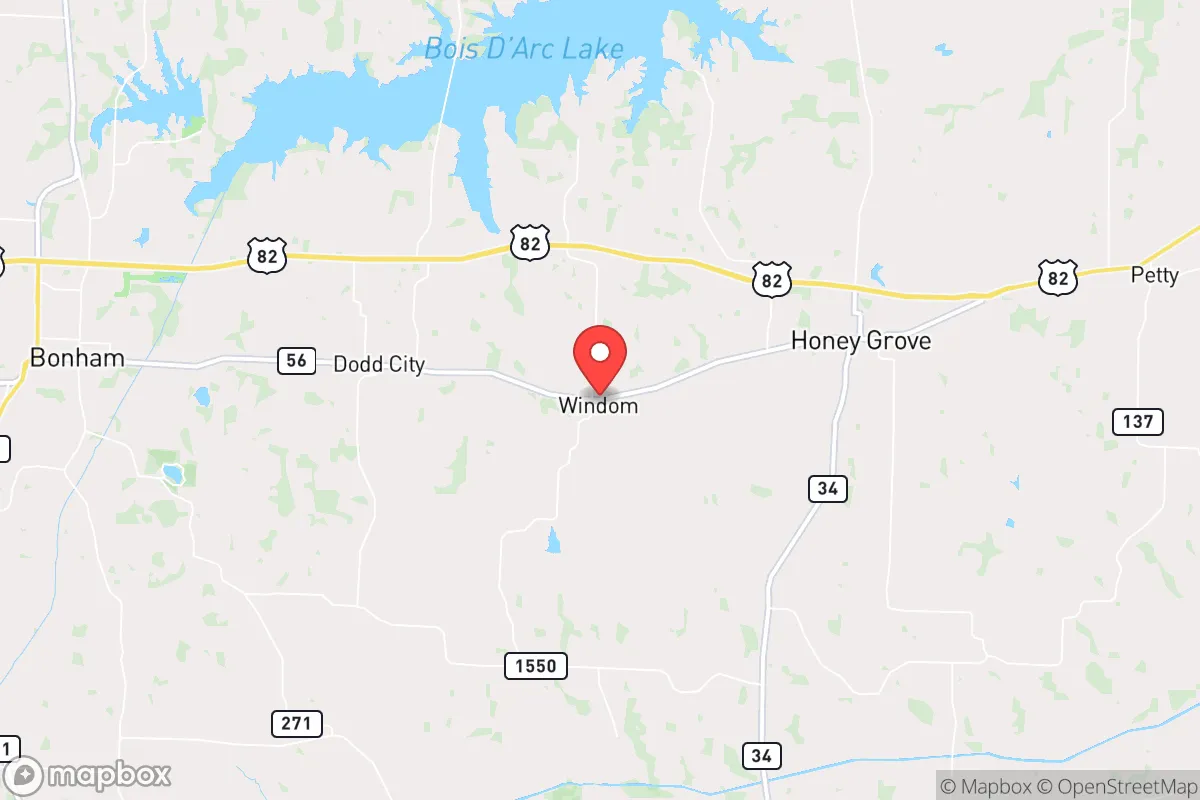
Photo: Wikipedia
Political ClimatePolitical Climate in Windom, TX
District shown is the primary district for this city’s centroid. Cities may span multiple districts.
Local Political AnalysisPolitical Analysis of Windom, TX
Windom, Texas, sits deep in reliably red territory, and that’s not changing anytime soon. With a Cook Partisan Voting Index of R+16, this area leans Republican by a solid margin—well to the right of the state average and a world away from the politics you’d find in Austin or Dallas. If you’ve lived here a while, you’ve seen the local elections stay consistently conservative, with most folks voting for limited government, lower taxes, and a hands-off approach to personal freedoms. The trajectory is steady: Windom isn’t swinging blue, and the surrounding rural counties have only hardened their Republican lean over the last decade, even as some Texas suburbs have shifted left.
How it compares
Windom’s political climate stands in sharp contrast to nearby cities like Sherman or Denison, which have seen more moderate or even progressive influences creep in as they grow. Sherman, for instance, has a more mixed electorate, with some precincts trending toward Democratic candidates in recent county-level races. Windom, by contrast, remains a bastion of traditional values—think lower property taxes, fewer zoning restrictions, and a general skepticism of state or federal overreach. Head south toward McKinney or Frisco, and you’ll find a different story: those areas have become battlegrounds over school board policies and local ordinances, with progressive activists pushing for higher density housing and stricter environmental rules. Windom’s voters have consistently rejected that path, favoring local control and individual liberty over top-down mandates. It’s a place where the Second Amendment isn’t debated, and the idea of a county mask mandate would be laughed out of the room.
What this means for residents
For the people who call Windom home, this political stability translates into a daily life with fewer government intrusions. You won’t see the kind of overreach that’s become common in blue-leaning cities—no heavy-handed business regulations, no aggressive code enforcement on how you maintain your property, and no push for controversial school curricula that undermine parental rights. Property taxes here are manageable compared to neighboring counties, and the local government tends to keep its nose out of your personal choices, whether that’s how you use your land or what you teach your kids. That said, there’s a growing concern among long-time residents about outside influence. As more people move from progressive states like California or New York, there’s a quiet worry that Windom could face the same erosion of freedoms seen in places like Austin or Houston. The local elections are still safe, but staying vigilant is key—keeping an eye on school board races and county commissioner seats is how this community preserves its way of life.
Culturally, Windom is a place where church potlucks and high school football games still define the social calendar, and the idea of “government overreach” isn’t just a talking point—it’s a lived experience. You’ll find a strong sense of self-reliance here, with neighbors helping neighbors rather than waiting for a government program. The policy distinctions are subtle but real: no city-wide plastic bag bans, no mandatory composting, and a sheriff’s office that focuses on actual crime rather than enforcing state mandates. For anyone tired of the nanny state creeping into everyday life, Windom offers a breath of fresh, unregulated air. Just don’t expect it to stay that way without effort—keeping the progressive tide at bay means staying involved, voting in every local election, and reminding newcomers why this place works the way it does.

State Political ClimatePolitical Climate in Texas
State Political AnalysisPolitical Environment in the State
Texas has been a reliably Republican state for the past three decades, but the dominant coalition is shifting under your feet. The GOP still holds every statewide office and both legislative chambers, but the margin of victory has narrowed from 16 points in 2012 to about 9 points in 2024. The real story isn’t a blue wave—it’s a demographic and geographic realignment that’s making the state more politically fragmented than ever. If you’re moving here expecting the same Texas your grandfather knew, you need to understand how the map is being redrawn.
Urban vs. rural divide
The political map of Texas is a tale of three worlds. The big metros—Houston, Dallas-Fort Worth, San Antonio, and Austin—are the engines of Democratic growth. Harris County (Houston) alone accounts for nearly a third of all Democratic votes in the state, and it flipped from red to blue between 2016 and 2020. Travis County (Austin) is the bluest urban core, with Democrats routinely winning 70%+ of the vote. Meanwhile, the rural and exurban counties are getting redder. Collin County (north of Dallas) was once a GOP stronghold but is now a swing county—Trump won it by only 3 points in 2024. The Rio Grande Valley, historically Democratic, has been shifting right; Starr County, which voted for Hillary Clinton by 60 points, went for Trump by 5 points in 2024. The suburbs of Fort Worth and San Antonio are the real battlegrounds—places like Tarrant County (Fort Worth) flipped to Biden in 2020 and stayed blue in 2024. If you’re looking for a reliably conservative area, you’re better off in Lubbock, Amarillo, or the Hill Country west of Austin, where GOP margins are still 30-40 points.
Policy environment
Texas remains a low-tax, low-regulation state by design. There’s no state income tax, and property taxes are high but capped at 10% annual growth for homesteads. The regulatory posture is business-friendly—permitting is fast, zoning is minimal outside of major cities, and occupational licensing has been rolled back. On education, the state funds schools through a Robin Hood system that redistributes property tax revenue from wealthy districts to poor ones, but per-pupil spending is below the national average. School choice is a live issue; the 2023 legislative session saw a push for education savings accounts that failed due to rural Republican opposition. Healthcare is a mixed bag: Texas has the highest uninsured rate in the country (about 18%), and the state has refused Medicaid expansion under the ACA. Election laws tightened after 2020—SB 1 (2021) restricted mail-in voting, added ID requirements, and banned 24-hour and drive-through voting. For a conservative, the policy environment is broadly favorable, but the cracks are showing: property taxes are a growing burden, and the lack of Medicaid expansion strains rural hospitals.
Trajectory & freedom
On paper, Texas is a freedom-friendly state, but the trajectory is more complicated than the slogan suggests. The 2021 legislative session was a landmark for gun rights: permitless carry (HB 1927) went into effect, allowing most adults to carry a handgun without a license. Parental rights were strengthened with the passage of the “Save Women’s Sports Act” (SB 15, 2021) and a ban on gender transition procedures for minors (SB 14, 2023). Abortion is effectively banned after a fetal heartbeat is detected (SB 8, 2021), with no exceptions for rape or incest. On the other hand, personal liberty took hits: the state’s drag show ban (SB 12, 2023) was struck down as unconstitutional, and the 2023 law targeting “sexual content” in libraries (HB 900) was blocked by a federal judge. Medical autonomy is under pressure—the state’s strict abortion laws have led to confusion over miscarriage care and IVF, and there’s no medical marijuana program to speak of. Property rights are strong, but the state’s aggressive use of eminent domain for pipelines and transmission lines is a recurring grievance. The bottom line: Texas is expanding freedom in some areas (guns, parental rights) while contracting it in others (medical choices, speech restrictions). If you value maximum personal autonomy, you’ll need to pick your battles.
Civil unrest & political movements
Texas has seen its share of political flashpoints. The 2020 protests in Austin and Dallas over George Floyd’s death were large and occasionally violent, leading to property damage and a police reform backlash. The “Defund the Police” movement gained traction in Austin, where the city council cut the police budget by $150 million in 2020, only to restore it after a crime spike and a public outcry. Immigration politics are a constant pressure point: Governor Abbott’s Operation Lone Star (2021) deployed state troopers and National Guard to the border, bused migrants to New York and Chicago, and installed razor wire along the Rio Grande. The state is currently in a legal standoff with the Biden administration over border enforcement, with the Supreme Court ruling that federal agents can remove the wire. Sanctuary city policies are banned statewide (SB 4, 2017), but some cities like Austin and Dallas have adopted “welcoming” ordinances that limit cooperation with ICE. Secession rhetoric is mostly a fringe phenomenon—the Texas Nationalist Movement has little real traction—but the state’s legal battles with the federal government over immigration, abortion, and transgender rights have fueled a broader “state sovereignty” sentiment. Election integrity remains a hot-button issue: the 2020 audit in Harris County found no widespread fraud, but the 2021 voting law changes have led to a surge in rejected mail ballots. A new resident will notice the political tension most in the cities—yard signs, bumper stickers, and local news coverage are more polarized than in the suburbs or rural areas.
Projection
Over the next 5-10 years, Texas is likely to become more competitive at the statewide level, but not necessarily more liberal. The in-migration from California and the Northeast is real—about 1,000 people move to Texas per day—and many of them are moderate or conservative-leaning, not progressive activists. The Hispanic vote is shifting right, especially in the border region, which could offset Democratic gains in the suburbs. The state’s population is growing fastest in the exurbs and the I-35 corridor, where housing is cheaper and politics are more mixed. The GOP will likely hold the legislature through the next redistricting cycle (2031), but the governor’s race in 2026 could be competitive if a moderate Democrat emerges. The biggest wildcard is the state’s water and energy infrastructure—if the grid fails again (like in 2021), it could erode trust in the current leadership. For a new resident, expect the political environment to remain broadly conservative but with more internal friction: fights over school vouchers, property tax reform, and border policy will dominate the headlines. The culture war issues (transgender rights, abortion, library books) aren’t going away, but they may become less central as economic concerns take priority.
For a conservative moving to Texas, the practical takeaway is this: you’ll find a state that still respects your gun rights, your religious liberty, and your wallet—but you’ll need to pick your county carefully. The urban cores are lost to progressive politics, the rural areas are solid, and the suburbs are the new front line. If you want the full Texas experience—low taxes, minimal regulation, and a government that mostly stays out of your life—head to the Hill Country, the Panhandle, or the exurbs of Fort Worth. If you end up in Austin or Houston, you’ll be living in a blue island with red state laws, which is a different kind of freedom altogether.
* Values derived from national, state, county, city and local statistics and may differ in a specific area. Last updated: 2026-04-17T23:45:33.000Z
Narrative content on this page is AI-generated and may contain mistakes. Verify any details that matter before acting on them.
ReloMaps may earn a commission from affiliate links at no extra cost to you.

