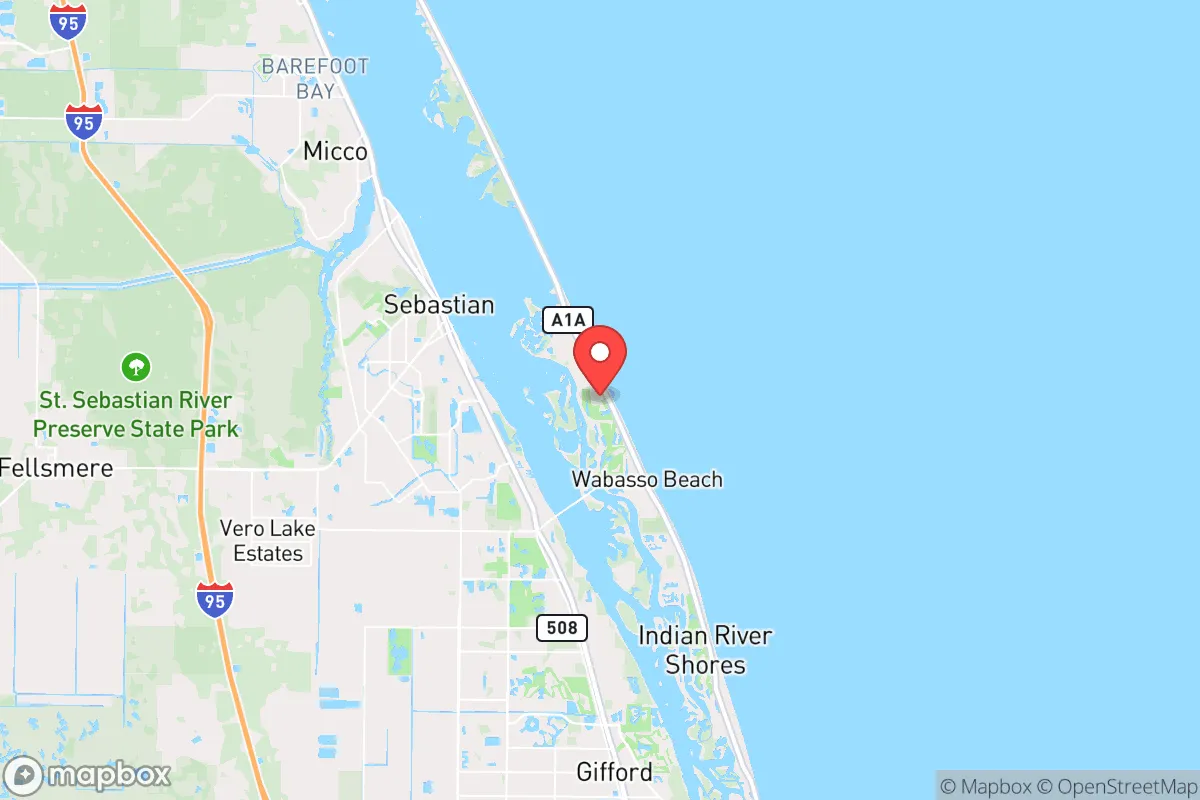
Strategic Assessment of Windsor, FL
Workable tactical position. Some exposure to population density or targets, but generally defensible in a crisis.
What does the Strategic Assessment tell us?
Our Strategic Assessment grades tactical survivability of an area. Major population centers, military targets, fallout zones, natural disasters, and border exposure all drive risk — lower exposure means a more defensible position in a crisis.
This is heavily inspired by Joel Skousen's Strategic Relocation book. Highly recommended you checkout the book ($)What does this tell us?
Our Strategic Assessment grades tactical survivability of an area. Major population centers, military targets, fallout zones, natural disasters, and border exposure all drive risk — lower exposure means a more defensible position in a crisis.
This is heavily inspired by Joel Skousen's Strategic Relocation book. Highly recommended you checkout the book ($)Strategic Pillars

Key Distances
Regional Safe Places
Below is our recommended "safe zones" in Florida and the surrounding area based on our strategic heuristics. For most people, it's unrealistic to live in a “safe zone” full-time due to work, family or other personal reasons. They tend to be more rural. However, many of these areas are perfect for second homes and retreat properties that double as a vacation home or even a short-term rental.

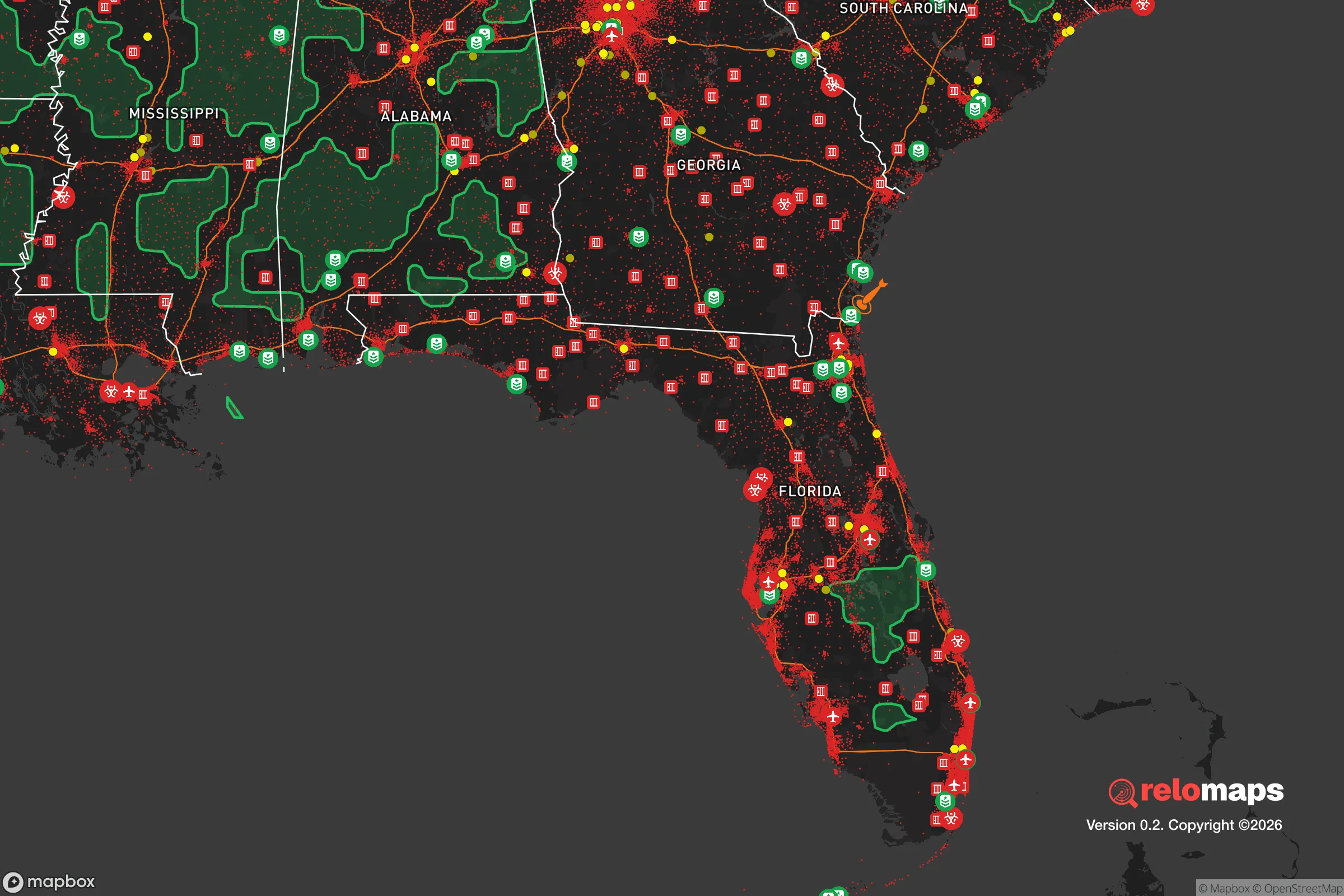


Important Note: For informational purposes only. This does not mean nothing bad ever happens in the green zones. Please use common sense. This is based on public data and modeled with AI. We tried to take a conservative approach but mistakes happen. We update this regularly as new information becomes available.
Solar Generator Recommendations
Backup power matters more here than in safer locations. We've picked three solar generators across budgets and capacity tiers — start with the budget unit if you only need a few essentials, or step up if you want to run a fridge and HVAC for days at a time.

Jackery Portable Power Station Explorer 300
Budget OptionPower on the Go: Weighing only 11 lbs, it's convenient to set up and store with book-sized foldable solar panels

BLUETTI Portable Power Station AC180
Designed for both indoor and outdoor scenarios, AC180 is highly capable as it has a robost capacity and continuous output power.

EF ECOFLOW DELTA Pro Ultra Power Station
Upgraded PickEcoFlow DELTA Pro Ultra is a whole-home energy system designed to grow with your family. Integrated with the Smart Home Panel 2, it scales to meet your evolving energy needs — keeping your home powered, intelligent, and secure through every stage of life.
We earn a commission, at no additional cost to you.
Strategic Assessment Analysis
Windsor, Florida, presents a mixed strategic picture for the conservative prepper or survivalist. Its primary advantage is its small-town character and relative isolation within a wealthy enclave, but its location in central Florida—a state with significant hurricane exposure and proximity to major population centers—introduces serious vulnerabilities. For a relocator prioritizing resilience against civic unrest, mass casualty events, and long-term disaster scenarios, Windsor offers a defensible core but demands careful mitigation of its geographic and logistical risks.
Geographic position and natural advantages for long-term security
Windsor sits in north-central Florida, roughly 30 miles southeast of Gainesville and about 15 miles west of the St. Johns River. Its position in Alachua County places it within a region known for rolling hills, hardwood forests, and abundant freshwater springs—a stark contrast to the flat, flood-prone coastal zones. The area’s elevation averages around 150 feet above sea level, which provides a meaningful buffer against storm surge and sea-level rise, though it does not eliminate flood risk entirely. The surrounding landscape is dominated by rural farmland, pine plantations, and conservation lands, including the nearby Ocala National Forest to the south. This natural buffer reduces the likelihood of urban sprawl encroaching quickly, preserving a degree of isolation. For a prepper, the key advantage is access to multiple natural water sources: the Santa Fe River runs just north of Windsor, and numerous springs like Ginnie Springs and Poe Springs are within a 20-minute drive. These provide reliable, off-grid water options if municipal systems fail. The area’s clay-based soils also support small-scale agriculture, though the sandy loam common in central Florida requires amendment for serious food production. Overall, Windsor’s geography offers a defensible, resource-rich pocket, but it is not a remote wilderness—it sits within a 90-minute drive of Jacksonville and a two-hour drive of Orlando, meaning it is within the fallout zone of any major urban disruption.
Risks, exposures, and proximity to fallout-relevant landmarks
The most significant strategic weakness of Windsor is its proximity to several high-risk targets. Gainesville, home to the University of Florida and a major medical complex (UF Health Shands), is a likely focal point for civil unrest, mass casualty events, or infrastructure collapse. In a scenario involving widespread societal breakdown, Gainesville’s population of over 140,000 could become a source of refugee flows, looting, or resource competition. Windsor’s main access road, County Road 346, connects directly to US-441 and I-75, both major evacuation and supply corridors that would become chokepoints or targets during a crisis. Additionally, the area is within 50 miles of the St. Johns River Nuclear Power Plant (Plant Vogtle’s distant cousin, but more relevantly, the nearby Crystal River Nuclear Plant, though decommissioned, still holds spent fuel). While the risk of a nuclear incident is low, the presence of any nuclear infrastructure within a 100-mile radius is a consideration for fallout planning. Hurricanes are the most probable natural disaster: Windsor lies in a zone that experiences tropical storms and Category 1-2 hurricanes with some regularity. The 2024 hurricane season demonstrated that even inland areas can face prolonged power outages, flooding, and supply chain disruptions. For a prepper, the key takeaway is that Windsor is not a hardened bunker location—it is a semi-rural suburb that would be affected by regional shocks. The lack of a major military base nearby (Camp Blanding is 40 miles east, but not a strategic asset) means no immediate security umbrella, but also no target value.
Practical resilience for a relocator: food, water, energy, and defensibility
For a single individual or family relocating with a prepper mindset, Windsor’s practical resilience hinges on self-sufficiency within a small community. The town itself has fewer than 1,000 residents, which means low population density and a higher likelihood of neighborly cooperation—assuming you integrate well. The local economy is driven by equestrian estates, small farms, and remote workers, so there is existing infrastructure for animal husbandry and gardening. However, the nearest major grocery store is in Gainesville (Walmart, Publix), which is a 25-minute drive. In a crisis, that supply line would be vulnerable. Building a 6-12 month food storage is essential, as local resupply is not guaranteed. Water resilience is stronger: the Floridan Aquifer is accessible via private wells, and many homes in Windsor already have them. Installing a hand pump or solar-powered well pump is a wise investment. Rainwater catchment is also viable, given the region’s 50+ inches of annual rainfall. Energy resilience is moderate. The area is served by Gainesville Regional Utilities, which has a mixed grid (natural gas, solar, biomass). Power outages during storms are common, lasting from hours to days. Solar panels with battery storage (e.g., Tesla Powerwall or off-grid systems) are practical here, as the region gets ample sun. Propane generators are also common. Defensibility is a mixed bag: Windsor’s layout is a gated community with controlled access, which provides a first layer of security against casual intrusion. However, the surrounding rural roads are open, and the community is not fortified. A determined group could bypass the gate. The best defensive strategy is low profile—blending in as a quiet resident, not advertising preps, and building relationships with neighbors who share your mindset. The local sheriff’s office (Alachua County) is professional but stretched thin; in a major event, response times would be long. Self-reliance is the only reliable plan.
Overall, Windsor offers a viable but not ideal strategic relocation option for the conservative prepper. Its strengths are natural water access, low population density, and a defensible community layout. Its weaknesses are proximity to Gainesville, hurricane risk, and reliance on vulnerable supply chains. For a single individual or family willing to invest in off-grid water, solar power, and food storage, and who can maintain a low profile, Windsor can serve as a solid base for weathering moderate regional disruptions. However, for those seeking true remote survival—far from any major city, nuclear infrastructure, or hurricane-prone zone—the Florida peninsula is not the best choice. Windsor is a compromise: a comfortable, semi-prepared location that works for those who accept its risks and plan accordingly.

* Values derived from national, state, county, city and local statistics and may differ in a specific area. Last updated: 2026-05-14T01:53:35.000Z
Narrative content on this page is AI-generated and may contain mistakes. Verify any details that matter before acting on them.
ReloMaps may earn a commission from affiliate links at no extra cost to you.

