Photo: Wikipedia
Find The Best Places To Live
in Jacksonville
PRO TIP! You can paste a Zillow or Redfin link to get info on that property.
What It's Like Living in Jacksonville, FL
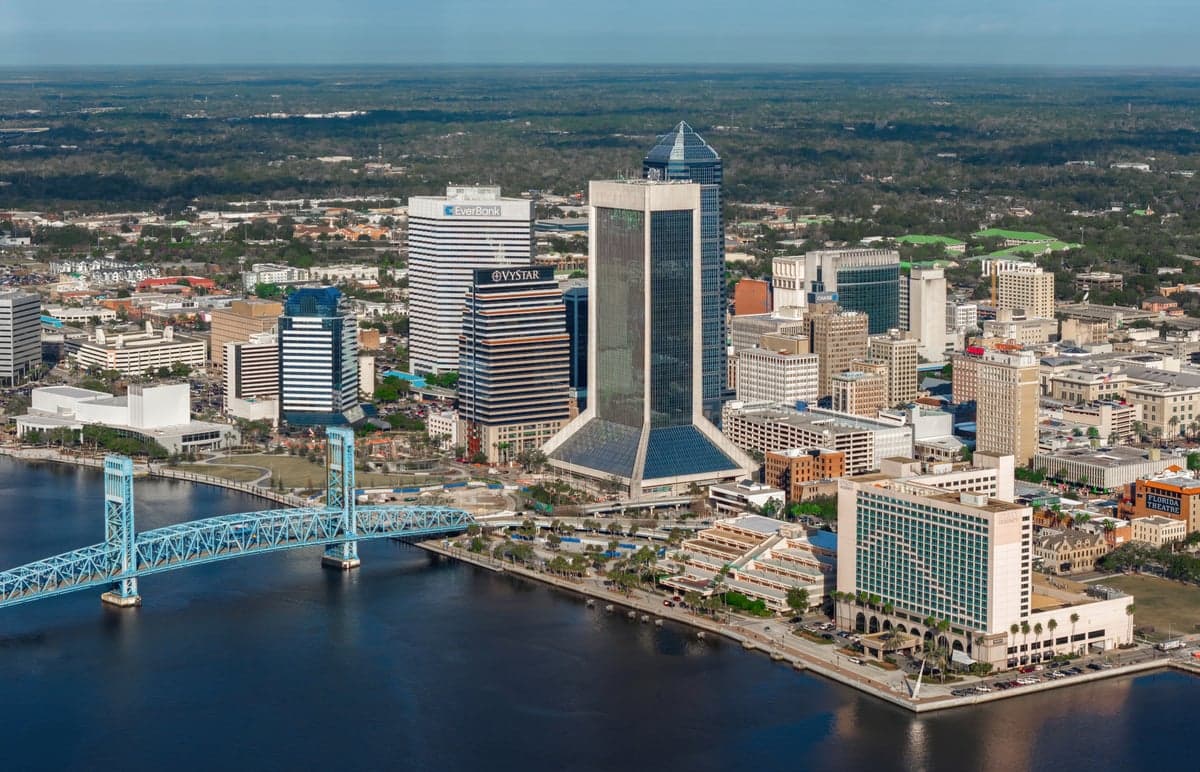
Jacksonville is the kind of place where you can spend a Saturday morning kayping through a salt marsh, grab lunch at a no-frills seafood shack, and still make it home in time to mow the lawn before the afternoon thunderstorm rolls in. It’s Florida’s largest city by land area, but it doesn’t feel like a sprawling metropolis — more like a collection of distinct neighborhoods and beach towns loosely stitched together by the St. Johns River. People here tend to be practical, outdoorsy, and unpretentious, and they’ll happily tell you that the city’s best feature is how much space there is to spread out.
The Daily Rhythm: River, Beaches, and a Lot of Driving
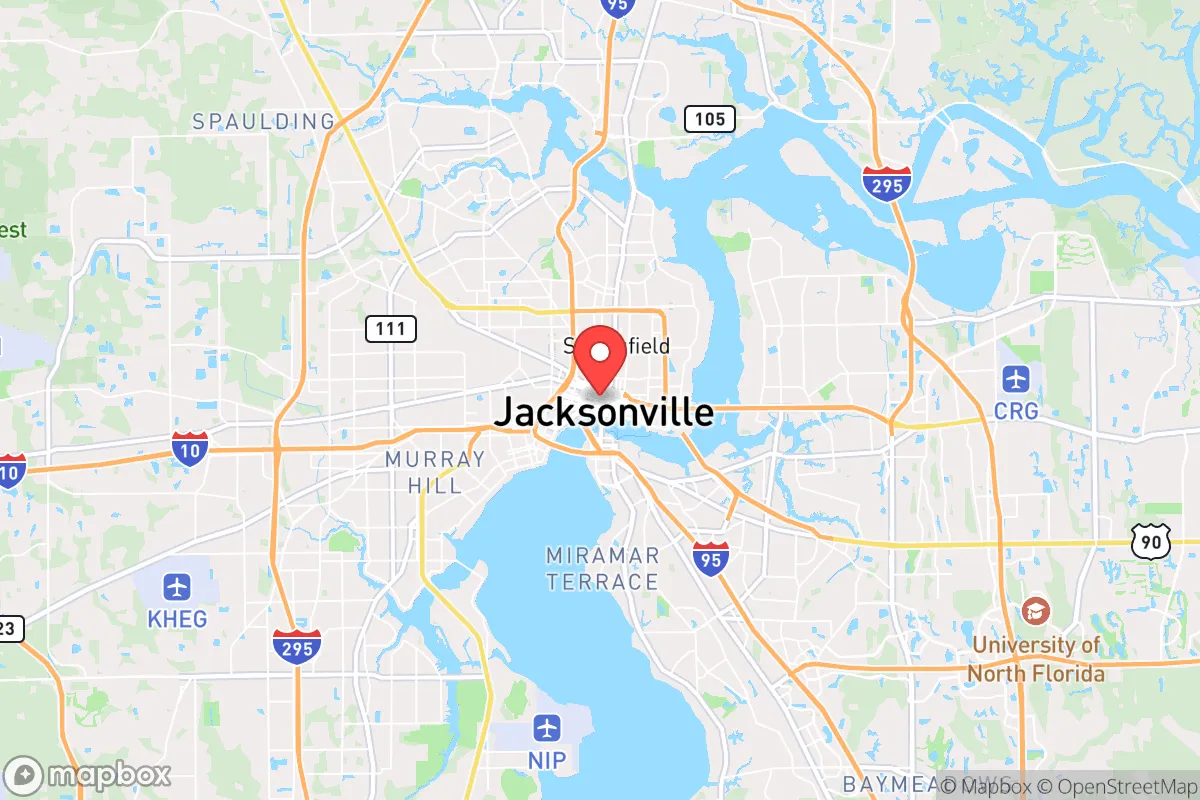
For most residents, daily life in Jacksonville revolves around the water. The St. Johns River runs through the heart of downtown, and the Atlantic Ocean is a 20-minute drive east from most neighborhoods. Commutes average about 24 minutes, which is manageable, but that number hides a key reality: you will drive everywhere. The city is so spread out that there’s no single “downtown” hub where everyone goes. Instead, people pick their orbit — Riverside and Avondale for walkable bungalows and indie coffee shops, the Southside for newer subdivisions and chain restaurants, or the Beaches (Jacksonville Beach, Neptune Beach, Atlantic Beach) for a laid-back surf-town vibe.
Weekends often start with a run or bike ride on the Timucuan Trail or through Hanna Park, followed by a late breakfast at The Fox Restaurant in Avondale or Metro Diner (the original location is here). Afternoons might mean a Jaguars tailgate in the fall, a stroll through the Cummer Museum of Art & Gardens, or a trip to Fort Caroline National Memorial. The city has a strong sense of local pride, but it’s not flashy — you’re more likely to hear someone rave about their favorite taco truck than about a five-star restaurant.
Sports & Community: More Than Just the Jags
Jacksonville is a football town, no question. The Jacksonville Jaguars are the centerpiece of the local sports scene, and game days at TIAA Bank Field (soon to be renamed) bring the city together in a way few other events do. But the sports culture runs deeper than the NFL. High school football is a big deal here, with programs like Trinity Christian Academy and Bolles School regularly producing Division I talent. The Jacksonville Jumbo Shrimp (minor league baseball) and Jacksonville Icemen (ECHL hockey) draw solid crowds, and the annual Florida-Georgia college football game (the World’s Largest Outdoor Cocktail Party) turns the city into a massive tailgate every October. If you’re not into sports, you’ll still feel the energy — it’s woven into the community fabric.
The city also has a strong military presence, with Naval Air Station Jacksonville and Naval Station Mayport bringing in a steady stream of active-duty families. That military influence gives the area a grounded, patriotic feel and a transient population that keeps things from getting too insular.
What’s There to Do: Festivals, Parks, and Honest-to-Goodness Nature
Jacksonville punches above its weight in outdoor recreation. The city claims over 80,000 acres of parks, including the massive Kathryn Abbey Hanna Park with its campgrounds, mountain bike trails, and a pristine beach. The Jacksonville Arboretum & Gardens is a hidden gem for quiet walks, and the St. Johns River Ferry is a cheap, scenic way to cross the river and explore the north side. For music lovers, Daily’s Place is an intimate amphitheater attached to the football stadium, and The St. Augustine Amphitheatre is a 30-minute drive south for bigger acts.
Festivals are a big part of the calendar. Riverside Arts Market runs every Saturday under the Fuller Warren Bridge, with local artists, produce, and food trucks. Springing the Blues in April is a free beachfront blues festival, and the Jacksonville Jazz Festival draws national names to downtown. The city’s food scene has grown significantly, with standout spots like Orsay for upscale French, Hawkers for Asian street food, and Maple Street Biscuit Company for a Southern-style breakfast that’s become a local institution.
Pros and Cons of Living Here
Let’s be honest: Jacksonville isn’t for everyone, and longtime residents will be the first to list the frustrations. Here’s a balanced look:
- Pro: Affordability. The median home value is around $266,100, well below the national average for a coastal city. The cost of living index sits at 109 (slightly above the US average), but you get a lot of space for your money — especially compared to Miami or Tampa.
- Con: Crime. The violent crime rate is 339.2 per 100,000, higher than the national average. Property crime is also a concern in certain areas. Most residents will tell you it’s neighborhood-dependent — Riverside and the Beaches feel safe, while parts of the Northside and Westside require more caution.
- Pro: No state income tax. Florida’s tax structure is a major draw, especially for single earners and families looking to stretch their paycheck.
- Con: Sprawl and traffic. You’ll need a car, and the city’s layout means you’ll spend time on I-95 and I-295. The commute average of 24 minutes is reasonable, but a trip from the Southside to the Beaches can take 45 minutes during rush hour.
- Pro: Weather and outdoor lifestyle. Mild winters and warm springs mean year-round golf, boating, and beach days. The summer heat and humidity are real, but afternoon thunderstorms usually cool things off.
- Con: Hurricane risk. Jacksonville gets brushed by tropical storms and hurricanes regularly. It’s not as exposed as the Gulf Coast, but you’ll need to be prepared for power outages and occasional flooding.
The median age here is 36.4, and about 32% of adults hold a college degree. The median household income is $66,981, which aligns with the cost of living — you can live comfortably on a middle-class salary, especially if you’re in healthcare, logistics, or the military. The kind of person who fits in here is someone who values space over density, doesn’t mind a little grit, and would rather spend a Saturday on a boat than in a museum. It’s a city that rewards practicality and patience, and for the right person, it feels like a secret worth keeping.

Similar mid-size cities to Jacksonville
* Values derived from national, state, county, city and local statistics and may differ in a specific area. Last updated: 2026-04-15T23:45:06.000Z
Narrative content on this page is AI-generated and may contain mistakes. Verify any details that matter before acting on them.
ReloMaps may earn a commission from affiliate links at no extra cost to you.

