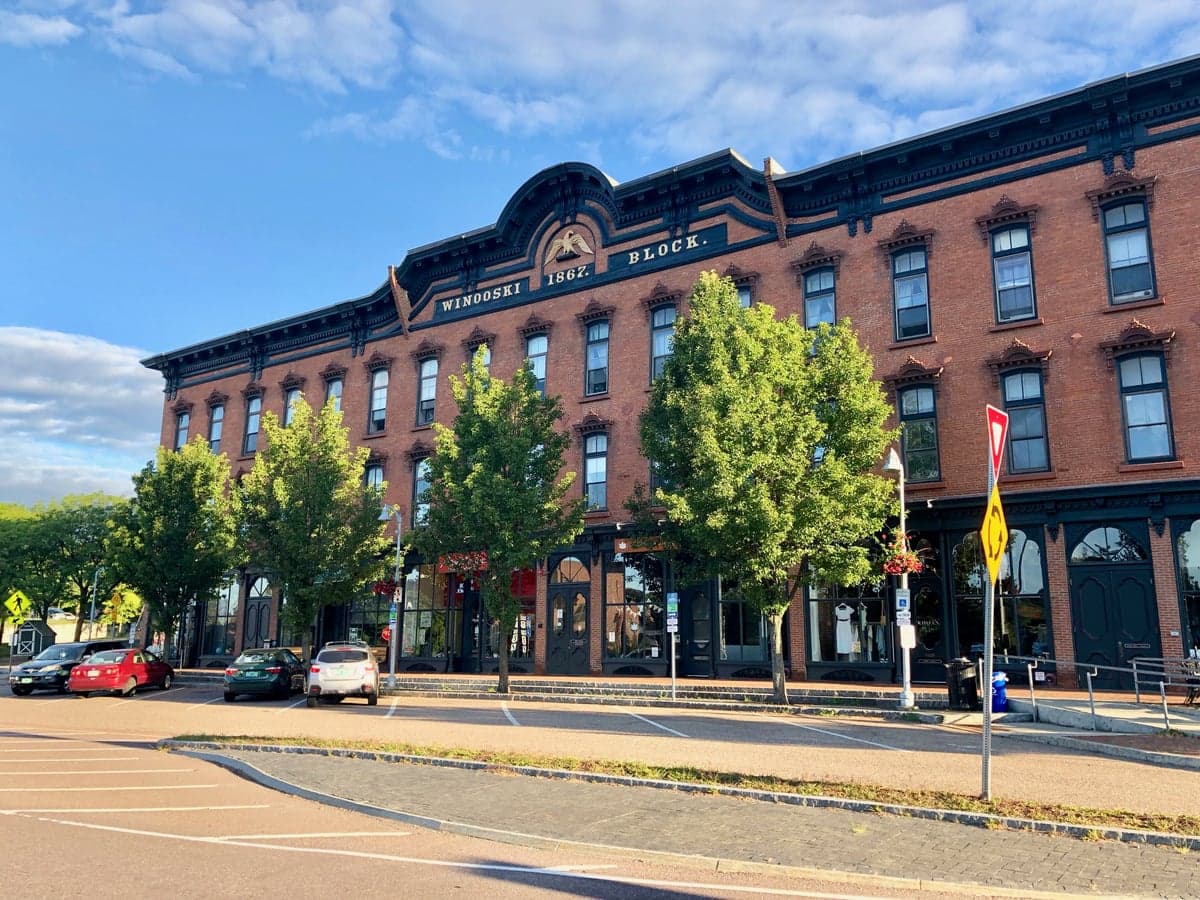
Photo: Wikipedia
Strategic Assessment of Winooski, VT
Multiple tactical vulnerabilities. Population density, target proximity, or disaster risk are likely compounding. A retreat property and exit planning is required.
What does the Strategic Assessment tell us?
Our Strategic Assessment grades tactical survivability of an area. Major population centers, military targets, fallout zones, natural disasters, and border exposure all drive risk — lower exposure means a more defensible position in a crisis.
This is heavily inspired by Joel Skousen's Strategic Relocation book. Highly recommended you checkout the book ($)What does this tell us?
Our Strategic Assessment grades tactical survivability of an area. Major population centers, military targets, fallout zones, natural disasters, and border exposure all drive risk — lower exposure means a more defensible position in a crisis.
This is heavily inspired by Joel Skousen's Strategic Relocation book. Highly recommended you checkout the book ($)Strategic Pillars

Key Distances
Regional Safe Places
Below is our recommended "safe zones" in Vermont and the surrounding area based on our strategic heuristics. For most people, it's unrealistic to live in a “safe zone” full-time due to work, family or other personal reasons. They tend to be more rural. However, many of these areas are perfect for second homes and retreat properties that double as a vacation home or even a short-term rental.
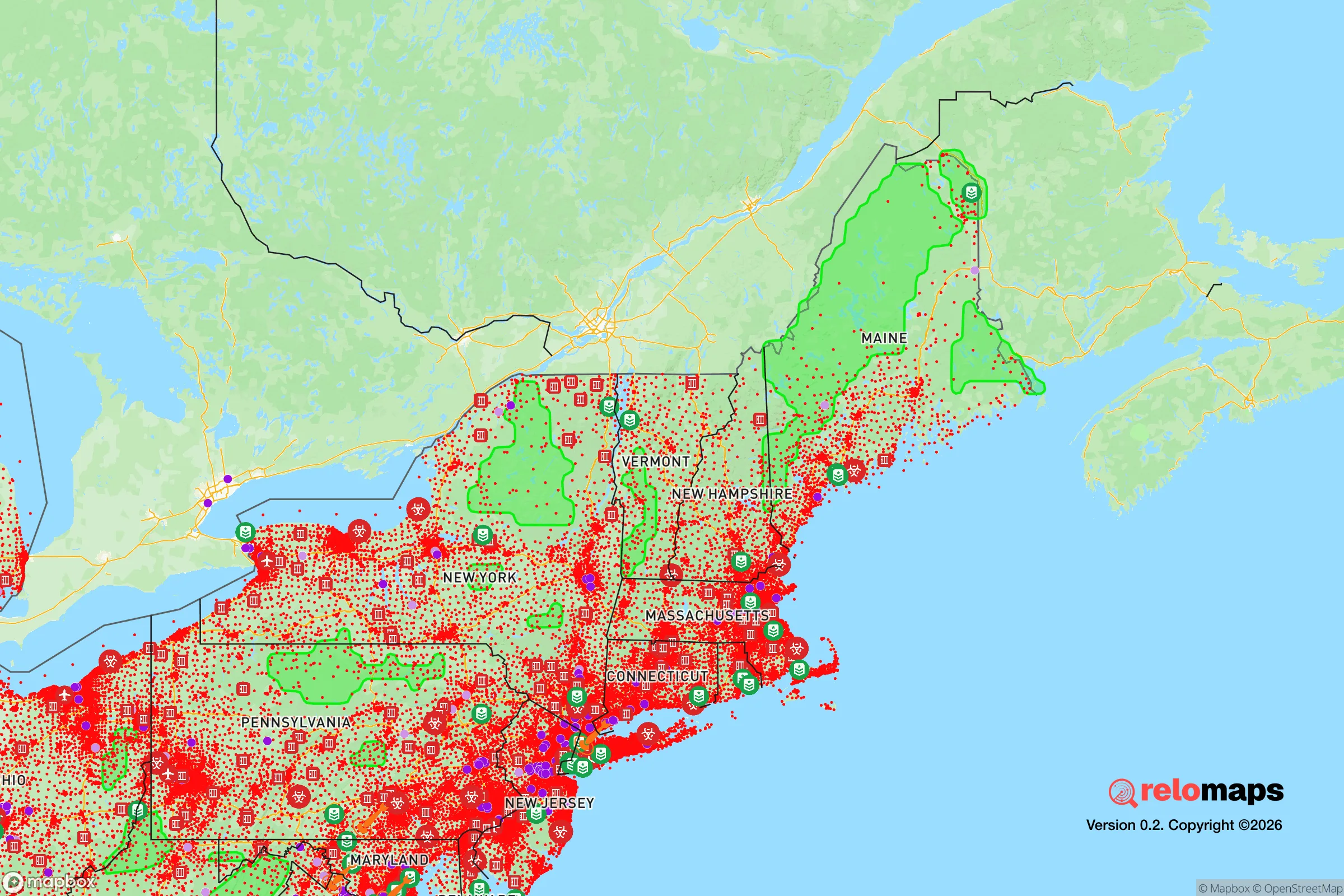
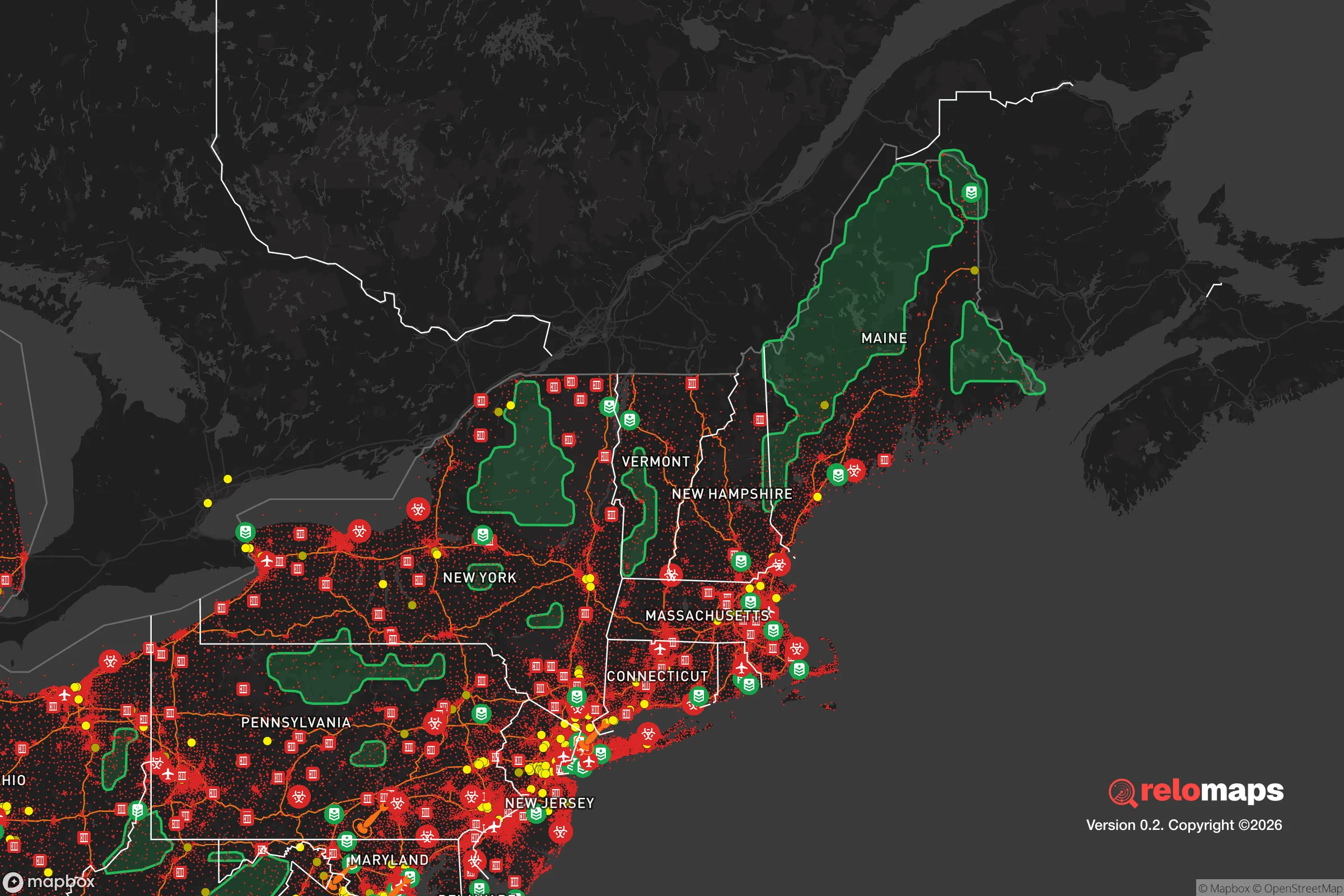


Important Note: For informational purposes only. This does not mean nothing bad ever happens in the green zones. Please use common sense. This is based on public data and modeled with AI. We tried to take a conservative approach but mistakes happen. We update this regularly as new information becomes available.
Solar Generator Recommendations
Backup power matters more here than in safer locations. We've picked three solar generators across budgets and capacity tiers — start with the budget unit if you only need a few essentials, or step up if you want to run a fridge and HVAC for days at a time.

Jackery Portable Power Station Explorer 300
Budget OptionPower on the Go: Weighing only 11 lbs, it's convenient to set up and store with book-sized foldable solar panels

BLUETTI Portable Power Station AC180
Designed for both indoor and outdoor scenarios, AC180 is highly capable as it has a robost capacity and continuous output power.

EF ECOFLOW DELTA Pro Ultra Power Station
Upgraded PickEcoFlow DELTA Pro Ultra is a whole-home energy system designed to grow with your family. Integrated with the Smart Home Panel 2, it scales to meet your evolving energy needs — keeping your home powered, intelligent, and secure through every stage of life.
We earn a commission, at no additional cost to you.
Strategic Assessment Analysis
Winooski, Vermont, presents a complex strategic picture for the conservative prepper or survivalist. On one hand, its compact, walkable layout and historic mill infrastructure offer unique defensive and communal advantages; on the other, its proximity to Burlington and the broader Lake Champlain corridor introduces significant vulnerabilities. For a relocator prioritizing resilience against civic unrest, mass casualty events, and systemic collapse, Winooski is best understood as a high-risk, high-reward outpost—not a standalone retreat, but a potential forward operating base with specific, hard-to-replicate strengths.
Geographic position and natural advantages for long-term survival
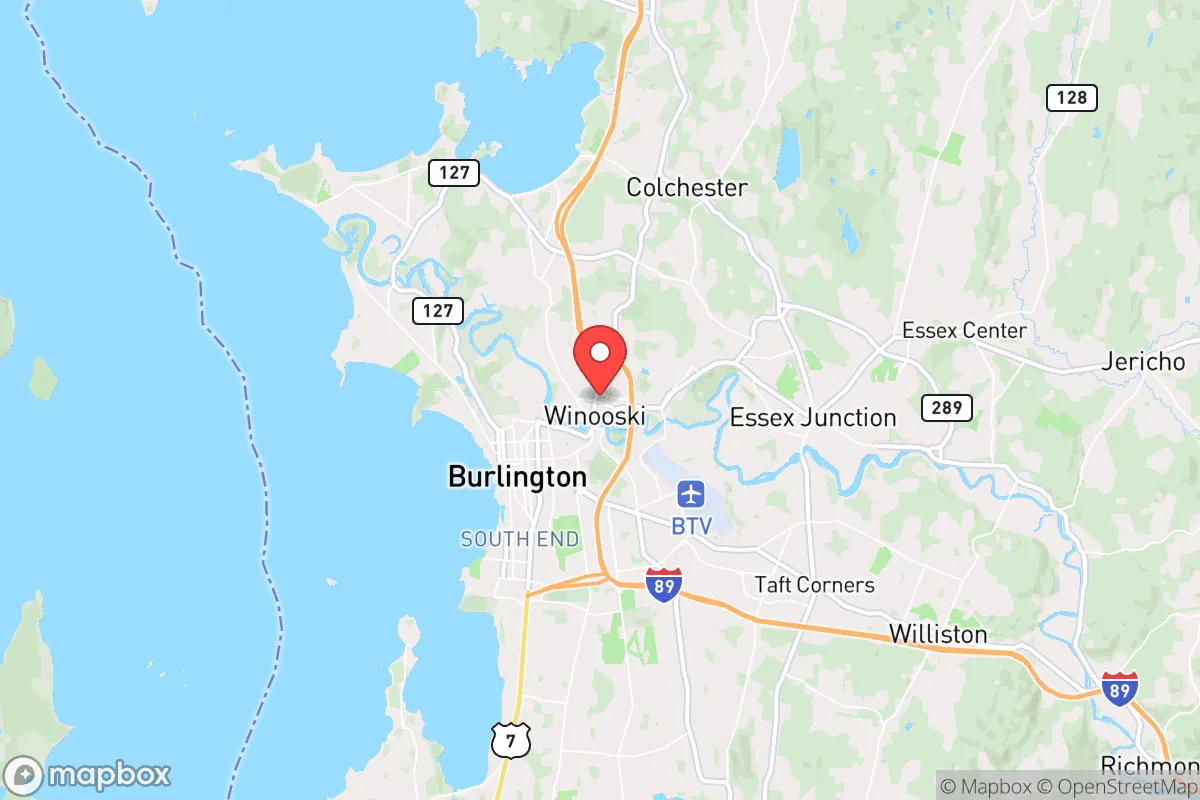
Winooski sits at the confluence of the Winooski River and the Lamoille River, a location that historically powered its textile mills and today provides a reliable freshwater source. The city is nestled within the Champlain Valley, which offers fertile soil and a growing season longer than much of northern New England—critical for any serious food-production plan. The surrounding landscape is a mix of working farms, forested hills, and small towns like Colchester and Essex Junction, creating a buffer zone that slows the spread of chaos from Burlington, just 2.5 miles south. The Winooski River itself acts as a natural moat on three sides of the city center, funneling access to a handful of bridges and roads that could be monitored or controlled. For a prepper, this chokepoint geography is a double-edged sword: it aids defensibility but also creates a potential trap if escape routes are compromised. The area’s elevation is modest—around 200 feet above sea level—but the surrounding Green Mountains to the east provide a rugged fallback zone within a 30-minute drive, offering dense forest cover and dispersed water sources for a bug-out scenario.
Risks, exposures, and proximity to fallout-relevant landmarks
The most glaring strategic liability is Winooski’s proximity to Burlington, Vermont’s largest city and a regional hub for government, healthcare, and the University of Vermont. In a mass casualty event or civil unrest scenario, Burlington would likely become a focal point for looting, refugee flows, and potential federal intervention. Winooski’s main thoroughfare, the Winooski River Bridge, connects directly to Burlington’s downtown, meaning any unrest there could spill over within minutes. Additionally, the Burlington International Airport (BTV) is just 4 miles southeast, a potential target for airlift operations or, in a worst-case scenario, a secondary fallout hazard if a dirty bomb or conventional strike were aimed at disrupting air travel. The nearby Vermont Yankee nuclear plant in Vernon is 80 miles south—outside immediate fallout range for most scenarios, but prevailing winds from the south could carry particulate up the Champlain Valley. More concerning is the presence of the IBM (now GlobalFoundries) semiconductor plant in Essex Junction, 5 miles east, which uses hazardous chemicals and could become a target for sabotage or a source of toxic release during unrest. For the survivalist, these risks mean Winooski is not a stand-alone retreat; it demands constant situational awareness and a pre-planned bug-out route east into the Worcester Range or north toward the Canadian border (45 miles to the St. Armand crossing).
Practical resilience for a relocator: food, water, energy, and defensibility
Winooski’s small footprint—just 1.5 square miles with a population under 8,000—makes it defensible in a neighborhood-scale sense, but it lacks the land for self-sufficient food production within city limits. The city’s zoning is dense, with multi-family homes and apartments dominating, so a relocator would need to secure a single-family home with a yard or, better yet, a property on the outskirts of town. Community gardens exist, but they are small and vulnerable to seizure during shortages. Water is the strongest asset: the Winooski River is a year-round, high-volume source, but it requires filtration and treatment—boiling or a high-quality Berkey system is non-negotiable given agricultural runoff and potential upstream contamination. The city’s municipal water supply draws from groundwater wells, which are less vulnerable than surface water but still dependent on the grid. For energy, Winooski is served by the Burlington Electric Department, which sources a high percentage of its power from hydro and biomass—a relatively resilient mix compared to fossil-fuel-dependent grids. However, the city’s reliance on a single substation means a targeted attack or natural disaster could knock out power for days. Solar panels are feasible on south-facing roofs, but the region’s cloudy winters (averaging 60% cloud cover from November to March) limit their reliability. A backup generator with a 200-gallon propane tank is a wise investment. Defensibility is mixed: the river and bridge chokepoints can be secured, but the city’s dense housing means neighbors are close—good for mutual aid, bad for operational security. The local police force is small (about 15 officers), so during a breakdown, residents would need to form their own watch or rely on the Chittenden County Sheriff’s Department, which is based in Burlington and may be overwhelmed. The Vermont State Police barracks in Williston (10 miles south) is a more reliable backup, but response times would stretch in a regional crisis.
Overall, Winooski is a strategic paradox. It offers a defensible core with excellent water access and a tight-knit community that could organize quickly under pressure—traits that appeal to the prepper mindset. But its proximity to Burlington, the airport, and industrial targets like GlobalFoundries makes it a high-exposure location for anyone serious about avoiding the fallout of societal collapse. For a conservative relocator, the smart play is to treat Winooski as a temporary staging area: use its resources to stockpile, build skills, and network with like-minded locals, then establish a more remote retreat in the nearby Northeast Kingdom or Adirondacks. If you’re willing to accept the risks and maintain a low profile, Winooski can serve as a resilient base for the first 72 hours of a crisis—but it’s not a place to hunker down for the long haul. The river will keep you alive, but the city’s exposure will keep you on edge.

* Values derived from national, state, county, city and local statistics and may differ in a specific area. Last updated: 2026-04-22T21:40:17.000Z
Narrative content on this page is AI-generated and may contain mistakes. Verify any details that matter before acting on them.
ReloMaps may earn a commission from affiliate links at no extra cost to you.

