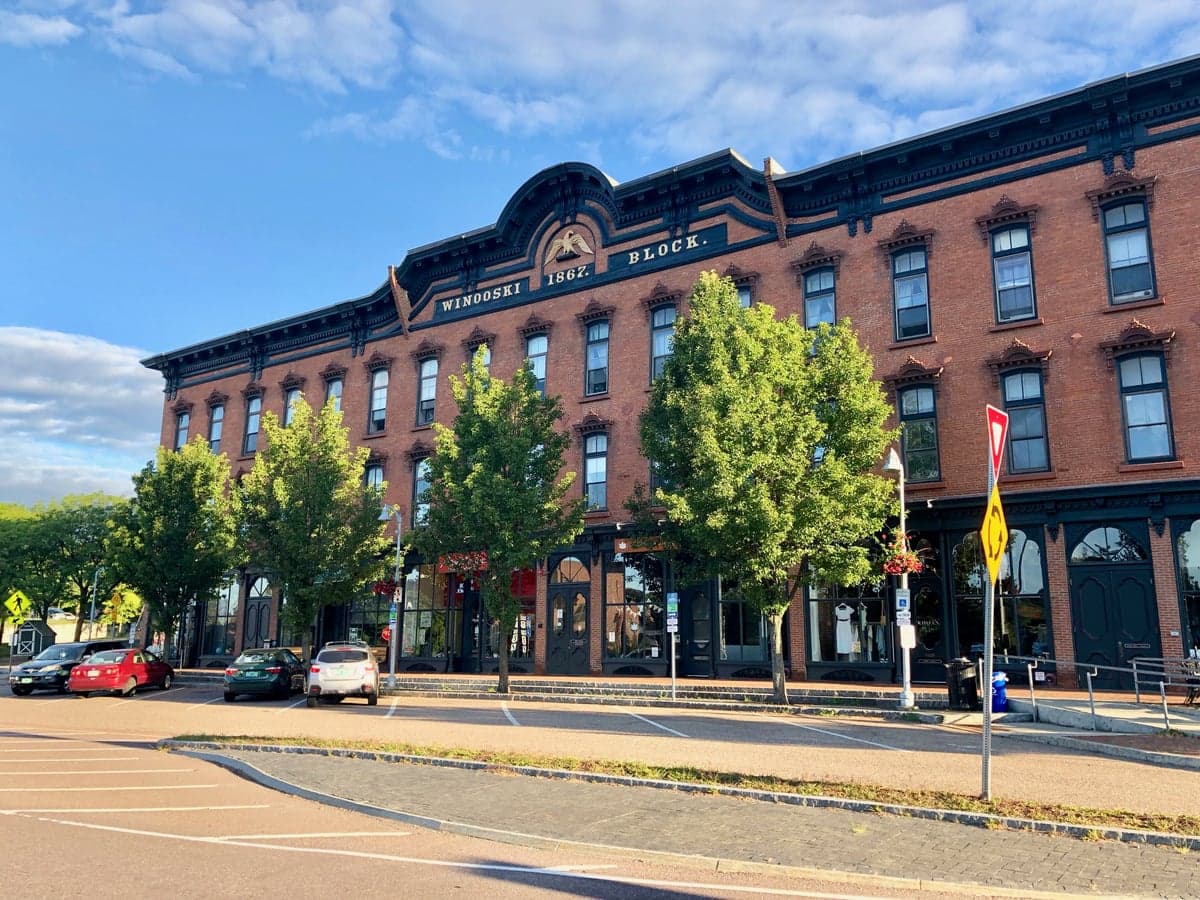
Photo: Wikipedia
Political ClimatePolitical Climate in Winooski, VT
District shown is the primary district for this city’s centroid. Cities may span multiple districts.
Inherited from parent state — no local data available.
Local Political AnalysisPolitical Analysis of Winooski, VT
Winooski, Vermont, is a small city with a big political footprint, and if you’re looking at it from a conservative perspective, you need to know what you’re getting into. With a Cook PVI of D+17, this place is deep blue—one of the most reliably progressive spots in the state. It wasn’t always this way, but over the last decade or so, the shift has been unmistakable. The city council and local boards are dominated by folks who lean hard into progressive policies, and that’s not changing anytime soon.
How it compares
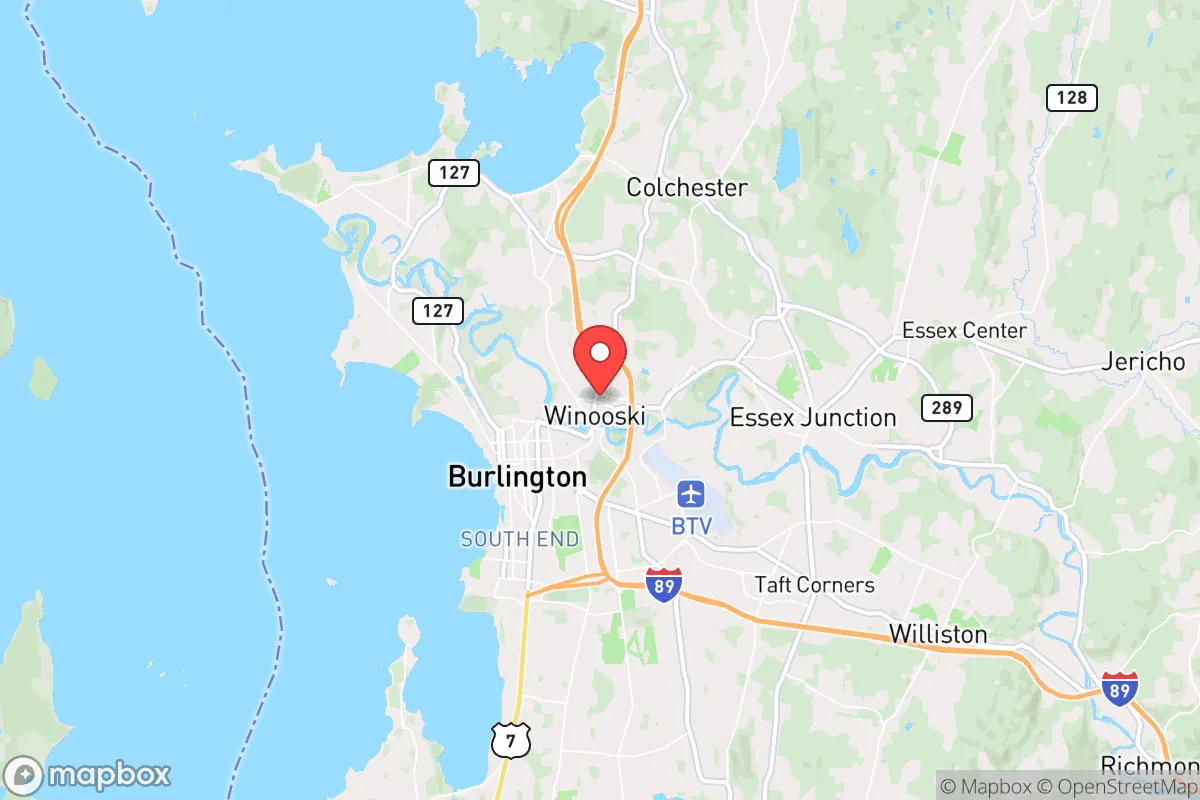
To understand Winooski, you have to look at its neighbors. Just a few miles south, Burlington is even more left-leaning, but Winooski has carved out its own identity as a younger, more diverse, and frankly more activist-driven community. Drive 15 minutes north to Colchester or west to South Burlington, and you’ll find a more moderate, family-oriented vibe—places where people still grumble about taxes and zoning. But Winooski? It’s a different animal. The city’s proximity to the University of Vermont and Champlain College brings in a steady stream of students and young professionals who vote for things like rent control, sanctuary city status, and expanded social programs. If you’re used to the quieter, more independent streak of rural Vermont towns like St. Albans or Hardwick, Winooski will feel like a foreign country.
What this means for residents
For a conservative-leaning resident, daily life in Winooski means watching your local government get deeper into your business. The city has been aggressive on housing regulations, pushing inclusionary zoning and tenant protections that make it harder for landlords to set their own terms. There’s also a strong push for environmental mandates—things like strict energy codes for new builds and bans on certain types of heating systems. It’s the kind of top-down approach that can feel like government overreach, especially if you value personal freedom and property rights. The school board isn’t much different, with a focus on equity initiatives and social-emotional learning that some parents find heavy-handed. If you’re a small business owner, you’ll also deal with a higher minimum wage and paid leave requirements that can squeeze your margins.
On the flip side, if you’re okay with a more collectivist mindset, the city does invest heavily in public services—there’s a strong community center, good parks, and a walkable downtown. But for those of us who remember when Winooski was a blue-collar mill town, the transformation can be jarring. The old-timers who used to run things are mostly gone, replaced by a younger, more educated crowd that sees government as the solution to every problem.
Cultural and policy distinctions
One thing that sets Winooski apart is its status as a sanctuary city. The local police are explicitly barred from cooperating with federal immigration enforcement, which has made it a magnet for newcomers but also a flashpoint for residents who worry about rule of law. The city also has a strong “housing first” approach to homelessness, meaning they prioritize getting people into apartments without preconditions like sobriety or job training. It’s well-intentioned, but it’s led to some visible street-level issues that other towns have managed to avoid. Looking ahead, I don’t see Winooski moderating—if anything, the next wave of young activists is pushing for even more aggressive policies, like defunding the police and community land trusts. If you value personal liberty and limited government, this is probably not your long-term home. But if you’re just passing through, it’s a fascinating case study of how far a small city can go when it fully embraces the progressive playbook.

State Political ClimatePolitical Climate in Vermont
State Political AnalysisPolitical Environment in the State
Vermont has long been painted as one of the most progressive states in the union, and for good reason—but the reality on the ground is more complicated than the national headlines suggest. The state’s overall partisan lean is solidly Democratic at the statewide level, with every federal office held by Democrats or independents who caucus with them, and the legislature has been under Democratic supermajority control for years. However, that blue veneer masks a deep and growing urban-rural split, and the trajectory over the last 10-20 years has been one of accelerating progressive dominance in Burlington and the Chittenden County metro, while the rest of the state has grown more skeptical, more libertarian-leaning, and in some cases, outright resistant to the policy direction coming from Montpelier.
Urban vs. rural divide
The political map of Vermont is essentially a tale of two states. Chittenden County, anchored by Burlington and its suburbs like South Burlington, Winooski, and Essex Junction, is the engine of the state’s progressive politics. This metro area accounts for roughly a quarter of the state’s population and reliably delivers margins of 70-80% for Democratic candidates. Burlington itself is a classic college town—home to the University of Vermont—with a young, transient population that drives the city’s far-left lean. Just a few miles south, Middlebury (home to Middlebury College) and Montpelier (the state capital) are similarly blue, though with a slightly more moderate, establishment-Democratic flavor. The real story, though, is what happens when you leave the I-89 corridor. Rutland, the state’s third-largest city, has been trending redder in recent cycles, with Trump improving his margins there in both 2020 and 2024. Newport and St. Johnsbury in the Northeast Kingdom are now reliably Republican, and even traditionally purple towns like Bennington and Brattleboro—once bastions of liberal hippie culture—have seen a noticeable shift toward more conservative voting patterns in local races. The 2024 election saw several rural counties that had been competitive for decades flip decisively red, including Orleans and Essex counties, which went for Trump by double digits. The divide isn’t just about party registration; it’s about worldview. Urban Vermonters tend to prioritize climate policy, social justice, and government-funded programs, while rural residents are increasingly focused on property rights, school choice, and pushing back against what they see as overreach from Montpelier.
Policy environment
Vermont’s policy environment is a mixed bag that will give a conservative-leaning newcomer serious pause. On the tax front, the state is one of the most heavily burdened in the nation. Property taxes are among the highest in the country, driven largely by the state’s education funding system, which pools all local property tax revenue and redistributes it—meaning even if you live in a low-cost rural town, you’re still paying for Burlington’s school spending. Income taxes are progressive but steep, with a top marginal rate of 8.75% kicking in at just over $200,000 for single filers. The regulatory posture is aggressive: Vermont has some of the strictest land-use laws in the nation (Act 250), which makes building anything—homes, businesses, even a garage—a multi-year ordeal. On education, the state has a universal pre-K program and has moved toward a “personalized learning” model that many conservatives view as undermining traditional academic standards. Healthcare is dominated by the state’s quasi-public insurance exchange and a strong push toward a single-payer model, though that effort stalled in the 2010s. Election laws are among the most liberal in the country: automatic voter registration, same-day registration, no-excuse mail-in voting, and universal mail-in ballots for all elections—which critics argue erodes election integrity. The state also has a “sanctuary” law (Act 58) that limits local law enforcement cooperation with federal immigration authorities, a flashpoint for many conservatives.
Trajectory & freedom
Over the past five years, Vermont has moved decisively in the direction of expanding government power at the expense of personal liberty, particularly in areas that matter most to conservatives. Gun rights have taken a major hit: in 2018, after a foiled school shooting plot, the legislature passed S.55, which banned magazines over 10 rounds, raised the purchase age to 21, and expanded background checks to private sales. In 2023, the legislature went further with S.4, which banned carrying firearms in public buildings and allowed municipalities to pass their own gun restrictions—a direct assault on the preemption law that had protected uniform gun laws statewide. Parental rights have also been under pressure: the state passed a law (Act 1 in 2022) that effectively codified a “gender-affirming care” mandate, allowing minors to receive hormone therapy and surgery without parental consent in some circumstances, and schools are required to affirm a student’s chosen gender identity even if parents disagree. On medical freedom, Vermont was one of the first states to mandate COVID-19 vaccines for healthcare workers and state employees, and the legislature has shown little appetite for repealing those mandates. Property rights have been eroded by Act 250 and by a 2023 law that allows municipalities to impose rent control and eviction moratoriums. The overall trajectory is clear: Vermont is becoming less free for anyone who values individual autonomy, gun ownership, parental authority, or economic liberty.
Civil unrest & political movements
Vermont is not a hotbed of civil unrest in the way some states are, but there have been notable flashpoints. The most visible was the 2020 Black Lives Matter protests in Burlington, which turned violent on several occasions, with property damage to downtown businesses and clashes with police. The city’s response was to defund the police—the Burlington City Council cut the police budget by 30% in 2020, leading to a staffing crisis that persists today. On the right, the Vermont Republican Party has been energized by the gun rights movement, with groups like the Vermont Federation of Sportsmen’s Clubs organizing large rallies at the Statehouse. The “secession” rhetoric you hear in some states is muted here, but there is a growing “state of Jefferson” style movement in the Northeast Kingdom, where some residents talk about forming a separate, more conservative county. Immigration politics are a live wire: the sanctuary law (Act 58) has led to tensions between local law enforcement and federal ICE agents, and there have been several high-profile incidents of ICE raids in Rutland and St. Johnsbury that sparked protests from left-wing activists. Election integrity is a recurring concern among conservatives, given the state’s universal mail-in system and lack of voter ID requirements—though no major fraud has been proven, the system’s lack of safeguards is a persistent worry. The most visible flashpoint for a new resident would likely be the annual “Town Meeting Day” in March, where local issues like school budgets, land-use changes, and gun ordinances are debated in person—often with heated exchanges between progressive activists and rural libertarians.
Projection
Looking ahead 5-10 years, the demographic trends are not favorable for conservatives. Vermont has one of the oldest populations in the nation, and the young people moving in are overwhelmingly progressive—drawn by the University of Vermont, the outdoor lifestyle, and the state’s reputation for tolerance. The in-migration from out of state, particularly from New York and Massachusetts, has accelerated since 2020, and these newcomers tend to be wealthier and more liberal than the native population. The rural counties that flipped red in 2024 are losing population, while Chittenden County continues to grow. Unless there is a major shift in state policy—like a property tax revolt or a successful school choice movement—Vermont will likely become even more progressive over the next decade. The legislature is unlikely to repeal the gun laws or the sanctuary policy, and the push for a single-payer healthcare system will likely resurface. However, there is a wild card: the state’s housing crisis. Vermont has the lowest rental vacancy rate in the nation, and home prices have skyrocketed. If the progressive majority in Montpelier cannot solve the affordability problem, there could be a backlash from working-class voters in places like Rutland and Barre, who might swing toward a more centrist or even conservative alternative. For now, though, the trajectory is clear: more regulation, higher taxes, and less personal freedom.
Bottom line for a conservative moving to Vermont: you will be in the minority, and you will feel it. Your property taxes will be high, your gun rights will be restricted, your children’s education will be shaped by progressive values, and your voice in local politics will be drowned out by the Burlington metro. If you value low taxes, strong Second Amendment protections, parental control over your kids’ upbringing, and a government that stays out of your life, Vermont is likely not the right fit. However, if you are willing to fight for your values in a small, rural community—and you can afford the cost of living—there are still pockets of freedom in the Northeast Kingdom and the southern counties. Just know that the tide is rising, and it’s rising blue.
* Values derived from national, state, county, city and local statistics and may differ in a specific area. Last updated: 2026-04-22T21:40:17.000Z
Narrative content on this page is AI-generated and may contain mistakes. Verify any details that matter before acting on them.
ReloMaps may earn a commission from affiliate links at no extra cost to you.

