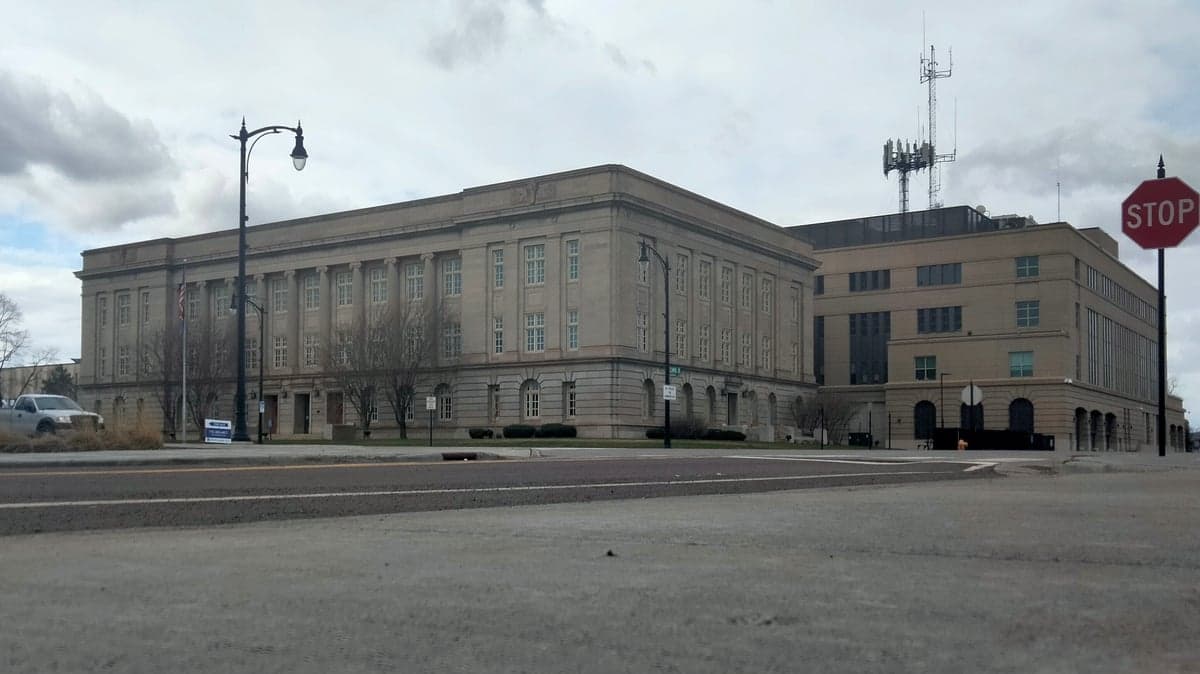
Photo: Wikipedia
Personal Sovereignty in Douglas County
Moderate friction. Expect trade-offs in some aspect of personal liberty and independence.
What does Personal Sovereignty tell us?
Personal Sovereignty measures your capacity for self-reliance and independence with minimal government friction. Higher scores mean fewer barriers between you and the way you want to live... but it assumes you have the space you need and good neighbors.
What does this tell us?
Personal Sovereignty measures your capacity for self-reliance and independence with minimal government friction. Higher scores mean fewer barriers between you and the way you want to live... but it assumes you have the space you need and good neighbors.
State Policy
Energy independence: Importer (15% of energy produced in-state)
Personal Liberty
Homesteading

Personal Liberty Analysis
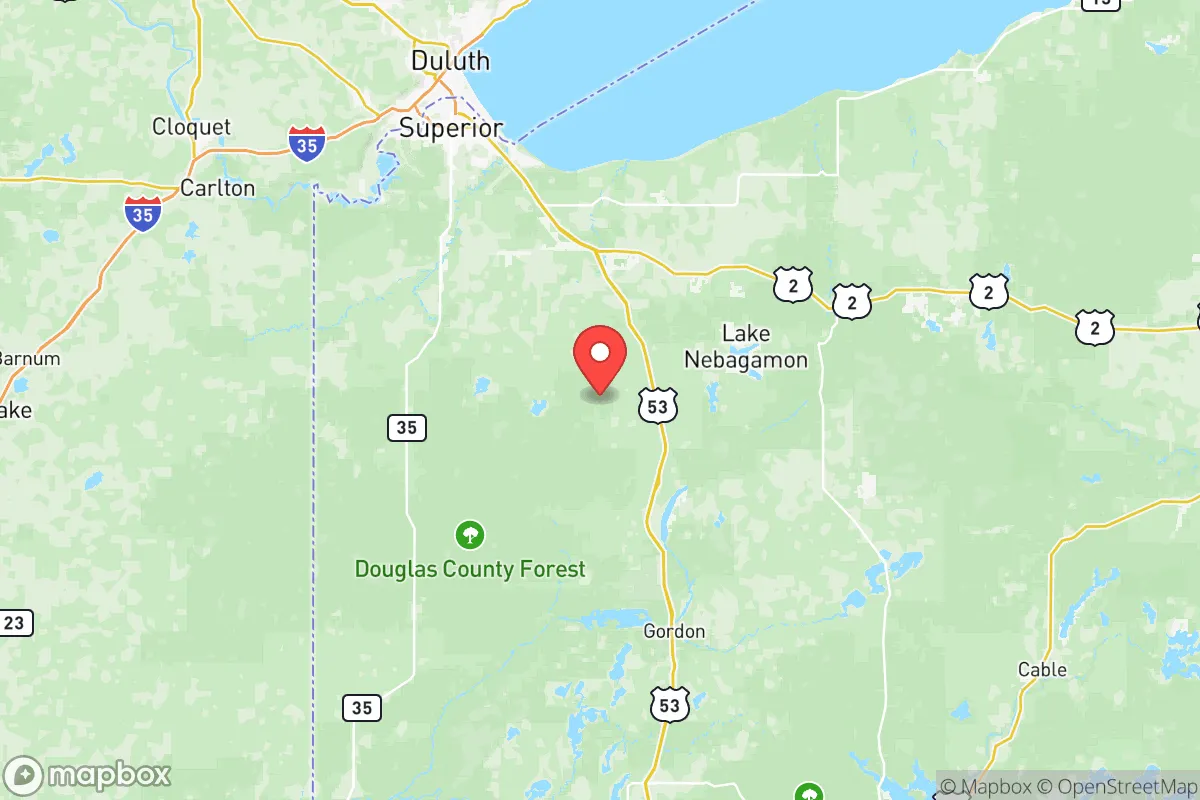
Douglas County, Wisconsin offers a notably high degree of personal sovereignty compared to many urban and even suburban areas in the Midwest, largely due to its rural character, low population density, and a state-level legal framework that generally respects individual autonomy. While no location is a perfect libertarian enclave, this northwestern Wisconsin county—bordering Lake Superior and Minnesota—provides a practical environment for those seeking to minimize government overreach in daily life. The key trade-offs involve proximity to services versus isolation, and the balance between state preemption and local ordinance enforcement, which varies notably between the county seat of Superior and the smaller townships like Solon Springs, Gordon, and Wascott.
Tax burden and regulatory posture in Douglas County
Wisconsin’s state tax structure is moderate, with a progressive income tax (top rate around 7.65% for 2025) and a 5% state sales tax, but Douglas County adds a 0.5% county sales tax, bringing the total to 5.5% in most areas. Property taxes are the primary concern for landowners: the county’s effective property tax rate hovers around 1.8% of assessed value, which is above the national average but typical for rural Wisconsin counties that rely heavily on property levies for schools and services. However, the regulatory posture is decidedly light-touch. Douglas County has no county-wide zoning in unincorporated areas, meaning townships like Bennett, Dairyland, and Hawthorne have minimal building codes, no mandatory septic inspections beyond state minimums, and very few permit requirements for outbuildings or fences. This contrasts sharply with the city of Superior, which enforces standard municipal codes, building permits, and rental inspections. For a prepper or homesteader, the unincorporated townships are far more attractive—you can erect a pole barn, park an RV, or set up a shipping container workshop without months of red tape. The state’s right-to-farm law also provides strong protections against nuisance lawsuits from new neighbors who dislike livestock smells or equipment noise, a critical buffer for agricultural self-reliance.
Self-defense and gun law specifics in Douglas County
Wisconsin is a shall-issue state for concealed carry permits, with no discretionary denial by local sheriffs—if you pass the background check and complete the training, you get the permit. Douglas County’s sheriff’s office is known for efficient processing, typically issuing permits within the statutory 21-day window. The state preempts all local firearm ordinances, meaning Superior cannot enact its own bans on open carry, magazine capacity, or ammunition types, unlike cities in states such as Colorado or Washington. Open carry is legal without a permit for anyone 18 or older who can legally possess a firearm, and concealed carry requires the permit. Stand-your-ground laws are not explicitly codified in Wisconsin statutes, but the Castle Doctrine is strong: there is no duty to retreat in one’s home, vehicle, or business, and deadly force is presumed reasonable against unlawful intruders. The practical reality in Douglas County is that gun culture is pervasive and non-controversial. In towns like Poplar and Lake Nebagamon, it is common to see firearms in pickup trucks, and local gun shops report no hostility from law enforcement. The nearest major city, Duluth, Minnesota, has far stricter policies (permit-to-purchase, magazine limits), but Wisconsin’s preemption ensures that crossing the bridge does not affect your rights while in Douglas County. For those concerned about federal overreach, the county’s Second Amendment Sanctuary resolution, passed in 2020, formally declares that county resources will not be used to enforce unconstitutional federal gun laws—a symbolic but meaningful stance for preppers.
Self-reliance and homesteading viability in Douglas County
Homesteading viability in Douglas County is excellent, driven by low land prices and permissive zoning. Unincorporated parcels in townships like Gordon, Wascott, and Brule commonly sell for $2,000–$5,000 per acre, with 5- to 40-acre plots readily available. There is no county-wide minimum lot size for residential use in unincorporated areas, though individual townships may impose 5-acre minimums for subdivision—check with the town clerk before buying. Off-grid living is entirely feasible: Wisconsin has no state law requiring grid connection, and Douglas County does not mandate electrical hookups for dwellings. Solar panels, wind turbines, and generator systems are common. Well water and septic systems require state permits (wells: $200–$400; septic: $1,000–$3,000 for design and inspection), but these are straightforward for standard gravity systems. Rainwater collection is legal for outdoor use, though indoor potable use is restricted to permitted wells. The county’s growing season is short (Zone 4a, roughly 100–120 frost-free days), so root cellars, greenhouses, and cold frames are essential for year-round food production. Livestock regulations are minimal: chickens, goats, and even pigs are allowed on most parcels without permits, though some townships limit the number of roosters or require fencing setbacks. For those seeking true self-reliance, the Brule River Valley and the area around Solon Springs offer abundant timber for firewood, clean water from the Lake Superior watershed, and low population density (fewer than 5 people per square mile in many townships). The trade-off is harsh winters—average January lows of 2°F, with occasional -30°F wind chills—meaning a robust heating plan (wood stove, propane backup, and insulation) is non-negotiable.
Personal liberties in Douglas County: parental rights, medical autonomy, speech, and property
Parental rights in Wisconsin are strong by national standards. The state’s parental consent laws for minors’ medical treatment (except emergencies) and the 2023 “Parental Bill of Rights” law (Act 19) affirm that parents have the fundamental right to direct their children’s education, healthcare, and upbringing. Douglas County school districts—including Superior, Maple, and Solon Springs—generally defer to parental authority on curriculum objections, though the larger Superior district has seen some friction over library materials and sex education. Homeschooling is straightforward: parents file a simple form with the Department of Public Instruction annually, and there are no curriculum mandates, testing requirements, or home visits. Medical autonomy is more nuanced. Wisconsin has no state-level vaccine mandate for adults, and COVID-19 mandates were never enforced in Douglas County beyond federal requirements for healthcare workers. However, the state does require certain childhood vaccines for school attendance (with medical and religious exemptions available). Ivermectin and hydroxychloroquine are legal to prescribe, and several local doctors in Superior and Solon Springs are known to be open to off-label use for informed patients. Speech and assembly rights are fully protected; the county has no history of suppressing political expression, and the local sheriff’s office has publicly stated it will not enforce federal mask or vaccine mandates. Property rights are robust: Wisconsin’s eminent domain laws require just compensation and a public purpose, and Douglas County rarely exercises condemnation for private development. The biggest property liberty concern is the state’s shoreland zoning regulations, which restrict building within 75 feet of navigable waterways—a factor for lakefront parcels in Lake Nebagamon and Upper St. Croix Lake. Overall, the county’s culture is live-and-let-live, with minimal interference in personal choices as long as they do not create public nuisances.
Compared to other regions in the Upper Midwest, Douglas County ranks high for personal sovereignty, especially for those willing to embrace rural isolation. It offers a more permissive regulatory environment than neighboring Minnesota (where state preemption is weaker and local gun control is aggressive) and a lower tax burden than Wisconsin’s more populous counties like Dane or Milwaukee. The county’s main sovereignty weaknesses are the state income tax and property tax rates, which are higher than in no-income-tax states like Texas or Florida, and the short growing season, which limits year-round homesteading. However, for a prepper or conservative individual prioritizing gun rights, minimal zoning, off-grid feasibility, and parental control, Douglas County—particularly the townships of Gordon, Wascott, Brule, and Solon Springs—represents a solid, low-hassle option where government overreach is the exception, not the rule. The key is to avoid the city of Superior’s municipal codes and instead target unincorporated land where the sheriff’s office is the primary authority and the nearest town hall is a 20-minute drive away.

* Values derived from national, state, county, city and local statistics and may differ in a specific area. Last updated: 2026-06-06T21:38:18.000Z
Narrative content on this page is AI-generated and may contain mistakes. Verify any details that matter before acting on them.
ReloMaps may earn a commission from affiliate links at no extra cost to you.

