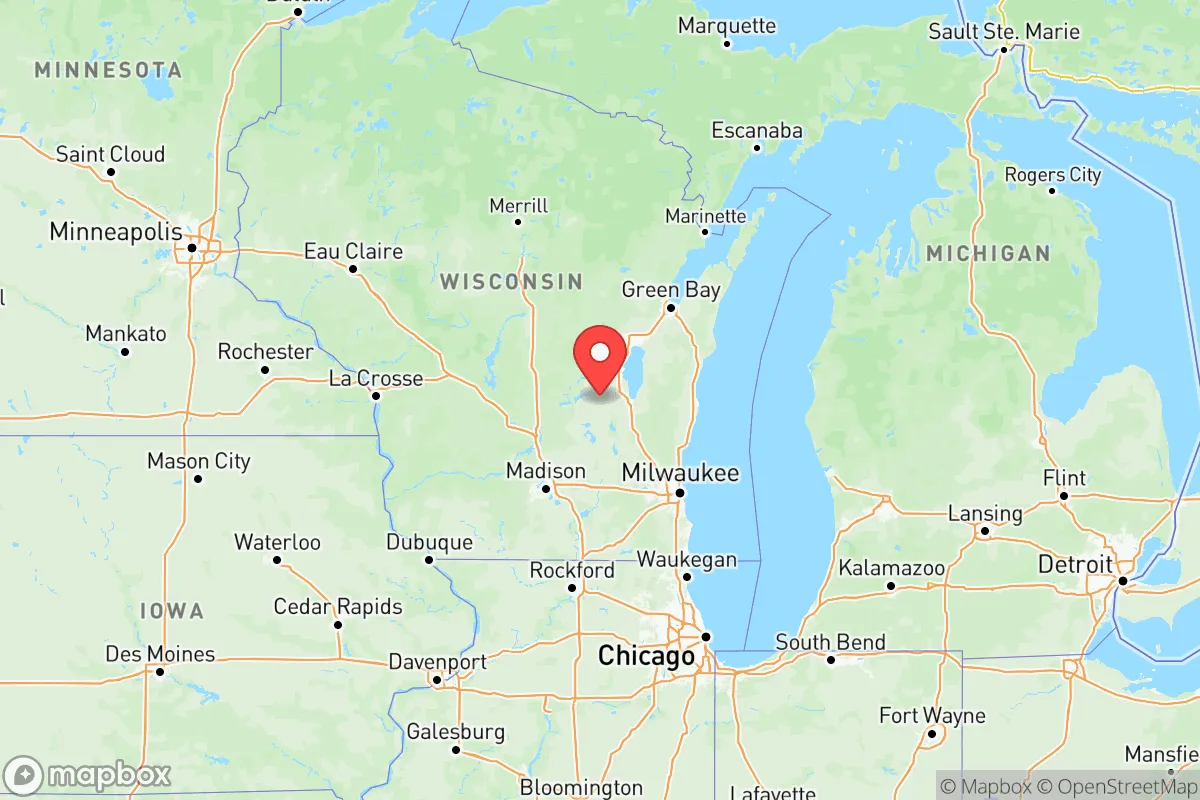
Photo: Wikipedia
Strategic Assessment of Wisconsin
Meaningful friction. Expect exposure to either population pressure, blast zones, or natural disaster risk. Consider buying a retreat property.
What does the Strategic Assessment tell us?
Our Strategic Assessment grades tactical survivability of an area. Major population centers, military targets, fallout zones, natural disasters, and border exposure all drive risk — lower exposure means a more defensible position in a crisis.
This is heavily inspired by Joel Skousen's Strategic Relocation book. Highly recommended you checkout the book ($)What does this tell us?
Our Strategic Assessment grades tactical survivability of an area. Major population centers, military targets, fallout zones, natural disasters, and border exposure all drive risk — lower exposure means a more defensible position in a crisis.
This is heavily inspired by Joel Skousen's Strategic Relocation book. Highly recommended you checkout the book ($)Regional Safe Places
Below is our recommended "safe zones" in Wisconsin and the surrounding area based on our strategic heuristics. For most people, it's unrealistic to live in a “safe zone” full-time due to work, family or other personal reasons. They tend to be more rural. However, many of these areas are perfect for second homes and retreat properties that double as a vacation home or even a short-term rental.
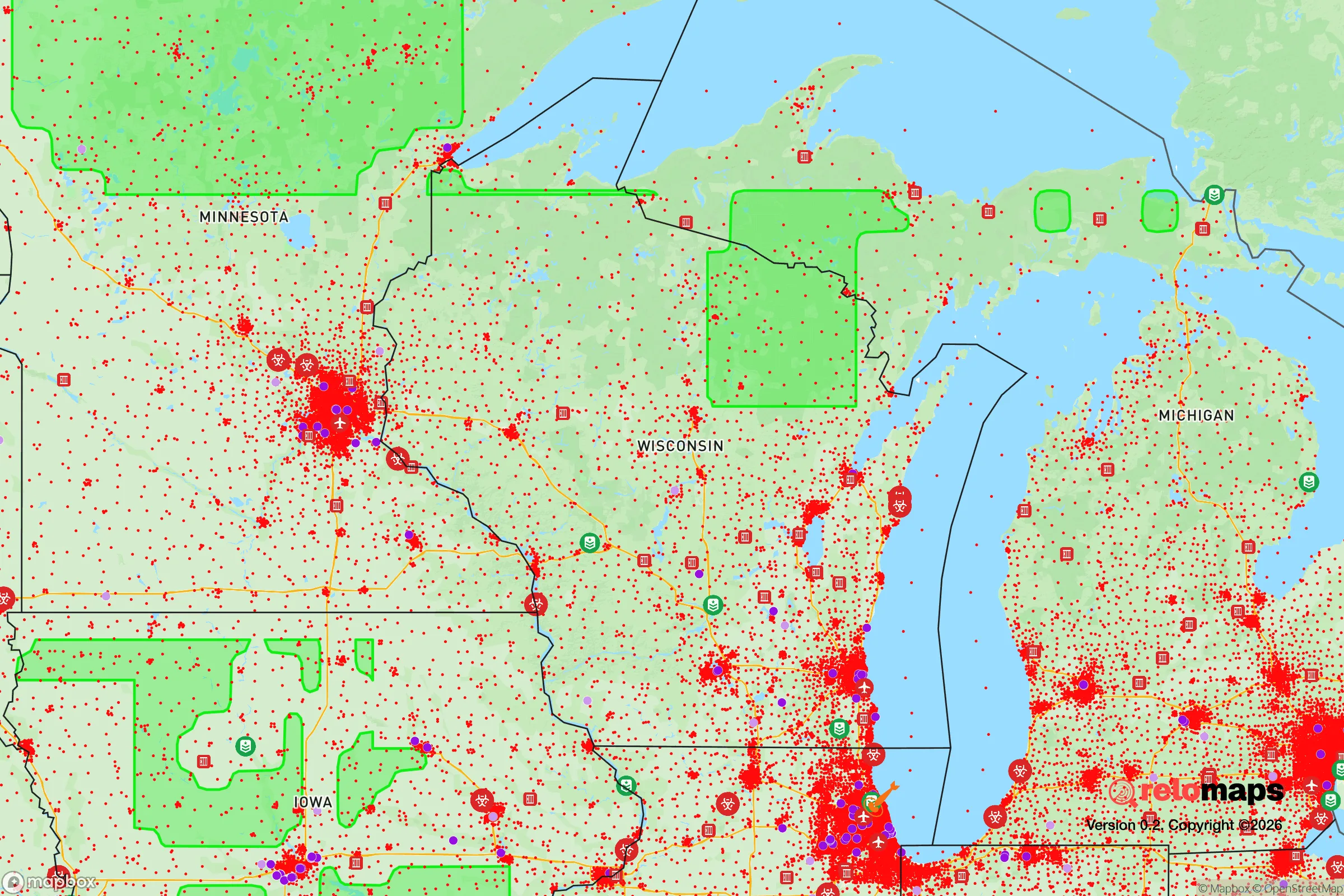
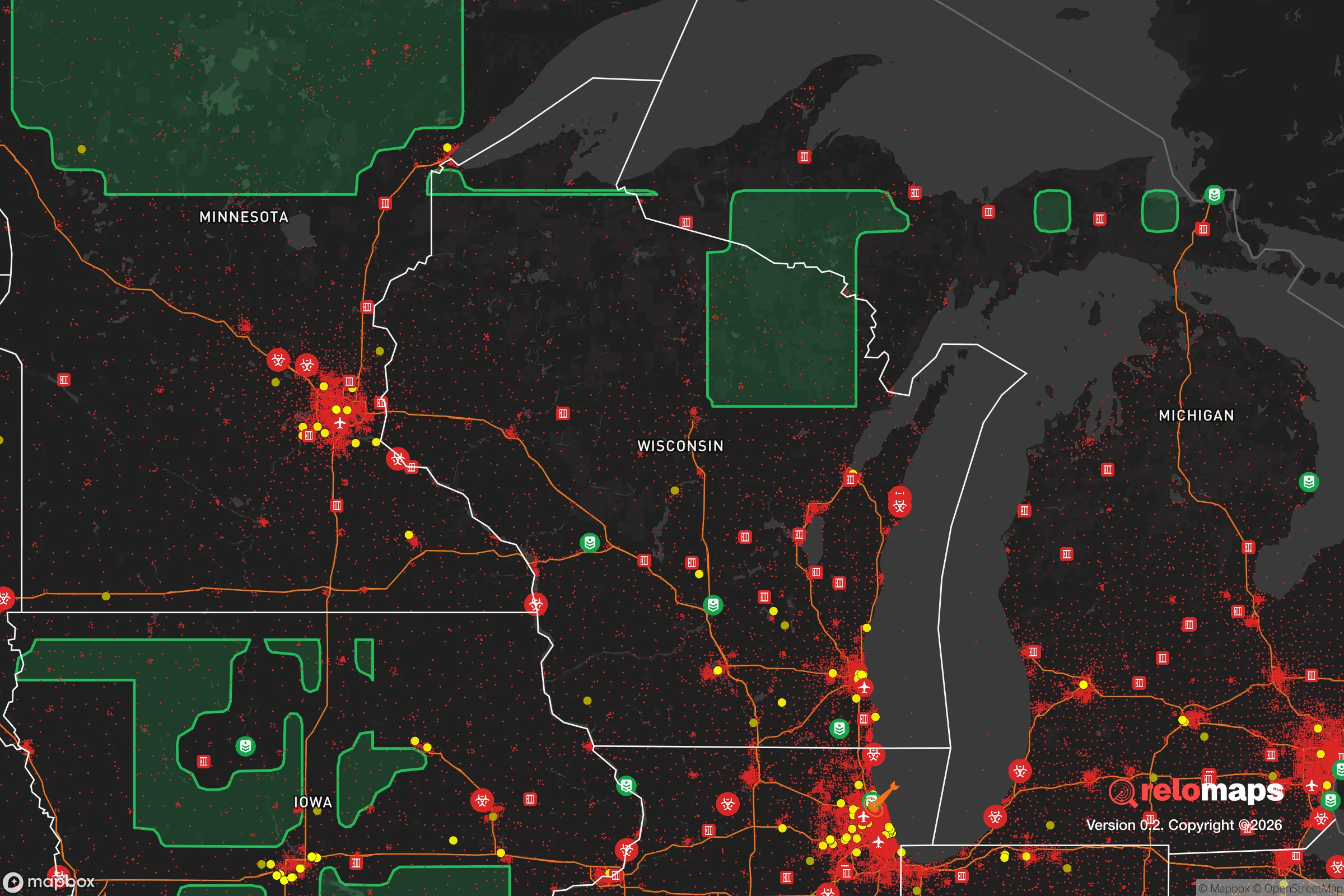


Important Note: For informational purposes only. This does not mean nothing bad ever happens in the green zones. Please use common sense. This is based on public data and modeled with AI. We tried to take a conservative approach but mistakes happen. We update this regularly as new information becomes available.
Solar Generator Recommendations
Backup power matters more here than in safer locations. We've picked three solar generators across budgets and capacity tiers — start with the budget unit if you only need a few essentials, or step up if you want to run a fridge and HVAC for days at a time.

Jackery Portable Power Station Explorer 300
Budget OptionPower on the Go: Weighing only 11 lbs, it's convenient to set up and store with book-sized foldable solar panels

BLUETTI Portable Power Station AC180
Designed for both indoor and outdoor scenarios, AC180 is highly capable as it has a robost capacity and continuous output power.

EF ECOFLOW DELTA Pro Ultra Power Station
Upgraded PickEcoFlow DELTA Pro Ultra is a whole-home energy system designed to grow with your family. Integrated with the Smart Home Panel 2, it scales to meet your evolving energy needs — keeping your home powered, intelligent, and secure through every stage of life.
We earn a commission, at no additional cost to you.
Strategic Assessment Analysis
Wisconsin offers a compelling mix of geographic insulation and practical self-sufficiency that appeals to those planning for long-term stability. Its position in the Upper Midwest places it far from the most likely coastal and border flashpoints, while its dense network of freshwater resources and agricultural capacity make it one of the few states where a relocator could realistically sustain themselves without constant outside supply chains. For a conservative-leaning individual or family looking to reduce exposure to national-level disruptions, Wisconsin’s combination of low population density outside the southeast corner, cold climate that discourages mass migration, and a culture of rural independence provides a solid foundation for strategic relocation.
Geographic position and natural advantages for long-term security
Wisconsin’s location is its first line of defense. Bounded by Lake Superior to the north, Lake Michigan to the east, and the Mississippi River to the west, the state is naturally buffered from the most volatile corridors of the country. The nearest major metropolitan chaos zones—Chicago, Minneapolis, and Milwaukee—are all at least a two-hour drive from the state’s interior, and the Driftless Area in the southwest offers rugged terrain that is difficult to traverse in a crisis. The state’s 35,000 miles of rivers and streams and 15,000 lakes provide a decentralized water supply that doesn’t rely on a single reservoir or aquifer. For a relocator, this means you’re not dependent on a municipal system that could fail during a grid-down event. The northern half of the state, particularly around Hayward and Eagle River, offers dense forest cover and low population density—under 10 people per square mile in many counties—which naturally reduces the risk of civil unrest spillover. The cold winters also act as a deterrent to unprepared transient populations, a factor often overlooked in warmer relocation destinations.
Risks, exposures, and proximity to fallout-relevant landmarks
No state is without vulnerabilities, and Wisconsin has specific exposures that a strategic relocator must account for. The most obvious is the Point Beach Nuclear Plant near Two Rivers, a single-unit reactor that sits on the Lake Michigan shoreline. A worst-case event there would put much of Manitowoc and Kewaunee counties in a dangerous downwind zone. Similarly, the La Crosse area is within 50 miles of the Monticello Nuclear Generating Plant in Minnesota, and the Dairyland Power Cooperative’s coal and natural gas facilities along the Mississippi River create industrial target risks. The Milwaukee metropolitan area, with its port on Lake Michigan and the Mitchell International Airport, is a logical chokepoint for any large-scale evacuation or supply disruption, meaning relocators should avoid the I-94 corridor between Milwaukee and Madison. The Fox River Valley, stretching from Green Bay down to Oshkosh, contains a concentration of paper mills and chemical storage facilities that could become secondary hazards during a prolonged grid failure. On the positive side, Wisconsin has no major oil refineries, no intercontinental ballistic missile silos (those are in the Plains states), and no major military bases that would be primary targets—Fort McCoy near Sparta is a training base, not a strategic asset, and Volk Field near Camp Douglas is a small air guard base. The state’s distance from the nation’s nuclear triad infrastructure and major petrochemical hubs is a genuine advantage.
Practical resilience for a relocator: food, water, energy, and defensibility
Wisconsin’s practical resilience is where it truly stands out for a prepper-minded relocator. The state is the second-largest producer of milk and cheese in the country, and its agricultural output extends to cranberries, ginseng, corn, soybeans, and a growing number of small-scale organic farms. A family relocating to the Baraboo Hills or Door County can realistically source 80% of their caloric needs within a 50-mile radius without relying on interstate trucking. Water is abundant and decentralized—most rural properties have access to private wells, and the state’s groundwater recharge rates are among the highest in the Midwest. For energy, Wisconsin’s grid is part of the Midcontinent Independent System Operator (MISO), which has a relatively stable mix of coal, natural gas, nuclear, and a growing wind component. However, the state’s net metering laws are favorable for solar panel installation, and the northern counties have enough biomass (wood) for heating that a family with a woodlot can be largely self-sufficient in winter. Defensibility is a mixed bag: the open farmland of the south and central regions offers long sightlines but little cover, while the Northwoods around Rhinelander and Minocqua provide dense forest and limited road access that makes group movement difficult. The Driftless Area’s steep valleys and bluffs create natural chokepoints, and many rural properties already have basements or root cellars that double as shelter. The biggest practical challenge is winter preparedness—a relocator from a warmer climate needs to plan for subzero temperatures for weeks at a time, which means redundant heating sources, adequate insulation, and a vehicle capable of handling snow and ice.
The overall strategic picture for Wisconsin is one of high potential with manageable trade-offs. It lacks the year-round growing season of the South and the defensive mountain terrain of the West, but it compensates with abundant water, decentralized food production, and a culture of self-reliance that still exists in many rural communities. For a conservative relocator concerned about national instability, the state offers a realistic path to a resilient lifestyle without requiring a complete off-grid transformation. The key is to avoid the southeastern population belt and the immediate fallout zones around nuclear plants, and instead focus on the Driftless counties (Crawford, Vernon, Richland) or the Northwoods (Vilas, Oneida, Forest). Those areas provide the best balance of isolation, resources, and community—and in a world where the grid might not always be there, that balance is worth more than any single metric.

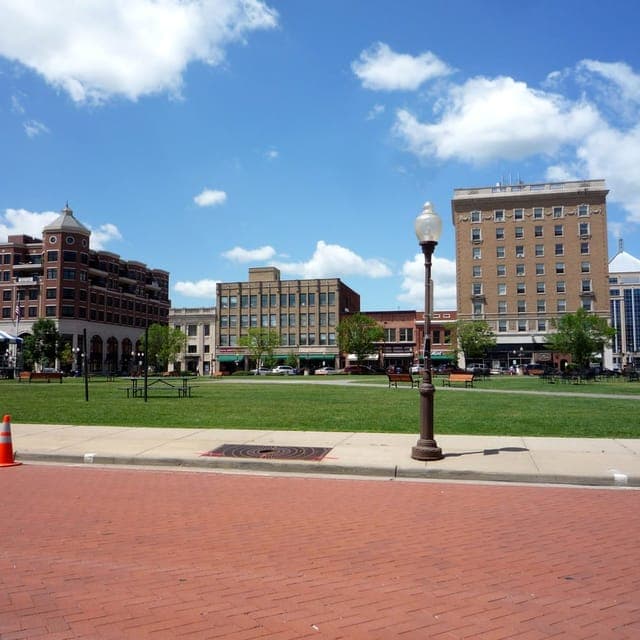
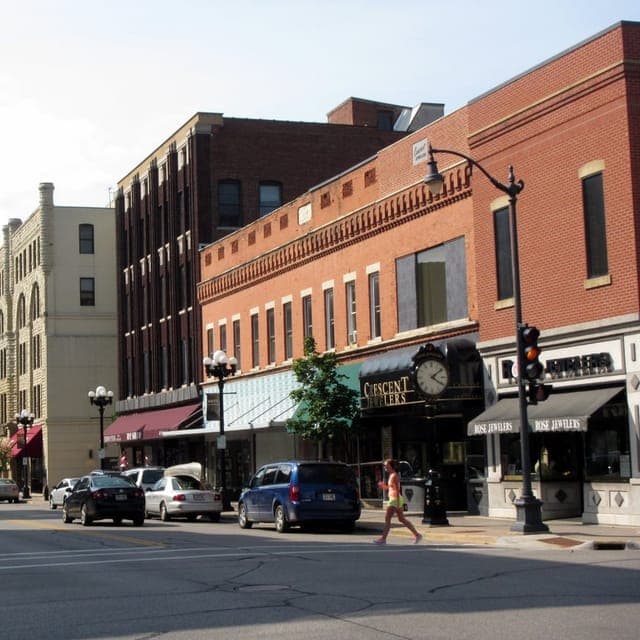
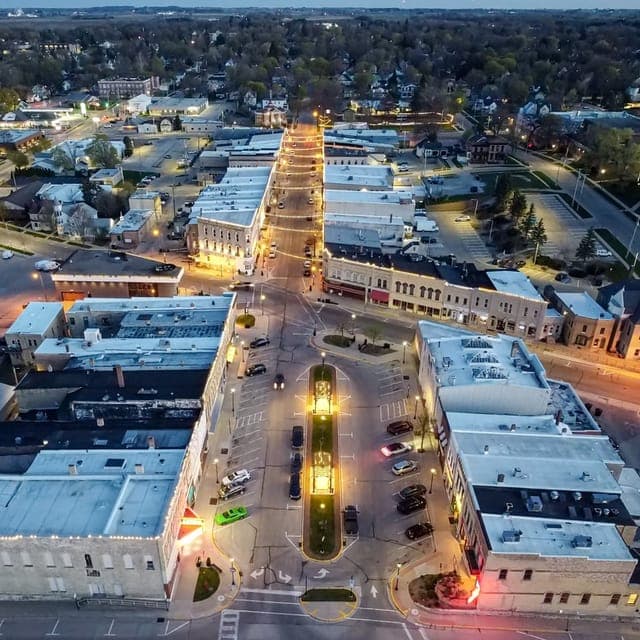
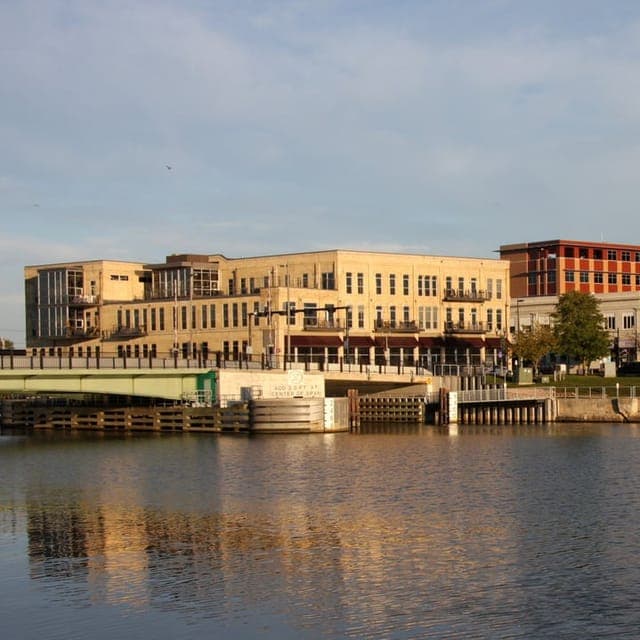
Top 10 Cities by Strategic Assessment in Wisconsin
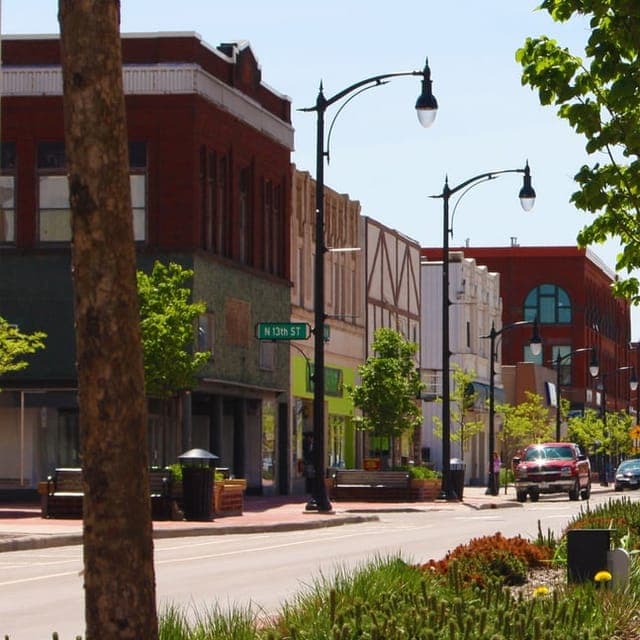
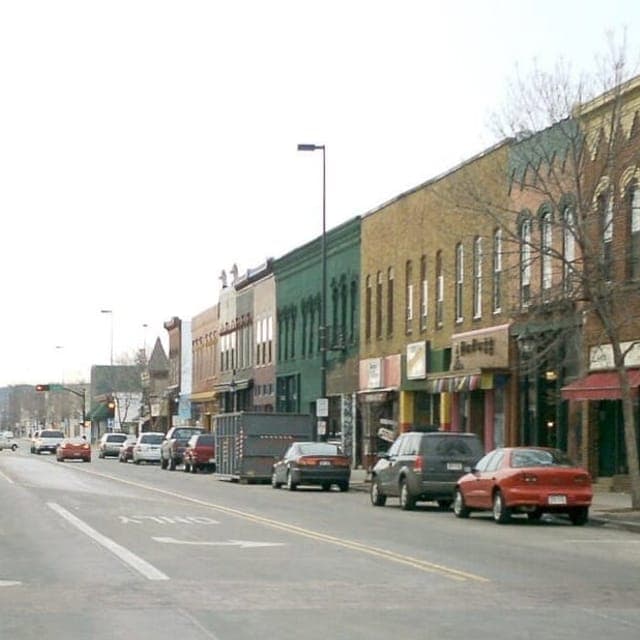
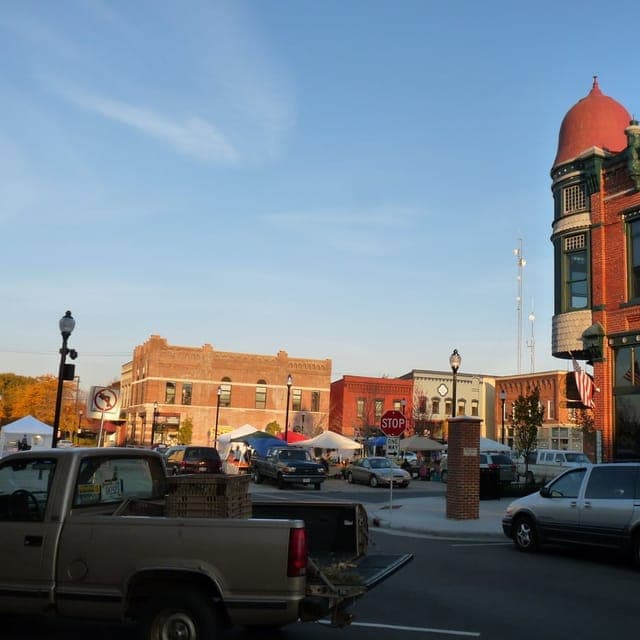

* Values derived from national, state, county, city and local statistics and may differ in a specific area. Last updated: 2026-04-19T01:54:13.000Z
Narrative content on this page is AI-generated and may contain mistakes. Verify any details that matter before acting on them.
ReloMaps may earn a commission from affiliate links at no extra cost to you.

