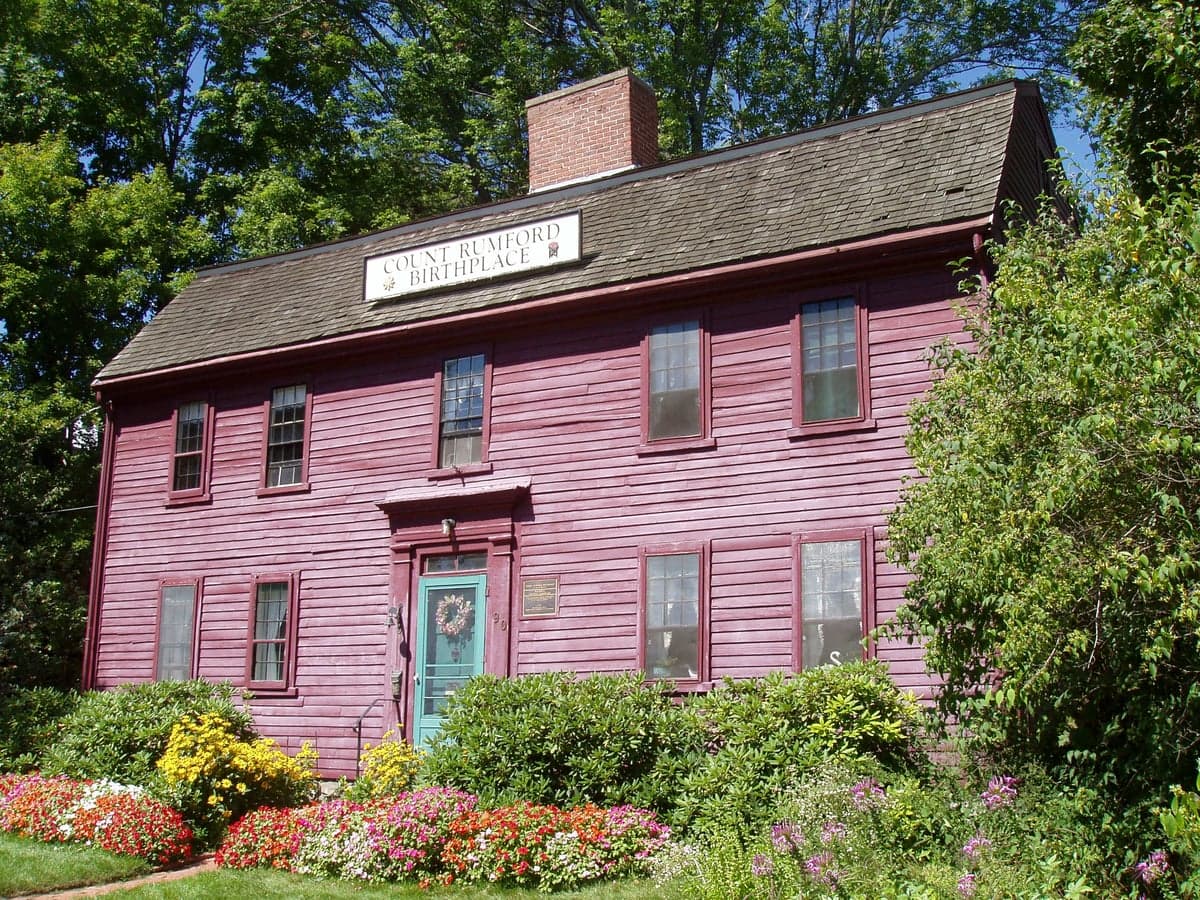
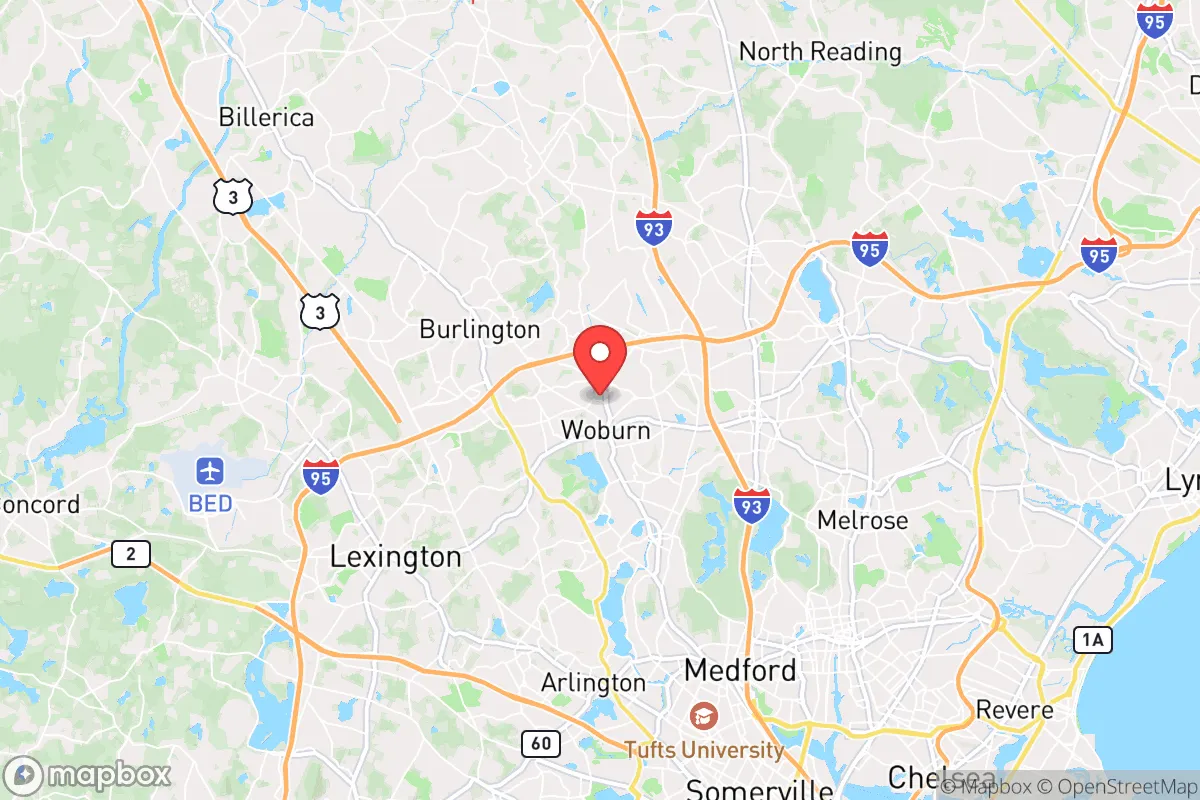
Photo: Wikipedia
Demographics of Woburn, MA
Affluence Level in Woburn, MA
An upper-middle-class area. Household wealth, education levels, and homeownership run ahead of national benchmarks.
People of Woburn, MA
The people of Woburn, Massachusetts today number 41,205, forming a densely settled, historically rooted city 10 miles north of Boston. The population is predominantly white (74.2%) but has grown notably more diverse since the 1990s, with a significant Indian-subcontinent community (4.6%) and smaller East/Southeast Asian (3.5%), Black (5.9%), and Hispanic (5.9%) populations. Nearly half of adults (47.3%) hold a college degree, and the foreign-born share stands at 9.4%, reflecting a steady but moderate immigration flow. Woburn’s identity is that of an old industrial mill town that has suburbanized without losing its blue-collar bones, now balancing historic Yankee stock with newer immigrant enclaves and commuter professionals.
How the city was settled and grew
Woburn was first settled in 1640 as part of Charlestown and incorporated as a separate town in 1642, making it one of the oldest inland communities in Massachusetts. The original population was English Puritan farmers, drawn by land grants in the fertile Mystic River valley. By the early 19th century, waterpower from the Horn Pond Brook and the Aberjona River fueled a leather-tanning and shoe-manufacturing economy, attracting Irish immigrants in the 1840s and 1850s. These Irish laborers settled in South Woburn near the tanneries and along the railroad corridor, building St. Charles Borromeo Church as their anchor. A second wave of French-Canadian millworkers arrived after the Civil War, clustering in North Woburn around the shoe factories and establishing the French parish of St. Joseph. Italian immigrants followed in the 1890s and early 1900s, taking up work in the tanneries and settling in the “New Boston” neighborhood near the downtown rail depot. By 1920, Woburn was a classic ethnic mill town: Irish, French-Canadian, and Italian enclaves layered over the original English core, with each group building its own churches, social clubs, and corner stores.
Modern era (post-1965)
The 1965 Hart-Cellar Act opened immigration from Asia and Latin America, but Woburn’s transformation was gradual. Through the 1970s and 1980s, the city remained overwhelmingly white and working-class, even as the tanneries closed and the economy shifted toward light manufacturing and services. The first notable post-1965 arrivals were Portuguese and Brazilian families, who settled in the Montvale Avenue corridor near the Winchester line, drawn by affordable triple-deckers and proximity to construction and cleaning jobs. The 1990s and 2000s brought a more dramatic shift: a rapidly growing Indian-subcontinent community, primarily professionals in tech and healthcare, began buying homes in the Wedgewood Park and Countryside Village subdivisions near the Route 128/Interstate 95 belt. These Indian families—many from Gujarat, Maharashtra, and Karnataka—now make up 4.6% of the population, a share larger than the East/Southeast Asian population (3.5%). The East/Southeast Asian community, mostly Chinese and Vietnamese, is smaller and more dispersed, with a modest cluster near the Woburn Center around Main Street. The Black population (5.9%) and Hispanic population (5.9%) are both relatively new, growing since 2000, with Hispanic residents concentrated in South Woburn near the tanneries’ old housing stock and Black families spread across the city’s eastern side. The white population, while still the majority, has aged and shrunk slightly as younger families have moved to outer suburbs.
The future
Woburn’s population is heading toward greater diversity, but the pace is moderate compared to neighboring cities like Burlington or Lexington. The Indian-subcontinent community is the fastest-growing group, driven by high homeownership rates and chain migration from the tech corridor along Route 128; this enclave is likely to expand from its current 4.6% share toward 7–8% over the next decade. The East/Southeast Asian population is plateauing, with little new immigration from China or Vietnam to Woburn specifically. The Hispanic and Black shares are growing slowly, primarily through domestic migration from Boston and Lowell rather than direct immigration. The white population is projected to decline to roughly 68–70% by 2035 as older residents age out and younger white families choose farther suburbs. Woburn is not tribalizing into stark ethnic blocks—most neighborhoods are mixed—but the Indian community is geographically concentrated in the newer subdivisions near the highway, while older South and North Woburn remain more white and working-class. The city’s overall density (2,500 people per square mile) and limited new housing construction mean population growth will be slow, likely reaching 43,000–44,000 by 2040.
For someone moving in now, Woburn is becoming a moderately diverse, middle-class suburb with a strong professional tilt and a fading industrial past. The Indian-subcontinent community is the most dynamic demographic force, while the older white ethnic groups remain the cultural baseline. The city is not homogenizing into a generic suburb—it retains distinct neighborhood identities—but it is steadily moving away from its historically white, Catholic, blue-collar character toward a more varied, commuter-oriented future. A newcomer should expect a place where the old Yankee-Irish-Italian fabric is still visible but increasingly layered with South Asian professionals and a small but growing Hispanic presence.

* Values derived from national, state, county, city and local statistics and may differ in a specific area. Last updated: 2026-05-01T10:25:36.000Z
Narrative content on this page is AI-generated and may contain mistakes. Verify any details that matter before acting on them.
ReloMaps may earn a commission from affiliate links at no extra cost to you.

