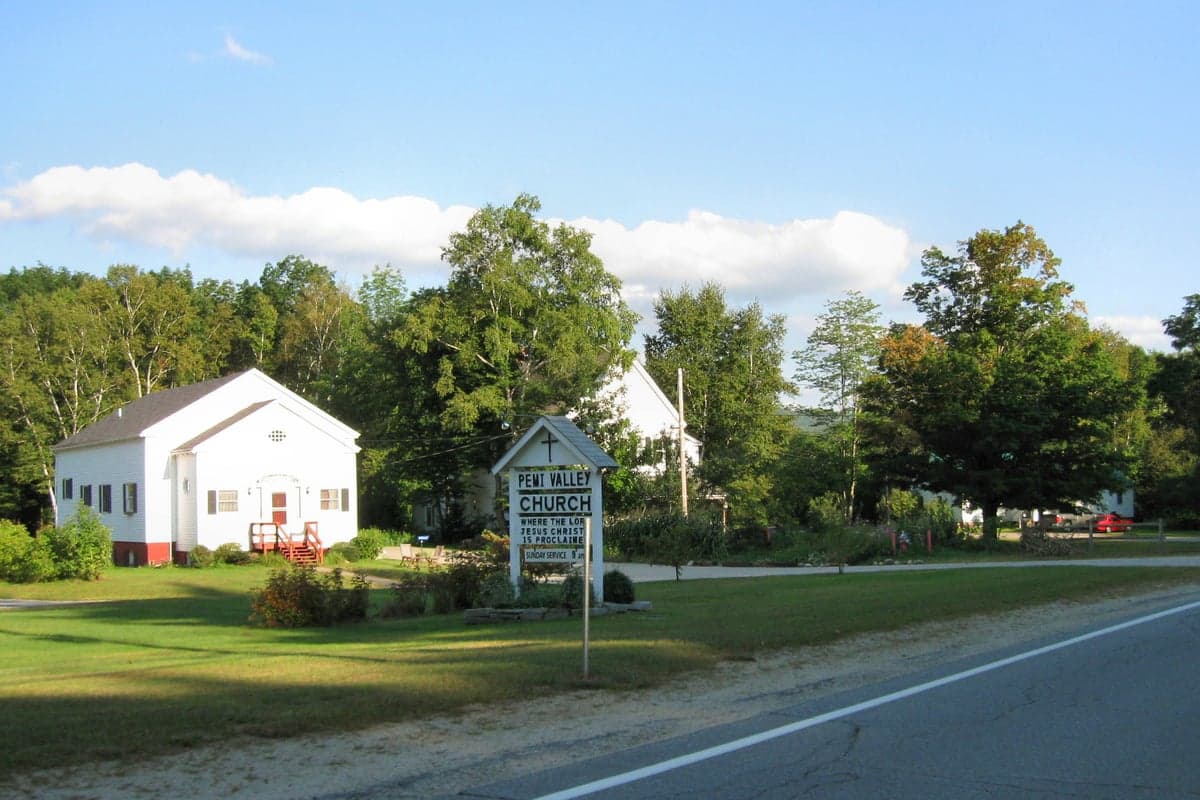
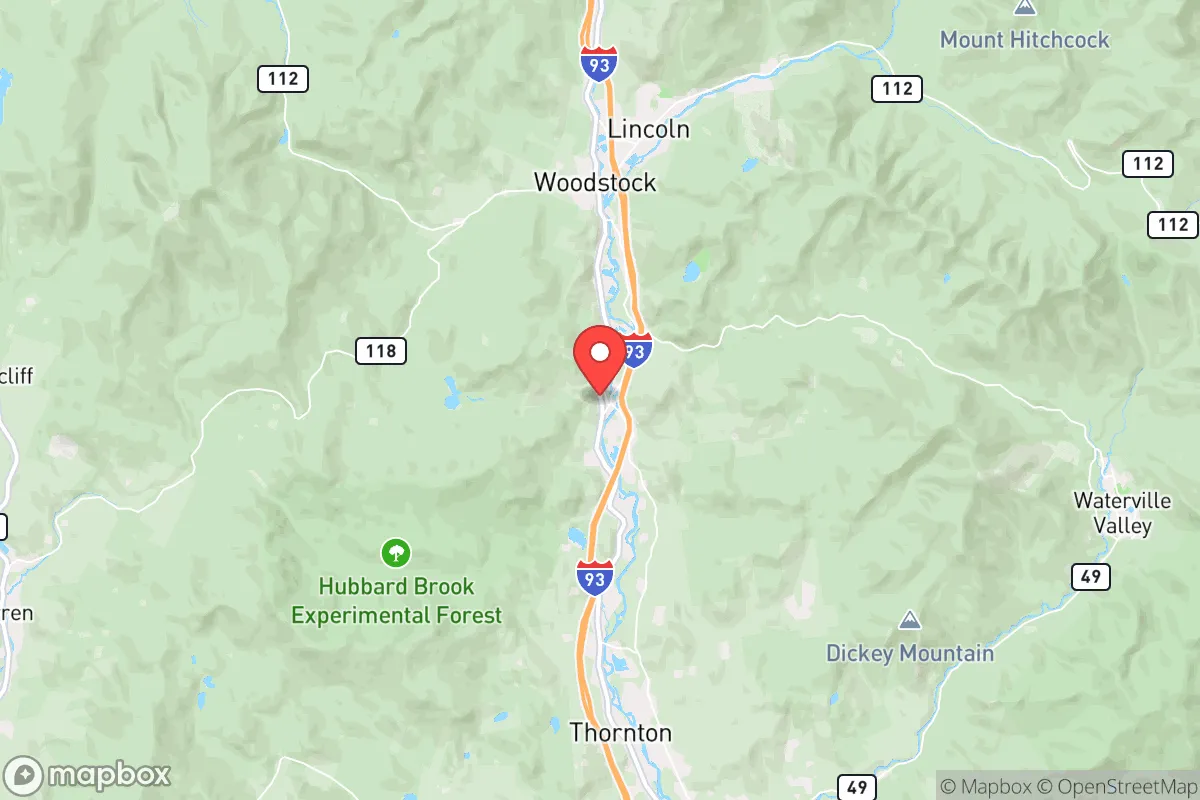
Photo: Wikipedia
Demographics of Woodstock, NH
Affluence Level in Woodstock, NH
An upper-middle-class area. Household wealth, education levels, and homeownership run ahead of national benchmarks.
People of Woodstock, NH
The people of Woodstock, New Hampshire, today number roughly 2,479 residents, forming a tight-knit, predominantly white community with a distinctly rural character. The population is notably homogenous, with 90.3% identifying as white and a very small foreign-born share of just 0.8%, reflecting a community shaped more by domestic migration than international immigration. A significant 33.7% of adults hold a college degree, a figure that points to a population with above-average educational attainment for a rural town, often drawn by the area's outdoor recreation, second-home market, and proximity to the White Mountain National Forest. This is a place where long-standing family roots run deep, yet new arrivals—often from southern New England—are gradually reshaping the town's demographic and cultural identity.
How the city was settled and grew
Woodstock’s human history begins with the 1763 land grant by Governor Benning Wentworth, which drew the first permanent settlers—primarily of English and Scots-Irish descent—to the Pemigewasset River valley. These early families, such as the Slafter and Merrill clans, established subsistence farms and small mills along the river, with the first cluster of homes forming in what is now the North Woodstock village center. The arrival of the Boston, Concord & Montreal Railroad in the 1850s transformed the town, bringing Irish laborers who built the rail line and later settled in the West Woodstock area, where their descendants remain today. By the late 19th century, the logging and tourism industries drew French-Canadian families from Quebec, who established a strong presence in the Lincoln-Woodstock corridor, working in the region's sawmills and later in the burgeoning ski and resort economy. These three waves—English yeoman farmers, Irish railroad workers, and French-Canadian mill hands—formed the foundational ethnic layers of Woodstock, with their family names still common on local mailboxes and cemetery headstones.
Modern era (post-1965)
After the 1965 Immigration and Nationality Act, Woodstock saw virtually no influx of new international immigrants, as its remote location and limited job base outside tourism and forestry offered little pull for foreign-born populations. Instead, the modern era has been defined by domestic in-migration, particularly from the 1980s onward, as second-home buyers and retirees from Massachusetts, Connecticut, and New York discovered the town’s proximity to Loon Mountain and the Kancamagus Highway. These newcomers concentrated in the Faulkner Hill and Hogsback Road neighborhoods, where newer subdivisions and custom homes replaced older farmsteads. The town’s racial composition has remained overwhelmingly white, with the 2020 census showing 90.3% white, while the Hispanic population—at 6.5%—has grown modestly, largely through families working in the hospitality and service industries tied to the ski resorts. The East/Southeast Asian share (0.7%) and Black share (0.2%) remain negligible, and the Indian-subcontinent population is effectively zero, underscoring that Woodstock has not been a destination for the broader diversification seen in New Hampshire’s southern tier. The Pemigewasset Village area, a small cluster of homes near the river, has seen some of the most visible turnover, with older seasonal cottages being converted into year-round residences by remote workers and telecommuters.
The future
Woodstock’s population is projected to remain stable or grow slowly, with the most significant demographic shift being an aging of the current resident base. The town’s median age has crept upward as younger adults leave for urban job markets, while retirees and second-home owners continue to buy property, particularly in the East Woodstock and Thornton Gore areas. The Hispanic share may increase slightly as service-sector workers settle more permanently, but the foreign-born population is unlikely to rise above 2-3% given the lack of industrial or agricultural employment that typically attracts immigrants. The white share will likely remain above 85% for the foreseeable future, making Woodstock one of the least diverse towns in Grafton County. The cultural identity is evolving from a working-class logging and mill town toward an amenity-driven, outdoor-recreation community, with new residents often more affluent and politically moderate than the older Yankee stock. For someone moving in now, Woodstock offers a stable, safe, and scenic environment where community ties are strong, but where the population will continue to be shaped by domestic migration from southern New England rather than by the broader demographic changes reshaping much of the country.
In summary, Woodstock is becoming a quieter, more affluent, and slightly more diverse version of its former self—still overwhelmingly white and native-born, but with a growing share of college-educated newcomers who value the mountains over the mills. The town’s future lies in balancing its historic character with the pressures of second-home development and an aging population, making it a place where new arrivals can integrate into a community that prizes continuity and tradition.

* Values derived from national, state, county, city and local statistics and may differ in a specific area. Last updated: 2026-10-20T07:45:58.000Z
Narrative content on this page is AI-generated and may contain mistakes. Verify any details that matter before acting on them.
ReloMaps may earn a commission from affiliate links at no extra cost to you.

