Photo: Wikipedia
Personal Sovereignty in Woodstock, VT
Moderate friction. Expect trade-offs in some aspect of personal liberty and independence.
What does Personal Sovereignty tell us?
Personal Sovereignty measures your capacity for self-reliance and independence with minimal government friction. Higher scores mean fewer barriers between you and the way you want to live... but it assumes you have the space you need and good neighbors.
What does this tell us?
Personal Sovereignty measures your capacity for self-reliance and independence with minimal government friction. Higher scores mean fewer barriers between you and the way you want to live... but it assumes you have the space you need and good neighbors.
State Policy
Energy independence: Importer (15% of energy produced in-state)
Personal Liberty
Homesteading

Personal Liberty Analysis
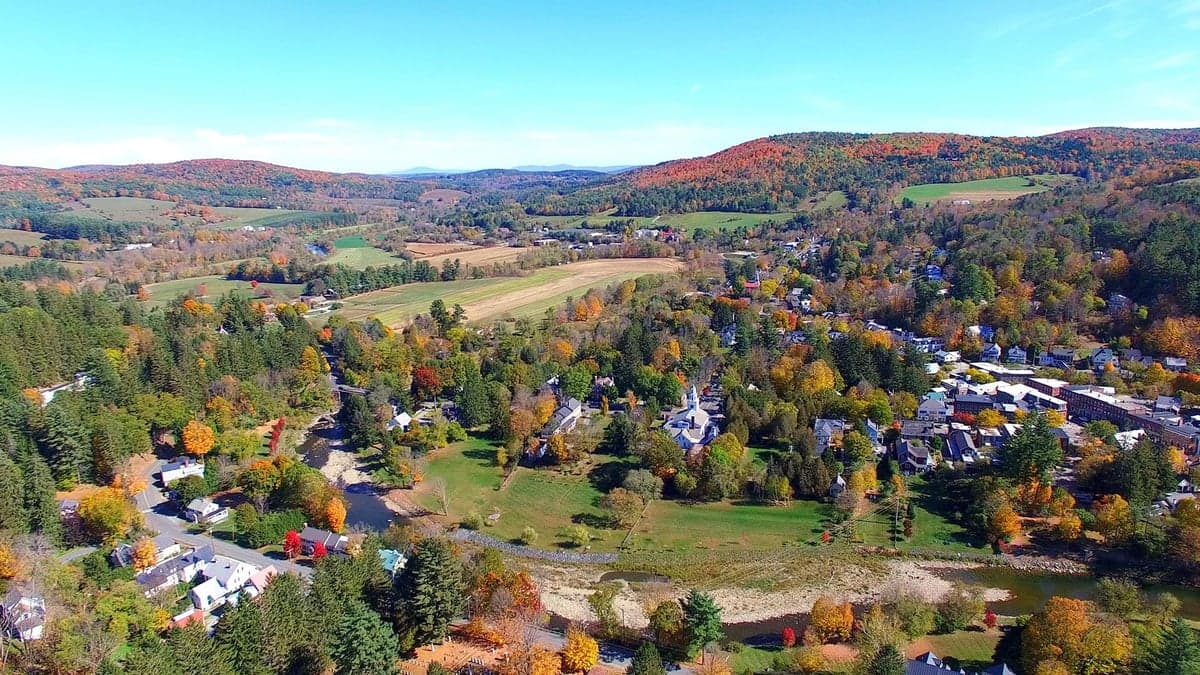
Woodstock, Vermont presents a complex sovereignty picture for the conservative-leaning individualist. While the town’s scenic beauty and tight-knit community are undeniable, the state-level regulatory environment imposes significant constraints on personal autonomy, particularly for those with a survivalist or prepper mindset. The trade-off here is clear: you gain a low-crime, rural lifestyle with strong community bonds, but you operate within a state government that actively limits self-reliance through taxation, gun control, and land-use restrictions. For a single person or family prioritizing maximum personal sovereignty, Woodstock is a strategic compromise, not a libertarian haven.
Tax burden and regulatory posture: what it costs to live free in Vermont
Vermont’s tax burden is among the highest in the nation, and Woodstock residents bear the full weight of it. The state levies a progressive income tax with a top marginal rate of 8.75%, which kicks in at a relatively modest $213,150 for single filers. Property taxes are also steep, with effective rates often exceeding 1.8% of assessed home value—a significant hit for anyone trying to build wealth through land ownership. Sales tax is 6%, but it’s applied broadly, including on many preparedness supplies. From a regulatory standpoint, Vermont is a “home rule” state, meaning towns like Woodstock have considerable local control, but that often translates to even stricter zoning and environmental regulations than state mandates. The Act 250 land-use law, a statewide permitting system, adds layers of bureaucracy to any significant construction or land alteration, making it difficult to build a bunker, expand a workshop, or even clear land for a garden without state approval. For the prepper, this regulatory posture is a direct obstacle to self-sufficiency—every project requires a paper trail and a fee.
Self-defense and gun law specifics: navigating Vermont’s shifting landscape
Vermont’s gun laws have shifted dramatically in recent years, eroding what was once a stronghold of firearm freedom. The state now requires universal background checks for all firearm sales, including private transactions, and has a “red flag” law (Extreme Risk Protection Order) that allows authorities to seize firearms without a criminal conviction based on a civil petition. Magazine capacity is limited to 15 rounds for handguns and 10 for long guns, which directly impacts defensive rifle setups. Carrying a concealed firearm without a permit is legal for residents 21 and older, but the state has banned firearms in many public buildings, schools, and municipal spaces. For the survivalist, this means your ability to defend your home and family is legally constrained, and the red flag law creates a vulnerability—a disgruntled neighbor or ex-spouse could theoretically trigger a seizure. Woodstock itself is a low-crime area, but the legal framework means you are relying on a system that may not respect your right to self-defense in a crisis. The local sheriff’s office is generally supportive of Second Amendment rights, but they must enforce state law.
Self-reliance and homesteading viability: lot sizes, zoning, and off-grid feasibility
Woodstock’s rural character offers genuine potential for self-reliance, but it comes with strings attached. Minimum lot sizes in the town’s rural districts are typically 2 to 5 acres, which is enough for a substantial garden, small orchard, and even a few livestock like chickens or goats. However, the town’s zoning bylaws are strict: raising pigs or cattle may require a conditional use permit, and any structure—from a chicken coop to a greenhouse—must meet setback and size requirements. Off-grid living is legally difficult. Vermont has no statewide right to disconnect from the grid; most towns, including Woodstock, require a connection to the electrical grid for new construction, and septic systems must be permitted and inspected. Rainwater collection is legal but limited—you can’t store more than 600 gallons without a permit, and it cannot be used for potable water without treatment. Solar panels are allowed, but net metering rules are complex, and you can’t simply go off-grid without a fight. For the prepper, this means you can have a productive homestead, but you’ll be paying taxes on it, following building codes, and staying connected to the system. True independence is a bureaucratic battle.
Personal liberties: parental rights, medical autonomy, speech, and property
On personal liberties, Vermont leans heavily toward state authority over individual choice. Parental rights are limited: the state has mandatory vaccination requirements for school attendance (with only medical exemptions), and the Department for Children and Families (DCF) has broad authority to investigate reports of educational neglect, including for homeschoolers. Homeschooling is legal but requires annual notification and proof of progress, which some see as government oversight of family decisions. Medical autonomy is similarly constrained. Vermont has legalized assisted suicide and recreational marijuana, but it also has a strict vaccine mandate for healthcare workers and schoolchildren, and the state’s response to COVID-19 included broad emergency powers that limited personal medical choice. Free speech is protected under the First Amendment, but Vermont’s “fair housing” and anti-discrimination laws can be used to penalize speech deemed harassing, particularly in public forums or online. Property rights are the weakest point: Act 250 and local zoning give the government extensive control over what you can do with your land, and the state’s environmental regulations can restrict timber harvesting, wetland use, and even landscaping. For the conservative individualist, Woodstock offers a beautiful place to live, but you are constantly negotiating with the state for permission to live your life.
Overall, Woodstock’s personal sovereignty is a mixed bag that requires careful calculation. It is not a place for those seeking maximum autonomy—you will pay high taxes, navigate strict gun laws, and battle bureaucracy for every homesteading project. However, for the strategic prepper who values a low-crime, community-oriented environment and is willing to work within the system, it offers a defensible, resource-rich base. Compared to states like New Hampshire or Idaho, Vermont’s sovereignty score is lower; compared to Massachusetts or New York, it is higher. The key is knowing the rules and deciding if the trade-offs are worth the lifestyle. For a single person or family willing to engage in local politics and build relationships with neighbors, Woodstock can be a viable outpost—but it is not a retreat from the state’s reach.

* Values derived from national, state, county, city and local statistics and may differ in a specific area. Last updated: 2026-04-30T14:34:09.000Z
Narrative content on this page is AI-generated and may contain mistakes. Verify any details that matter before acting on them.
ReloMaps may earn a commission from affiliate links at no extra cost to you.

