Photo: Wikipedia
Political ClimatePolitical Climate in Woodstock, VT
District shown is the primary district for this city’s centroid. Cities may span multiple districts.
Inherited from parent state — no local data available.
Local Political AnalysisPolitical Analysis of Woodstock, VT
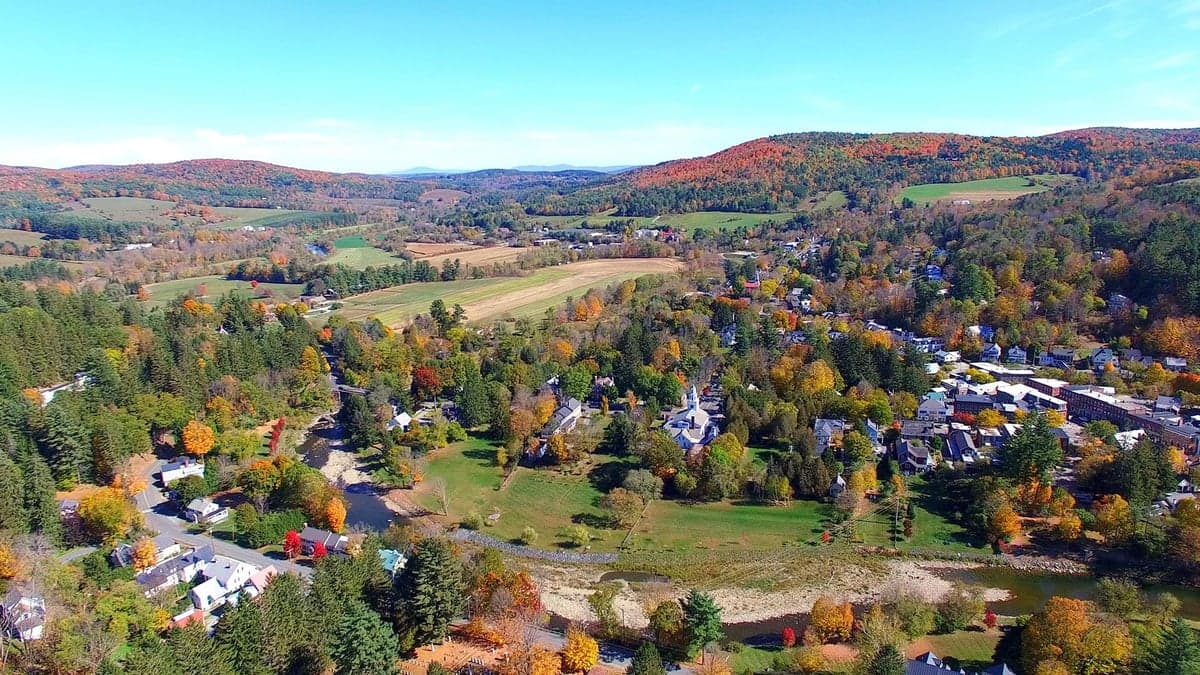
Woodstock, Vermont, has long been a bastion of progressive politics, and the numbers back that up with a Cook PVI of D+17, meaning it votes about 17 points more Democratic than the national average. But if you’ve lived here as long as I have, you’ve watched this shift from a quiet, independent-minded town into something that feels more like a political echo chamber. The trajectory isn’t subtle anymore—it’s a steady march leftward, and it’s changing the character of the place in ways that make a lot of us long-timers uneasy.
How it compares
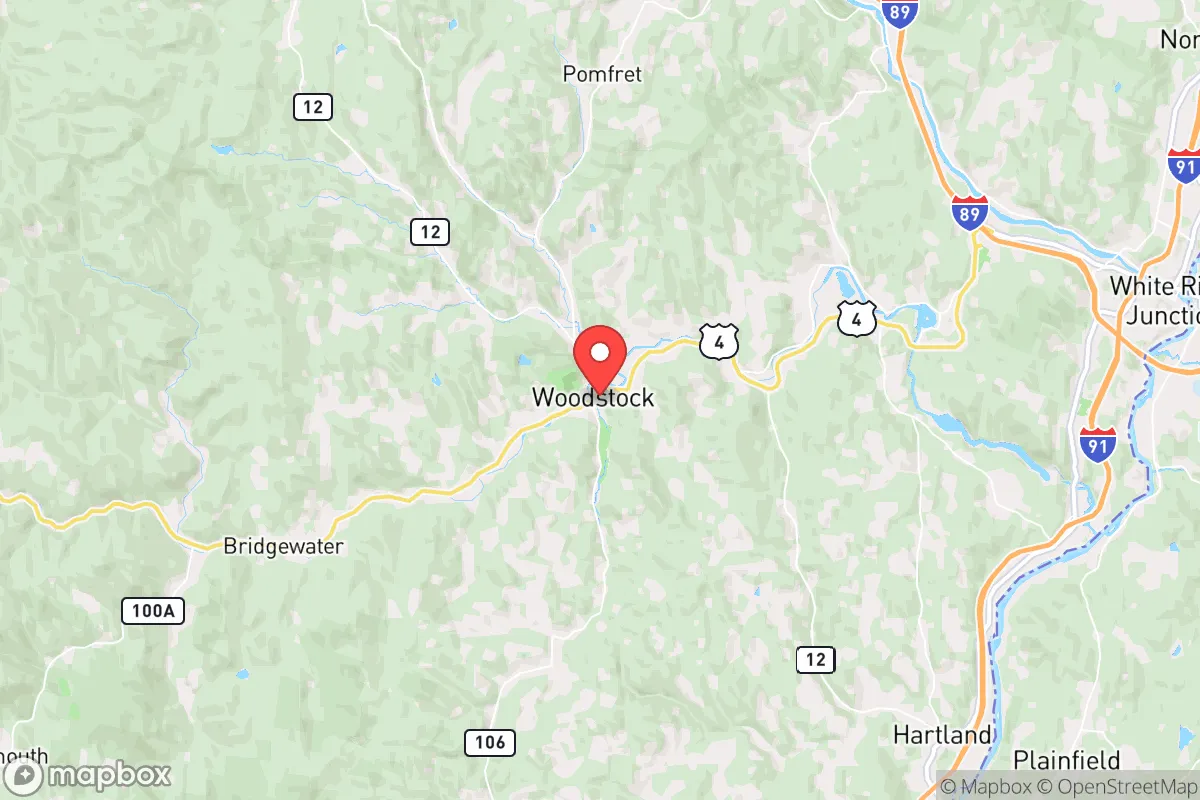
Drive just 15 minutes south to Bridgewater, and you’ll find a town that still votes more or less evenly split, with a lot of folks who keep their politics to themselves and just want to be left alone. Head north to White River Junction, and you’re in a more working-class, pragmatic area where people are skeptical of the kind of top-down solutions that get celebrated in Woodstock. The contrast is stark: Woodstock’s village green might host a climate rally, while a town like Barnard (10 miles west) is still debating whether to allow a new gas station. The surrounding towns in Windsor County aren’t nearly as blue as Woodstock itself, which tells you the political pressure here comes from a vocal, well-funded minority that’s out of step with the broader region’s common sense.
What this means for residents
For those of us who value personal freedom and don’t want the government in our business, living in Woodstock means constantly fighting against overreach. The local school board has pushed curriculum changes that prioritize ideology over academics, and the town selectboard has entertained zoning rules that would tell you what you can do with your own land. It’s not just talk—property taxes have climbed 8% in the last two years to fund programs a lot of us never asked for. If you’re a small business owner, you’re dealing with new regulations on everything from signage to waste disposal that feel less about safety and more about control. The long-term concern is that this progressive drift will drive out the very people who make the town work—the contractors, the mechanics, the farmers—leaving only those who can afford to live in a political petri dish.
On a cultural level, Woodstock has become a place where you keep your head down if you don’t share the prevailing views. The local paper, the Standard, leans hard into progressive narratives, and town meetings can feel less like community gatherings and more like performances for the like-minded. There’s a palpable pressure to conform, which is ironic for a town that prides itself on being open-minded. The policy distinctions are real too: Woodstock was one of the first towns in Vermont to adopt a “sanctuary” resolution, and it’s aggressively pushed for renewable energy mandates that drive up costs for everyone. If you’re looking for a place where you can live your life without a political agenda being shoved down your throat, you might find more breathing room in Quechee or South Royalton. But if you’re set on Woodstock, be ready to push back—or just keep your opinions to yourself and enjoy the scenery while it lasts.

State Political ClimatePolitical Climate in Vermont
State Political AnalysisPolitical Environment in the State
Vermont has long been painted as a deep-blue bastion, but the reality on the ground is more complicated than the national narrative suggests. The state’s overall partisan lean is solidly Democratic at the presidential level — Joe Biden won it by 35 points in 2020 — but that top-line number masks a fierce urban-rural split and a stubborn libertarian streak that has kept the state from fully embracing the progressive agenda seen in places like Massachusetts or New York. Over the last 10-20 years, the dominant coalition has shifted from a moderate, fiscally conservative Yankee Republicanism to a coalition of wealthy out-of-state transplants, college-town activists, and a shrinking but vocal rural conservative base. The trajectory is concerning: the state is becoming more progressive, more expensive, and less tolerant of dissenting views, especially in the Chittenden County corridor.
Urban vs. rural divide
The political map of Vermont is a tale of two states. The urban core — Burlington, South Burlington, Winooski, and Montpelier — drives the state’s blue lean. Burlington, home to the University of Vermont, is a progressive stronghold where socialist city council members are common and the local Democratic Party has moved sharply left on issues like housing mandates and police defunding. In 2024, Chittenden County voted over 70% for Biden, and it’s the engine of every statewide Democratic victory. Drive 30 minutes in any direction, and the landscape flips. Rutland County, Orleans County, and Essex County are reliably red at the local level, with Trump winning many of their towns by double digits in 2020. The Northeast Kingdom — Caledonia, Orleans, and Essex counties — is the most culturally conservative region, with a strong independent streak and a deep distrust of Montpelier. Even within blue counties, there are pockets of resistance: St. Albans in Franklin County and Bennington in Bennington County have shown they can flip to Republican in state legislative races when the national tide is right. The divide isn’t just about party — it’s about lifestyle: rural Vermonters resent being governed by Burlington’s urbanites who don’t understand snowplow budgets, gun culture, or the cost of heating a farmhouse.
Policy environment
Vermont’s policy environment is a mixed bag that should give any freedom-minded person pause. The state has one of the highest property tax burdens in the nation, driven by a school funding system that relies heavily on local property taxes — rates can exceed 2% of assessed value in many towns. Income tax is progressive, topping out at 8.75%, and there’s a statewide sales tax of 6% (with local option taxes in some towns). The regulatory posture is aggressive: Act 250, the state’s land-use law, makes even minor construction projects a bureaucratic nightmare, and the state has a strict renewable energy mandate requiring 100% renewable electricity by 2035 — a goal that’s driving up rates and forcing rural towns to host industrial wind and solar projects they don’t want. On education, Vermont spends more per pupil than almost any state, but outcomes are mediocre, and the state has moved to mandate “culturally responsive” curricula that many parents find intrusive. Healthcare is dominated by the state’s all-payer model, which has kept costs somewhat contained but limited choice. Election laws are among the most liberal: universal mail-in voting, same-day registration, and no voter ID requirement — a system that critics say invites fraud, though no major scandals have emerged. The state also has a sanctuary state law (Act 59) that limits cooperation with federal immigration enforcement, a policy that has caused friction in border towns like Derby Line and Alburgh.
Trajectory & freedom
Vermont is becoming less free by almost any measure, and the trend has accelerated since 2020. The most visible flashpoint is gun rights: in 2018, the state passed Act 71, which banned magazines over 10 rounds, raised the purchase age to 21, and instituted universal background checks. In 2023, the legislature passed a “safe storage” law (Act 45) that criminalizes leaving a firearm unlocked in a home where a minor could access it — a well-intentioned but overbroad law that gun owners see as a backdoor to confiscation. On parental rights, the state passed Act 1 in 2024, which codifies “gender-affirming care” as a protected right and explicitly overrides parental consent for minors seeking such care — a law that has sparked outrage among conservative families. On medical freedom, Vermont was one of the first states to mandate COVID-19 vaccines for schoolchildren (though that mandate was later repealed), and it maintains one of the nation’s strictest vaccine schedules for school entry. Property rights are under assault: the state’s “housing bill” (Act 250 reform) passed in 2024 allows municipalities to override local zoning to force higher-density development, a move that rural towns see as a loss of local control. The only bright spot is that Vermont has no state-level “red flag” law (yet), and the state’s libertarian tradition means that enforcement of these laws is often lax in rural counties — but the legal framework is there, and it’s expanding.
Civil unrest & political movements
Vermont’s political activism is a study in contrasts. The left is well-organized and vocal: Burlington saw nightly protests in 2020 that included property damage and clashes with police, and the city’s “People’s Budget” movement pushed for defunding the police (though it was ultimately defeated at the ballot box). The Rights and Democracy coalition is a powerful progressive force that has successfully lobbied for rent control, paid family leave, and the sanctuary state law. On the right, the Vermont Republican Party is small but scrappy, with a strong grassroots presence in the Northeast Kingdom and Rutland County. The “Take Back Vermont” movement, which emerged in the early 2000s over civil unions, has been revived in recent years around gun rights and parental rights. There’s a growing secessionist sentiment in the Northeast Kingdom, with some towns passing resolutions calling for independence from the state — a symbolic but telling gesture. Immigration politics are a flashpoint: the sanctuary law has led to tensions in border towns like Derby Line, where federal agents have been blocked from accessing the local police station. Election integrity is a simmering issue: the state’s universal mail-in system has been criticized by conservatives, but no major fraud has been proven. The most visible flashpoint for a new resident would be the “Vermont Statehouse” protests — every legislative session sees dueling rallies on gun rights, abortion, and parental rights, with the left typically outnumbering the right 3-to-1.
Projection
Over the next 5-10 years, Vermont is likely to become more progressive, more expensive, and more polarized. The demographic trends are clear: the state’s population is aging and shrinking, with young people leaving for better job markets and retirees moving in from out of state — many of them wealthy, educated, and left-leaning. The in-migration from New York, Massachusetts, and Connecticut since 2020 has accelerated the blue shift, particularly in Chittenden County and the ski towns of Stowe, Manchester, and Woodstock. These newcomers bring progressive voting habits and support for higher taxes and stricter regulations. The rural conservative base is aging out, and young conservatives are leaving for states like Texas, Florida, and New Hampshire. The state’s fiscal trajectory is unsustainable: the pension system is underfunded, property taxes are crushing, and the state’s reliance on federal funding (over 30% of the budget) makes it vulnerable to federal cuts. A new resident moving in now should expect to see the state’s political climate continue to shift left, with more gun control, more mandates on schools and businesses, and less tolerance for conservative viewpoints. The only wild card is a potential “Vermont exodus” if the tax burden becomes unbearable — but that would likely accelerate the blue shift as the remaining population becomes even more progressive.
Bottom line for a new resident: If you’re a conservative looking for a state that respects your values, Vermont is a tough sell. The state’s natural beauty and small-town charm are real, but the political climate is increasingly hostile to gun rights, parental authority, and economic freedom. You’ll find like-minded communities in the Northeast Kingdom and parts of Rutland County, but you’ll be fighting an uphill battle against a state government that is actively moving in the opposite direction. If you’re willing to be a political minority and focus on the lifestyle, it can work — but don’t expect the state to become more conservative anytime soon. For most conservatives, New Hampshire is a better bet, with a similar landscape but a much freer political environment.
* Values derived from national, state, county, city and local statistics and may differ in a specific area. Last updated: 2026-04-30T14:34:09.000Z
Narrative content on this page is AI-generated and may contain mistakes. Verify any details that matter before acting on them.
ReloMaps may earn a commission from affiliate links at no extra cost to you.

