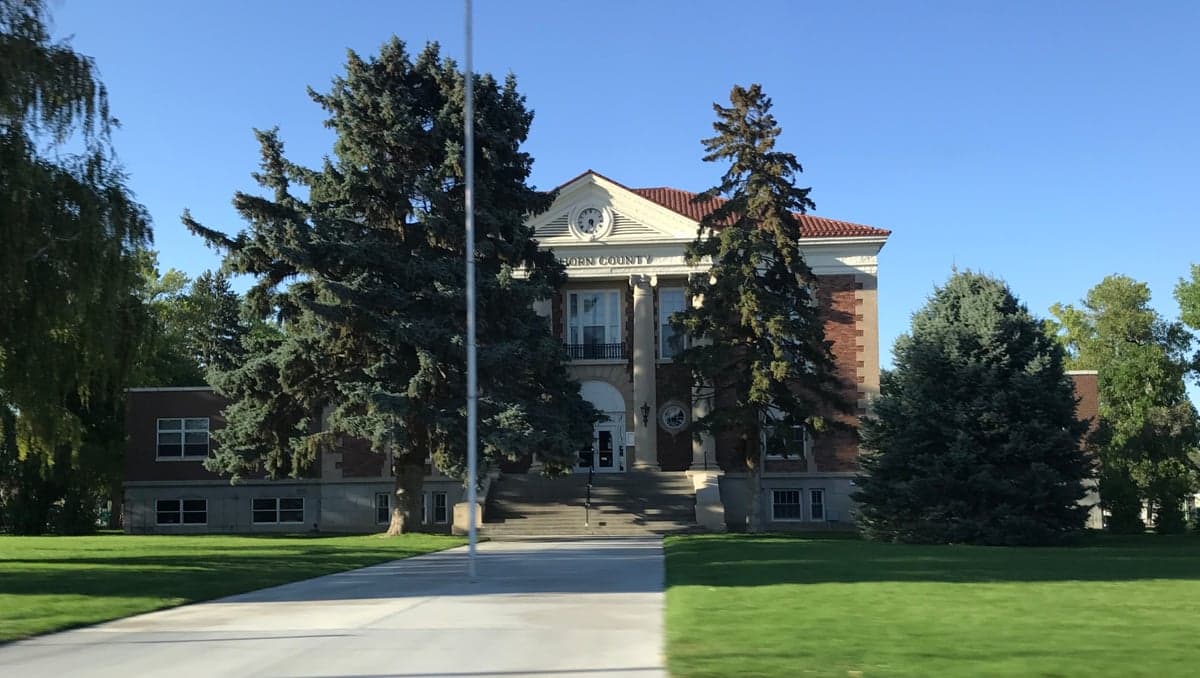
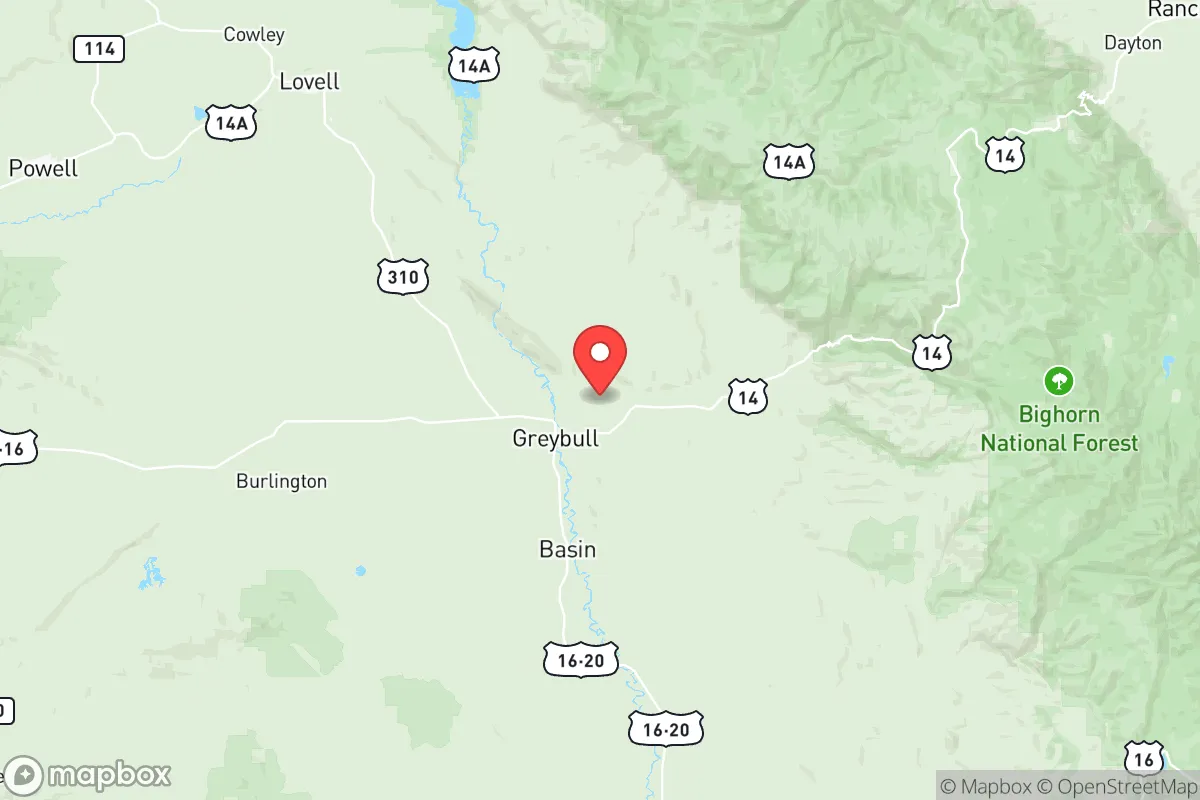
Photo: Wikipedia
Personal Sovereignty in Big Horn County
Viable for self-reliance. Generally workable, though some barriers may limit total independence.
What does Personal Sovereignty tell us?
Personal Sovereignty measures your capacity for self-reliance and independence with minimal government friction. Higher scores mean fewer barriers between you and the way you want to live... but it assumes you have the space you need and good neighbors.
What does this tell us?
Personal Sovereignty measures your capacity for self-reliance and independence with minimal government friction. Higher scores mean fewer barriers between you and the way you want to live... but it assumes you have the space you need and good neighbors.
State Policy
Energy independence: Net exporter (800% of energy produced in-state)
Personal Liberty
Homesteading

Personal Liberty Analysis
Big Horn County, Wyoming, offers one of the most uncompromising personal sovereignty environments in the lower 48, a place where the state’s constitutional ethos of individual liberty meets the practical realities of rural life. For those looking to escape the creeping regulatory state and government overreach seen in coastal and urban centers, this county delivers a level of autonomy that is increasingly rare. The county’s sparse population—roughly 11,000 residents spread across 3,200 square miles—means that the default posture of local government is non-interference, and the state of Wyoming itself has enshrined protections for personal freedoms that make it a standout for conservative-leaning individuals and families prioritizing self-determination.
Tax burden and regulatory posture: How Big Horn County compares to Wyoming and the West
Wyoming’s tax structure is a fortress for personal sovereignty, and Big Horn County benefits fully from it. There is no state income tax, no corporate income tax, and no inventory tax, which means the state takes nothing from your paycheck or business operations. Property taxes in Big Horn County are among the lowest in the nation, with an effective rate around 0.6% of assessed value—far below the national average of 1.1%. The county’s regulatory posture is equally light: there are no county-wide building codes in unincorporated areas, and zoning is minimal outside of the towns of Basin, Greybull, and Lovell. In the unincorporated stretches—places like Manderson, Otto, and the vast ranching lands near Hyattville—you can build, modify, or demolish structures without permits or inspections. This is a stark contrast to states like Colorado or Washington, where county health departments and planning commissions dictate everything from septic placement to roof pitch. The state’s Property Tax Refund Program offers relief for low-income homeowners, but the real draw is the absence of bureaucratic friction. For a prepper or survivalist, this means you can establish a homestead, store supplies, and develop infrastructure without a paper trail or government approval.
Self-defense and gun law specifics: Constitutional carry and no red flag laws
Big Horn County is a constitutional carry jurisdiction, meaning no permit is required to carry a concealed firearm for anyone legally allowed to possess one. Wyoming has no red flag laws, no firearm registration, no waiting periods, and no magazine capacity restrictions. The state preempts all local gun ordinances, so towns like Basin, Greybull, and Lovell cannot impose their own restrictions—what’s legal in the county is legal everywhere within it. The county sheriff’s office, led by Sheriff Ken Blackburn, is known for a pro-Second Amendment stance and a policy of non-enforcement of any federal overreach, such as potential future bans on certain firearms or accessories. For those concerned about government overreach, this is a critical buffer. The nearest major urban center, Cody (in Park County), is about 45 minutes from Lovell, but Big Horn County itself has no gun ranges or stores that require membership or fees—public land is the range. The Bighorn National Forest and BLM lands offer unlimited shooting opportunities, and the county’s low crime rate (violent crime is roughly 1.5 per 1,000 residents, half the national average) means self-defense is a practical consideration, not a daily fear. For parents, this environment means teaching firearm safety and marksmanship is a normal part of raising children, not a politically charged activity.
Self-reliance and homesteading viability: Lot sizes, zoning, and off-grid feasibility
Big Horn County is a homesteader’s paradise, with land availability and regulatory freedom that make off-grid living not just possible but the norm. In unincorporated areas, there are no minimum lot sizes for agricultural or residential use on land zoned for rural development—you can buy a 5-acre parcel near Deaver or a 40-acre spread outside of Byron and build immediately. Zoning is virtually non-existent outside town limits; the county’s land use plan is advisory, not mandatory. Off-grid systems are fully legal: solar panels, wind turbines, rainwater catchment, and composting toilets require no permits or inspections. The county health department does require a septic system permit for wastewater, but the process is straightforward and costs under $200. Well drilling is regulated by the state, but the county has no additional hoops. The Bighorn River and Shoshone River provide reliable water sources, and the area’s high desert climate (12-15 inches of rain annually) means rainwater harvesting is practical with proper storage. Towns like Greybull and Lovell have municipal water and sewer, but the real sovereignty is in the rural tracts—places like Emblem, Kane, and the foothills near Shell. For a prepper, this means you can build a fully self-sufficient compound with no government oversight, store years of supplies, and live without utility bills or property inspections. The county’s agricultural roots mean that livestock, gardening, and food preservation are common skills, and local feed stores and co-ops in Basin and Lovell support a self-reliant lifestyle.
Personal liberties: Parental rights, medical autonomy, speech, and property
Wyoming’s legal framework strongly protects parental rights, medical autonomy, and property rights, and Big Horn County’s local culture reinforces these. The state has a Parental Bill of Rights that affirms parents’ authority over their children’s education, healthcare, and upbringing—no school district in the county has attempted to implement controversial curricula or medical mandates. The county’s school districts (Big Horn County School District #1 in Basin and #2 in Lovell) are small and community-controlled, with school boards that are responsive to local values. Medical autonomy is protected by state law: there is no vaccine mandate for adults or children, and the state has banned any form of medical passport or discrimination based on vaccination status. The Wyoming Medical Freedom Act prohibits employers and government entities from requiring vaccines as a condition of service or employment. Speech is protected by the state’s strong free speech tradition, and Big Horn County has no local hate speech or social media ordinances. Property rights are enshrined in the state constitution, and the county has no eminent domain abuse—the last major condemnation was for a water pipeline project in the 1990s. For those concerned about federal overreach, the county’s sheriffs have publicly stated they will not enforce federal gun or land-use laws they deem unconstitutional, a stance backed by Wyoming’s 2010 Firearms Protection Act. This is a place where you can speak your mind, raise your children without government interference, and control your own medical decisions without fear of state coercion.
In the broader landscape of American personal sovereignty, Big Horn County stands as a rare holdout against the encroaching regulatory state. Compared to states like Oregon, New York, or California—where land use, gun laws, and medical mandates have tightened dramatically—this county offers a level of autonomy that is increasingly difficult to find. The combination of no income tax, constitutional carry, off-grid freedom, and strong parental rights makes it a strategic relocation target for those who prioritize self-reliance and distrust of government overreach. While the winters are harsh and the economy is tied to agriculture and energy, the trade-off is a life where your sovereignty is not a privilege granted by the state but a right you exercise daily. For the survivalist or conservative family looking to escape the crumbling social contract of urban America, Big Horn County is not just an option—it’s a sanctuary.

* Values derived from national, state, county, city and local statistics and may differ in a specific area. Last updated: 2026-05-12T12:21:12.000Z
Narrative content on this page is AI-generated and may contain mistakes. Verify any details that matter before acting on them.
ReloMaps may earn a commission from affiliate links at no extra cost to you.

