Photo: Wikipedia
Demographics of Fremont County
Affluence Level in Fremont County
A middle-class area roughly in line with national averages across income, home values, education, and employment.
People of Fremont County
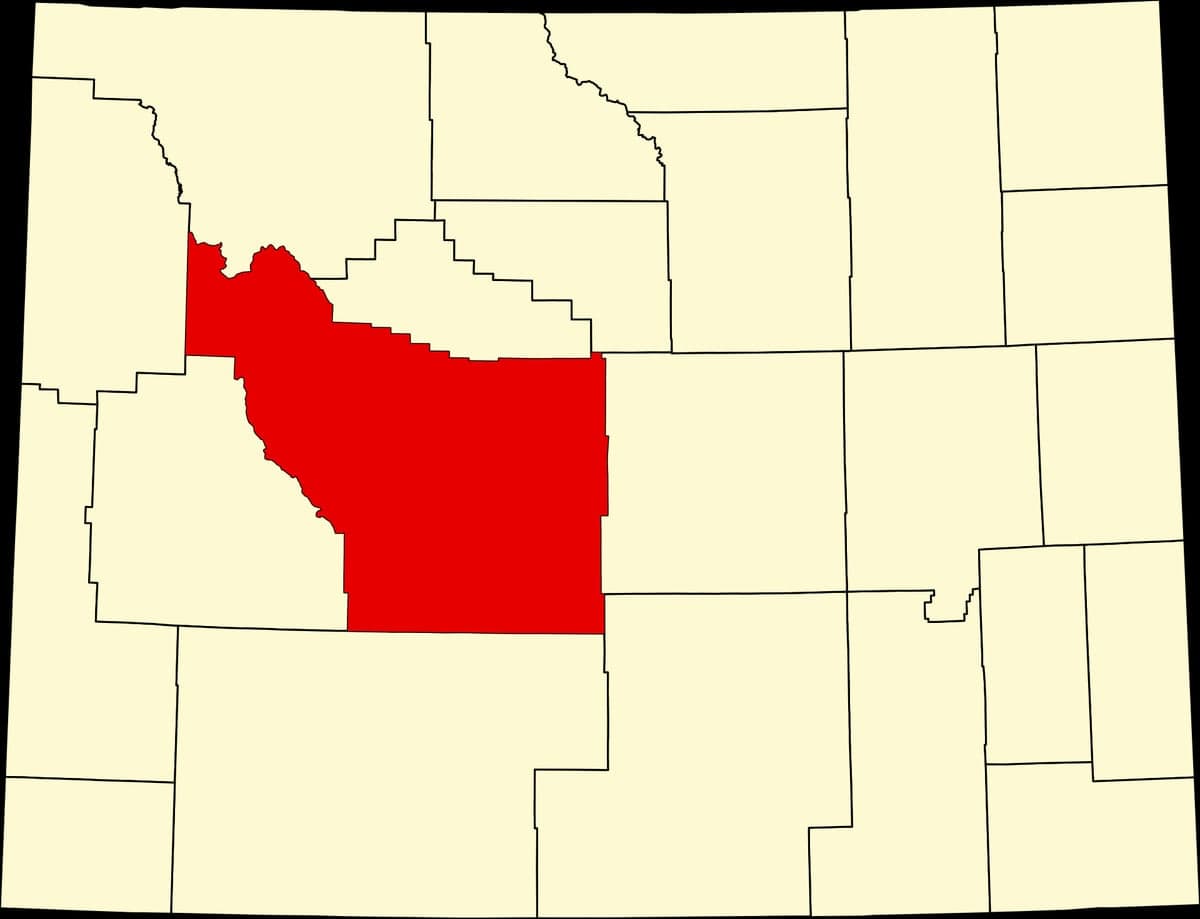
Fremont County, Wyoming is home to 39,472 residents spread across a vast, rugged landscape where the Wind River Range meets the high desert. The county is defined by its dual identity: a majority white population (69.7%) living alongside the Wind River Indian Reservation, home to the Eastern Shoshone and Northern Arapaho tribes, creating a demographic character unlike any other in Wyoming. With only 0.6% foreign-born residents and a sparse population density of roughly 3 people per square mile, Fremont County remains one of the most culturally distinct and least globally connected places in the American West.
Settlement & growth (pre-1960)
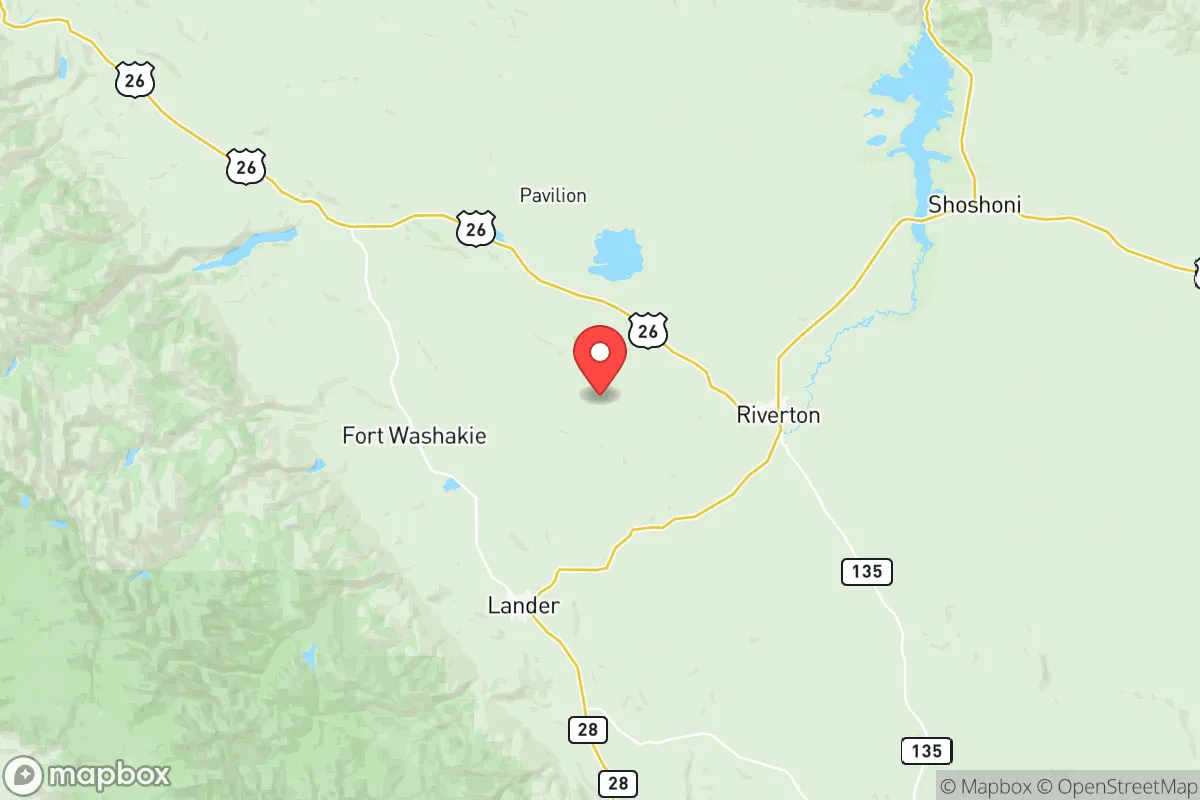
The human history of Fremont County begins with the Eastern Shoshone people, who controlled much of the Wind River Basin and the mountain passes into the Yellowstone region by the early 1800s. The Shoshone were a mounted, buffalo-hunting culture that ranged from the Green River to the Bighorn Basin, with seasonal camps near what is now Lander and along the Popo Agie River. The Northern Arapaho, traditionally based east of the Continental Divide, were forcibly relocated to the Wind River Reservation in 1878 after the U.S. government dissolved their Colorado reservation, creating a tense cohabitation that persists to this day. The reservation, established by the 1868 Fort Bridger Treaty, covers roughly 2.2 million acres and remains the political and cultural heart of both tribes, with communities like Fort Washakie, Ethete, and Arapahoe serving as population centers.
American settlement of Fremont County began in earnest after the 1850s, driven by the Oregon Trail and later the transcontinental railroad. The first non-Native settlers were fur trappers and traders who established posts along the Wind River and Sweetwater River corridors. The 1868 treaty that created the reservation also opened the surrounding lands to homesteading, and by the 1870s, cattle ranchers from Texas and the Midwest began moving into the Lander Valley and the area around what would become Riverton. The town of Lander, founded in 1884 as a railroad stop on the Chicago and North Western line, quickly became the county's commercial and governmental hub, drawing merchants, miners, and ranchers from the eastern United States and the British Isles.
The major population wave came between 1900 and 1930, when the U.S. Reclamation Service's Riverton Project brought irrigation canals to the Wind River Basin, transforming dry sagebrush into farmland. This project, completed in 1927, opened thousands of acres to homesteaders, primarily from the Great Plains and the Midwest. The town of Riverton, founded in 1906 as a railroad and irrigation hub, grew rapidly as farmers planted alfalfa, sugar beets, and beans. Many of these homesteaders were of German, Scandinavian, and English descent, with smaller numbers of Irish and Dutch families. The town of Hudson, settled in the 1906 land lottery, became a center for these irrigation-era farmers, while Dubois, founded in the 1890s as a tie-hack camp for the railroad, attracted a more transient population of loggers and sheepherders from the Rocky Mountain region.
By 1960, Fremont County's population had reached roughly 26,000, with the white majority concentrated in Lander and Riverton, and the Native population living primarily on the reservation. The county's economy was a mix of agriculture (cattle, hay, sugar beets), timber, and mining (bentonite, uranium, and gold), with tourism beginning to grow as Yellowstone and Grand Teton National Parks drew visitors through the county. The population was overwhelmingly native-born, with foreign-born residents accounting for less than 2% of the total, a pattern that would persist for decades.
Modern era (post-1965)
The 1965 Hart-Cellar Act had minimal direct impact on Fremont County, as the county's foreign-born population remains at just 0.6% in 2026, far below the national average. The county did not experience the waves of immigration from Latin America, Asia, or the Middle East that reshaped much of the United States. Instead, the modern demographic story of Fremont County is one of domestic migration and internal shifts. The white population, which was 85% in 1990, has declined to 69.7% as of the most recent data, driven primarily by out-migration of younger white residents to urban areas and a modest increase in the Hispanic population, which now stands at 6.7%.
The Hispanic population, while small, has grown steadily since the 1990s, concentrated in Riverton and Lander, where they work in agriculture, construction, and the service industry. Many are second- and third-generation families from northern New Mexico and Colorado, rather than recent immigrants. The Black population remains negligible at 0.5%, and East/Southeast Asian communities account for just 0.4%, with no significant enclaves forming. The Indian subcontinent population is effectively zero. The county's racial and ethnic character is thus a binary between the white majority and the Native American population, which together account for nearly 95% of residents.
The most significant modern demographic shift has been the growth of the Native American population on the Wind River Reservation. The Eastern Shoshone and Northern Arapaho tribes have seen steady natural increase, with younger families settling in communities like Fort Washakie, Ethete, and St. Stephens. The reservation's population now exceeds 11,000, making it one of the most populous Native American communities in the Rocky Mountain region. This growth has created cultural and political tensions, particularly around jurisdictional issues, resource allocation, and economic development, but it has also made Fremont County a center of Native American art, language preservation, and tribal governance.
Domestic migration patterns since 2000 have been mixed. The county has attracted retirees and second-home buyers from Colorado and California, drawn by lower property taxes, hunting and fishing access, and the scenic beauty of the Wind River Range. Lander, in particular, has seen an influx of outdoor recreation enthusiasts and remote workers, giving it a slightly more liberal and cosmopolitan character than the rest of the county. Riverton, by contrast, has remained more working-class and conservative, with a economy tied to agriculture, energy, and the Wind River Casino. Dubois has become a haven for artists and writers, while the smaller towns like Pavillion and Shoshoni have seen population stagnation or decline as younger residents leave for larger cities.
The future
Fremont County's population is projected to grow slowly, reaching roughly 42,000 by 2040, driven primarily by natural increase among the Native American population and modest in-migration of retirees and remote workers. The county is not homogenizing; rather, it is tribalizing into distinct cultural zones. The Wind River Reservation will continue to grow as a Native American cultural and political stronghold, with the Eastern Shoshone and Northern Arapaho tribes asserting greater sovereignty over land, resources, and governance. Lander will likely become more liberal and amenity-driven, attracting outdoor enthusiasts and creative professionals, while Riverton will remain a conservative, working-class hub. The Hispanic population will grow slowly, likely reaching 8-10% by 2040, but will not form the large enclaves seen in other Western states.
The foreign-born population will remain negligible, as Fremont County lacks the economic pull factors—large employers, universities, or immigrant networks—that drive international migration. The county's cultural identity will thus remain rooted in its Western heritage, with the white and Native American populations coexisting in a relationship that is often tense but also deeply intertwined. For a conservative-leaning individual or family moving in now, Fremont County offers a place where traditional values, outdoor recreation, and a low-tax environment are central, but where the cultural landscape is more complex than a simple white majority narrative suggests.
Fremont County is becoming a place of distinct, self-reinforcing communities: a growing Native American nation on the reservation, an increasingly progressive outdoor-recreation hub in Lander, and a stable, conservative agricultural and energy base in Riverton and the surrounding towns. For someone moving in now, the choice of where to settle within the county will matter as much as the decision to move to Fremont County itself.

* Values derived from national, state, county, city and local statistics and may differ in a specific area. Last updated: 2026-05-17T23:15:46.000Z
Narrative content on this page is AI-generated and may contain mistakes. Verify any details that matter before acting on them.
ReloMaps may earn a commission from affiliate links at no extra cost to you.

