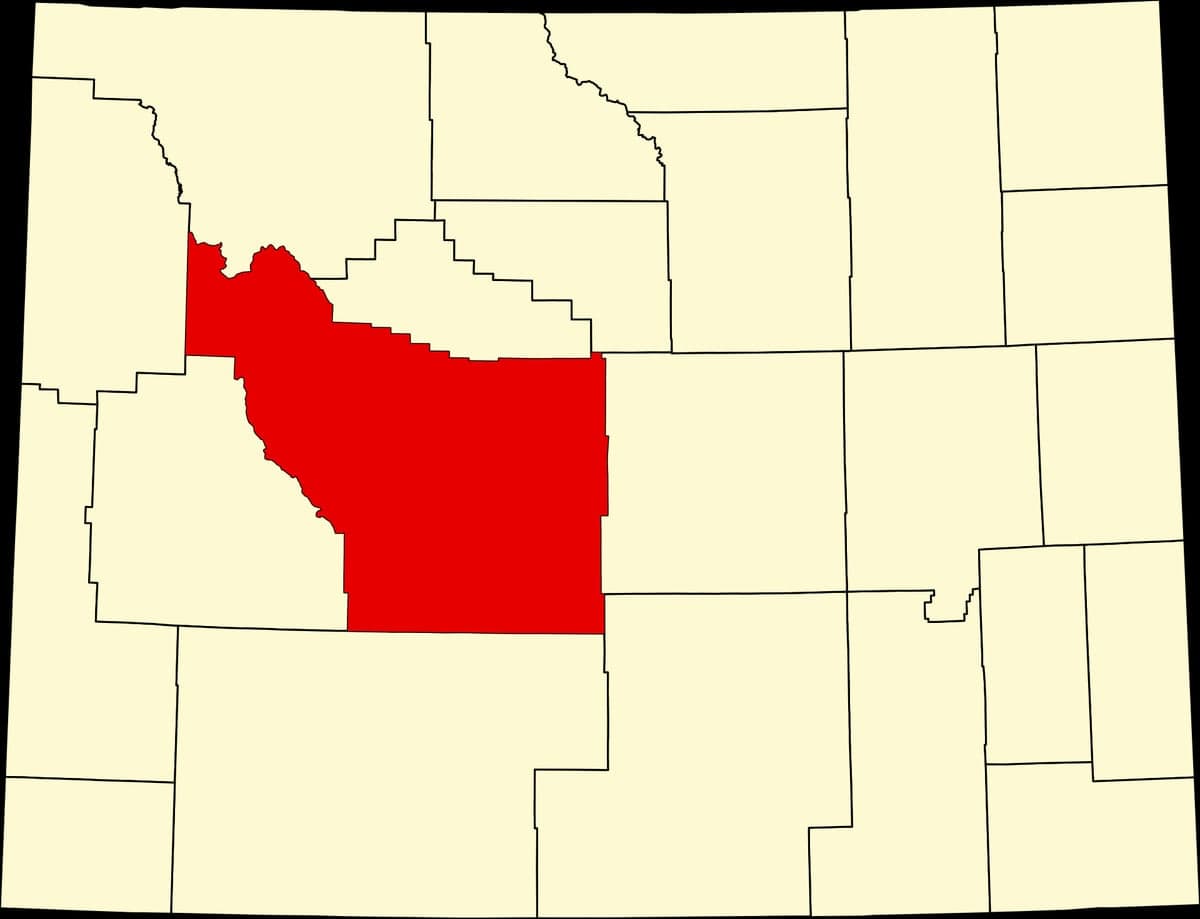
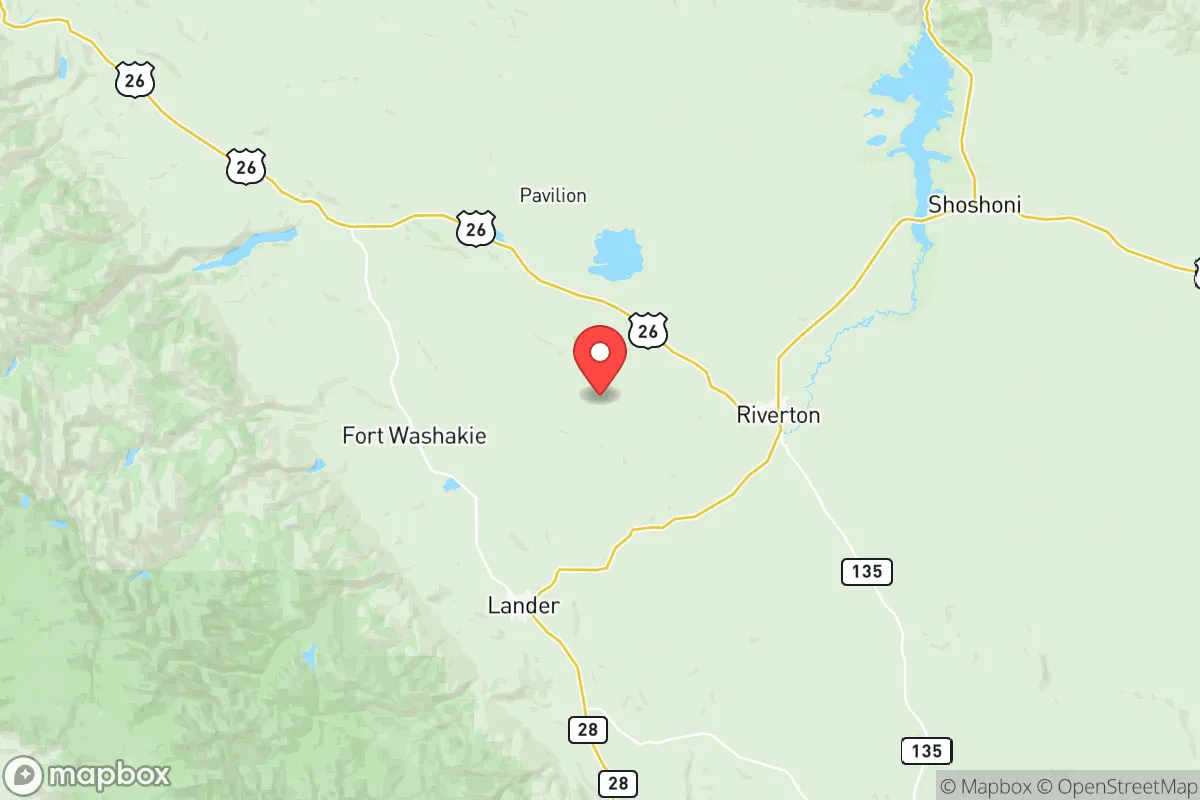
Photo: Wikipedia
Quality of Life in Fremont County
A livable area that tracks near national norms for affordability, walkability, and neighborhood health.
What does Quality of Life tell us?
Quality of Life measures an area by evaluating factors like cost of living, nearby amenities, country club access, airport proximity, socioeconomic signals and neighborhood character. For large states, this is a general average — quality of life can vary dramatically between metro areas, suburbs, and rural communities within the same state.
What does this tell us?
Quality of Life measures an area by evaluating factors like cost of living, nearby amenities, country club access, airport proximity, socioeconomic signals and neighborhood character. For large states, this is a general average — quality of life can vary dramatically between metro areas, suburbs, and rural communities within the same state.
Cost of Living
20% below national average
90%
The Real Cost of Living in Fremont County for 2026
| Tier | Individual | Family (4) |
|---|---|---|
| Survival | $14k | $26k |
| Comfortable | $49k | $72k |
| Luxury | $104k+ | $161k+ |
| Elite (Top 5%) | $122k+ | $189k+ |
Quality-of-Life Analysis
Fremont County, Wyoming, offers a broad quality-of-life spectrum that ranges from the regional hub of Riverton to the historic tourism center of Lander, with smaller communities like Dubois, Hudson, and Shoshoni providing distinctly different paces of life. The county’s character is defined by its position at the edge of the Wind River Indian Reservation and the Wind River Range, drawing outdoor recreationists to Lander, energy-sector workers to Riverton, and those seeking deep solitude to the rural stretches along the Popo Agie and Wind Rivers. With a cost-of-living index of 80 (20% below the U.S. average), a median home value of $252,700, and a median rent of $858, the county presents a financially accessible alternative to Colorado or Jackson Hole, though the trade-offs in amenities and commute times vary significantly by location.
Largest town(s) & population centers
Riverton, the county seat and largest city (population ~10,600), serves as the commercial and transportation hub, anchored by the Central Wyoming College campus and the Riverton Regional Airport. Daily life here is practical and car-dependent, with big-box retail, healthcare facilities like SageWest Health Care, and a median commute of just 17 minutes. Lander (population ~7,500), 20 miles south, is the cultural and outdoor recreation counterpoint, home to the National Outdoor Leadership School (NOLS) and a walkable downtown with independent shops, breweries, and the Lander Bar. Lander’s housing market is tighter and pricier than Riverton’s, with median home values often exceeding $300,000, reflecting its desirability among remote workers and climbers. Both towns offer K-12 public schools, but Lander’s Fremont County School District #1 consistently posts higher test scores and graduation rates, a factor for families weighing school quality.
Smaller towns & rural pockets
Dubois (population ~970), 80 miles northwest of Riverton at the edge of the Shoshone National Forest, is a gateway to the Wind River Range and a haven for fly-fishing and hunting. Its year-round population is small, but summer tourism and a growing number of second-home owners sustain a handful of cafes, a grocery store, and the Dubois Museum. Hudson (population ~460) and Shoshoni (population ~470) are former railroad and mining towns along U.S. Highway 26, offering the county’s most affordable housing—often under $150,000 for a single-family home—but with limited employment beyond agriculture, energy, and the Wind River Casino. Unincorporated areas like Fort Washakie (population ~1,600) on the Wind River Indian Reservation provide a different cultural context, with tribal governance, the Wind River Hotel and Casino, and access to the reservation’s outdoor spaces, though infrastructure and retail options are sparse. The rural pockets between these towns consist of irrigated farmland, sagebrush plains, and scattered subdivisions where residents often rely on well water and septic systems.
Cost & lifestyle range
The cost-of-living spread across Fremont County is wide. At the low end, Shoshoni and Hudson offer median home values around $120,000–$160,000 and rents below $700, attracting retirees on fixed incomes and workers in the trona mining and oil fields. At the high end, Lander’s desirable neighborhoods near the Popo Agie River and Sinks Canyon State Park push home values above $350,000, while Dubois’s limited inventory and scenic location create a similar premium. Riverton sits in the middle, with a median home value of $252,700 and a rental market where a two-bedroom apartment averages $858—affordable by national standards but tight for local wages in retail or hospitality. The average commute of 17 minutes holds true for most residents, but those living in Dubois or rural subdivisions near the reservation may drive 30–45 minutes to reach a full-service grocery store or hospital. Amenities follow the same gradient: Lander has a vibrant arts scene, a farmers market, and the Lander Community Center; Riverton has Walmart, fast food, and the Riverton Museum; smaller towns have a gas station, a bar, and little else.
Fremont County best suits people who value space, affordability, and direct access to the Wind River Range over urban convenience. Outdoor enthusiasts and remote workers gravitate to Lander and Dubois for the trails and community culture, while energy-sector employees and budget-conscious families find stability in Riverton and the smaller towns. The county’s low cost of living and short commutes are genuine assets, but the trade-off is limited job diversity, harsh winters, and a healthcare system that requires travel to Casper or Salt Lake City for specialist care. Those who thrive here are self-reliant, comfortable with a slower pace, and willing to drive for the amenities they cannot find at home.

Crime in Fremont County
Generally safer than 71% of comparable U.S. locations.
Violent CrimeViolent Crime Analysis
Property CrimeProperty Crime Analysis
Crime Analysis
Fremont County, Wyoming, presents a mixed safety profile that is heavily shaped by its rural geography and the significant presence of the Wind River Indian Reservation. The county’s overall crime rates are notably higher than the state and national averages, driven primarily by property crime, though violent crime remains below the national benchmark. Understanding where these incidents concentrate—and the local justice system’s approach—is critical for anyone evaluating relocation to communities like Lander, Riverton, or Dubois.
Crime in context
Fremont County’s violent crime rate of 171.7 per 100,000 residents is roughly 40% lower than the national average (around 380 per 100K) but slightly above Wyoming’s state rate of approximately 240 per 100K. Property crime, however, is a more pressing concern. At 1,011.3 per 100,000, it exceeds both the Wyoming state average (roughly 1,800 per 100K) and the national rate (about 1,950 per 100K). This means a resident’s likelihood of experiencing theft, burglary, or motor vehicle theft is elevated compared to the rest of the state. The county’s vast, low-density landscape makes law enforcement response times longer, and many rural properties are vulnerable to opportunistic crime. The Fremont County Sheriff’s Office and the Riverton Police Department are the primary law enforcement agencies, with the FBI also having jurisdiction on the Wind River Reservation.
What residents experience
Daily life in Fremont County is not defined by random violence, but by property crime and substance-fueled incidents. The most common offenses are larceny-theft, burglary, and motor vehicle theft, often tied to methamphetamine and opioid addiction. Riverton, the county’s largest city, sees a disproportionate share of these incidents, with its downtown and residential areas near the reservation boundary reporting higher theft rates. Lander, the county seat, has a lower property crime rate than Riverton but still faces periodic break-ins and vehicle prowls, particularly near the Sinks Canyon and South Pass areas popular with tourists. Dubois, in the northern part of the county, is the safest incorporated town, with crime rates well below the county average, though its isolation means any incident is more impactful. The Wind River Indian Reservation, which covers roughly 60% of the county’s land area, has its own complex safety dynamics, with higher rates of domestic violence and assault, but these are often underreported and handled by tribal law enforcement and federal prosecutors rather than the county court system.
A significant factor influencing safety is the local judicial philosophy. Fremont County’s District Attorney and judges operate within a conservative legal framework, which generally prioritizes victim rights and public safety over progressive offender rehabilitation. This is a positive for residents concerned about recidivism. Unlike some large metro areas where liberal district attorneys have implemented policies that reduce incarceration for property and drug crimes, Fremont County’s courts are more likely to impose jail time and supervised probation. This approach helps keep repeat offenders off the streets, directly benefiting communities like Lander and Riverton by reducing the revolving-door effect that plagues jurisdictions with progressive justice systems. However, the sheer volume of property crime means that even with a tough-on-crime stance, resources are stretched, and many thefts go unsolved.
Neighborhood-level variation is pronounced. In Riverton, areas west of the Wind River (near the reservation boundary) and the older central grid near Main Street see the highest crime density. In Lander, the historic downtown and the Baldwin Creek area are generally safe, while the outskirts near the reservation line experience more property crime. Dubois, with its small population and strong community watch, has the lowest crime rates in the county. For those seeking the safest environment, Dubois and the rural subdivisions around Lander (like the Louis Lake area) offer the best options, while Riverton’s core requires more vigilance. The county’s overall safety is a trade-off: lower violent crime than the nation, but property crime that demands proactive security measures, all within a justice system that does not coddle offenders.
* Values derived from national, state, county, city and local statistics and may differ in a specific area. Last updated: 2026-05-17T23:15:46.000Z
Narrative content on this page is AI-generated and may contain mistakes. Verify any details that matter before acting on them.
ReloMaps may earn a commission from affiliate links at no extra cost to you.

