Photo: Wikipedia
Political ClimatePolitical Climate in Fremont County
Showing state-level results — no local-only data available.
Local Political AnalysisPolitical Analysis of Fremont County
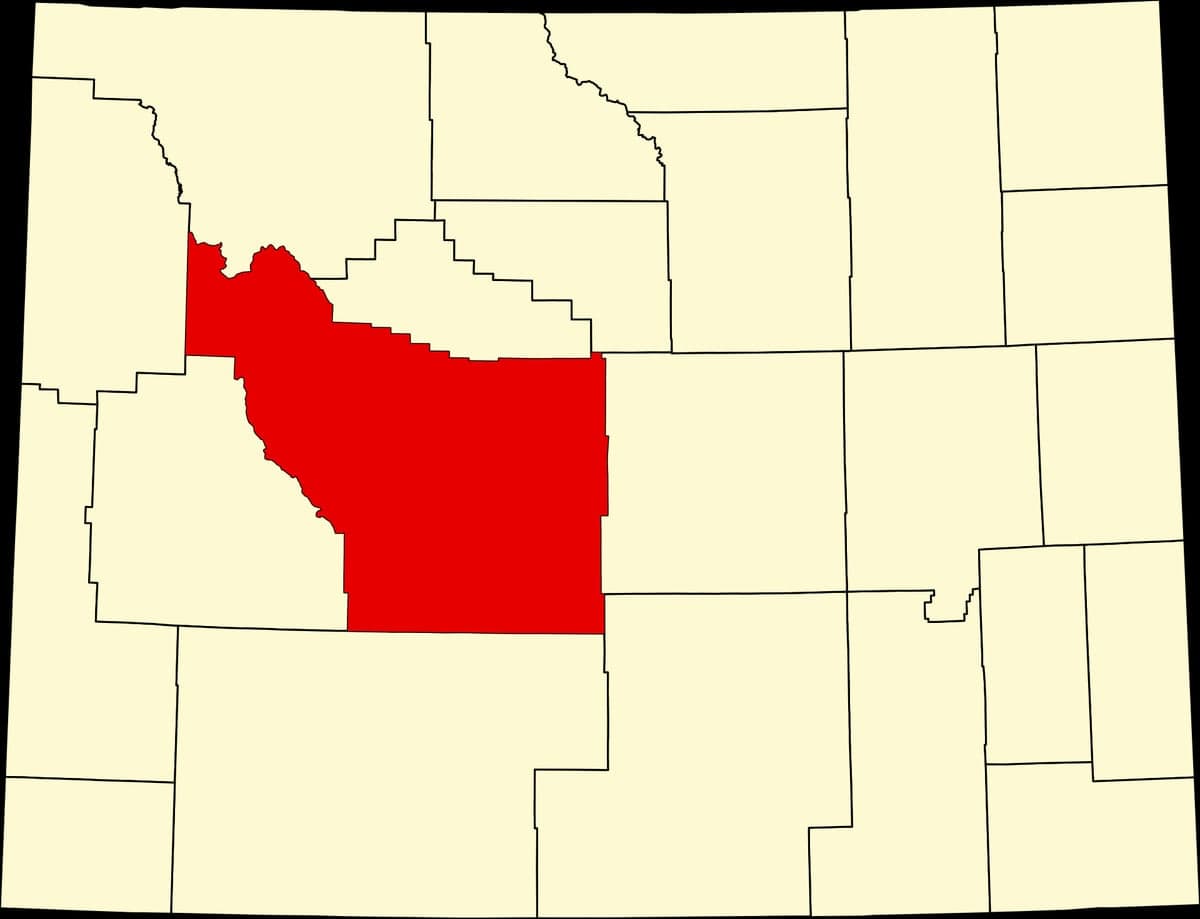
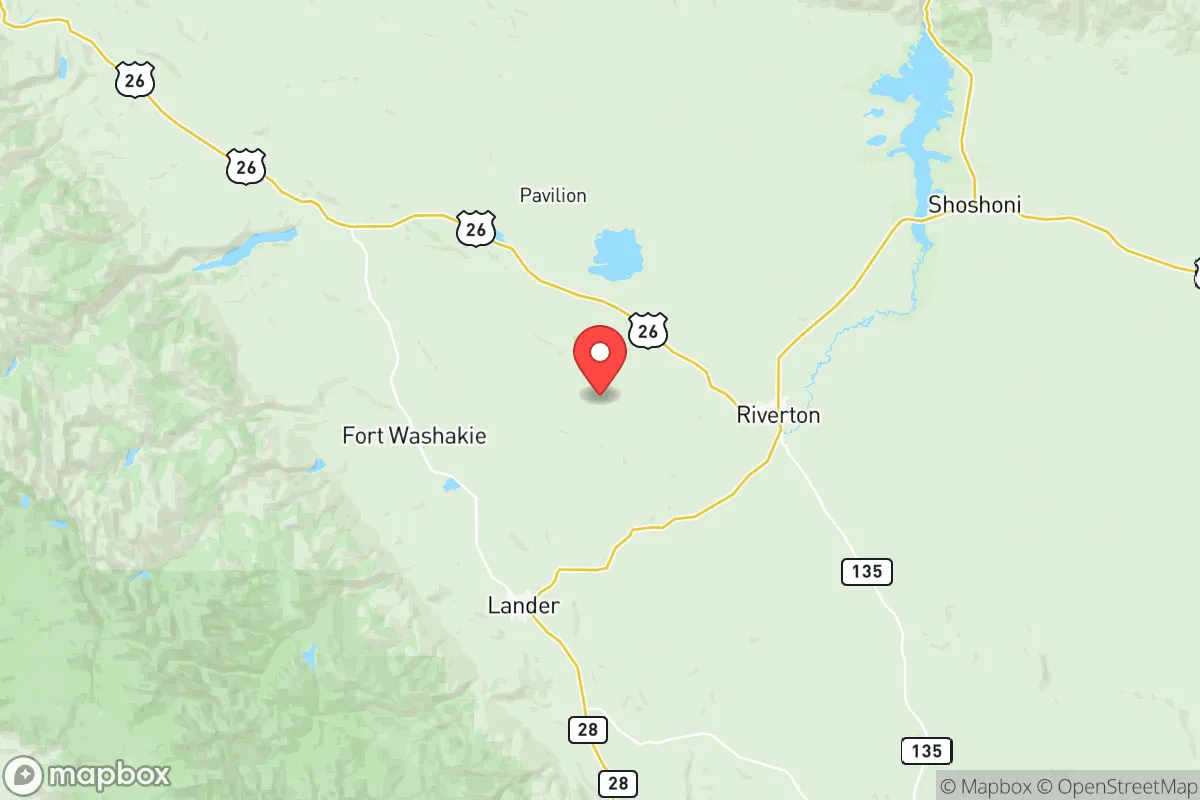
Fremont County, Wyoming, has long been a rock-solid conservative stronghold, and that hasn't changed much—its Cook PVI of R+25 is actually a tick redder than the state's already deep R+23. But if you've lived here as long as I have, you know the political story isn't as simple as that number suggests. The county's real divide isn't between Republicans and Democrats; it's between the traditional, liberty-minded conservatives in the small towns and the more moderate, government-dependent pockets around Lander and Riverton. You can feel the difference driving from Dubois—where the "Don't Tread on Me" flags fly as high as the elk antlers—down to the Wind River Reservation, where local politics often clash with state-level priorities.
How it compares
Compared to the rest of Wyoming, Fremont County is actually a bit more conservative on paper, but the texture is different. The state as a whole votes R+23, but Fremont's R+25 comes with a unique mix: Dubois and Hudson are deep red, often voting 80%+ Republican, while Lander and Riverton have small but vocal progressive pockets, especially around the college and the arts scene. The swing precincts aren't really swing—they're just less red. For instance, precincts in downtown Lander might only go 55-60% Republican, which feels almost purple by Wyoming standards. Meanwhile, the rural precincts around Pavillion and Shoshoni are as red as any in the state. The real story is that Fremont County's conservatism is more "leave us alone" than "government knows best"—a distinction that matters when you're talking about land use, energy policy, and local control.
What this means for residents
For folks living here, the political climate means you can generally expect your own business without too much hassle—but that's changing. The county commission and school board have stayed reliably conservative, pushing back on federal overreach on public lands and resisting progressive curriculum mandates from Cheyenne or Washington. Property taxes remain among the lowest in the state, and there's a strong cultural resistance to new regulations, especially on hunting, fishing, and energy development. That said, the growing influence of out-of-state transplants—particularly in Lander—is slowly shifting the tone. You see it in local elections: a few years ago, a Lander city council race turned on a debate over a "sustainable" development ordinance that felt more Boulder than Wyoming. It's not a takeover, but it's a warning sign for those of us who value our traditional freedoms.
The cultural and policy distinctions here are real. Fremont County is one of the few places in Wyoming where the tension between federal land management and local autonomy is a daily conversation—because half the county is federal land. The Shoshone and Arapaho tribes also hold significant political weight, especially on issues like water rights and economic development, which adds a layer of complexity you don't see in, say, Sublette County. For a conservative who values personal liberty and limited government, Fremont County still feels like home—but you have to keep an eye on the school board meetings and the planning commission. The fight isn't over yet, and it's worth staying involved if you want to keep it that way.

State Political ClimatePolitical Climate in Wyoming
State Political AnalysisPolitical Environment in the State
Wyoming is the most Republican state in the nation by Cook PVI (R+23), a position it has held for decades with no sign of weakening. The dominant coalition is a blend of traditional Western libertarians, evangelical conservatives, and energy-sector workers, all united by a deep distrust of federal overreach. Over the last 10-20 years, the state has actually drifted further right, as the small Democratic presence in places like Laramie and Jackson Hole has been diluted by out-migration of liberals and a steady influx of conservatives fleeing blue states. The 2024 presidential election saw Donald Trump win Wyoming with 72% of the vote, the highest margin in the nation, and every single county voted Republican.
Urban vs. rural divide
The political map is remarkably uniform, but there are subtle gradients. The most conservative areas are the rural ranching and energy counties like Sublette County (Trump 86%) and Campbell County (Gillette, Trump 84%), where the economy is tied to coal, oil, and gas. The state’s largest city, Cheyenne (Laramie County), is reliably red but slightly more moderate due to state government employees and a small military presence at F.E. Warren Air Force Base. Casper (Natrona County) leans hard right, driven by the energy industry and a strong ranching culture. The only real blue-ish pocket is Teton County (Jackson Hole), where wealthy second-home owners and tourism workers create a liberal enclave — it voted for Biden in 2020, but its population is tiny (about 23,000) and its influence on state politics is minimal. Laramie (Albany County), home to the University of Wyoming, is the only other county that occasionally flirts with Democrats, but even there, the 2024 margin was +18 for Trump. The urban-rural divide in Wyoming is less about cities vs. countryside and more about extractive industry towns vs. tourism/recreation towns.
Policy environment
Wyoming’s policy environment is a conservative dream, with some notable wrinkles. There is no state income tax, and the sales tax is a low 4% (local options can push it to 6%). Property taxes are among the lowest in the nation, though a 2024 ballot initiative (failed) tried to raise them for schools. The state has a constitutional carry law (no permit needed to carry a concealed firearm), and it was the first state to ban abortion via a trigger law after Dobbs, with no exceptions for rape or incest. Education policy is dominated by school choice: Wyoming has a robust charter school law and a new Education Savings Account program (2023) that lets parents use state funds for private or homeschool expenses. Healthcare is a mixed bag — the state refused Medicaid expansion for years, finally adopting a limited version in 2024, but the system remains underfunded and rural hospitals struggle. Election laws are strict: voter ID is required, same-day registration is not allowed, and the state uses paper ballots. There is no mail-in voting unless you have an excuse. The legislature is heavily Republican (super-majorities in both chambers), and the governor, Mark Gordon, is a mainstream conservative who vetoed a bill to ban transgender athletes in 2023 but was overridden.
Trajectory & freedom
Wyoming is becoming more free in many respects, but not without controversy. The 2023 “Freedom Caucus” push resulted in the Wyoming Freedom Act, which prohibits any state enforcement of federal gun laws deemed unconstitutional. The same session saw the Parental Rights in Education Act, which requires schools to notify parents of any curriculum involving gender identity or sexual orientation and allows them to opt their children out. On medical freedom, the state passed a law banning COVID-19 vaccine mandates by private employers (2023), one of the strongest such laws in the nation. However, property rights have been a flashpoint: the state’s eminent domain laws are still used aggressively for energy pipelines, and a 2024 bill to restrict carbon pipeline projects (opposed by landowners) failed. The biggest threat to freedom, in many locals’ eyes, is the federal government: 70% of Wyoming land is federally owned, and the state has sued the Biden administration multiple times over energy leasing, grizzly bear management, and sage grouse protections. The “transfer of public lands” movement is strong here, with the legislature passing a resolution demanding the feds hand over control. On the downside, the state’s alcohol laws are surprisingly restrictive — no liquor sales on Sundays in many counties, and bars close at 2 a.m. — a remnant of Mormon influence.
Civil unrest & political movements
Wyoming is not a place of frequent protests, but when they happen, they are intense. The “Freedom Convoy” in 2022 saw hundreds of trucks roll through Cheyenne in support of Canadian truckers, and the state’s Wyoming Liberty Group is a powerful libertarian activist organization that has successfully pushed for school choice and gun rights. The most visible political movement is the “Green River” secessionist sentiment — a fringe but vocal group that wants Wyoming to leave the Union, citing federal overreach. In 2024, a bill to study secession failed in committee, but the rhetoric is common in rural bars and county commission meetings. Immigration politics are muted because the state has a tiny foreign-born population (about 3%), but there have been flashpoints over sanctuary city policies — Jackson Hole briefly considered becoming a sanctuary city in 2019, which prompted a statewide law (2020) banning any such designation. Election integrity controversies are minimal; the state uses paper ballots and hand-counts in small precincts, and there have been no major fraud allegations. The “Cowboy State” identity is a unifying force, but it masks a growing tension between the energy industry and the tourism/recreation sector, with the latter increasingly pushing for conservation policies that the former sees as job-killing.
Projection
Over the next 5-10 years, Wyoming will likely become even more conservative, but with a twist. The in-migration of remote workers from California and Colorado (especially to Teton County and the I-80 corridor) is bringing some liberal-leaning voters, but they are vastly outnumbered by conservatives moving from blue states for the low taxes and freedom. The energy transition is the wild card: as coal declines, the state is pivoting to carbon capture and rare earth minerals, which could create new economic bases but also new political factions. The 2026 gubernatorial race will be a proxy war between the establishment wing and the Freedom Caucus, with the latter likely gaining ground. Expect more legislation on parental rights, school choice, and gun freedom, and a continued push against federal land control. The biggest risk is demographic decline — Wyoming’s population has been flat for a decade, and young people are leaving. If the state can’t attract families, it will become an even older, more rural, and more conservative place. For a new resident, the next decade looks like more of the same: low taxes, high personal freedom, and a government that stays out of your life, but with a growing tension between the old energy economy and the new recreation economy.
Bottom line for a new resident: If you want a state where the government leaves you alone, respects your gun rights, and keeps taxes low, Wyoming is as good as it gets. You’ll find a community that values self-reliance and distrusts federal authority. Just be prepared for long winters, limited amenities, and a political culture that is deeply skeptical of change. The freedom is real, but so is the isolation.
* Values derived from national, state, county, city and local statistics and may differ in a specific area. Last updated: 2026-05-17T23:15:46.000Z
Narrative content on this page is AI-generated and may contain mistakes. Verify any details that matter before acting on them.
ReloMaps may earn a commission from affiliate links at no extra cost to you.

