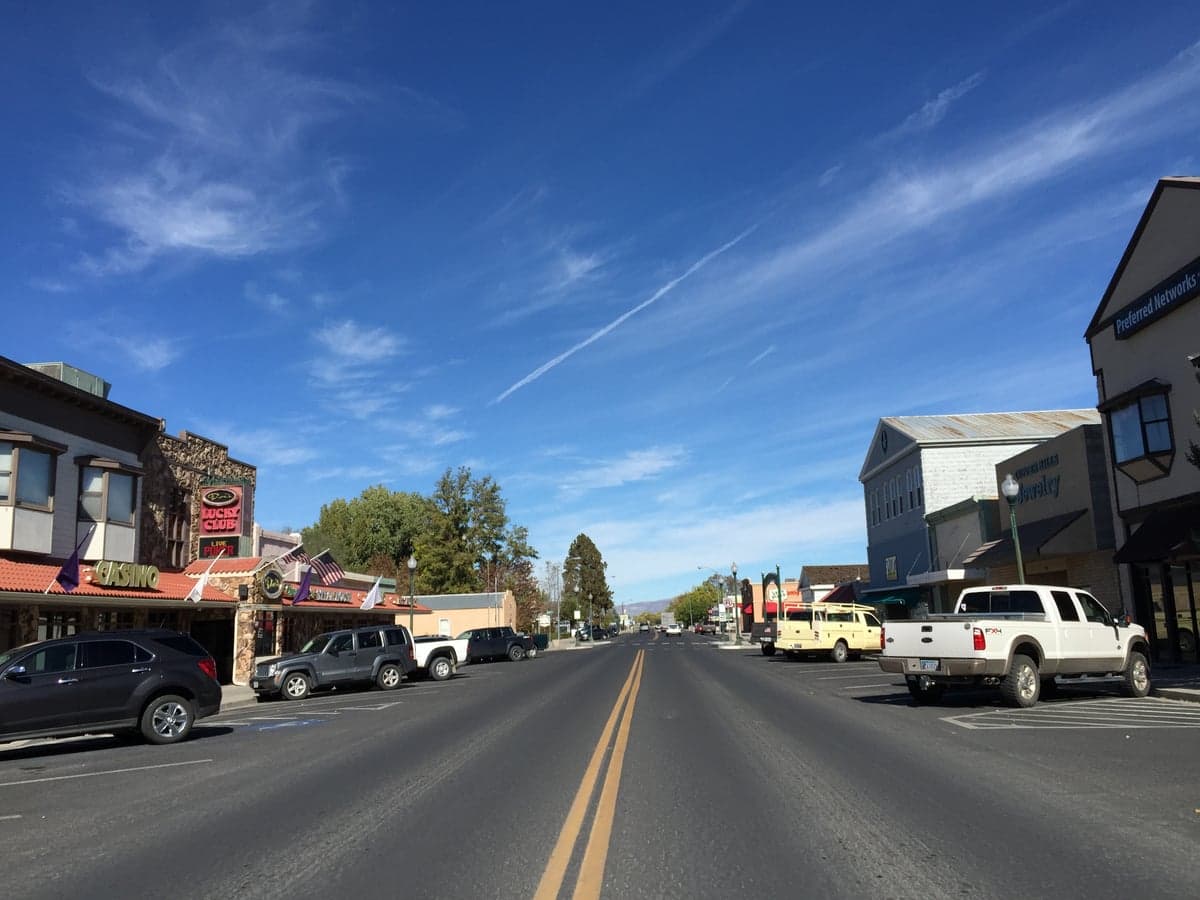
Photo: Wikipedia
Political ClimatePolitical Climate in Yerington, NV
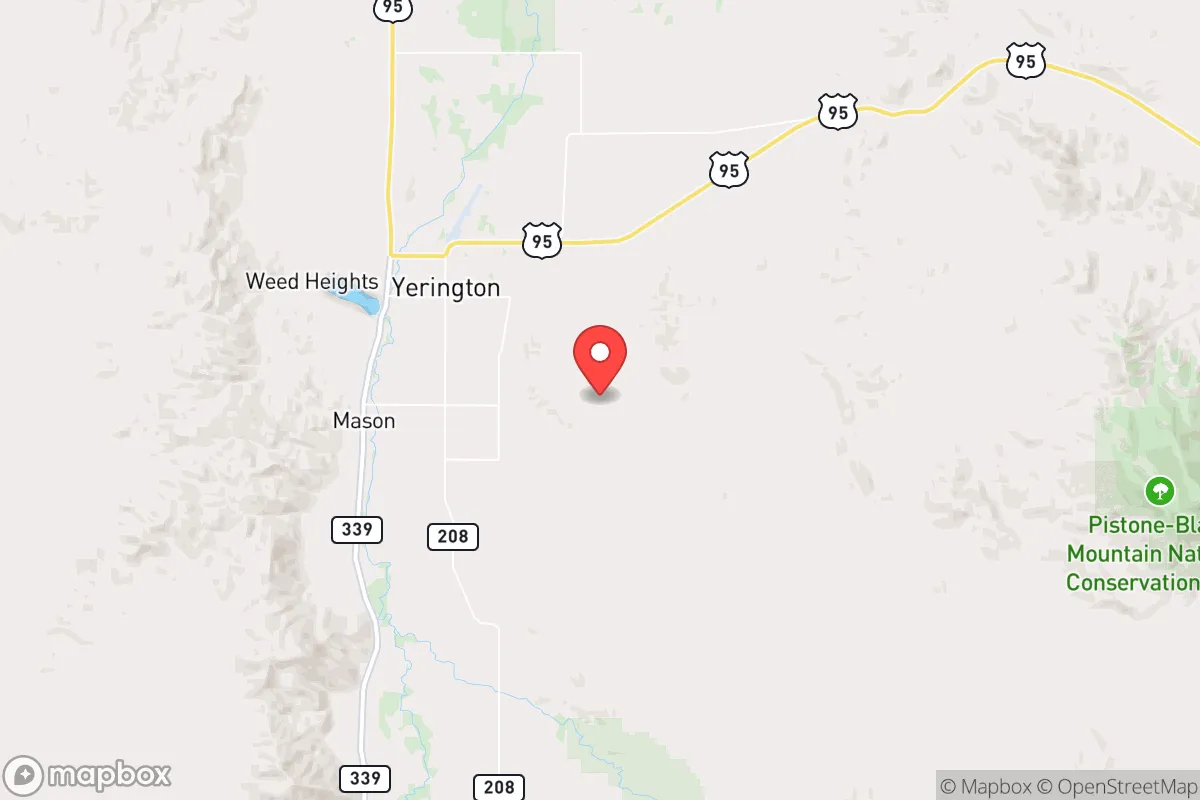
District shown is the primary district for this city’s centroid. Cities may span multiple districts.
Local Political AnalysisPolitical Analysis of Yerington, NV
Yerington leans solidly conservative, and it’s been that way for as long as anyone around here can remember. The Cook PVI of R+7 tells the story—this isn’t a swing town or a purple patch; it’s a place where folks generally believe in limited government, personal responsibility, and keeping the feds out of local business. That said, you can feel the ground shifting under your feet if you’ve lived here a while, especially as new people move in from places like Reno or Carson City, bringing different ideas about how things ought to run.
How it compares
Drive thirty minutes north to Fernley, and you’ll find a similar conservative vibe, though it’s a bit more blue-collar and less tied to the old ranching economy. Head west toward Carson City, and the politics get noticeably more mixed—you’ll see state workers and retirees who lean left on social issues, which can feel like a different world. The real contrast is south to Hawthorne or east to Fallon; those towns are even more reliably red, with less exposure to the influx of out-of-state transplants. Yerington sits right in the middle—still conservative, but with a growing undercurrent of progressive pressure that wasn’t there twenty years ago. Back in the ’90s, you could count on every local election being a lock for common-sense, small-government candidates. Now, you see more contested races and a few folks pushing for policies that sound good on paper but usually mean more rules, more taxes, and less freedom to live your own life.
What this means for residents
For the people who’ve been here a generation or more, the biggest concern is that the character of the place is slowly changing. The county commission and school board used to be a rubber stamp for keeping things simple—low regulations, no nonsense, and a hands-off approach to how you run your property or raise your kids. Lately, there’s been chatter about zoning changes, more oversight on water rights, and even talk of “diversity initiatives” in the schools that sound an awful lot like government overreach into personal values. If you value your Second Amendment rights or want to run a small business without a stack of permits, Yerington is still one of the better spots in Nevada, but you have to stay vigilant. The shift is subtle—a new ordinance here, a committee there—but it adds up. Longtime residents are starting to organize more, showing up to meetings and voting in local primaries, because they know that once those progressive ideas take root, they’re hard to pull out.
Culturally, Yerington still feels like the Old West in a lot of ways—people wave on the street, the rodeo is a big deal, and nobody blinks if you fly an American flag on your truck. But there’s a quiet tension now between the old guard and the newcomers who want to “modernize” things, which usually means importing the same policies that made places like Reno unaffordable and overregulated. The best advice I can give is to get involved locally, because the real fights aren’t in Washington—they’re in the county planning office and the school board meetings. If you’re thinking of moving here, you’ll find good neighbors and wide-open spaces, but don’t expect the politics to stay frozen in time. Keep an eye on those local elections, and don’t be afraid to speak up when someone tries to tell you what’s best for your own backyard.

State Political ClimatePolitical Climate in Nevada
State Political AnalysisPolitical Environment in the State
Nevada has long been a classic swing state, but over the past decade it has shifted from a purple battleground to a state where Democrats hold a narrow but persistent edge in statewide races, driven almost entirely by the explosive growth of Clark County (Las Vegas) and the influx of service-industry workers and out-of-state transplants. The 2024 presidential election saw the state go blue by roughly 2.5 points, continuing a trend where the rural and exurban vote—once enough to tip the balance—is now consistently swamped by the Las Vegas metro’s turnout. For a conservative considering relocation, the key takeaway is that Nevada’s political future is being written in the suburbs of Henderson and the master-planned communities of Summerlin, not in the wide-open counties that still fly the Gadsden flag.
Urban vs. rural divide
The political map of Nevada is a stark study in contrast. Clark County, home to nearly three-quarters of the state’s population, votes Democratic by margins of 10-15 points in most elections, powered by the Culinary Union’s ground game and a heavily Latino and working-class base in North Las Vegas and East Las Vegas. Washoe County (Reno) is the true bellwether—it voted for Biden in 2020 and Trump in 2024, flipping back and forth, and its suburban precincts in Spanish Springs and Damonte Ranch are where races are won or lost. Meanwhile, the vast rural expanse—from Elko and Ely in the north to Pahrump and Mesquite in the south—votes Republican by 30-40 points, but those counties combined barely equal the population of a single Las Vegas ward. The political divide isn’t just urban vs. rural; it’s also suburban vs. exurban. Henderson, once a reliably red suburb, has trended purple-to-blue as Californians and midwestern retirees move in, while the exurban fringe like Boulder City and Laughlin remains deeply conservative. If you’re looking for a red enclave, you’ll find it in the ranching towns of White Pine County or the Mormon-influenced communities of Lincoln County, but you’ll be driving hours to the nearest Costco.
Policy environment
Nevada’s policy landscape is a mixed bag that frustrates conservatives. On the plus side, there is no state income tax, which is a major draw for high-earners and business owners, and the sales tax cap on groceries keeps everyday costs manageable. However, the state’s regulatory posture leans progressive in key areas. The 2023 legislative session saw the passage of AB 116, which created a state-run retirement savings program for private-sector workers without employer plans—a mandate that many conservatives view as an overreach. Education policy is a flashpoint: Nevada ranks near the bottom nationally in K-12 outcomes, and the state’s school choice options are limited compared to Arizona or Florida, though the 2023 passage of SB 400 expanded charter school access slightly. Healthcare policy is dominated by the state’s Medicaid expansion under the ACA, which covers roughly one in five Nevadans. Election laws have been a source of controversy: Nevada automatically mails ballots to all active registered voters, a system implemented during COVID and made permanent in 2021, which conservatives argue weakens ballot security. Same-day voter registration and no-excuse mail voting are the norm, and while there’s no evidence of widespread fraud, the system remains a point of distrust for many on the right.
Trajectory & freedom
On the freedom index, Nevada is a state in flux. Gun rights are relatively strong: permitless carry was signed into law in 2023 (SB 171), allowing law-abiding citizens to carry concealed without a permit, and there are no magazine capacity limits or universal background checks beyond federal law. However, the state has a red-flag law (AB 291, passed in 2019) that allows temporary firearm seizure via court order, which conservatives view as a due process violation. On medical freedom, Nevada was an early adopter of COVID vaccine mandates for state employees and healthcare workers, though those have since been rescinded. Parental rights took a hit in 2023 with SB 419, which codified protections for gender-affirming care for minors, overriding parental consent requirements in some cases—a move that has sparked intense backlash and is likely to be a major issue in the 2026 elections. Property rights are generally respected, but the state’s land-use planning in Clark County is heavily centralized, and the Bureau of Land Management controls over 80% of the state’s land, limiting private development. The trajectory is concerning for conservatives: the legislature has been under Democratic control since 2019, and the governor’s office flipped to Republican Joe Lombardo in 2022, but he has been unable to stop the progressive legislative agenda due to veto-proof majorities in the Assembly.
Civil unrest & political movements
Nevada has seen its share of political flashpoints. The 2020 election integrity controversy was particularly heated in Clark County, where the Republican Party filed multiple lawsuits over mail ballot processing and signature verification, leading to a 2021 audit that found no systemic fraud but deepened partisan distrust. The “Battle Born” movement, a loose coalition of rural conservatives and libertarians, has pushed for county-level secession from Clark County, with proposals to split the state into two—a non-starter legislatively but a persistent talking point in places like Elko and Winnemucca. Immigration politics are front and center: Nevada is a sanctuary state in practice, with AB 278 (2023) prohibiting state and local law enforcement from cooperating with federal immigration authorities in most cases, a policy that has drawn sharp criticism from conservatives who argue it undermines public safety. Protests have been relatively muted compared to Portland or Seattle, but the 2020 George Floyd demonstrations in Las Vegas turned violent, with looting on the Strip and a curfew imposed. The Culinary Union remains the most powerful political force in the state, often clashing with the GOP over right-to-work laws and minimum wage increases. For a new resident, the most visible political tension is the culture war playing out in school board meetings in Henderson and Reno, where debates over critical race theory and LGBTQ curriculum have become heated.
Projection
Looking ahead five to ten years, the trajectory is clear: Nevada will continue to trend blue, driven by demographic shifts and in-migration from California and the Pacific Northwest. Clark County is expected to add another 300,000 residents by 2035, most of them moving into suburban developments in the southwest valley and the new “Innovation Park” area near the Las Vegas Strip. These newcomers tend to be younger, more diverse, and more progressive, and they vote. The rural counties will continue to hemorrhage population as mining and ranching consolidate, further diluting their electoral influence. The wildcard is the growing Latino electorate, which in Nevada is not monolithic—Cuban and South American immigrants in the north lean more conservative, while Mexican-American voters in the south lean Democratic—but overall, the trend is toward the left. For conservatives, the best-case scenario is a repeat of 2022, where a strong Republican governor (Lombardo) can veto the worst bills, but the legislature will remain hostile. The 2026 gubernatorial race will be a bellwether: if Lombardo loses, expect a wave of progressive legislation on taxes, housing, and education that will make Nevada look more like California within a decade.
For a conservative considering a move to Nevada, the bottom line is this: the state offers genuine advantages—no income tax, strong gun rights, and a relatively business-friendly climate—but the political winds are blowing against you. If you settle in a rural county like Nye or Lander, you’ll live in a red bubble, but you’ll have little say in state policy. If you move to Henderson or Reno, you’ll be in a purple-to-blue environment where your vote matters but your values will be increasingly out of step with the majority. The smart play is to buy in a conservative exurb like Pahrump or Mesquite, where you can enjoy the tax benefits while insulating yourself from the worst of the progressive agenda—but don’t expect the state to turn red again in your lifetime. Nevada is a libertarian dream on paper, but in practice, it’s becoming a blue state with a red hat.
* Values derived from national, state, county, city and local statistics and may differ in a specific area. Last updated: 2026-04-29T19:29:05.000Z
Narrative content on this page is AI-generated and may contain mistakes. Verify any details that matter before acting on them.
ReloMaps may earn a commission from affiliate links at no extra cost to you.

