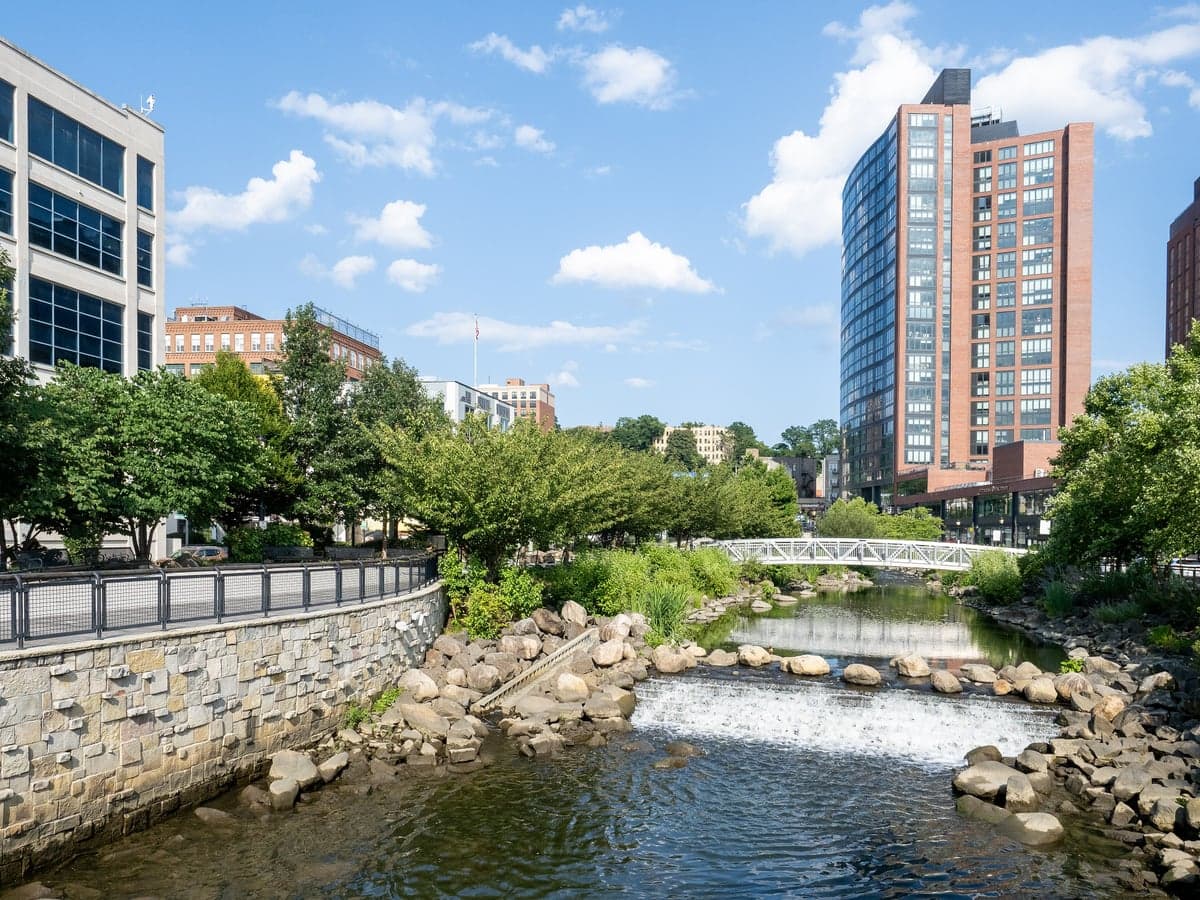
Photo: Wikipedia
Personal Sovereignty in Yonkers, NY
Moderate friction. Expect trade-offs in some aspect of personal liberty and independence.
What does Personal Sovereignty tell us?
Personal Sovereignty measures your capacity for self-reliance and independence with minimal government friction. Higher scores mean fewer barriers between you and the way you want to live... but it assumes you have the space you need and good neighbors.
What does this tell us?
Personal Sovereignty measures your capacity for self-reliance and independence with minimal government friction. Higher scores mean fewer barriers between you and the way you want to live... but it assumes you have the space you need and good neighbors.
State Policy
Energy independence: Importer (12% of energy produced in-state)
Personal Liberty
Homesteading

Personal Liberty Analysis
Yonkers, New York, presents a challenging environment for personal sovereignty, where the dense urban setting and deep-blue state governance create significant friction for individuals and families seeking maximum autonomy. As a prepper or survivalist, you will find that New York’s regulatory apparatus—from its tax code to its firearm restrictions—systematically erodes the kind of self-reliance that many conservative-leaning households prioritize. While Yonkers offers proximity to economic opportunities in New York City, the trade-off is a legal and cultural landscape that heavily favors collective mandates over individual discretion, making it a location where strategic compliance, rather than outright freedom, is the operative reality.
Tax burden and regulatory posture in Yonkers
New York State’s tax burden is among the highest in the nation, and Yonkers residents feel this acutely. The combined state and local income tax rates can exceed 12% for top earners, and property taxes in Westchester County are notoriously steep—often exceeding $10,000 annually on a modest home. For a prepper mindset, this represents a direct drain on resources that could otherwise fund supplies, land, or equipment. The regulatory posture extends beyond taxes: New York’s building codes, environmental regulations, and business licensing requirements are dense and expensive to navigate. Starting a home-based business or undertaking significant property improvements requires permits and inspections that can delay projects and invite government scrutiny. This environment discourages the kind of off-grid or self-sufficient modifications—like installing solar panels without utility approval or constructing a root cellar—that would be straightforward in less regulated states. The state’s aggressive enforcement of tax compliance, including the use of tax warrants and property liens, further erodes financial privacy and autonomy.
Self-defense and gun law specifics in Yonkers
New York’s gun laws are among the most restrictive in the country, and Yonkers, as a city within Westchester County, operates under the full weight of the SAFE Act and subsequent legislation. The state requires a pistol permit for handguns, which involves a lengthy application process, background checks, character references, and a mandatory 16-hour safety course. Even after the Supreme Court’s Bruen decision, New York’s “concealed carry” regime remains hostile: the state now requires a “good moral character” determination and prohibits firearms in a long list of “sensitive locations,” including public parks, libraries, and private businesses that haven’t explicitly posted a welcome sign. For a survivalist, this means carrying a firearm for everyday self-defense is legally fraught. Magazine capacity is capped at 10 rounds, and “assault weapons” (defined broadly) are banned. Ammunition purchases require a background check and are tracked. The practical effect is that Yonkers residents face significant barriers to maintaining a robust personal arsenal for home defense or emergency preparedness. While owning a shotgun or bolt-action rifle for hunting is feasible, the legal infrastructure is designed to discourage widespread firearm ownership, making self-defense a matter of legal navigation rather than personal right.
Self-reliance and homesteading viability in Yonkers
Yonkers is a dense, urbanized city with a population density of over 10,000 people per square mile, making traditional homesteading or off-grid living nearly impossible. Typical lot sizes in residential neighborhoods range from 3,000 to 6,000 square feet—far too small for substantial food production or livestock. Zoning laws prohibit keeping chickens, goats, or bees in most residential districts, and any attempt to install a rainwater catchment system or composting toilet would likely run afoul of health and building codes. The city’s reliance on municipal water, sewer, and electrical grids means that true off-grid independence is not legally or practically feasible. For a prepper, the best you can do is a small vegetable garden, a few fruit trees, and a backup generator—but even these are subject to homeowners’ association rules in many neighborhoods. The lack of rural buffer zones also means that any SHTF scenario involving civil unrest or supply chain collapse would leave Yonkers residents exposed to the same vulnerabilities as any dense urban population. Self-reliance here is about stockpiling supplies and building community networks, not about land-based independence.
Personal liberties in Yonkers: parental rights, medical autonomy, speech, and property
New York State has a strong track record of overriding local and parental autonomy in favor of state-level mandates. During the COVID-19 pandemic, Yonkers enforced mask and vaccine mandates in schools and businesses, with little room for religious or medical exemptions. Parental rights in education are limited: the state mandates comprehensive sex education and has removed parental opt-out provisions for certain curricula. Medical autonomy is similarly constrained—New York has some of the strictest vaccine requirements for school attendance, and the state’s health department has broad authority to impose quarantines and treatment orders. Free speech is legally protected, but the state’s “hate crime” laws and social media regulations create a chilling effect for those expressing dissenting views on immigration, gender, or public health. Property rights are heavily circumscribed by zoning, rent control (in certain multi-family buildings), and environmental regulations. The state’s “Green Amendment” allows citizens to sue over environmental impacts, which can be weaponized against property owners who want to clear land or build structures. For a conservative individual, the cumulative effect is a legal environment where personal discretion is secondary to state-defined public interest.
Overall, Yonkers ranks low on the personal sovereignty scale compared to states like Texas, Florida, or New Hampshire. The tax burden, gun restrictions, and regulatory density create a system where the state is a constant partner in your daily life—whether you want it or not. For a survivalist or prepper, Yonkers is a place to earn a living, not a place to build a fortress of self-reliance. If you must live here, focus on financial resilience, community networking, and legal compliance as survival skills. But for those who prioritize maximum personal freedom, the Hudson Valley’s more rural counties—or a move out of state entirely—will offer a far more sovereign existence.

* Values derived from national, state, county, city and local statistics and may differ in a specific area. Last updated: 2026-05-01T23:53:39.000Z
Narrative content on this page is AI-generated and may contain mistakes. Verify any details that matter before acting on them.
ReloMaps may earn a commission from affiliate links at no extra cost to you.

