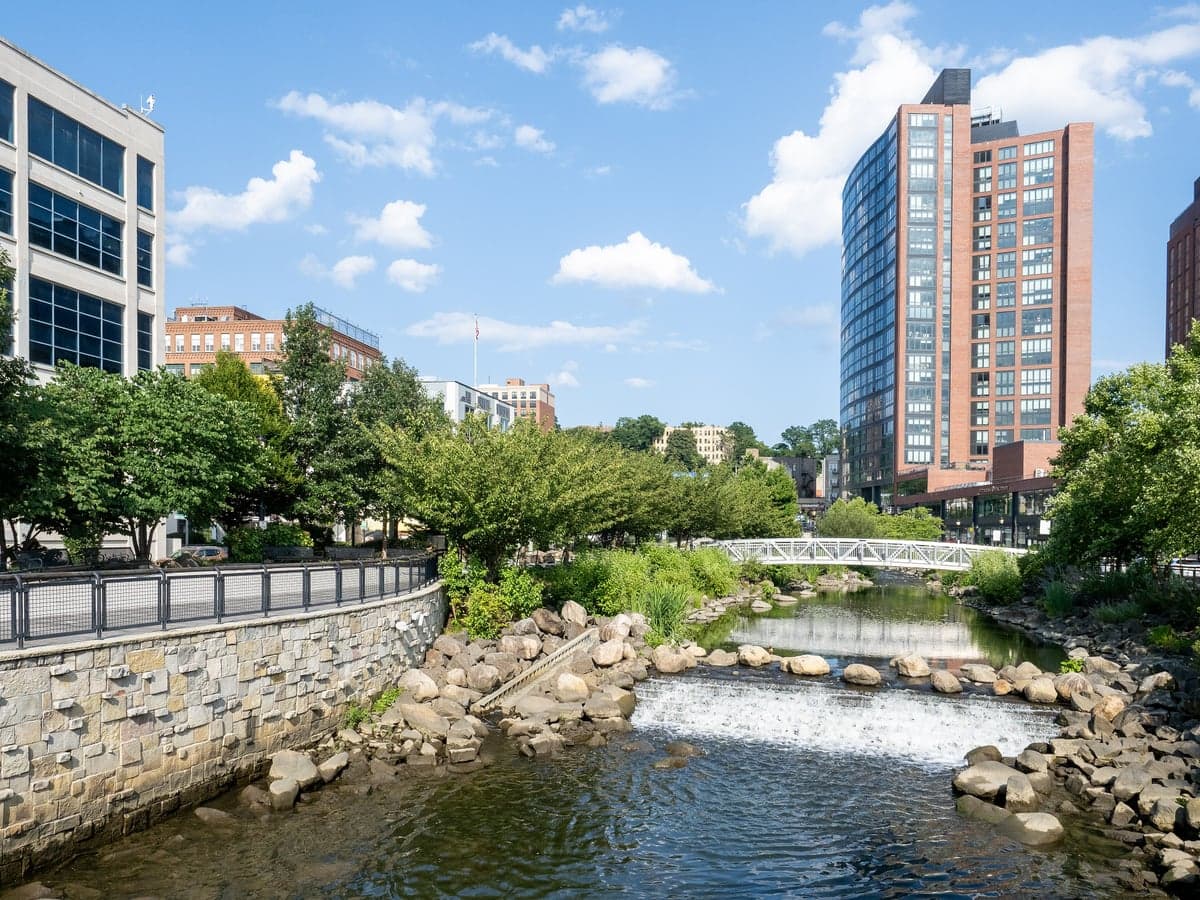
Photo: Wikipedia
Strategic Assessment of Yonkers, NY
High tactical risk. This location is likely close to major population centers, strategic targets, or sits in a high-disaster corridor. A retreat property and careful exit planning is required.
What does the Strategic Assessment tell us?
Our Strategic Assessment grades tactical survivability of an area. Major population centers, military targets, fallout zones, natural disasters, and border exposure all drive risk — lower exposure means a more defensible position in a crisis.
This is heavily inspired by Joel Skousen's Strategic Relocation book. Highly recommended you checkout the book ($)What does this tell us?
Our Strategic Assessment grades tactical survivability of an area. Major population centers, military targets, fallout zones, natural disasters, and border exposure all drive risk — lower exposure means a more defensible position in a crisis.
This is heavily inspired by Joel Skousen's Strategic Relocation book. Highly recommended you checkout the book ($)Strategic Pillars

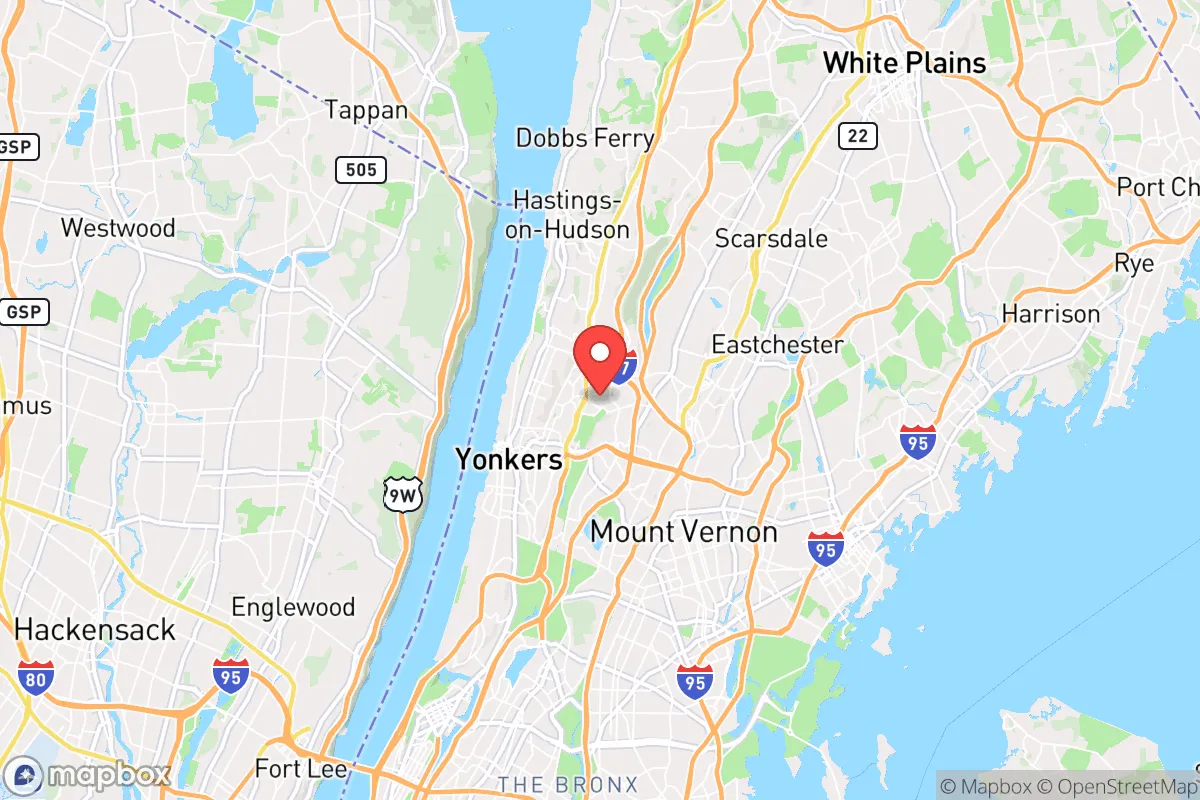
Key Distances
Regional Safe Places
Below is our recommended "safe zones" in New York and the surrounding area based on our strategic heuristics. For most people, it's unrealistic to live in a “safe zone” full-time due to work, family or other personal reasons. They tend to be more rural. However, many of these areas are perfect for second homes and retreat properties that double as a vacation home or even a short-term rental.
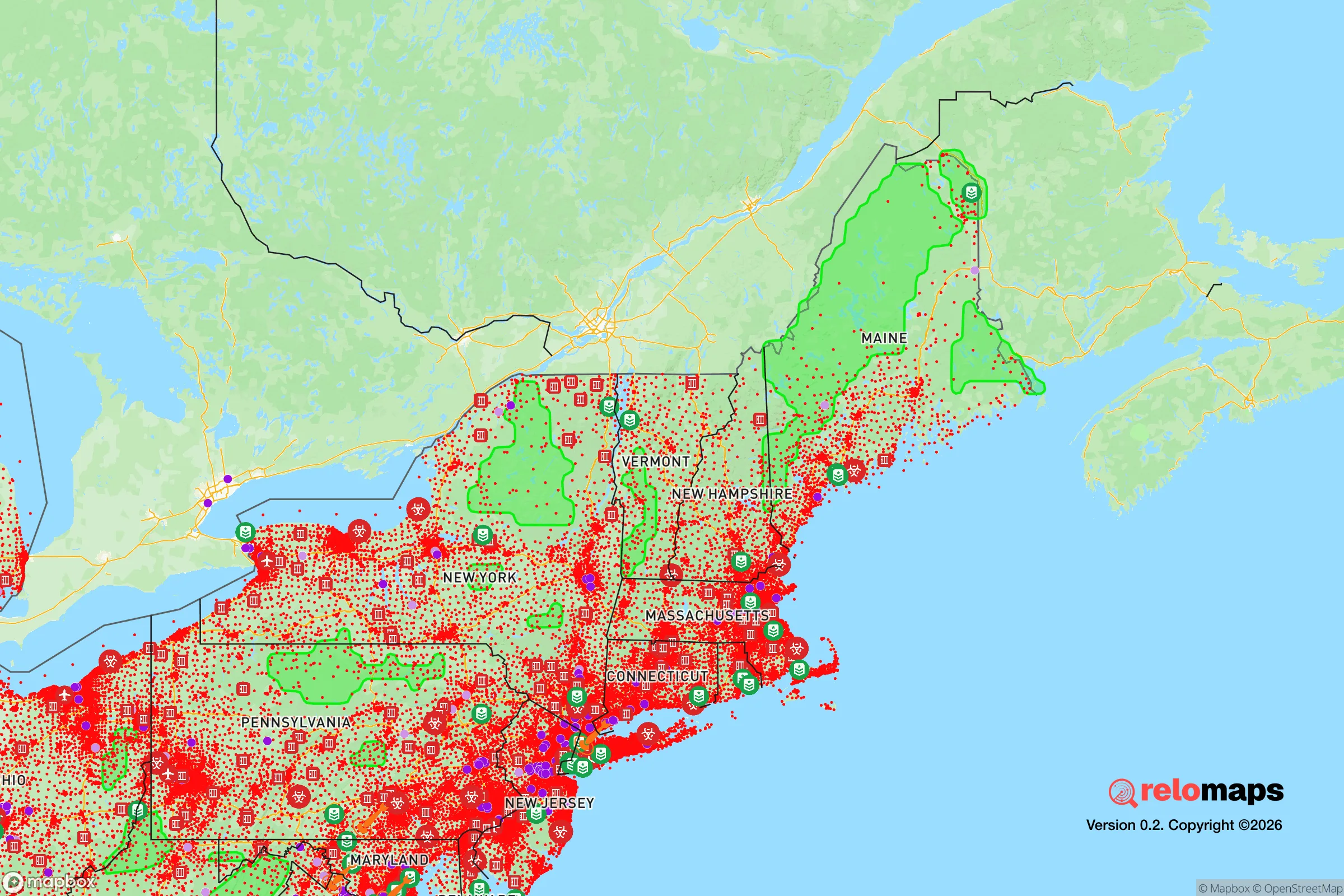
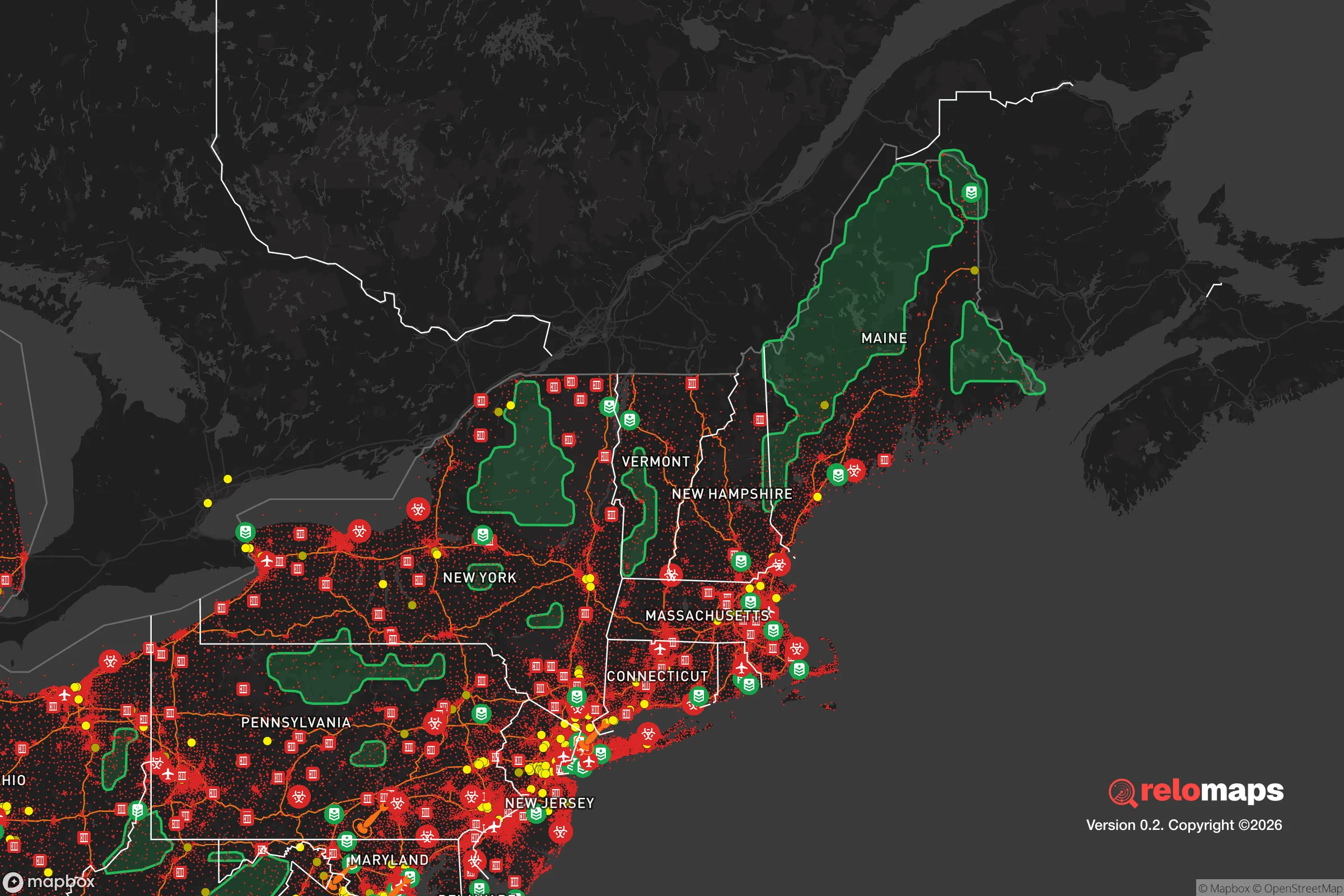


Important Note: For informational purposes only. This does not mean nothing bad ever happens in the green zones. Please use common sense. This is based on public data and modeled with AI. We tried to take a conservative approach but mistakes happen. We update this regularly as new information becomes available.
Solar Generator Recommendations
Backup power matters more here than in safer locations. We've picked three solar generators across budgets and capacity tiers — start with the budget unit if you only need a few essentials, or step up if you want to run a fridge and HVAC for days at a time.

Jackery Portable Power Station Explorer 300
Budget OptionPower on the Go: Weighing only 11 lbs, it's convenient to set up and store with book-sized foldable solar panels

BLUETTI Portable Power Station AC180
Designed for both indoor and outdoor scenarios, AC180 is highly capable as it has a robost capacity and continuous output power.

EF ECOFLOW DELTA Pro Ultra Power Station
Upgraded PickEcoFlow DELTA Pro Ultra is a whole-home energy system designed to grow with your family. Integrated with the Smart Home Panel 2, it scales to meet your evolving energy needs — keeping your home powered, intelligent, and secure through every stage of life.
We earn a commission, at no additional cost to you.
Strategic Assessment Analysis
Yonkers, New York, presents a deeply contradictory picture for the strategic relocator. Its immediate proximity to New York City offers economic opportunity, but from a survivalist and prepper perspective, that same proximity is its single greatest liability. The city’s resilience is undermined by its position as a dense, infrastructure-dependent suburb directly adjacent to a primary target for civil unrest, mass casualty events, and potential fallout scenarios. For those prioritizing long-term security and self-sufficiency, Yonkers is best understood as a high-risk, high-exposure location that demands a clear-eyed assessment of its vulnerabilities before any relocation decision is made.
Geographic position and natural advantages for survival
Yonkers sits on the eastern bank of the Hudson River, roughly 15 miles north of Midtown Manhattan. Its topography includes steep hills and ridges that rise from the river valley, offering some natural elevation and drainage advantages over flatter, flood-prone areas. The city is part of the Hudson Valley watershed, which provides a reliable freshwater source—the Hudson River itself, along with the Saw Mill and Bronx River systems that run through the city. However, these waterways are heavily industrialized and polluted in many stretches, making them unreliable for untreated consumption without advanced filtration. The city’s position along the Metro-North railroad and major highways (I-87, I-287) means it is a transit corridor, which is a double-edged sword: it allows for rapid evacuation but also funnels population movement directly through the area during a crisis. The surrounding natural terrain includes pockets of forested parkland—such as Untermyer Park and the Tibbetts Brook Park—that could provide limited cover and foraging, but these are small, fragmented, and heavily trafficked. For a relocator seeking true defensible space, Yonkers offers little in the way of remote, isolated terrain; it is a dense urban-suburban interface where privacy and buffer zones are minimal.
Risks, exposures, and proximity to fallout-relevant landmarks
The most glaring risk for a Yonkers-based prepper is its location within the blast and fallout radius of New York City. In the event of a nuclear detonation—whether from a state actor or a terrorist device—Yonkers falls within the moderate-to-heavy fallout zone depending on wind patterns. The city is also within 20 miles of the Indian Point Energy Center (though it ceased operations in 2021), and the decommissioning process still involves spent fuel storage on-site, a potential target for sabotage or accident. Beyond nuclear threats, Yonkers is a choke point for civil unrest. During the 2020 protests, the city saw significant disruptions, including looting and property damage in its downtown and commercial corridors. The city’s population density—over 200,000 people packed into 20 square miles—means that any mass casualty event (pandemic, chemical spill, or coordinated attack) would spread rapidly. Key infrastructure vulnerabilities include the Tappan Zee Bridge (now the Governor Mario M. Cuomo Bridge) just north, which is a critical evacuation route that could become a bottleneck or target. The city’s reliance on the NYC water supply system (the Catskill/Delaware aqueducts) means that a disruption to that system would leave Yonkers without potable water, as local reservoirs are limited. For the strategic relocator, these exposures argue strongly against Yonkers as a long-term safe haven.
Practical resilience for a relocator: food, water, energy, and defensibility
On the ground, Yonkers offers mixed prospects for practical self-sufficiency. Food security is poor: the city has few working farms or community gardens of meaningful scale, and the local grocery supply chain is entirely dependent on just-in-time delivery from regional distribution centers. In a prolonged disruption, shelves would empty within days. Water security is similarly fragile—most residents rely on municipal tap water from the NYC system, and while the city has backup wells, they are not designed to support the full population. Rainwater collection is possible but limited by space and local regulations. Energy resilience is weak: the grid is old and prone to outages during storms (Superstorm Sandy left parts of Yonkers without power for over a week), and solar installation is hampered by the dense urban canopy and restrictive zoning in many neighborhoods. Natural gas infrastructure is widespread but vulnerable to pipeline disruptions. Defensibility is the most critical weakness. Yonkers is a grid of interconnected streets with few natural barriers; a determined group could move through the city with ease. The police force, while professional, is stretched thin and would be overwhelmed in a widespread crisis. For a single individual or family, securing a home against looters or hostile groups would require significant fortification and a strong neighborhood watch network—something that is not uniformly present. The city’s proximity to NYC also means that any collapse in the city would send a wave of refugees northward, overwhelming local resources. In short, Yonkers is not a location where a relocator can easily hunker down and ride out a disaster; it is a place that demands constant vigilance and a robust plan for evacuation to a more secure secondary location.
The overall strategic picture for Yonkers is one of high convenience paired with high vulnerability. For the conservative-leaning prepper who values self-reliance and long-term security, this city is a poor fit for a primary residence. Its economic advantages—jobs, services, and access to NYC—are real, but they come at the cost of being directly in the path of the most likely threats. If you are considering Yonkers, treat it as a temporary staging ground or a base for a short-term work assignment, not as a place to build a bunker or raise a family in a crisis. The smart play is to use Yonkers for its resources while maintaining a fully stocked bug-out location at least 50 miles north or west, beyond the immediate fallout and unrest zones. For those who insist on staying, invest heavily in water filtration, a backup power source, a well-stocked pantry, and a network of trusted neighbors. But the honest assessment is this: in a serious national emergency, Yonkers will be a very dangerous place to be. Plan accordingly.

* Values derived from national, state, county, city and local statistics and may differ in a specific area. Last updated: 2026-05-01T23:53:39.000Z
Narrative content on this page is AI-generated and may contain mistakes. Verify any details that matter before acting on them.
ReloMaps may earn a commission from affiliate links at no extra cost to you.

