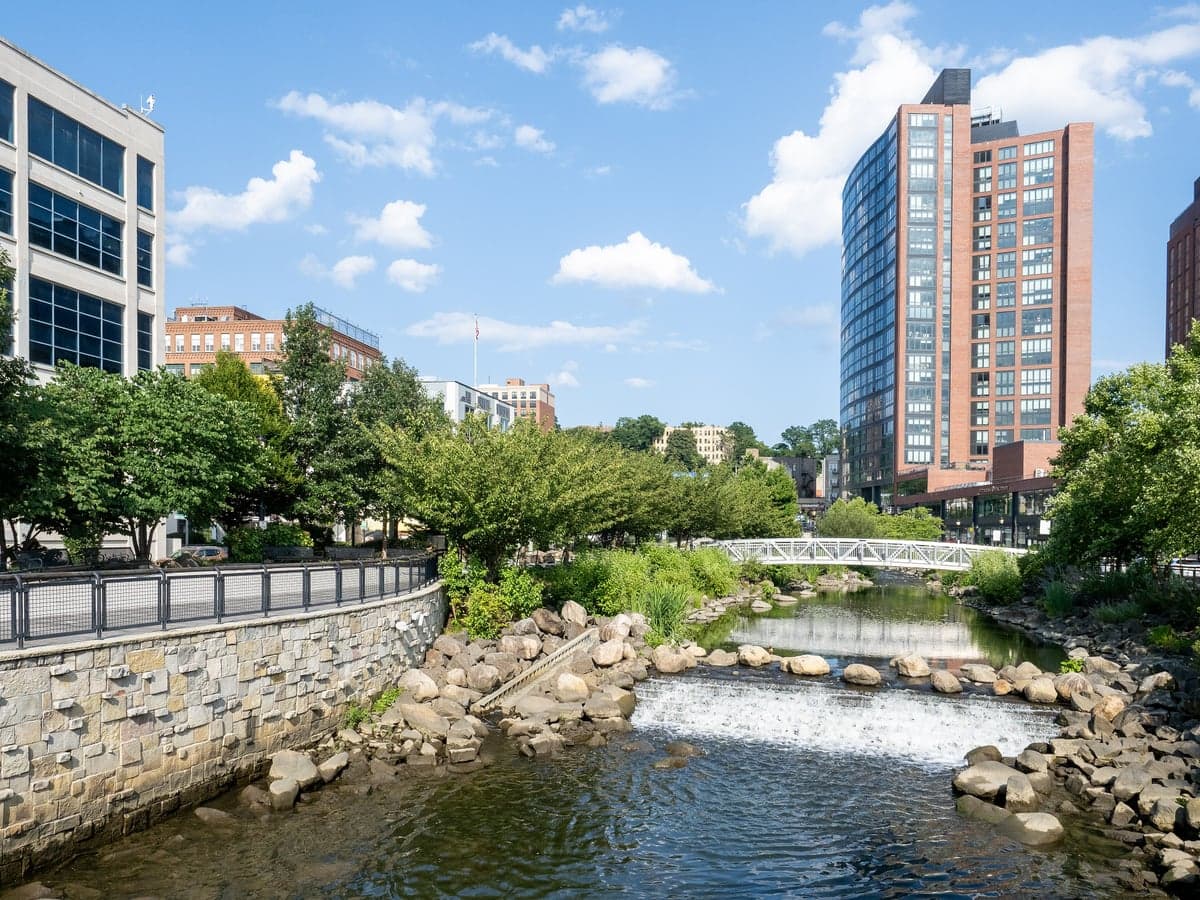
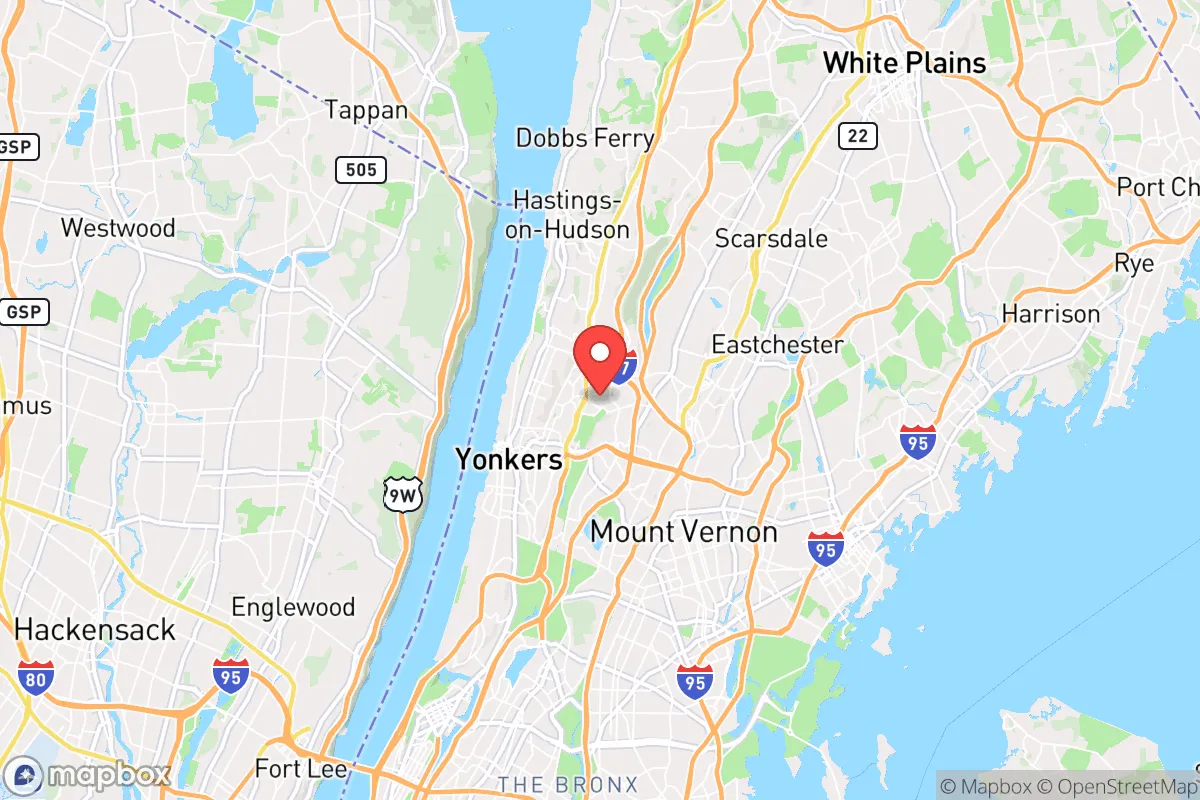
Photo: Wikipedia
Quality of Life in Yonkers, NY
A high quality of life with strong walkability, manageable living costs, healthy neighborhood signals, and solid amenity access.
What does Quality of Life tell us?
Quality of Life blends cost of living, nearby amenities, socioeconomic signals, and neighborhood character. City-level scores represent the whole municipality; individual neighborhoods can differ.
What does this tell us?
Quality of Life blends cost of living, nearby amenities, socioeconomic signals, and neighborhood character. City-level scores represent the whole municipality; individual neighborhoods can differ.
Cost of Living
57% above national average
The Real Cost of Living in Yonkers, NY for 2026
| Tier | Individual | Family (4) |
|---|---|---|
| Survival | $28k | $52k |
| Comfortable | $93k | $137k |
| Luxury | $148k+ | $229k+ |
| Elite (Top 5%) | $181k+ | $281k+ |
60%
The Area Signal
A metric tracking the socioeconomic signals of the area.
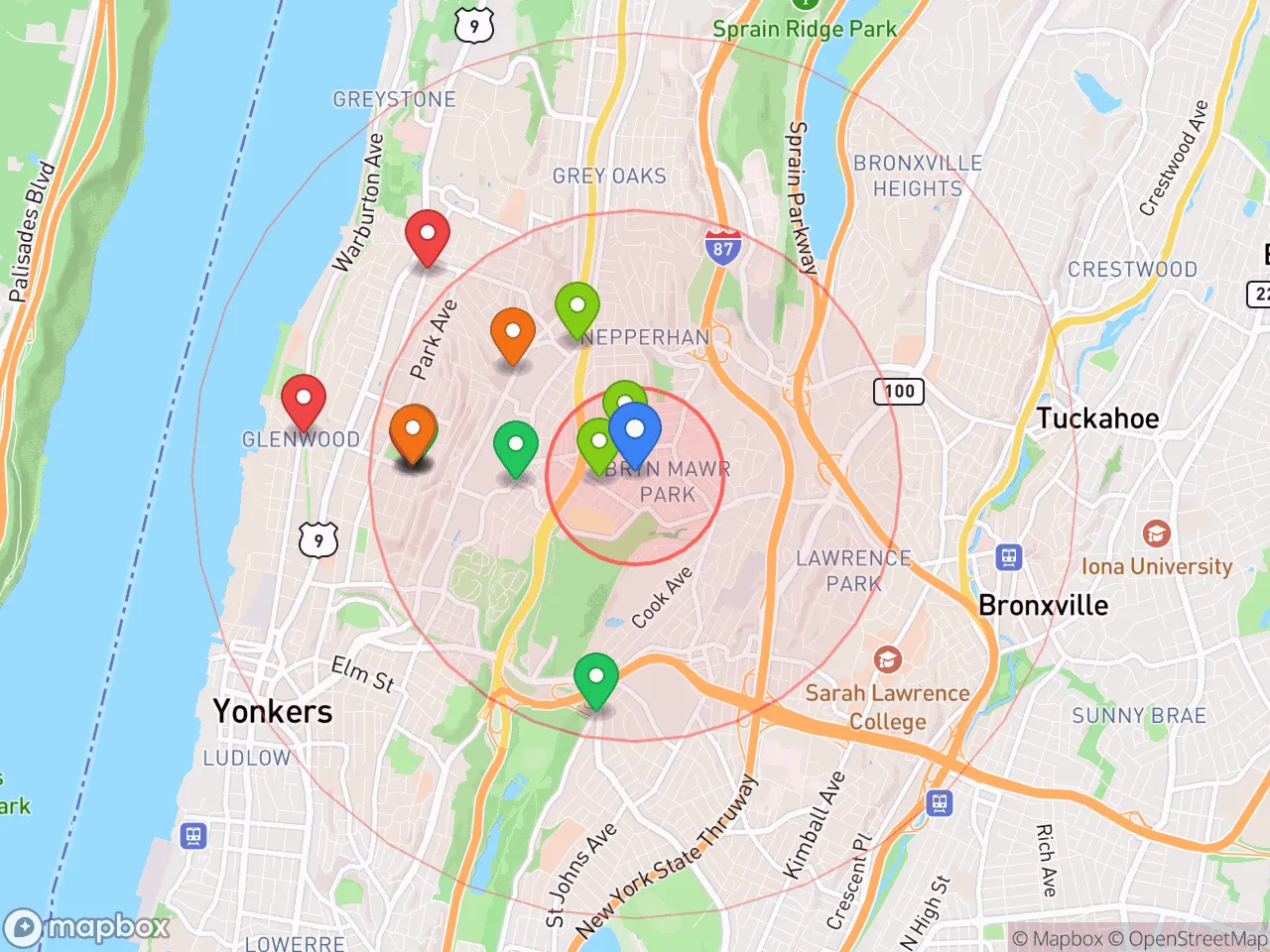
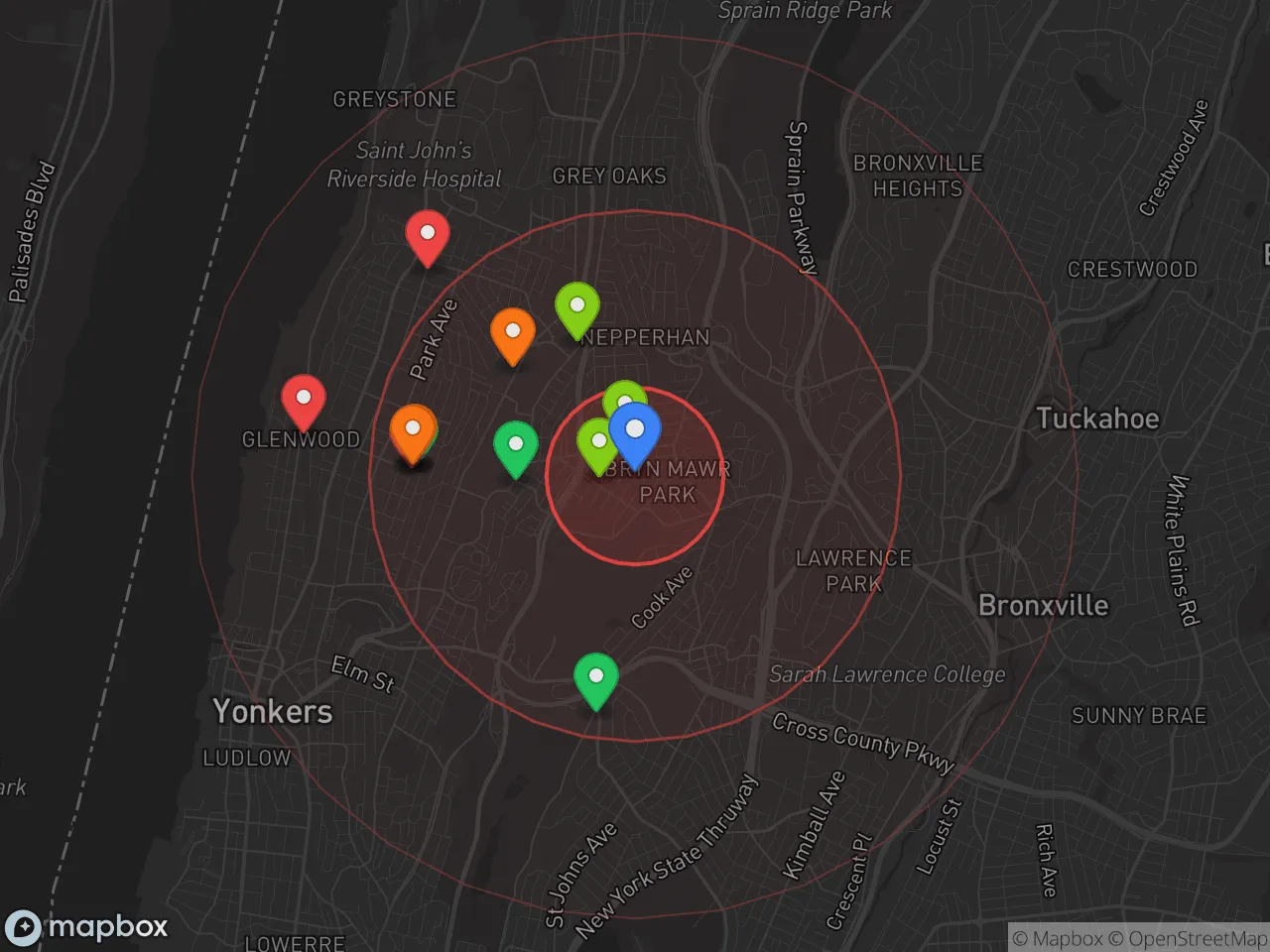
Hobbies
Explore the areaGroceries
7 within 10 miles
Gas
20 within 10 miles
Hospital
20 within 20 miles
Airport
JFK — John F. Kennedy International
Post Office
USPS — Yonkers, NY
Critical Amenities
Quality-of-Life Analysis
Yonkers, New York, presents a quality-of-life profile defined by its position as Westchester County’s most populous city and a more affordable alternative to Manhattan, attracting a mix of young professionals, established families, and long-term residents. With a cost of living index of 157 (57% above the national average), the city offers a distinctly suburban feel within a dense urban setting, drawing people who value proximity to New York City but seek lower housing costs and more space than they would find in the five boroughs. The population is diverse, with a significant middle-class presence, and the city’s character is shaped by its historic neighborhoods, riverfront parks, and a steady rhythm of daily life that balances city energy with residential calm.
Cost of living and housing affordability compared to NYC and Westchester
Yonkers’ cost of living is high by national standards but represents a meaningful discount compared to neighboring New York City and much of lower Westchester. The median home value sits at $478,000, which is roughly half the median in Manhattan and significantly below the Westchester County median of around $700,000. For renters, the median rent of $1,730 is notably lower than the $2,500+ average for a one-bedroom in Manhattan, making Yonkers a practical choice for commuters who want a shorter trip than from the outer suburbs. The average commute time of 34.9 minutes is slightly above the national average but competitive for the region, with Metro-North trains reaching Grand Central in about 30 minutes and express bus service to Midtown. Property taxes in Yonkers are high—among the highest in the state—which offsets some of the home-price savings, but the overall housing cost remains more accessible than in Scarsdale, White Plains, or Greenwich, CT. Utility costs and groceries also run above national averages, though local markets and ethnic grocery stores help moderate food expenses.
Schools, parks, and daily life in Yonkers neighborhoods
Yonkers offers a mix of public and private schooling options, with the Yonkers Public Schools system serving over 25,000 students across 39 schools. Notable high schools include Yonkers Montessori Academy and Riverside High School, while several parochial and independent schools, such as St. Joseph’s School and the German School of New York, provide alternatives. For daily recreation, the city boasts over 70 parks, including the expansive Untermyer Park and Gardens, a 43-acre historic site with stunning Hudson River views, and the 4.5-mile South County Trailway for biking and jogging. The Hudson River waterfront has seen significant redevelopment, with the Yonkers Pier, Hudson River Museum, and the new Yonkers Brewing Company adding to the local scene. Grocery shopping is served by chains like ShopRite and Stop & Shop, plus specialty markets along McLean Avenue and in the Getty Square area. The rhythm of daily life is heavily influenced by the commute: many residents leave early for trains or buses, and evenings are spent in neighborhood restaurants, the Cross County Shopping Center, or at local sports fields. The city’s walkability varies by neighborhood—downtown and the riverfront are more pedestrian-friendly, while areas like Northeast Yonkers are car-dependent.
Yonkers is best suited for those who want the economic and cultural access of the New York metro area without the extreme costs and density of Manhattan or Brooklyn. Commuters who can tolerate a 35-minute train ride and a high property tax bill will find a solid middle ground. Families with school-age children should research specific school zones, as outcomes vary widely by neighborhood. Empty nesters downsizing from larger Westchester homes and young professionals seeking a first home with a yard will also find Yonkers appealing, provided they are comfortable with a suburban-urban hybrid that still feels like a real city. The city’s diversity, improving waterfront, and relative affordability within a high-cost region make it a pragmatic choice for those who prioritize space and commute time over the prestige of a more exclusive suburb.

Crime in Yonkers, NY
WARNING: The crime statistics are unreliable for this jurisdiction. Local authorities have either not reported or under reported their data to the FBI. This could be due to bad intentions, incompetence or technical issues. Regardless, we suggest skepticism.
Higher crime rates than 60% of comparable U.S. locations.
Violent CrimeViolent Crime Analysis
Property CrimeProperty Crime Analysis
Crime Analysis
Yonkers presents a mixed safety picture for prospective residents. The city’s violent crime rate of 331.5 incidents per 100,000 residents and property crime rate of 1,323.4 per 100,000 place it above the national average for cities of its size, though below the most dangerous large cities in the New York metro area. However, as a large metro suburb governed by Westchester County’s progressive judicial system, readers should be aware that local district attorneys and judges often prioritize rehabilitation and diversion over incarceration, a philosophy that can result in more offenders remaining on the street and reduced deterrence for property and violent crimes.
Crime in context
Yonkers’ violent crime rate is roughly 1.5 times the national average for cities with populations over 200,000, while its property crime rate is about 1.2 times the national average. Compared to New York State as a whole, Yonkers is significantly more dangerous: the state’s violent crime rate is approximately 380 per 100,000, but that figure is pulled down by safer upstate and suburban communities. Within the immediate metro area, Yonkers is safer than Mount Vernon (violent crime ~500 per 100K) but more dangerous than White Plains (~250 per 100K). The city’s proximity to New York City means it absorbs some of the region’s crime spillover, particularly auto theft and burglary, which are elevated in the southern, more urbanized sections of Yonkers.
What residents experience
Daily life in Yonkers involves navigating a city where property crime is the most common threat. Larceny and motor vehicle theft account for the majority of property crime incidents, with car break-ins and package thefts frequently reported in neighborhoods near the Cross County Shopping Center and along the Central Park Avenue corridor. Violent crime, while less frequent, is concentrated in specific areas: the southwest quadrant (around Nepperhan Avenue and the Getty Square area) sees higher rates of robbery and aggravated assault, often drug-related. Residents in the more affluent northern neighborhoods (e.g., Crestwood, Colonial Heights) report feeling safer, with crime largely limited to occasional car burglaries. The progressive policies of Westchester County’s District Attorney’s office—which has implemented cash bail reform and pretrial diversion programs—mean that many property offenders are released quickly, contributing to a perception among residents that the justice system does not adequately deter repeat offenses.
Neighborhood-level variation is significant. The safest areas are the northwest Yonkers neighborhoods (e.g., Lincoln Park, Woodlawn Heights), where violent crime rates drop to under 200 per 100K, comparable to suburban White Plains. In contrast, the southwest Yonkers neighborhoods (e.g., Ludlow Park, Getty Square) experience violent crime rates exceeding 500 per 100K, driven by gang activity and open-air drug markets. Prospective renters and buyers should research block-level crime maps and consider that the city’s liberal judicial environment may reduce the effectiveness of traditional crime-fighting measures, making personal security precautions—such as home security systems and avoiding high-crime blocks after dark—more important than in jurisdictions with tougher sentencing practices.
* Values derived from national, state, county, city and local statistics and may differ in a specific area. Last updated: 2026-05-01T23:53:39.000Z
Narrative content on this page is AI-generated and may contain mistakes. Verify any details that matter before acting on them.
ReloMaps may earn a commission from affiliate links at no extra cost to you.

