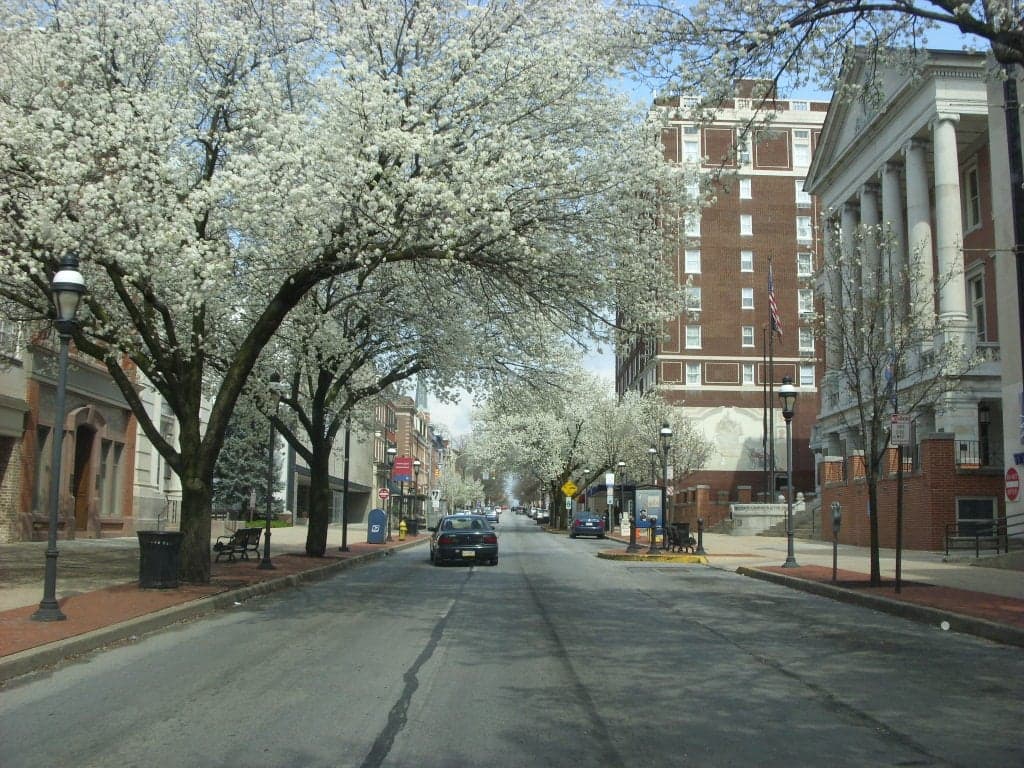
Photo: Wikipedia
Strategic Assessment of York, PA
Multiple tactical vulnerabilities. Population density, target proximity, or disaster risk are likely compounding. A retreat property and exit planning is required.
What does the Strategic Assessment tell us?
Our Strategic Assessment grades tactical survivability of an area. Major population centers, military targets, fallout zones, natural disasters, and border exposure all drive risk — lower exposure means a more defensible position in a crisis.
This is heavily inspired by Joel Skousen's Strategic Relocation book. Highly recommended you checkout the book ($)What does this tell us?
Our Strategic Assessment grades tactical survivability of an area. Major population centers, military targets, fallout zones, natural disasters, and border exposure all drive risk — lower exposure means a more defensible position in a crisis.
This is heavily inspired by Joel Skousen's Strategic Relocation book. Highly recommended you checkout the book ($)Strategic Pillars

Key Distances
Regional Safe Places
Below is our recommended "safe zones" in Pennsylvania and the surrounding area based on our strategic heuristics. For most people, it's unrealistic to live in a “safe zone” full-time due to work, family or other personal reasons. They tend to be more rural. However, many of these areas are perfect for second homes and retreat properties that double as a vacation home or even a short-term rental.
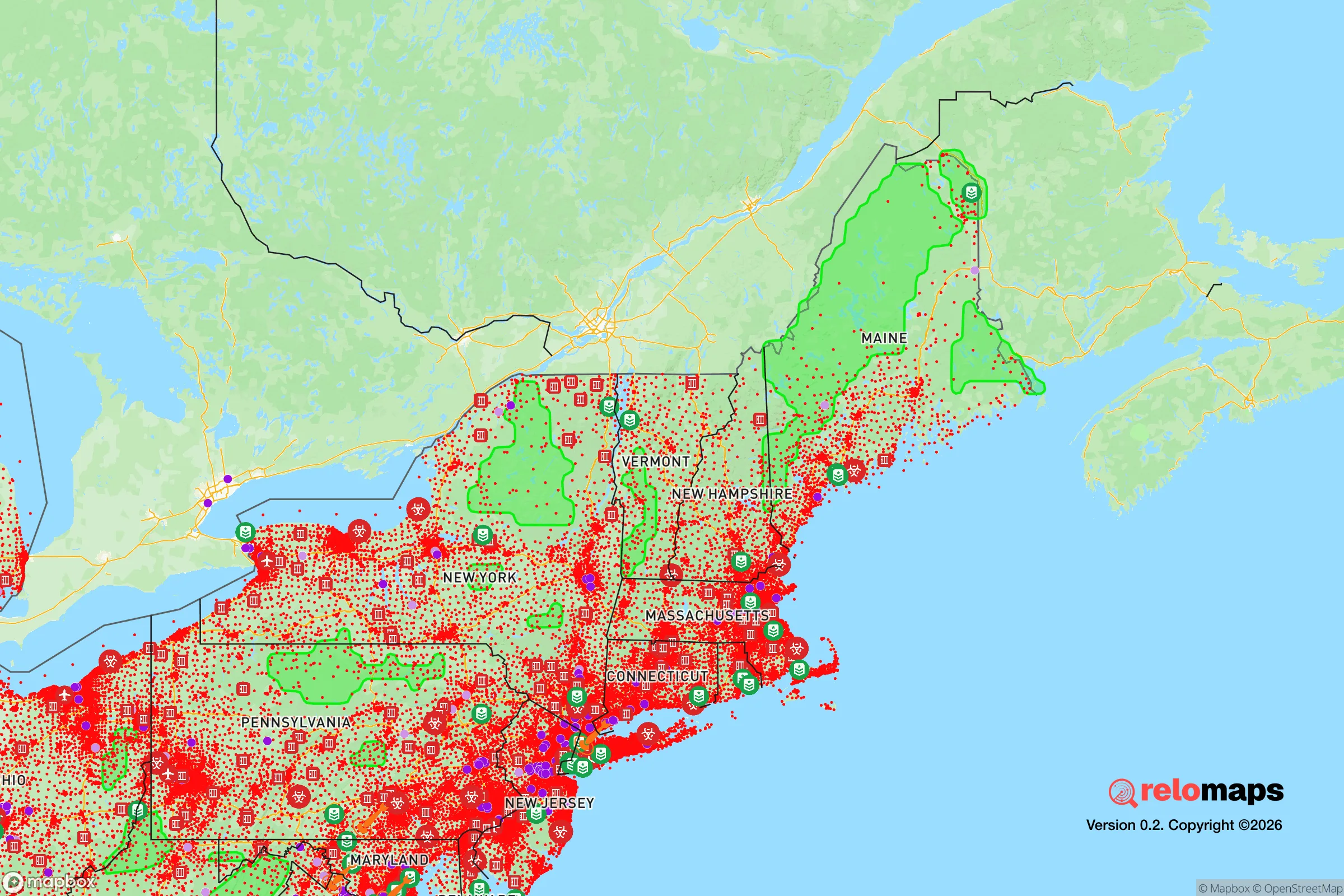
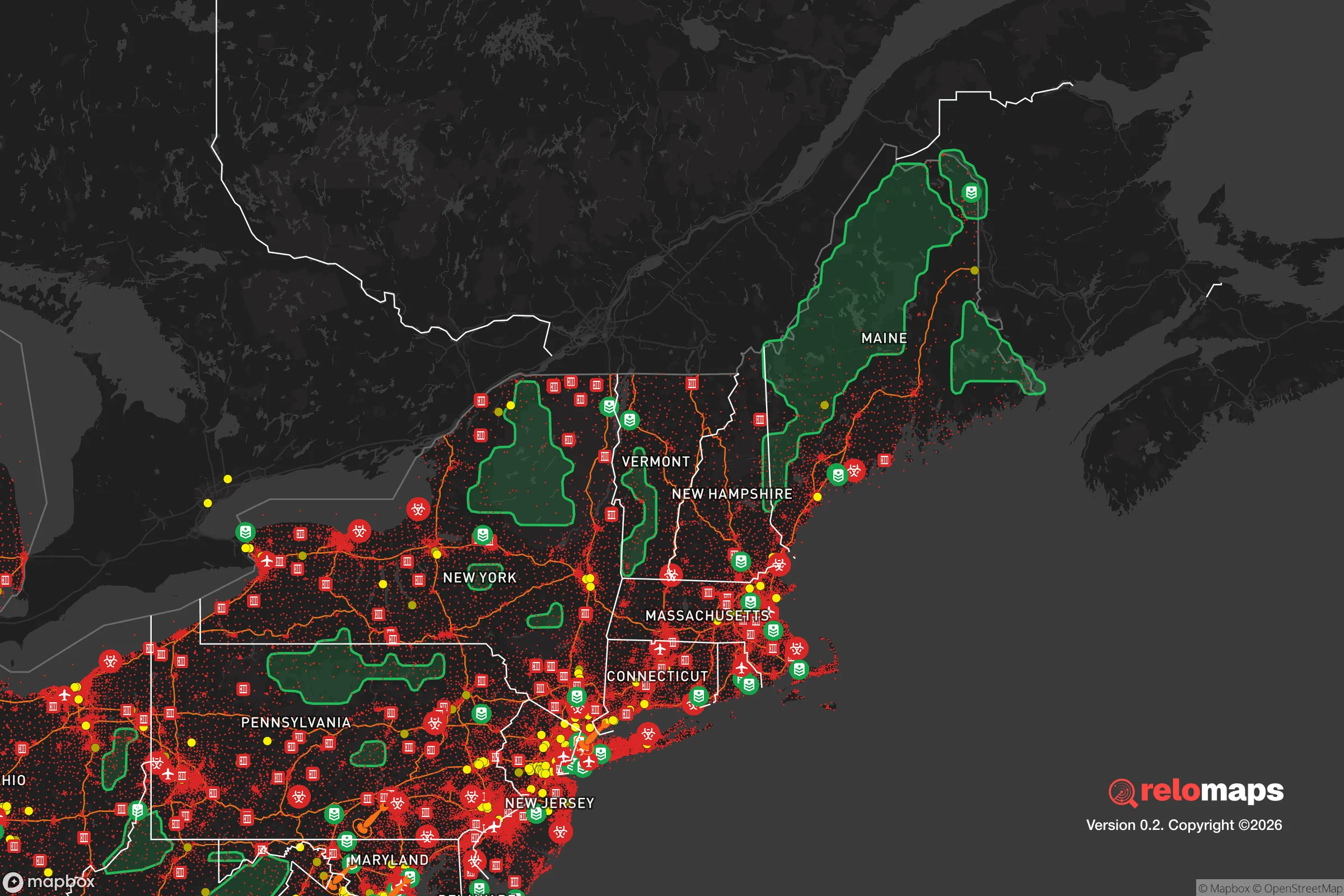


Important Note: For informational purposes only. This does not mean nothing bad ever happens in the green zones. Please use common sense. This is based on public data and modeled with AI. We tried to take a conservative approach but mistakes happen. We update this regularly as new information becomes available.
Solar Generator Recommendations
Backup power matters more here than in safer locations. We've picked three solar generators across budgets and capacity tiers — start with the budget unit if you only need a few essentials, or step up if you want to run a fridge and HVAC for days at a time.

Jackery Portable Power Station Explorer 300
Budget OptionPower on the Go: Weighing only 11 lbs, it's convenient to set up and store with book-sized foldable solar panels

BLUETTI Portable Power Station AC180
Designed for both indoor and outdoor scenarios, AC180 is highly capable as it has a robost capacity and continuous output power.

EF ECOFLOW DELTA Pro Ultra Power Station
Upgraded PickEcoFlow DELTA Pro Ultra is a whole-home energy system designed to grow with your family. Integrated with the Smart Home Panel 2, it scales to meet your evolving energy needs — keeping your home powered, intelligent, and secure through every stage of life.
We earn a commission, at no additional cost to you.
Strategic Assessment Analysis
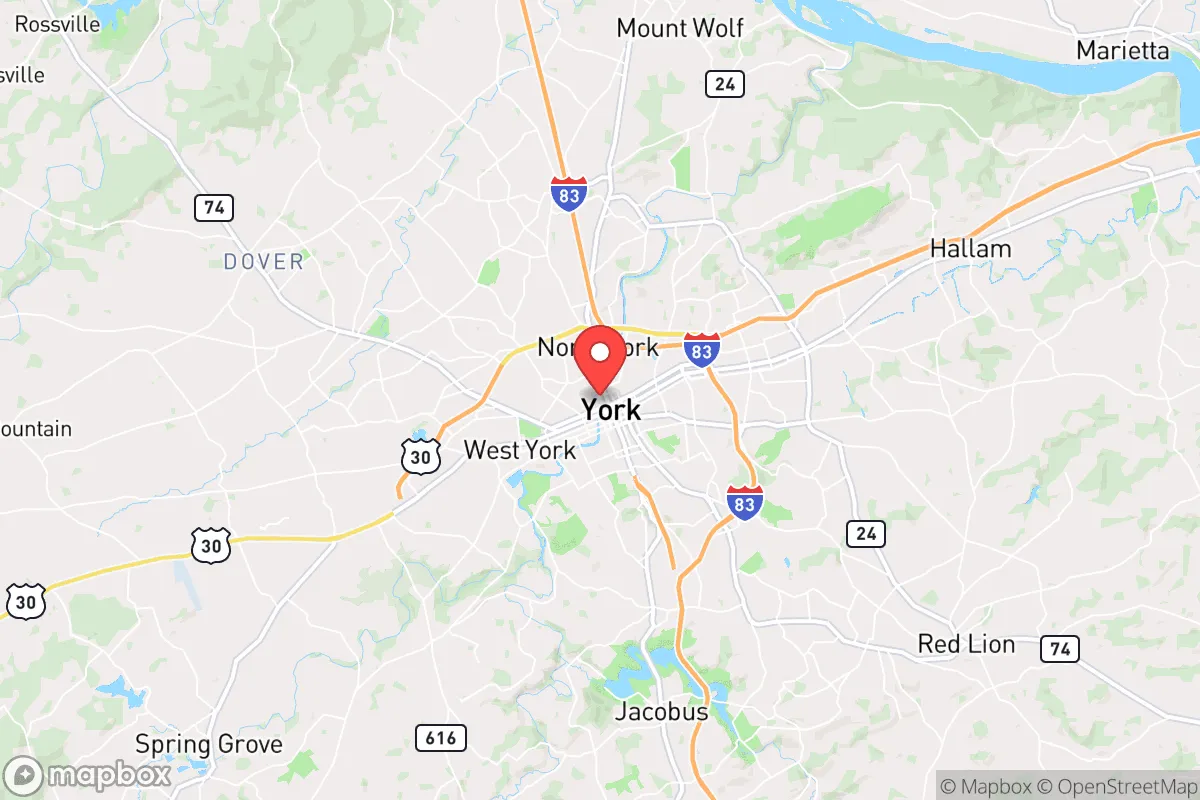
York, Pennsylvania, occupies a strategic middle ground that resilience-minded relocators should examine closely. It sits roughly 50 miles south of Harrisburg and 50 miles north of Baltimore, placing it within a day’s drive of major East Coast population centers—but crucially, not inside any of them. This positioning offers a buffer against the immediate fallout of urban unrest, mass casualty events, or infrastructure collapse, while still providing access to regional supply chains and medical resources. For a conservative audience weighing long-term preparedness, York’s location along the I-83 corridor and its proximity to the Susquehanna River give it a logistical edge that many smaller towns lack, though the trade-offs are real and worth unpacking.
Geographic position and natural advantages for long-term preparedness
York sits in the rolling hills of south-central Pennsylvania, an area defined by fertile farmland, hardwood forests, and a temperate climate that supports four-season living. The region’s natural advantages for a prepper or survivalist mindset are tangible: the surrounding York County is dotted with small farms, orchards, and rural acreage that could sustain food production if supply chains falter. The Susquehanna River, about 15 miles east of downtown York, provides a major freshwater source, while numerous creeks and groundwater aquifers offer redundancy for well-dependent properties. The terrain itself—a mix of ridges and valleys—creates natural defensibility in outlying areas, with wooded hills that can obscure movement and limit line-of-sight from main roads. Winters are cold but manageable, with average snowfall around 30 inches, meaning heating fuel and cold-weather gear are practical necessities rather than afterthoughts. For a relocator prioritizing self-sufficiency, the area’s agricultural base is a genuine asset: York County ranks among Pennsylvania’s top producers of corn, soybeans, and livestock, which translates to local food availability even if national distribution networks degrade.
Risks, exposures, and proximity to fallout-relevant landmarks
The same proximity that gives York its logistical advantages also introduces significant risks. The city lies within 30 miles of the Peach Bottom Atomic Power Station, a nuclear plant on the Susquehanna River in Delta, Pennsylvania. In a worst-case scenario—whether from accident, sabotage, or a broader conflict—this puts York within the emergency planning zone for radiological release. Prevailing winds from the west-southwest mean fallout patterns could shift unpredictably, but the plant’s location southeast of York means a release could push contamination toward the city depending on weather. Beyond nuclear risk, York is roughly 45 miles from the Baltimore metropolitan area and 90 miles from Philadelphia, both of which are high-probability targets for civil unrest, cyberattacks, or mass casualty events in a deteriorating national scenario. The I-83 corridor, which funnels traffic directly from Baltimore into York, becomes a liability during evacuation or unrest: choke points at the Maryland-Pennsylvania border and the Susquehanna River bridges could trap residents fleeing north. Additionally, York’s own population of about 45,000, combined with the broader county’s 460,000, means the area is not remote enough to avoid spillover from urban crises. The city itself has experienced economic decline and periodic crime spikes, which could amplify during societal breakdown—think resource competition, not just petty theft.
Practical resilience for a relocator: food, water, energy, and defensibility
For someone serious about resilience, York’s practical infrastructure is a mixed bag. On the positive side, the surrounding countryside offers ample opportunities for off-grid living: rural properties with private wells, septic systems, and acreage are available at prices well below national averages—think $200,000 to $400,000 for a 5-10 acre parcel with a house, compared to $500,000+ in the Northeast corridor. The local Amish and Mennonite communities, concentrated in the southern part of the county, maintain traditional farming and horse-drawn transport, which could serve as a resilience model if fuel becomes scarce. Farmers’ markets and co-ops are common, and many rural residents already keep gardens, chickens, or small livestock. Water access is generally good, but relocators should test well yields and consider rainwater catchment as a backup—droughts have hit the region in recent years, and the Susquehanna River basin faces periodic low-flow conditions. Energy-wise, the grid is moderately reliable but vulnerable to storms and cyberattacks; solar panels with battery storage are a wise investment here, given the area’s 200+ sunny days per year. Natural gas is widely available in suburban zones, but rural properties often rely on propane or heating oil, which require storage and supply chain access. Defensibility varies by location: properties on dead-end roads, near wooded ridges, or with clear sightlines offer better security than those in valley bottoms or near major highways. The city itself is not defensible in any practical sense—dense housing, limited escape routes, and a police force that would be overwhelmed in a crisis make it a place to avoid for long-term survival. The sweet spot for a relocator is a rural property 15-30 minutes outside York, ideally south or west of the city, away from the nuclear plant and major transit corridors.
The overall strategic picture for York, PA, is one of calculated trade-offs. It is not a remote bunker location—you are still within striking distance of East Coast chaos, and the nuclear plant is a real, if low-probability, hazard. But for a conservative relocator who wants to stay connected to regional resources while maintaining a buffer from urban collapse, York County offers a workable balance. The farmland, water access, and relatively affordable land give you a foundation to build self-sufficiency, while the proximity to Harrisburg and Baltimore provides access to medical care, hardware stores, and supply chains that a truly isolated location lacks. The key is to choose your exact spot carefully: avoid the city limits, stay clear of the Susquehanna floodplain, and prioritize properties with well water, wood-burning capability, and multiple exit routes. If you are willing to invest in solar, water storage, and a solid perimeter, York can serve as a staging ground for weathering the next decade’s uncertainties—just don’t mistake it for a fortress. It is a place to live prepared, not to hide from the world.

* Values derived from national, state, county, city and local statistics and may differ in a specific area. Last updated: 2026-05-01T22:23:31.000Z
Narrative content on this page is AI-generated and may contain mistakes. Verify any details that matter before acting on them.
ReloMaps may earn a commission from affiliate links at no extra cost to you.

