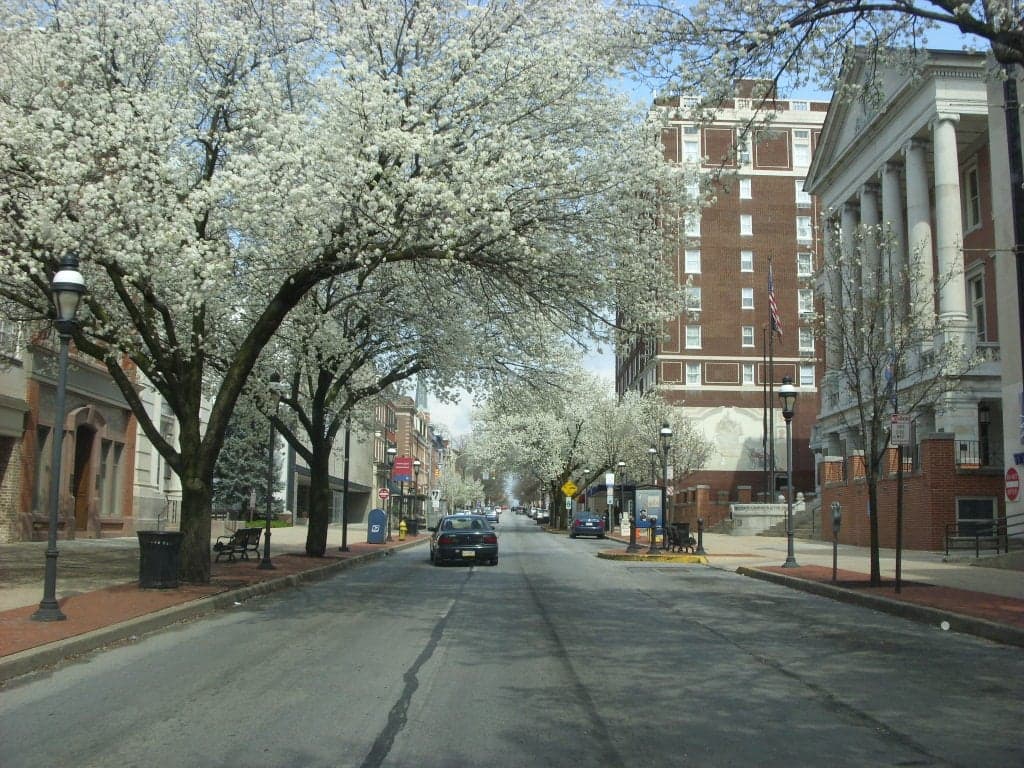
Photo: Wikipedia
Political ClimatePolitical Climate in York, PA
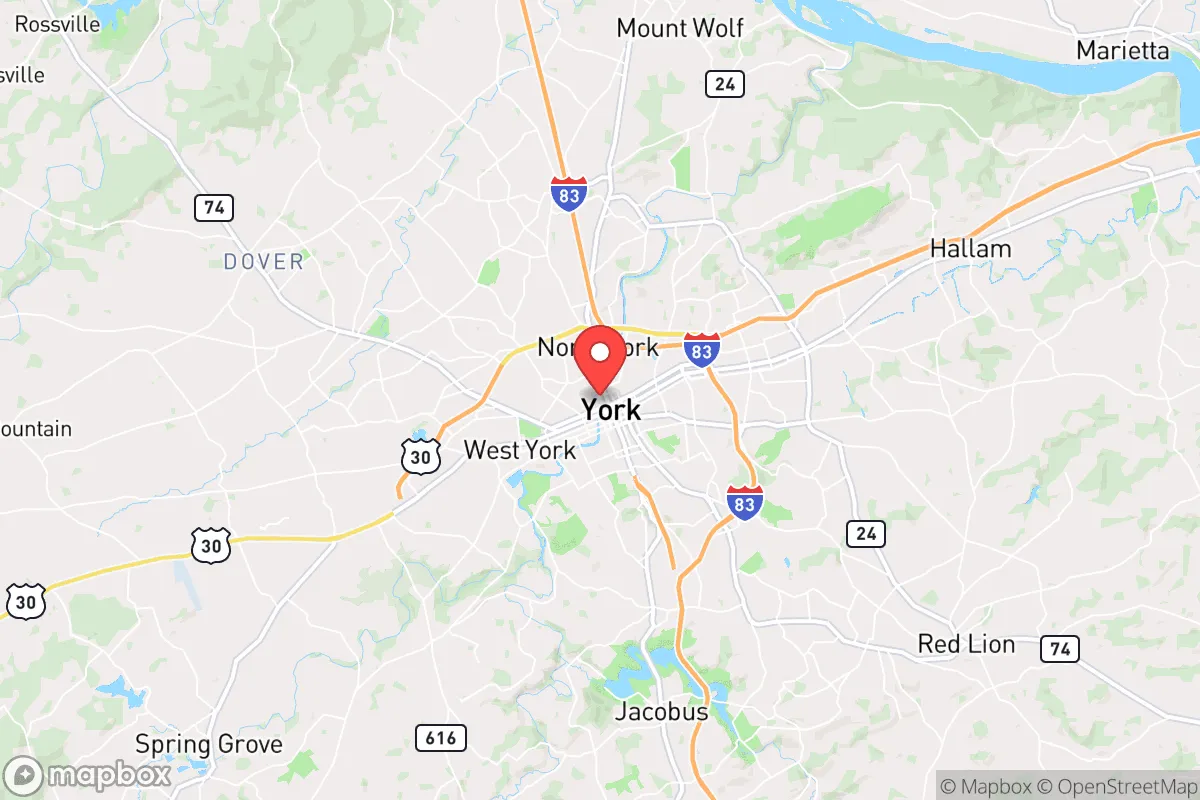
District shown is the primary district for this city’s centroid. Cities may span multiple districts.
Local Political AnalysisPolitical Analysis of York, PA
York, Pennsylvania, sits in a reliably conservative corner of the state, with a Cook PVI of R+3 that reflects its longstanding Republican lean, but if you’ve lived here as long as I have, you know that label doesn’t tell the whole story. The city itself has been trending bluer in recent years, while the surrounding townships and rural areas—places like Springettsbury, Manchester, and Shrewsbury—remain deeply red. That split creates a real tension, and honestly, it’s getting harder to ignore the creeping influence of progressive policies that feel out of step with what most of us around here value.
How it compares
Drive ten minutes north to Harrisburg, and you’ll see a city that’s been fully captured by progressive politics—higher taxes, more bureaucracy, and a general sense that government knows best. Lancaster, just east, is similar, with its trendy downtown masking a shift toward policies that prioritize ideology over common sense. York County, by contrast, has held the line better, but the city of York itself is starting to mirror those neighbors. The surrounding townships still vote reliably Republican, but the city council has pushed things like sanctuary city rhetoric and zoning changes that make you wonder who’s really calling the shots. It’s a stark contrast: out in the county, folks just want to be left alone to run their businesses and raise their families, while inside the city limits, you get the sense that personal freedoms—like how you use your property or what you teach your kids—are increasingly seen as negotiable.
What this means for residents
For those of us who’ve been here a while, the biggest concern is how fast the culture is shifting under the radar. You used to be able to count on local government staying out of your life, but now you see more ordinances that feel like overreach—things like noise complaints being weaponized against small businesses, or school boards getting pressured to adopt curriculum that doesn’t reflect what most parents want. Property taxes are another sore spot: as the city tries to fund progressive pet projects, the burden falls on homeowners who just want to keep what they’ve earned. The good news is that the county commissioners and state representatives from this area still fight hard against that kind of thing, but you have to stay vigilant. If you’re thinking of moving here, I’d recommend looking at the townships—Dallastown, Red Lion, or even Glen Rock—where the local vibe is still “live and let live” without the city’s bureaucratic meddling.
One thing that sets York apart from some of its neighbors is a strong, quiet resistance to the kind of top-down mandates you see in places like Philadelphia or Pittsburgh. There’s a real culture here of self-reliance—people help each other out without waiting for a government program. That said, the long-term trend is concerning. If the city keeps drifting left, you could see more regulations on everything from short-term rentals to how you heat your home. For now, York County remains a place where conservative values still hold sway, but it’s a fight to keep it that way. If you value personal freedom and want to live somewhere that hasn’t fully surrendered to progressive groupthink, this area still has a lot to offer—just keep an eye on the city council meetings.

State Political ClimatePolitical Climate in Pennsylvania
State Political AnalysisPolitical Environment in the State
Pennsylvania has long been the quintessential swing state, but over the last 10-20 years, its political center of gravity has shifted in a way that should give any freedom-minded relocator pause. The state is currently a patchwork of deep-blue urban strongholds and deep-red rural expanses, with a narrow statewide lean toward Democrats in presidential years (Biden won by just 1.2% in 2020) but a more conservative tilt in off-year and local elections. The trajectory is concerning: the growing population and political muscle of Philadelphia and its collar counties are steadily dragging the entire state leftward, even as the vast middle and northern tier remain stubbornly conservative.
Urban vs. rural divide
The political map of Pennsylvania is a tale of two irreconcilable worlds. The southeastern corner, anchored by Philadelphia and its immediate suburbs in Montgomery, Delaware, and Chester counties, is a Democratic machine that produces massive vote margins. Philadelphia alone delivered over 600,000 votes for Biden in 2020, effectively canceling out the entire Republican vote from the rest of the state. Meanwhile, the Pittsburgh metro area, once reliably blue-collar Democratic, has seen Allegheny County drift left as the city gentrifies, while the surrounding southwestern counties like Washington, Westmoreland, and Butler have flipped hard red. The real battleground is the "T" — the central spine of the state running from Erie down through Harrisburg and York to the Maryland border. These areas, once the home of moderate "Pennsylvania Dutch" Republicans, are now the front lines of a cultural war, with fast-growing exurbs like Lancaster and Lebanon trending redder as they absorb conservative refugees from the coastal cities.
Policy environment
Pennsylvania's policy environment is a mixed bag that leans more restrictive than its reputation suggests. The state has a flat income tax of 3.07%, which is relatively low, but that's offset by some of the highest property taxes in the nation — averaging over 1.5% of home value, with no statewide cap. The regulatory posture is heavy: Pennsylvania is one of the few states that still has a state-run liquor monopoly (the PLCB), meaning you can't buy wine or spirits in a grocery store, and the state controls all distribution. On education, the state has seen a massive push toward centralization, with Governor Josh Shapiro's administration pushing for more state control over curriculum and funding, which has alarmed parents in rural districts. Election laws are a flashpoint: Pennsylvania was ground zero for the 2020 election integrity controversies, with the state Supreme Court (controlled by Democrats) unilaterally extending mail-in ballot deadlines. The current system allows no-excuse mail-in voting under Act 77 (2019), but the legislature has been deadlocked on adding voter ID requirements, leaving the system vulnerable to the same chaos that erupted in 2020.
Trajectory & freedom
The trajectory of personal freedom in Pennsylvania is decidedly negative. On gun rights, the state has preemption laws that prevent local municipalities from enacting their own gun bans, but Philadelphia has repeatedly tried to circumvent this, and the state legislature has been unable to pass constitutional carry — you still need a permit to carry concealed. On parental rights, the state has seen a wave of school board battles, particularly in Central Bucks County and York County, where parents have fought against critical race theory and gender ideology in classrooms. The state Department of Education under Shapiro has been hostile to these efforts, issuing guidance that effectively mandates LGBTQ+ inclusive policies. On medical freedom, Pennsylvania was one of the most aggressive states in COVID-19 lockdowns under Governor Tom Wolf, with business closures and school shutdowns that lasted far longer than in neighboring Ohio or West Virginia. The state has no religious or philosophical exemption for vaccine mandates. Property rights are under assault in the southeast, where Montgomery County has aggressively pursued "fair share" housing mandates that override local zoning. The bottom line: the state's freedom index is declining, driven by the urban corridor's political dominance.
Civil unrest & political movements
Pennsylvania has been a hotbed of political activism on both sides. The 2020 election aftermath saw massive "Stop the Steal" rallies in Harrisburg and Gettysburg, and the state was the site of the January 6th investigation's focus on the "fake electors" scheme. On the left, Philadelphia has seen recurring protests over police brutality, including the 2020 looting spree that devastated Center City retail. The state has a growing sanctuary city movement: Philadelphia is a declared sanctuary city, and Pittsburgh has similar policies, creating tension with ICE and the state legislature. Immigration politics are raw in the agricultural regions of Lancaster County, where a large undocumented workforce in the mushroom and dairy industries has created a de facto open-border policy that local law enforcement largely ignores. The most visible flashpoint for a new resident would be the constant election integrity debates — every election cycle brings new lawsuits over mail-in ballots, drop boxes, and signature verification, and the state's divided government ensures no resolution is coming.
Projection
Looking ahead 5-10 years, the math is not favorable for conservatives. The in-migration patterns are stark: people are leaving the rural north-central and southwestern counties, while the southeastern suburbs are growing rapidly with transplants from New Jersey and New York who bring their blue-state voting habits. The 2020 census cost Pennsylvania a congressional seat, and the trend lines suggest the state will become more Democratic as the Philadelphia metro area's population share increases. The only countervailing force is the growth of conservative exurbs like Pike County (the fastest-growing county in the state, driven by New York refugees) and the continued reddening of the Lehigh Valley (Allentown-Bethlehem-Easton) as blue-collar voters abandon the Democratic Party. But even these trends are likely to be overwhelmed by the sheer demographic weight of Philadelphia and its suburbs. A new resident moving in now should expect that in a decade, the state will likely have a Democratic trifecta (governor, house, senate) for the first time since the 1990s, with all the policy consequences that entails.
For a conservative individual or family considering Pennsylvania, the practical takeaway is this: the state offers genuine beauty, strong communities, and a low cost of living in its rural and exurban areas, but you are moving into a political warzone. Your vote will be diluted by Philadelphia's machine, your children's education will be a constant battleground, and your tax dollars will flow to urban pension systems. If you choose Pennsylvania, pick your county carefully — Butler, Lancaster, or York are your best bets for local governance that respects freedom — but understand that the state-level headwinds are real and getting stronger. The days of Pennsylvania as a purple state are numbered; it is becoming a blue state with a red minority, and that minority is fighting a rear-guard action that, while spirited, is unlikely to reverse the tide.
* Values derived from national, state, county, city and local statistics and may differ in a specific area. Last updated: 2026-05-01T22:23:31.000Z
Narrative content on this page is AI-generated and may contain mistakes. Verify any details that matter before acting on them.
ReloMaps may earn a commission from affiliate links at no extra cost to you.

