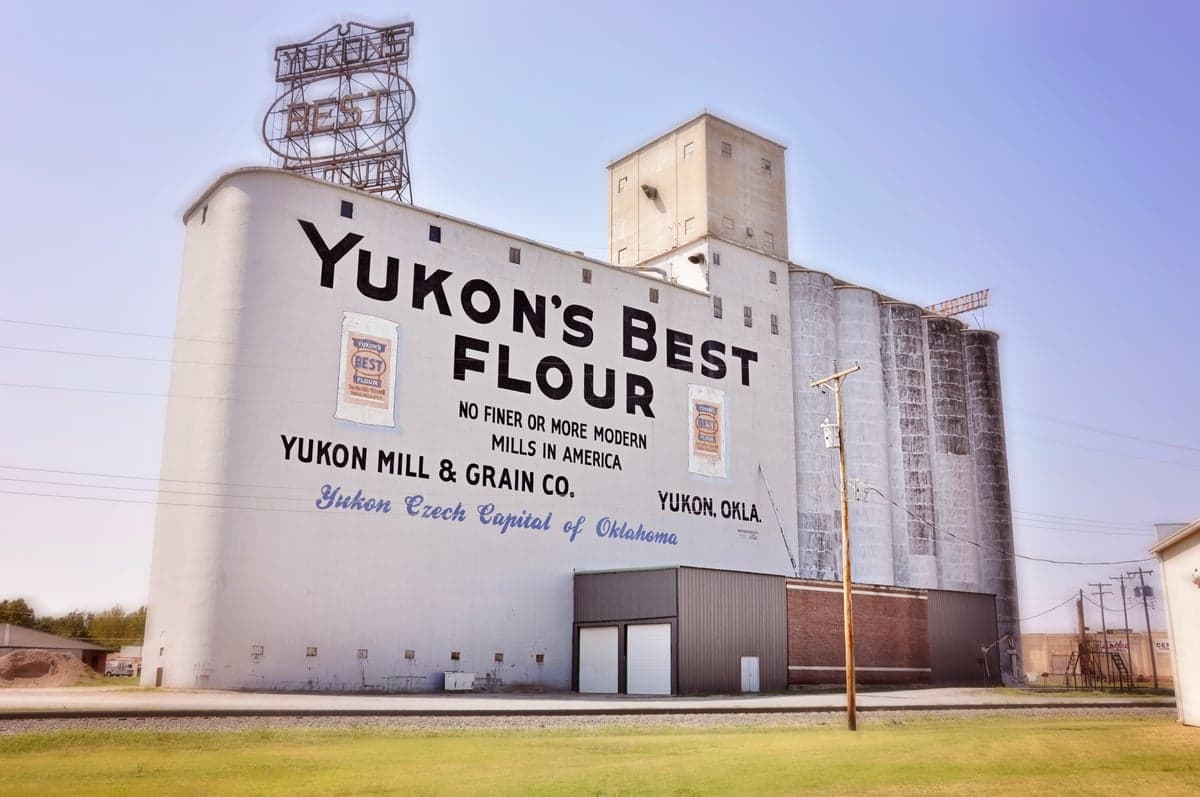
Photo: Wikipedia
Strategic Assessment of Yukon, OK
Meaningful friction. Expect exposure to either population pressure, blast zones, or natural disaster risk. Consider buying a retreat property.
What does the Strategic Assessment tell us?
Our Strategic Assessment grades tactical survivability of an area. Major population centers, military targets, fallout zones, natural disasters, and border exposure all drive risk — lower exposure means a more defensible position in a crisis.
This is heavily inspired by Joel Skousen's Strategic Relocation book. Highly recommended you checkout the book ($)What does this tell us?
Our Strategic Assessment grades tactical survivability of an area. Major population centers, military targets, fallout zones, natural disasters, and border exposure all drive risk — lower exposure means a more defensible position in a crisis.
This is heavily inspired by Joel Skousen's Strategic Relocation book. Highly recommended you checkout the book ($)Strategic Pillars

Key Distances
Regional Safe Places
Below is our recommended "safe zones" in Oklahoma and the surrounding area based on our strategic heuristics. For most people, it's unrealistic to live in a “safe zone” full-time due to work, family or other personal reasons. They tend to be more rural. However, many of these areas are perfect for second homes and retreat properties that double as a vacation home or even a short-term rental.
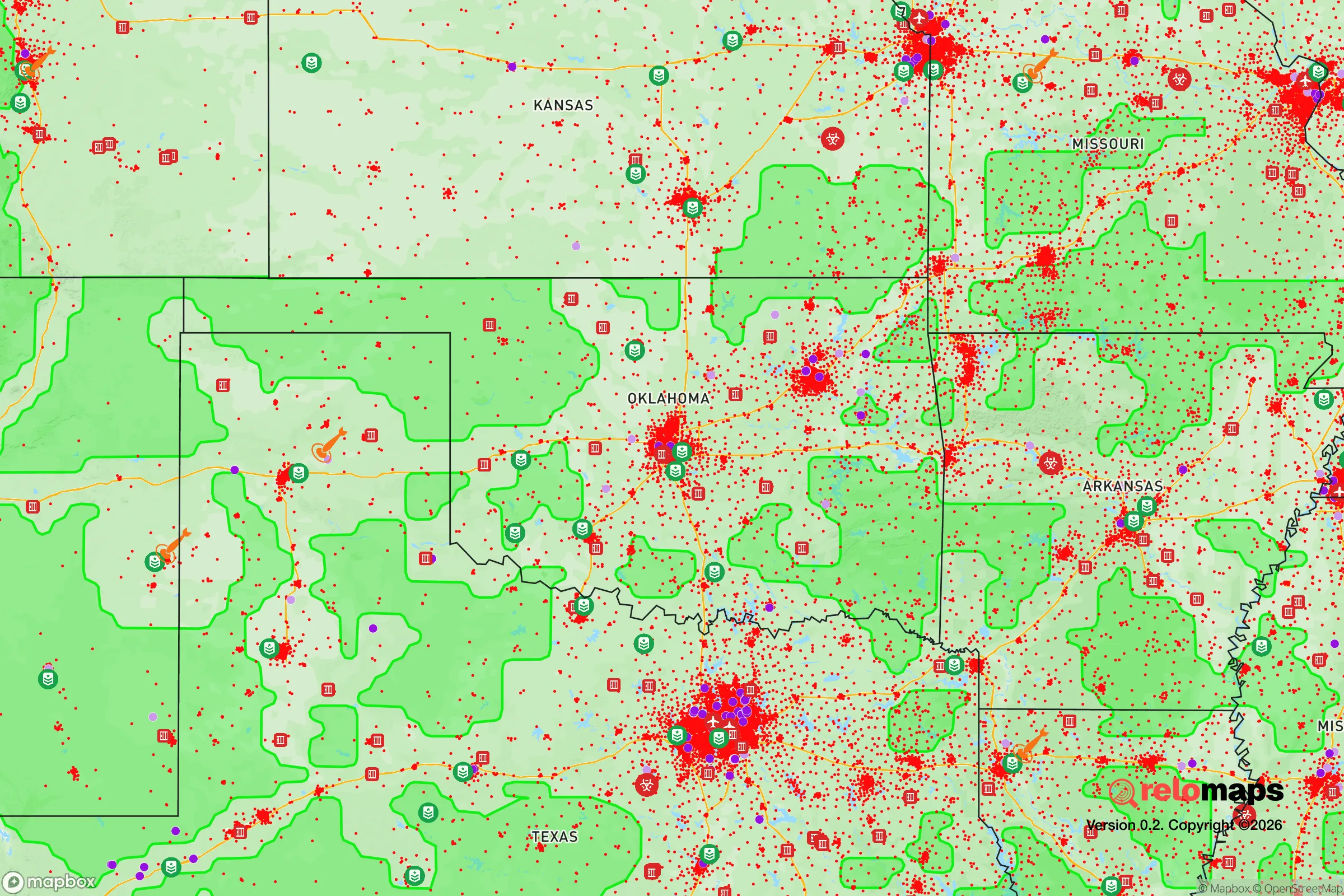
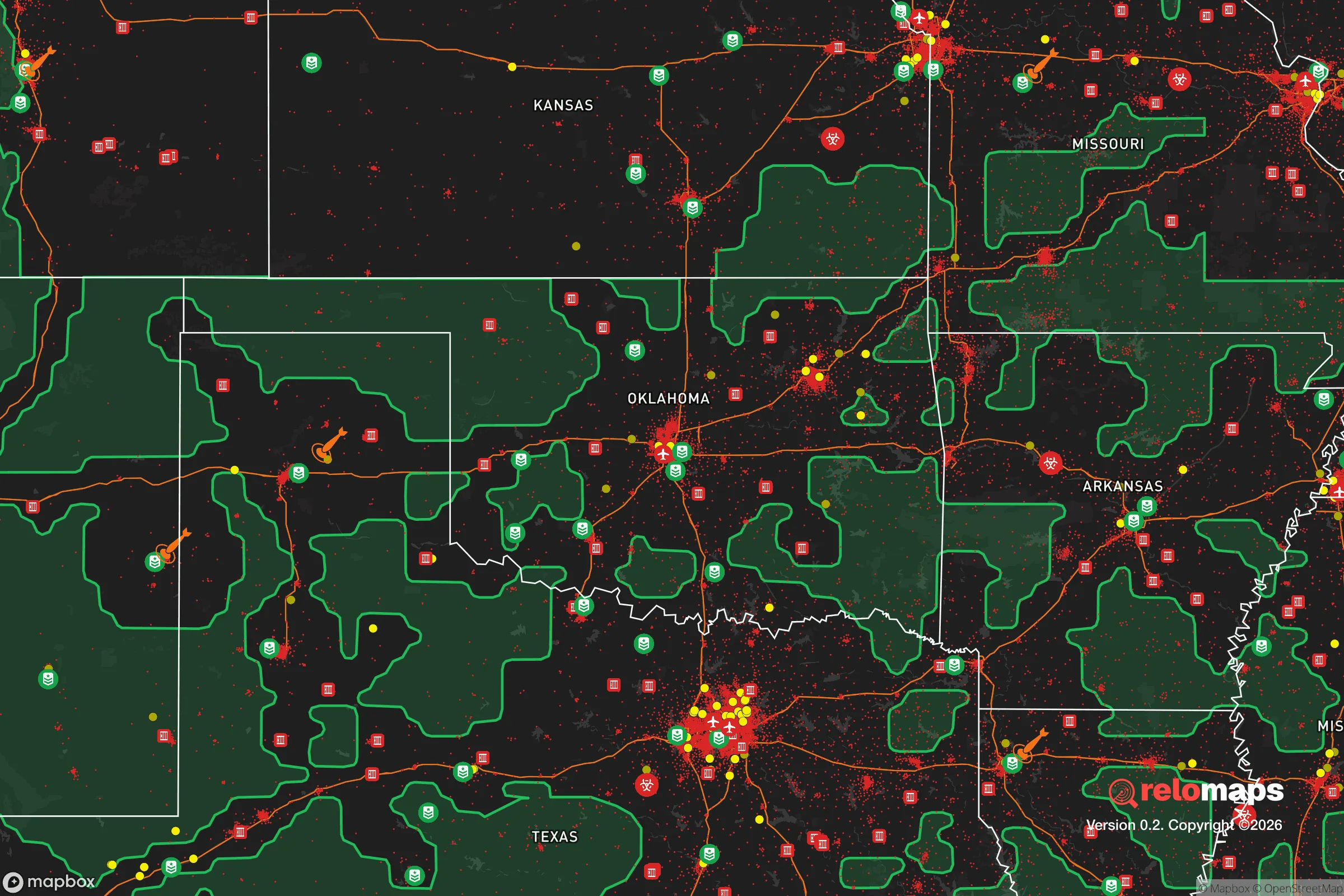


Important Note: For informational purposes only. This does not mean nothing bad ever happens in the green zones. Please use common sense. This is based on public data and modeled with AI. We tried to take a conservative approach but mistakes happen. We update this regularly as new information becomes available.
Solar Generator Recommendations
Backup power matters more here than in safer locations. We've picked three solar generators across budgets and capacity tiers — start with the budget unit if you only need a few essentials, or step up if you want to run a fridge and HVAC for days at a time.

Jackery Portable Power Station Explorer 300
Budget OptionPower on the Go: Weighing only 11 lbs, it's convenient to set up and store with book-sized foldable solar panels

BLUETTI Portable Power Station AC180
Designed for both indoor and outdoor scenarios, AC180 is highly capable as it has a robost capacity and continuous output power.

EF ECOFLOW DELTA Pro Ultra Power Station
Upgraded PickEcoFlow DELTA Pro Ultra is a whole-home energy system designed to grow with your family. Integrated with the Smart Home Panel 2, it scales to meet your evolving energy needs — keeping your home powered, intelligent, and secure through every stage of life.
We earn a commission, at no additional cost to you.
Strategic Assessment Analysis
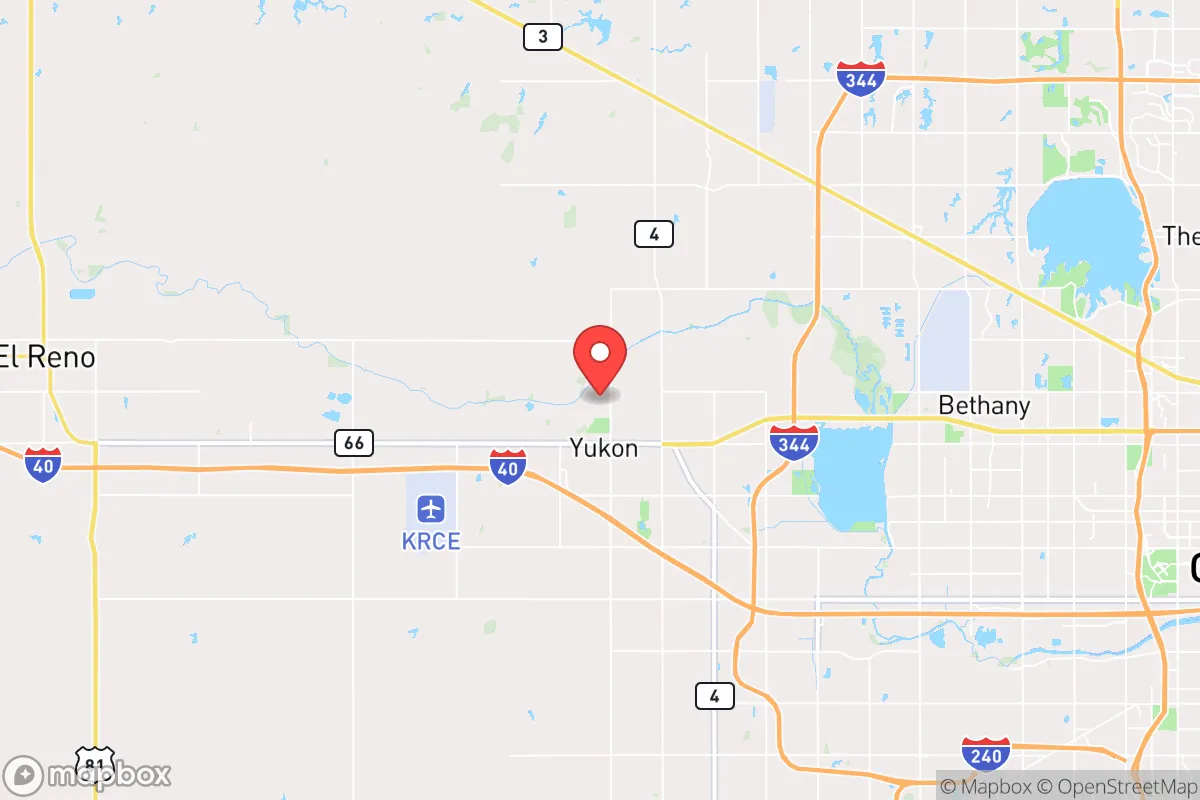
Yukon, Oklahoma, sits in a deceptive pocket of the central plains—close enough to Oklahoma City to feel the economic pulse, but far enough out to offer genuine strategic depth for those thinking about resilience. The town’s position along the North Canadian River and its access to Interstate 40 and Route 66 give it a logistical edge that matters when supply chains falter or movement becomes necessary. For a relocator weighing civic unrest, mass casualty events, or long-term disruption, Yukon presents a mixed bag: real advantages in water and food access, offset by proximity to a major metro that could become a liability in a crisis.
Geographic position and natural buffers in central Oklahoma
Yukon sits about 15 miles west of downtown Oklahoma City, which puts it just outside the immediate blast radius of any hypothetical high-value target in the metro—think federal buildings, Tinker Air Force Base, or the Will Rogers World Airport. The terrain is flat to gently rolling, with the Canadian River corridor providing a natural barrier to the south. That river isn’t a defensive moat, but it does create a break in development and offers a potential water source if municipal systems go down. The area’s position in Tornado Alley is a double-edged sword: severe weather is a real threat, but it also means the local infrastructure is hardened against power outages and storm damage. Most homes have storm shelters, and the community is accustomed to rapid response. The lack of mountains, forests, or dense cover means concealment is minimal, but it also means clear lines of sight and fewer places for hostile groups to stage. For a prepper, the flat openness is a liability for defense but an asset for early warning.
Risks, exposures, and proximity to fallout-relevant landmarks
The biggest strategic weakness of Yukon is its proximity to Oklahoma City. In a mass casualty event—whether from a terrorist strike, a dirty bomb, or a major industrial accident—the metro would become a chaos magnet. I-40 and I-44 would clog instantly, and the surge of refugees westward could overwhelm Yukon’s resources. Tinker Air Force Base, roughly 20 miles east, is a prime target for any adversary looking to cripple U.S. air power. A conventional strike or EMP event there would send shockwaves through the region. The Will Rogers World Airport and the Union City rail yard (a major freight hub) are additional risk vectors. On the plus side, Yukon is far enough from the Cimarron River and the oil fields to the north to avoid the worst of any industrial spill or pipeline rupture. The area’s biggest natural risk is tornadoes—violent, unpredictable, and capable of leveling entire subdivisions. But the community’s response culture is strong; storm shelters are common, and the local emergency management is well-drilled. For a relocator, the calculus is: you’re trading the high probability of a weather event for the lower probability of a man-made catastrophe that would be far more devastating.
Practical resilience for a relocator: food, water, energy, and defensibility
Yukon’s practical resilience hinges on three things: water, food, and community. The North Canadian River is a perennial water source, though it’s silty and requires filtration. The local water table is high enough that shallow wells are feasible in many areas, and the city’s municipal supply draws from the Canton Lake reservoir, which has held up well during droughts. For food, the surrounding farmland is some of the most productive in Oklahoma—wheat, corn, and cattle operations dominate. The Yukon Farmers Market and local co-ops provide a direct line to growers, and the rural character means many residents already garden or raise small livestock. Energy is a mixed bag: OG&E provides grid power, but natural gas is the primary heating source, and the region’s wind farms (visible to the west) offer a decentralized backup if you have the gear. Solar is viable, with over 260 sunny days per year, but the flat terrain means no natural shade for panels—you’ll need to mount them high or on tracking systems. Defensibility is the weak link. Yukon is a bedroom community with a grid layout; there are no natural chokepoints, and the open terrain makes it hard to secure a perimeter. The best bet is a rural property on the outskirts, ideally with a creek or pond for water and a clear view of approach routes. The local gun culture is strong, and the sheriff’s office is responsive, but in a total breakdown, you’d be relying on your immediate neighbors. The good news: Yukon’s population is relatively homogeneous and politically conservative, which means a higher likelihood of mutual aid and shared values in a crisis.
The overall strategic picture for Yukon is one of calculated trade-offs. It’s not a remote bunker location—it’s a suburban-rural hybrid that offers decent self-sufficiency potential if you’re willing to invest in water storage, solar, and a good storm shelter. The proximity to Oklahoma City is a liability that can be managed with a solid bug-out plan and a vehicle capable of navigating clogged highways. For a single individual or a family looking to ride out the coming instability, Yukon provides a middle ground: enough infrastructure to avoid the grind of true off-grid living, but enough space and resources to weather a short-to-medium-term disruption. The key is to buy on the western edge, away from the metro creep, and to build relationships with the local farming community before you need them. In a world where the grid is fragile and the cities are tinderboxes, Yukon is a solid B+—not perfect, but far better than most.

* Values derived from national, state, county, city and local statistics and may differ in a specific area. Last updated: 2026-04-21T11:42:44.000Z
Narrative content on this page is AI-generated and may contain mistakes. Verify any details that matter before acting on them.
ReloMaps may earn a commission from affiliate links at no extra cost to you.

