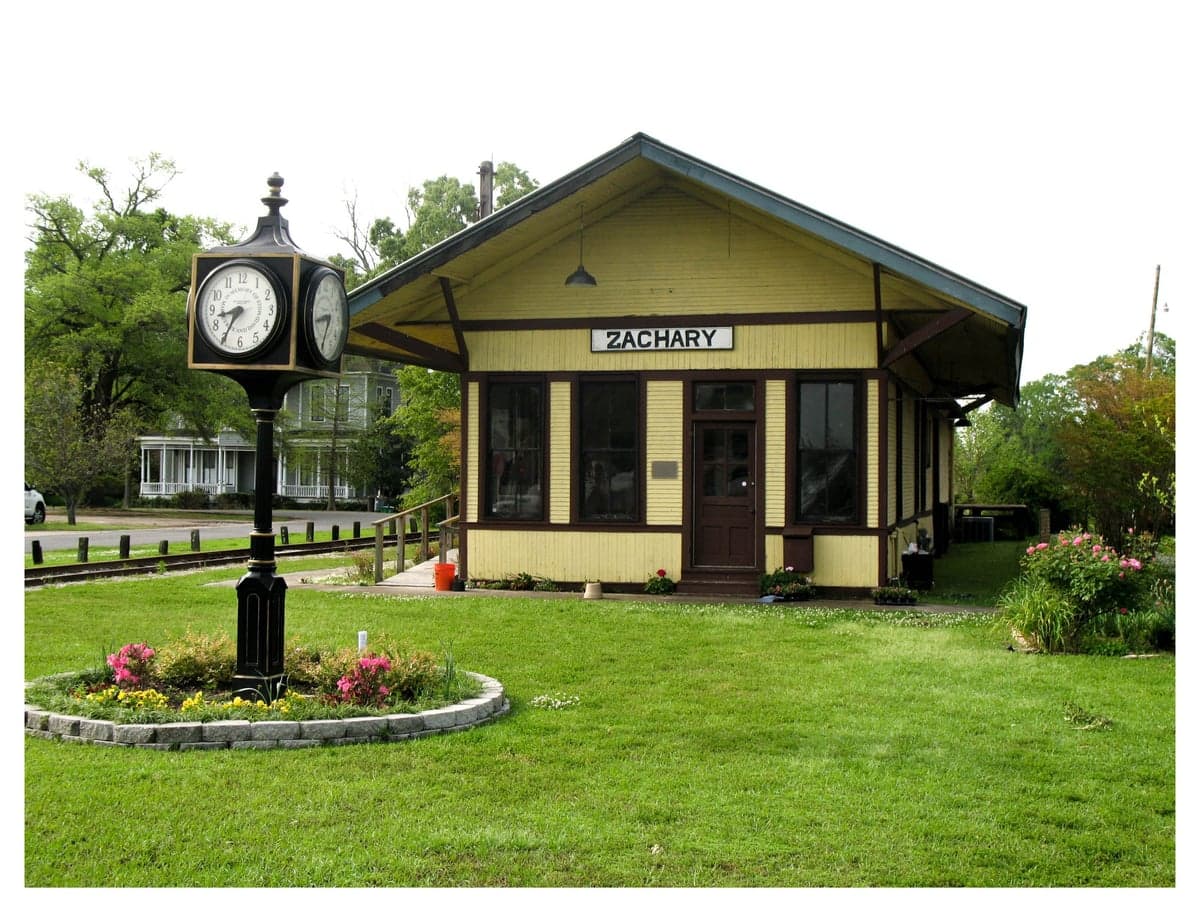
Photo: Wikipedia
Strategic Assessment of Zachary, LA
Workable tactical position. Some exposure to population density or targets, but generally defensible in a crisis.
What does the Strategic Assessment tell us?
Our Strategic Assessment grades tactical survivability of an area. Major population centers, military targets, fallout zones, natural disasters, and border exposure all drive risk — lower exposure means a more defensible position in a crisis.
This is heavily inspired by Joel Skousen's Strategic Relocation book. Highly recommended you checkout the book ($)What does this tell us?
Our Strategic Assessment grades tactical survivability of an area. Major population centers, military targets, fallout zones, natural disasters, and border exposure all drive risk — lower exposure means a more defensible position in a crisis.
This is heavily inspired by Joel Skousen's Strategic Relocation book. Highly recommended you checkout the book ($)Strategic Pillars

Key Distances
Regional Safe Places
Below is our recommended "safe zones" in Louisiana and the surrounding area based on our strategic heuristics. For most people, it's unrealistic to live in a “safe zone” full-time due to work, family or other personal reasons. They tend to be more rural. However, many of these areas are perfect for second homes and retreat properties that double as a vacation home or even a short-term rental.

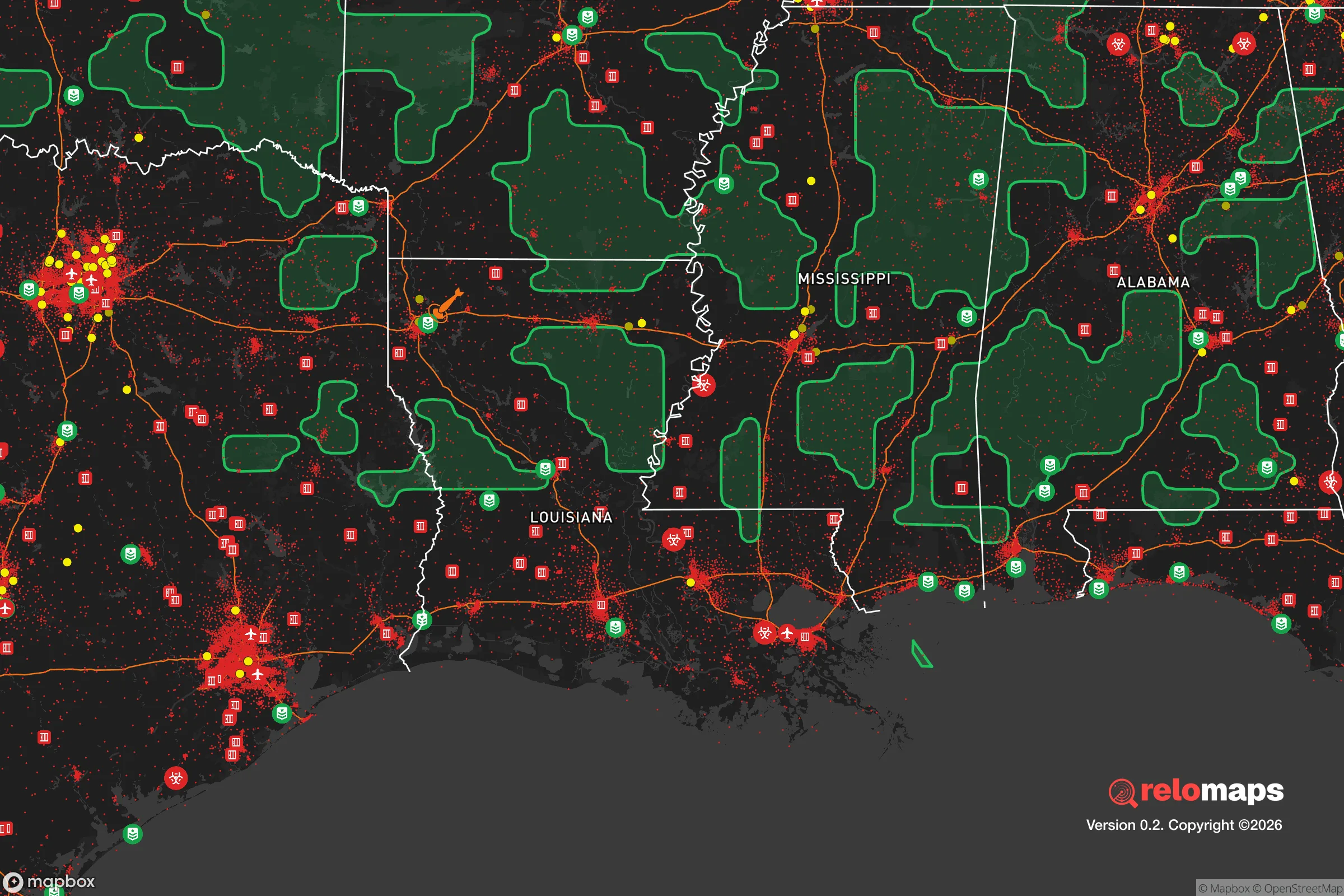


Important Note: For informational purposes only. This does not mean nothing bad ever happens in the green zones. Please use common sense. This is based on public data and modeled with AI. We tried to take a conservative approach but mistakes happen. We update this regularly as new information becomes available.
Solar Generator Recommendations
Backup power matters more here than in safer locations. We've picked three solar generators across budgets and capacity tiers — start with the budget unit if you only need a few essentials, or step up if you want to run a fridge and HVAC for days at a time.

Jackery Portable Power Station Explorer 300
Budget OptionPower on the Go: Weighing only 11 lbs, it's convenient to set up and store with book-sized foldable solar panels

BLUETTI Portable Power Station AC180
Designed for both indoor and outdoor scenarios, AC180 is highly capable as it has a robost capacity and continuous output power.

EF ECOFLOW DELTA Pro Ultra Power Station
Upgraded PickEcoFlow DELTA Pro Ultra is a whole-home energy system designed to grow with your family. Integrated with the Smart Home Panel 2, it scales to meet your evolving energy needs — keeping your home powered, intelligent, and secure through every stage of life.
We earn a commission, at no additional cost to you.
Strategic Assessment Analysis
Zachary, Louisiana, sits in a sweet spot that resilience-minded relocators rarely find: close enough to Baton Rouge for supply runs and medical access, but far enough north to avoid the worst of the city’s sprawl, crime spillover, and hurricane surge zones. The town’s position on the bluffs above the Mississippi River floodplain gives it a natural elevation advantage that most of south Louisiana lacks, and its relatively low population density—around 20,000 people—means you’re not competing with a million neighbors for resources when things go sideways. For a conservative-leaning individual or family looking to plant roots in a place that can weather both natural disasters and civil unrest, Zachary offers a rare combination of geographic defensibility, community cohesion, and logistical practicality.
Geographic position and natural advantages for long-term security
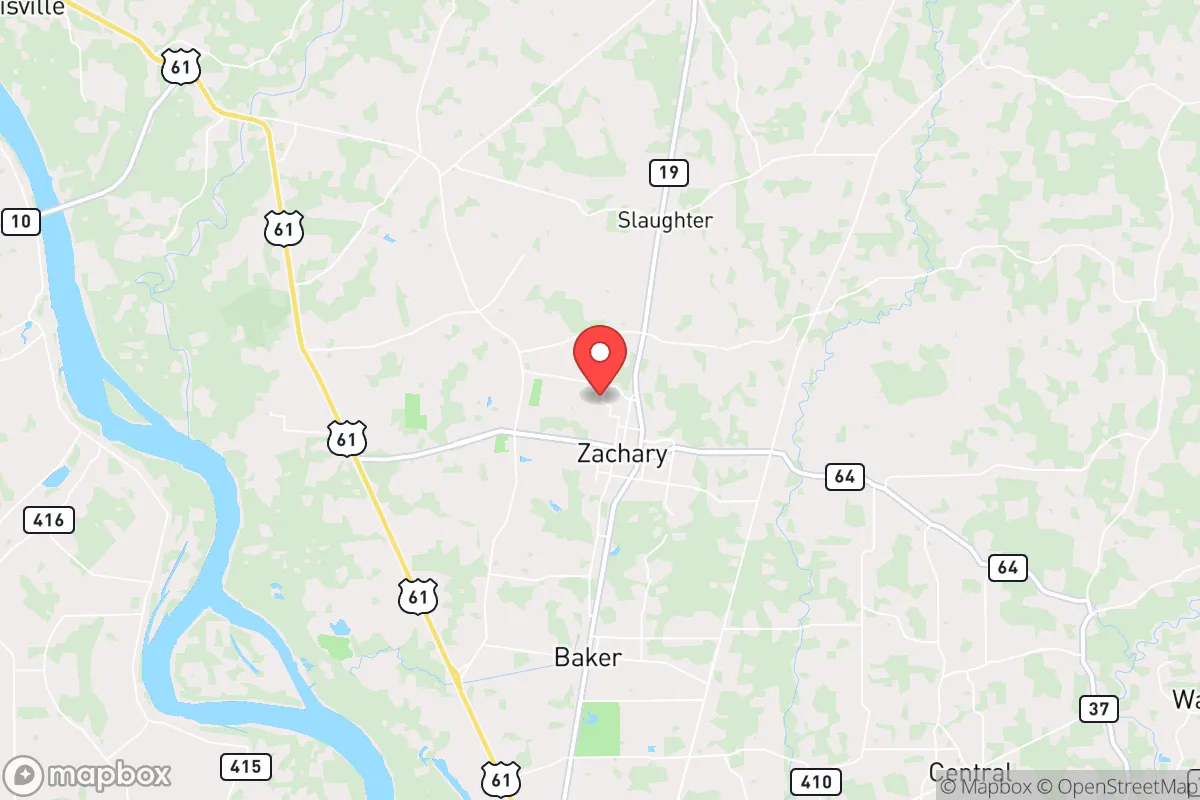
Zachary sits on the eastern edge of East Baton Rouge Parish, roughly 15 miles north of downtown Baton Rouge, but its elevation—averaging 80 to 100 feet above sea level—puts it head and shoulders above most of the surrounding region. The city is built on the Pleistocene terraces of the Mississippi River, which means it’s largely immune to the catastrophic flooding that plagues areas like Denham Springs, Watson, and much of Ascension Parish. During the Great Flood of 2016, Zachary saw minimal damage while neighboring communities were underwater for weeks. That elevation also provides a tactical advantage: the terrain is gently rolling, with wooded areas and open farmland that offer both concealment and fields of fire if you’re thinking in defensive terms. The nearby Comite River and several smaller creeks provide natural water sources, though they’re not navigable for large vessels, which limits unwanted river access. The city’s position on the northern edge of the Baton Rouge metro area means you’ve got a buffer of rural land—Baker, Slaughter, and Clinton to the north and east—that can serve as a retreat corridor if the city ever becomes untenable.
Risks, exposures, and proximity to fallout-relevant landmarks
No location is perfect, and Zachary has its share of vulnerabilities that a prepper needs to account for. The most obvious risk is its proximity to Baton Rouge’s industrial corridor along the Mississippi River, which is packed with chemical plants, refineries, and petroleum storage facilities. The ExxonMobil Baton Rouge Refinery, one of the largest in the country, is about 20 miles south—close enough that a major industrial accident or terrorist strike could send a toxic plume northward depending on wind direction. The same corridor is a prime target for civil unrest or sabotage, given its economic and strategic importance. Additionally, the Louisiana State Penitentiary at Angola is roughly 30 miles northwest; while it’s not a direct threat, a prison break or riot in a crisis scenario could push desperate individuals toward smaller towns like Zachary. On the natural disaster front, the area is still vulnerable to hurricanes—though the storm surge doesn’t reach this far inland, the wind damage and prolonged power outages from a Category 3 or higher storm are real possibilities. The 2021 Hurricane Ida knocked out power in Zachary for over a week, and the local grid is not hardened for extended outages. Finally, the city’s location along US-61 and LA-19 means it’s a natural evacuation route for Baton Rouge residents heading north, which could turn into a chokepoint during a mass exodus event.
Practical resilience for a relocator: food, water, energy, and defensibility
Zachary’s practical resilience is a mixed bag, but the positives outweigh the negatives if you’re willing to put in the work. The city has its own water supply system, drawing from the Southern Hills Aquifer, which is less prone to contamination than surface water sources. That said, the treatment plant is a single point of failure—if it goes down, you’re on your own, so a well on your property is a smart investment. The local power grid is served by Entergy, which has a reputation for slow restoration after storms; solar panels with battery storage are becoming more common in the area, and the city’s zoning is friendly to off-grid setups on larger lots. Food security is decent: the surrounding farmland produces soybeans, corn, and cattle, and there are several local farms and farmers’ markets within a 10-mile radius. The Zachary Community Farmers Market runs year-round, and you can find raw milk, pastured eggs, and grass-fed beef from producers in nearby Clinton and Jackson. For long-term storage, the area’s humidity is a challenge—mold and rust are constant enemies—so a climate-controlled root cellar or dehumidified pantry is essential. Defensibility-wise, Zachary is a classic suburban grid layout, which isn’t ideal for a siege, but the northern and eastern edges of town have larger lots, wooded buffers, and rural roads that make approach detection easier. The local sheriff’s office is well-funded and conservative-leaning, and the community has a strong “neighbor-watch” culture that discourages crime even in normal times. During the 2020 civil unrest in Baton Rouge, Zachary saw no looting or protests, largely because the town’s demographics and political leanings—overwhelmingly conservative, with a high rate of gun ownership—made it a hard target for organized disruption.
The overall strategic picture for Zachary is one of calculated trade-offs. You’re trading the absolute isolation of rural Montana or Idaho for the logistical convenience of being 20 minutes from a major city’s hospitals, hardware stores, and supply chains. That proximity is a double-edged sword: it gives you access to resources during normal times, but it also puts you on the edge of a potential urban collapse zone. The key is that Zachary sits far enough north and high enough to avoid the worst of the Gulf Coast’s natural and man-made threats, while still being close enough to the Mississippi River corridor to monitor and react to events. For a conservative family that wants to be prepared without living off-grid in a cabin, Zachary offers a realistic middle ground—a place where you can build a resilient homestead, raise kids in a safe community, and still have a fighting chance if the world goes sideways. The smart play is to buy land on the northern or eastern fringe, invest in solar and well water, and build relationships with local farmers and like-minded neighbors. That’s how you turn a good location into a secure one.

* Values derived from national, state, county, city and local statistics and may differ in a specific area. Last updated: 2026-05-01T18:28:45.000Z
Narrative content on this page is AI-generated and may contain mistakes. Verify any details that matter before acting on them.
ReloMaps may earn a commission from affiliate links at no extra cost to you.

