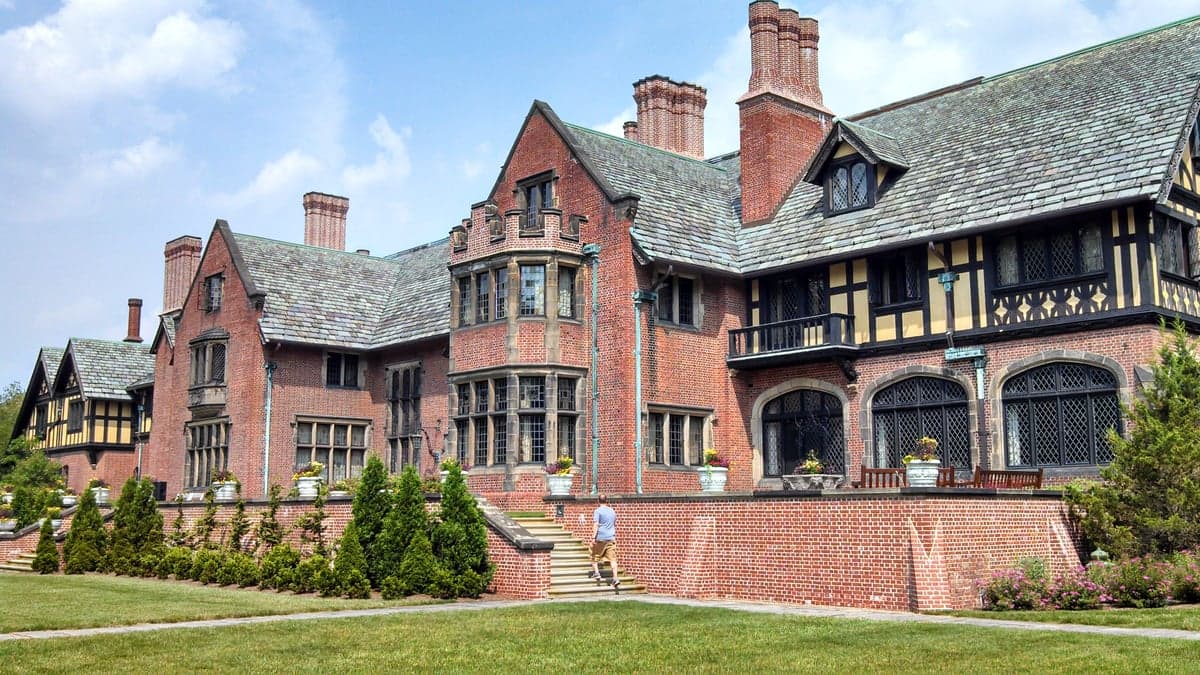
Photo: Wikipedia
Strategic Assessment of Akron, OH
Meaningful friction. Expect exposure to either population pressure, blast zones, or natural disaster risk. Consider buying a retreat property.
What does the Strategic Assessment tell us?
Our Strategic Assessment grades tactical survivability of an area. Major population centers, military targets, fallout zones, natural disasters, and border exposure all drive risk — lower exposure means a more defensible position in a crisis.
This is heavily inspired by Joel Skousen's Strategic Relocation book. Highly recommended you checkout the book ($)What does this tell us?
Our Strategic Assessment grades tactical survivability of an area. Major population centers, military targets, fallout zones, natural disasters, and border exposure all drive risk — lower exposure means a more defensible position in a crisis.
This is heavily inspired by Joel Skousen's Strategic Relocation book. Highly recommended you checkout the book ($)Strategic Pillars

Key Distances
Regional Safe Places
Below is our recommended "safe zones" in Ohio and the surrounding area based on our strategic heuristics. For most people, it's unrealistic to live in a “safe zone” full-time due to work, family or other personal reasons. They tend to be more rural. However, many of these areas are perfect for second homes and retreat properties that double as a vacation home or even a short-term rental.

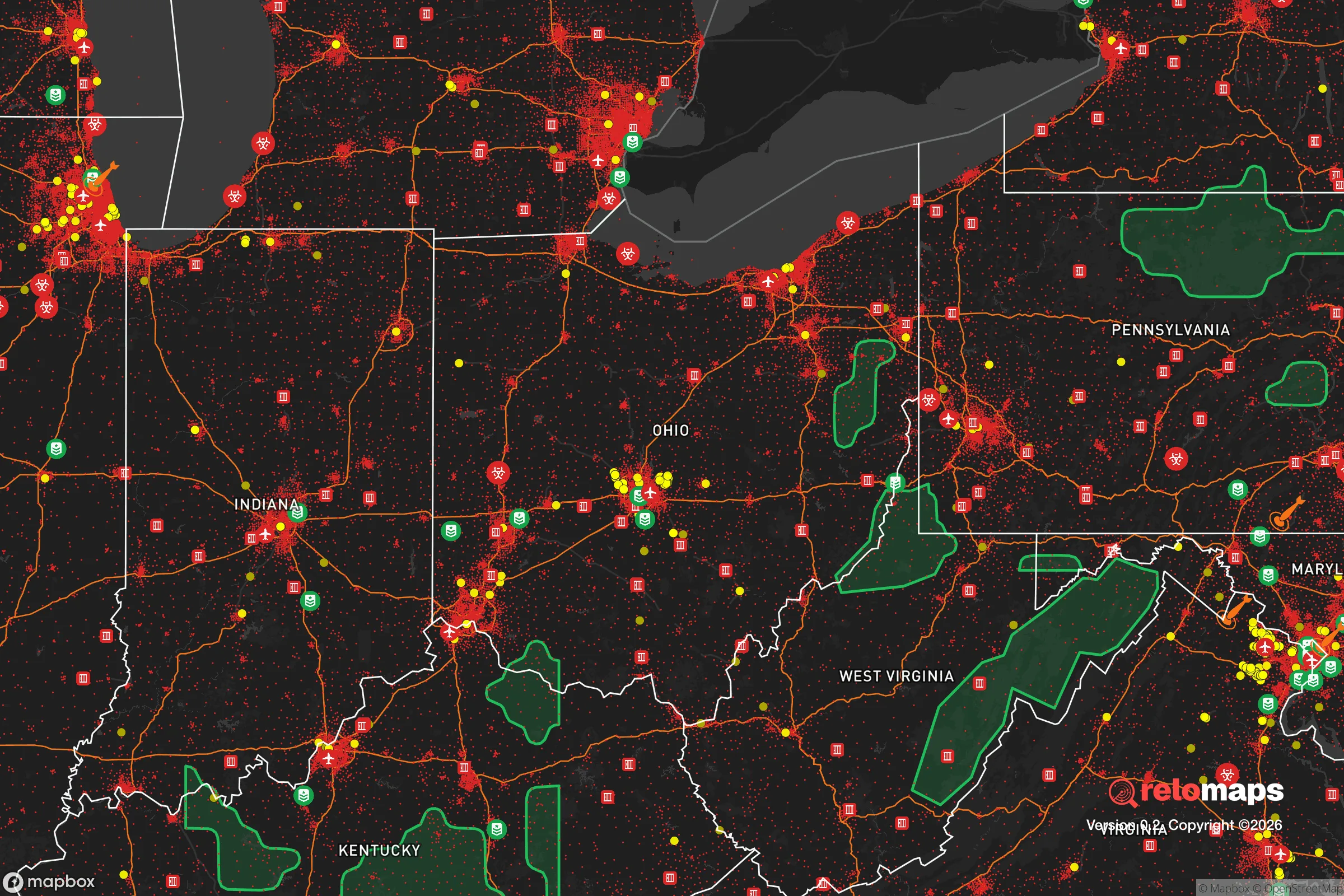


Important Note: For informational purposes only. This does not mean nothing bad ever happens in the green zones. Please use common sense. This is based on public data and modeled with AI. We tried to take a conservative approach but mistakes happen. We update this regularly as new information becomes available.
Solar Generator Recommendations
Backup power matters more here than in safer locations. We've picked three solar generators across budgets and capacity tiers — start with the budget unit if you only need a few essentials, or step up if you want to run a fridge and HVAC for days at a time.

Jackery Portable Power Station Explorer 300
Budget OptionPower on the Go: Weighing only 11 lbs, it's convenient to set up and store with book-sized foldable solar panels

BLUETTI Portable Power Station AC180
Designed for both indoor and outdoor scenarios, AC180 is highly capable as it has a robost capacity and continuous output power.

EF ECOFLOW DELTA Pro Ultra Power Station
Upgraded PickEcoFlow DELTA Pro Ultra is a whole-home energy system designed to grow with your family. Integrated with the Smart Home Panel 2, it scales to meet your evolving energy needs — keeping your home powered, intelligent, and secure through every stage of life.
We earn a commission, at no additional cost to you.
Strategic Assessment Analysis
Akron, Ohio, sits in a position that demands a hard-nosed look from anyone serious about strategic relocation. Its location in the Great Lakes region offers genuine advantages for resilience—abundant fresh water, a temperate climate that avoids the worst of extreme weather, and a population that has already weathered decades of economic restructuring. However, the city’s proximity to major industrial and population centers, including Cleveland and the Rust Belt corridor, introduces significant risks that a prepper-minded relocator cannot ignore. This assessment weighs Akron’s natural assets against its exposure to fallout-relevant targets, giving you the unvarnished picture of whether this city works for your long-term security plan.
Geographic position and natural advantages for long-term survival
Akron’s primary strategic asset is its access to the Great Lakes watershed, specifically the Cuyahoga River and the Lake Erie basin. This means a virtually inexhaustible supply of fresh water, a resource that will only grow more valuable in any prolonged disruption scenario. The city sits on the glaciated Allegheny Plateau, which provides rolling terrain and decent soil for small-scale agriculture, though the growing season is short—roughly 150 days. The surrounding Summit County and adjacent Portage and Medina counties offer a mix of suburban and rural land where a relocator could secure acreage for food production without being completely isolated from supply chains. The region’s elevation, around 1,000 feet above sea level, keeps it out of floodplains for the most part, and the climate is moderate enough that you won’t face the brutal heat waves of the South or the wildfire risks of the West. For a survivalist, the combination of water, arable land, and moderate weather is a solid foundation—but it’s only half the picture.
Risks, exposures, and proximity to fallout-relevant landmarks
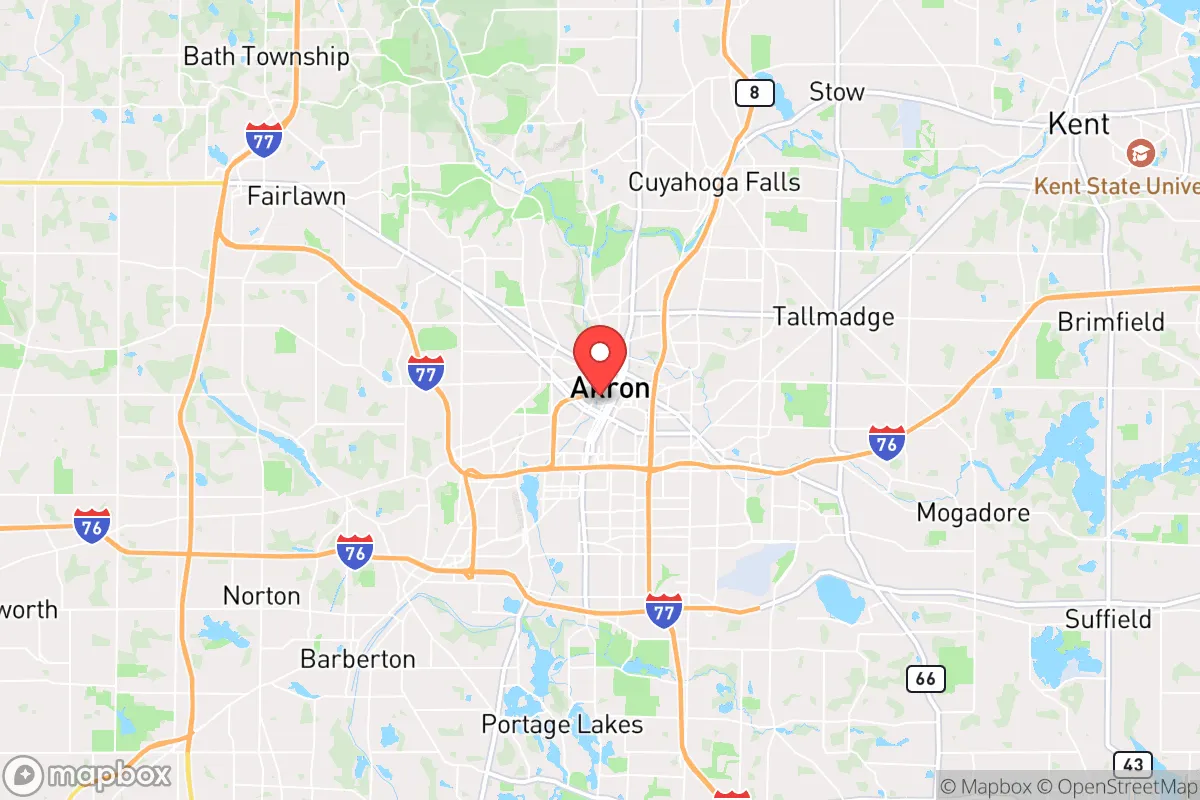
Here’s where Akron’s strategic calculus gets complicated. The city is roughly 40 miles south of Cleveland, a major population center with a large port, multiple hospitals, and critical infrastructure that would be a prime target in any large-scale conflict or civil unrest scenario. Cleveland’s proximity means that any event—whether a conventional attack, a dirty bomb, or a cascading grid failure—would send shockwaves, refugees, and potential fallout into Akron’s direction. Additionally, Akron itself hosts the Goodyear Tire & Rubber Company headquarters and several chemical and polymer manufacturing facilities along the Cuyahoga River. These industrial sites are not just economic engines; they are potential hazard zones in a disaster. A fire, explosion, or intentional sabotage at a chemical plant could render large swaths of the city uninhabitable for weeks. The Ohio Turnpike (I-80) and I-77 run through the area, making Akron a chokepoint for evacuation and supply routes—but also a funnel for looters and desperate populations fleeing larger cities. For a relocator, the risk profile is moderate-to-high: you are close enough to major targets to feel the effects, but far enough that you might have a window to react if you have a plan.
Practical resilience for a relocator: food, water, energy, and defensibility
If you’re looking to set up a resilient homestead or bug-out location near Akron, the practical considerations break down into four categories. Water is the strongest suit: the Cuyahoga River and numerous smaller streams and reservoirs (like the Portage Lakes) provide surface water, and the underlying aquifer is reliable for well drilling in most of Summit County. Food is more challenging. The local growing season is short, and the soil in the immediate Akron area is often clay-heavy and acidic, requiring amendment for serious gardening. However, the surrounding counties—especially Wayne and Holmes to the south—are Amish country with established agricultural infrastructure. You can source seeds, livestock, and knowledge from these communities, which are also culturally aligned with self-reliance. Energy is a mixed bag. The grid is aging but stable under normal conditions; for off-grid capability, solar is viable but less efficient than in sunnier regions. Wood heating is practical given the forested landscape, but you’ll need to secure a supply chain for firewood or own timberland. Defensibility is the weak point. Akron’s terrain is not mountainous; it’s rolling hills and valleys with plenty of cover, but no natural chokepoints or high ground that would make a rural property easy to defend. The population density in the city proper is around 2,500 people per square mile, which is too high for any kind of stand-alone security. Your best bet is to buy land at least 15–20 miles outside the city limits, in a rural township like Bath, Richfield, or Copley, where you can have acreage, a well, and a buffer from the urban core.
Overall strategic picture: a calculated trade-off
Akron offers a genuine strategic option for the conservative prepper who wants to stay within driving distance of Great Lakes water and industrial supply chains but is willing to accept moderate risk from nearby urban targets. The city’s resilience is not in its own infrastructure—which is aging and vulnerable—but in the surrounding region’s natural resources and the cultural presence of self-sufficient communities like the Amish. If you are a single individual or a family looking to relocate, the smart play is not to move into Akron itself, but to secure property in the outer ring of Summit or Medina counties, where you can tap into the water and agricultural advantages while maintaining a low profile. The downsides are real: you are within fallout range of Cleveland and its critical infrastructure, and the industrial sites in Akron itself are a latent hazard. But compared to living in a coastal megacity or a tornado-prone plains state, this area offers a balanced risk profile that a serious strategist can work with. Just don’t expect to be completely safe—no place in the lower 48 is. Akron is a solid B-tier relocation target for the prepared, not a fortress, but a place where good planning and a few acres of land can give you a fighting chance.

* Values derived from national, state, county, city and local statistics and may differ in a specific area. Last updated: 2026-04-21T19:21:18.000Z
Narrative content on this page is AI-generated and may contain mistakes. Verify any details that matter before acting on them.
ReloMaps may earn a commission from affiliate links at no extra cost to you.

