Photo: Wikipedia
Political ClimatePolitical Climate in Baldwin County
Showing state-level results — no local-only data available.
Local Political AnalysisPolitical Analysis of Baldwin County
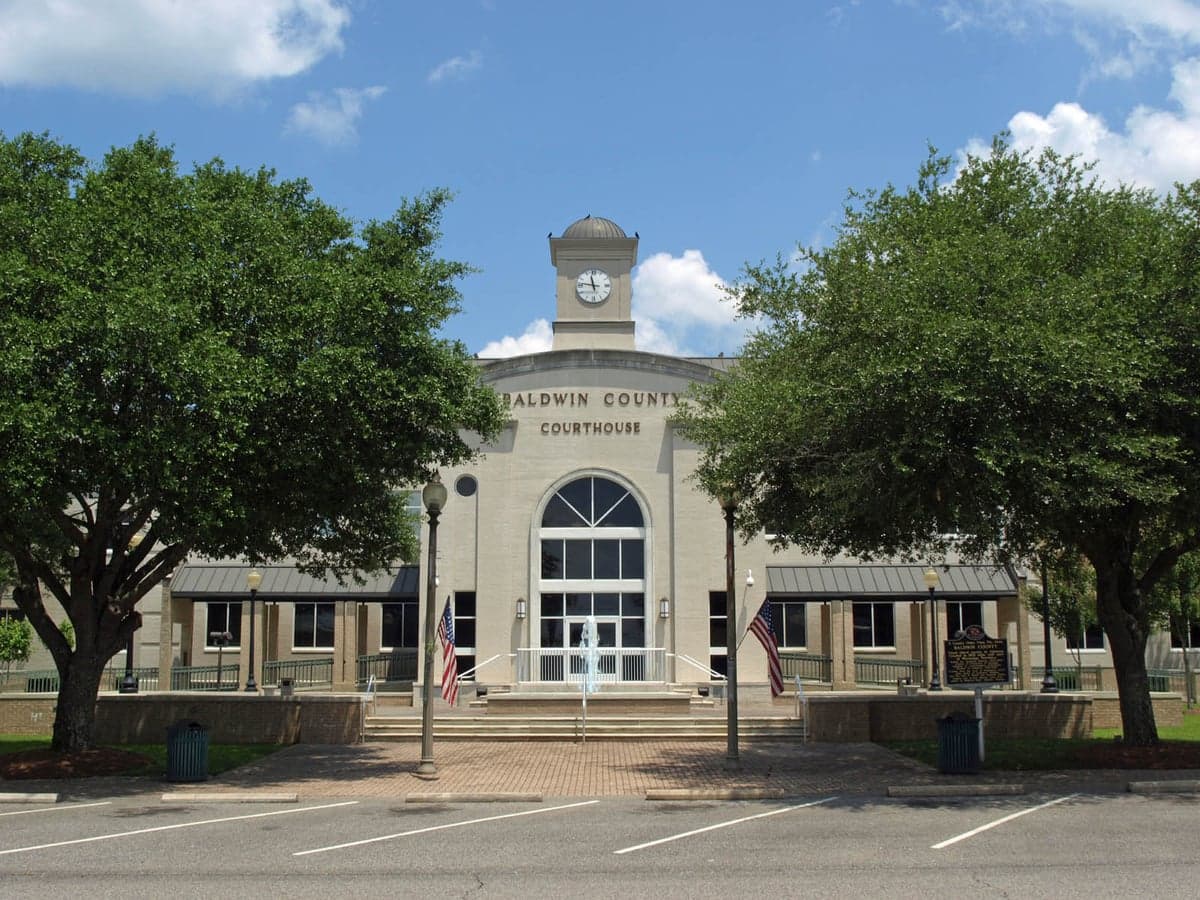
Baldwin County is one of the most reliably conservative areas in Alabama, and honestly, it’s been that way for as long as I can remember. The whole county went for Trump by a massive margin in 2024, and the local GOP holds nearly every elected office from the courthouse to the school board. But here’s the thing—it’s not a monolith. You’ve got a real split between the old-guard rural towns and the fast-growing coastal communities, and that’s where the political story gets interesting. The surrounding state of Alabama carries a Cook PVI of R+14, but Baldwin County itself is even redder, probably closer to R+20 or more when you factor in the rural precincts.
How it compares
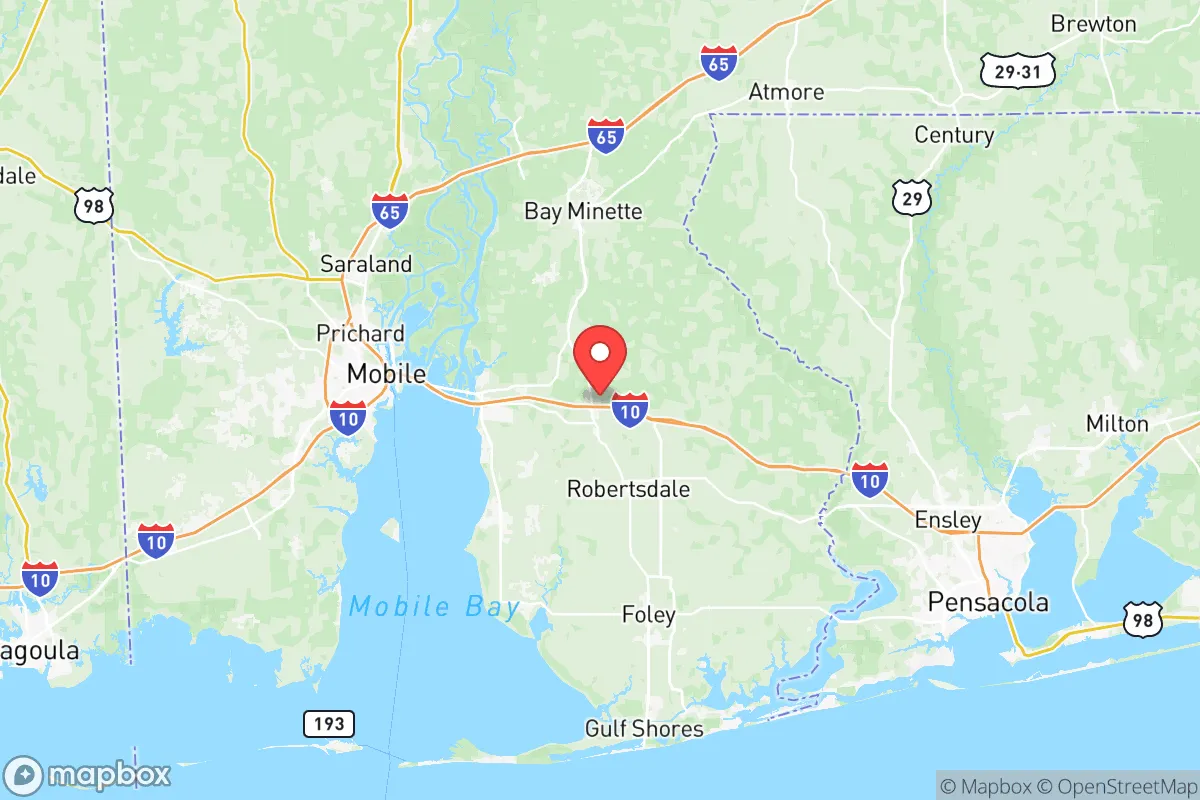
Compared to the rest of Alabama, Baldwin County is a conservative stronghold that’s actually getting more Republican, not less. While places like Jefferson County (Birmingham) or Montgomery County are trending purple or blue, Baldwin has held steady or shifted right. The rural parts—think Stockton, Stapleton, and the area around Bay Minette—are deep red, with precincts that routinely vote 80%+ Republican. The swing precincts, if you can call them that, are in the beach towns like Gulf Shores and Orange Beach, where tourism and second-home owners bring in a few more moderates. But even there, the tilt is still solidly conservative. The only real blue dots are in Fairhope’s downtown precinct and a pocket near Daphne’s Eastern Shore Centre, where you’ll see a handful of Democrats and independents. That’s a recent shift—Fairhope used to be reliably red, but as it’s grown, you’ve seen a little more progressive influence creeping in, which is concerning if you value limited government and personal freedoms.
What this means for residents
For folks living here, the conservative majority means lower taxes, fewer regulations, and a general hands-off approach from local government. The county commission and school board have resisted a lot of the overreach you see in other parts of the country—no mask mandates that lasted forever, no heavy-handed business closures during the pandemic, and a real focus on property rights. That’s the kind of thing that keeps Baldwin County attractive for families and retirees who want to be left alone. But you can see the pressure building. As more people move in from California, Illinois, and other high-tax states, there’s a risk that some of those progressive ideas come with them. The school board has already had to push back on a few curriculum battles, and there’s been chatter about zoning changes in Spanish Fort and Loxley that could lead to more government control over development. So far, the old guard has held the line, but it’s something to keep an eye on.
Culturally, Baldwin County is still very much rooted in traditional Southern values—church, family, and community. You won’t find the kind of government overreach you’d see in a place like Birmingham or Montgomery. The local sheriff’s office is pro-Second Amendment, the tax burden is low, and there’s a general expectation that the government stays out of your business. That said, the rapid growth is changing things. The new subdivisions popping up around Robertsdale and Summerdale are bringing in folks who don’t always share those values. If you’re looking for a place where personal freedom is still respected and the government isn’t trying to micromanage your life, Baldwin County is one of the last strongholds in Alabama. But you’ve got to be aware that the political winds are shifting, and it’s going to take active involvement from residents to keep it that way.

State Political ClimatePolitical Climate in Alabama
State Political AnalysisPolitical Environment in the State
Alabama is a deeply conservative state, with a Cook PVI of R+14, meaning it votes about 14 points more Republican than the national average in presidential elections. The dominant coalition is a blend of traditional Southern Democrats who shifted right, evangelical Christians, and rural and suburban voters who prioritize limited government and gun rights. Over the last 10-20 years, the state has moved steadily redder, with Democrats losing their last footholds in state-wide offices and the legislature becoming overwhelmingly Republican, though some local pockets of blue remain in the Black Belt and a few urban centers.
Urban vs. rural divide
The political map of Alabama is starkly divided. The rural areas—places like Cullman, Gadsden, and the Wiregrass region around Dothan—are deeply Republican, often voting 70-80% for GOP candidates. The major metros tell a more nuanced story. Birmingham’s Jefferson County is a Democratic stronghold, driven by the city’s large Black population and progressive-leaning white professionals, but the surrounding suburbs like Hoover and Vestavia Hills are reliably Republican. Montgomery and the Black Belt counties (like Selma’s Dallas County) vote heavily Democratic due to African American majorities. Huntsville is the most interesting case: a fast-growing, high-education hub driven by aerospace and defense, it leans Republican but with a libertarian streak—less culturally conservative than the rest of the state, more focused on economic freedom and tech policy. Mobile and Baldwin County (including Fairhope) are solidly red, with Baldwin being one of the fastest-growing and most conservative counties in the state.
Policy environment
Alabama’s policy environment is among the most conservative in the nation. The state has no state-level property tax on vehicles, and property taxes overall are the lowest in the country—a major draw for families and retirees. Income tax is a flat 5%, and the state has a regressive sales tax that can hit 10% or more in some cities. Education policy is a flashpoint: the state has a robust school choice movement, with the Alabama Accountability Act providing tax credits for private school tuition, and the new CHOOSE Act (2024) expanding Education Savings Accounts (ESAs) for families. However, public schools in rural areas and the Black Belt remain underfunded. Healthcare is limited by the state’s refusal to expand Medicaid, which keeps costs low for taxpayers but leaves many rural hospitals struggling. Election laws are strict: voter ID is required, and the state has closed primaries, which some see as protecting election integrity but others as limiting participation. The legislature has also passed laws restricting ballot harvesting and limiting absentee voting, which conservatives generally view as necessary safeguards.
Trajectory & freedom
Alabama is moving in a direction that many conservatives see as expanding freedom, particularly in the areas of gun rights, parental rights, and religious liberty. The state passed constitutional carry (permitless carry) in 2022, allowing law-abiding citizens to carry a concealed firearm without a permit. The Alabama Parental Rights Act (2022) gives parents explicit authority over their children’s education and medical decisions, a direct response to COVID-era school mandates and transgender policies. In 2023, the state passed a law banning gender-affirming care for minors, which conservatives view as protecting children from irreversible procedures. On the other hand, the state has seen some concerning expansions of government power: the 2023 “Don’t Say Gay” style law (the Alabama School Choice and Student Safety Act) restricts classroom discussion of sexual orientation and gender identity, which some see as protecting parental rights but others as government overreach into curriculum. Property rights remain strong, with no state-level rent control and limited zoning in most rural areas. However, the state’s heavy reliance on sales tax means that low-income families bear a disproportionate tax burden, which is a trade-off for the low property taxes.
Civil unrest & political movements
Alabama has not seen the level of civil unrest seen in other states, but there have been notable flashpoints. The 2020 George Floyd protests in Birmingham and Montgomery were relatively small and peaceful compared to other cities, though there were some property damage incidents. The state has a strong pro-life movement, with annual rallies at the State Capitol and the 2019 passage of the near-total abortion ban (the Human Life Protection Act), which was a direct challenge to Roe v. Wade and remains a point of pride for conservatives. Immigration politics are less heated than in border states, but there is a vocal minority pushing for stricter enforcement, particularly in rural areas where immigrant labor is common in agriculture. There is no sanctuary city policy anywhere in Alabama; in fact, the state passed a law in 2011 (HB 56) that was one of the toughest anti-illegal immigration laws in the country, though parts were later struck down. Election integrity remains a hot topic: the 2022 election saw no major controversies, but the legislature has continued to tighten voting laws, citing concerns about federal overreach. The “Stop the Steal” movement had some presence in 2020, but it was less organized than in states like Georgia or Arizona.
Projection
Over the next 5-10 years, Alabama is likely to become even more conservative, but with a growing libertarian-leaning wing driven by in-migration to Huntsville and Baldwin County. The state’s population is growing slowly, but the growth is concentrated in these areas, which are attracting tech workers, retirees, and families from blue states seeking lower taxes and more freedom. This influx could shift the Republican primary electorate toward a more pro-business, less socially conservative stance, but the overall partisan lean will remain deeply red. The Black Belt will continue to vote Democratic, but its population is declining, reducing its electoral influence. The biggest wild card is education: if the ESA program succeeds, it could accelerate the decline of public schools, leading to a more fragmented society. On the positive side, the state’s low regulation and low taxes are likely to attract more manufacturing and data center investment, particularly in the Birmingham-Huntsville corridor. A new resident moving in now should expect to find a state that is stable, safe, and increasingly prosperous, but with a growing divide between the booming suburbs and the struggling rural areas.
For a new resident, the bottom line is this: Alabama offers a high degree of personal freedom, low taxes, and a culture that respects traditional values and gun rights. The trade-offs are a weaker public education system, limited healthcare access in rural areas, and a political environment that can feel insular to outsiders. If you’re looking for a place where government stays out of your life and you can raise a family with minimal interference, Alabama is a strong choice—just be prepared for the heat, the bugs, and the fact that everyone will ask you what church you go to.
* Values derived from national, state, county, city and local statistics and may differ in a specific area. Last updated: 2026-05-09T19:29:23.000Z
Narrative content on this page is AI-generated and may contain mistakes. Verify any details that matter before acting on them.
ReloMaps may earn a commission from affiliate links at no extra cost to you.

