
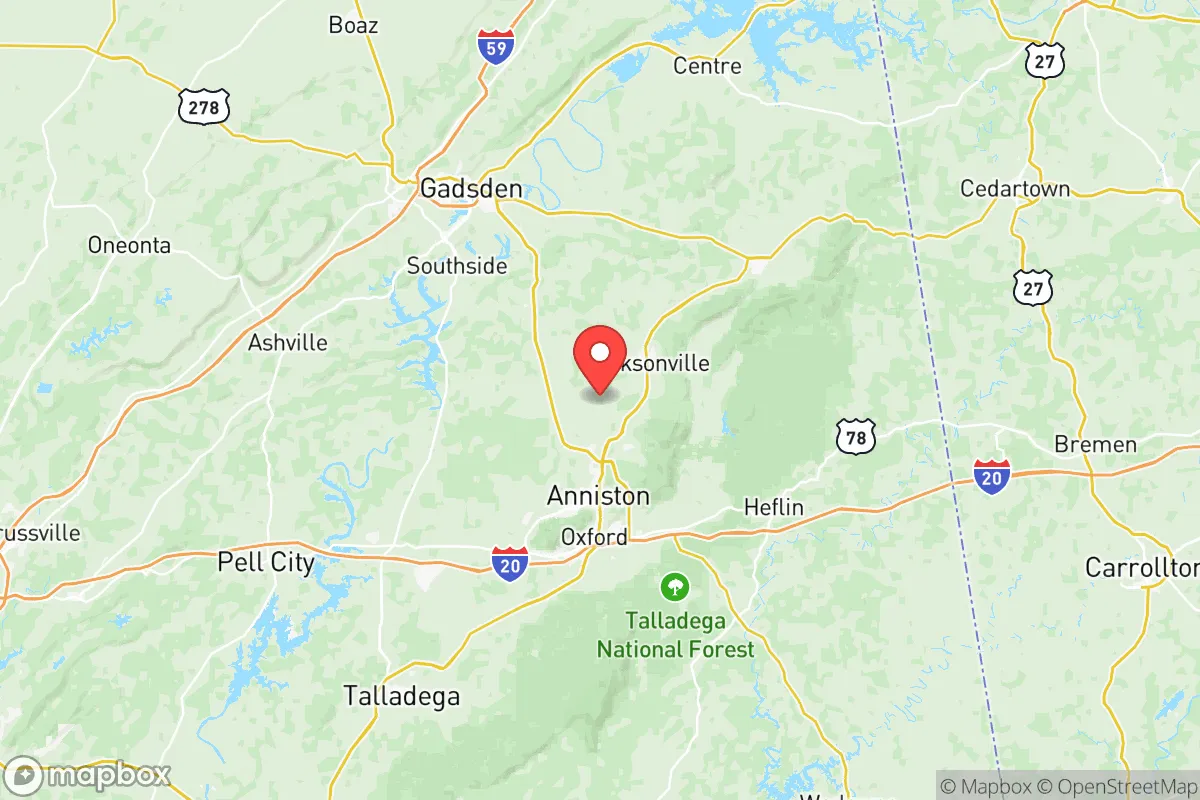
Photo: Wikipedia
Quality of Life in Calhoun County
A livable area that tracks near national norms for affordability, walkability, and neighborhood health.
What does Quality of Life tell us?
Quality of Life measures an area by evaluating factors like cost of living, nearby amenities, country club access, airport proximity, socioeconomic signals and neighborhood character. For large states, this is a general average — quality of life can vary dramatically between metro areas, suburbs, and rural communities within the same state.
What does this tell us?
Quality of Life measures an area by evaluating factors like cost of living, nearby amenities, country club access, airport proximity, socioeconomic signals and neighborhood character. For large states, this is a general average — quality of life can vary dramatically between metro areas, suburbs, and rural communities within the same state.
Cost of Living
37% below national average
131%
The Real Cost of Living in Calhoun County for 2026
| Tier | Individual | Family (4) |
|---|---|---|
| Survival | $13k | $24k |
| Comfortable | $29k | $43k |
| Luxury | $96k+ | $148k+ |
| Elite (Top 5%) | $113k+ | $174k+ |
Quality-of-Life Analysis
Calhoun County, Alabama, offers a spectrum of living environments that range from the urbanized hub of Anniston to the quiet, unincorporated crossroads of communities like Choccolocco and White Plains, drawing everyone from defense contractors and healthcare professionals to retirees seeking low taxes and remote workers chasing affordable land. The county’s character shifts noticeably as you move from the commercial corridors of the Anniston-Oxford metro area into the piney woods and farmland of its eastern and northern reaches. People choose Calhoun County not for a single lifestyle, but for the ability to pick a specific spot along that continuum — walkable historic districts, suburban subdivisions, or acreage with no neighbors in sight.
Largest town(s) & population centers
The dominant population center is Anniston (pop. ~21,000), the county seat and historic industrial anchor, home to the Anniston Army Depot and the sprawling Fort McClellan redevelopment zone. Daily life here is defined by a mix of government employment, healthcare at Regional Medical Center, and a revitalizing downtown with craft breweries and the Berman Museum. Adjacent Oxford (pop. ~22,000) is the county’s retail and commercial powerhouse, anchored by the Quintard Mall corridor and a dense strip of big-box stores and chain restaurants that serve the entire region. Jacksonville (pop. ~14,000), home to Jacksonville State University, provides a distinct college-town atmosphere with rental-heavy neighborhoods, a walkable town square, and a younger demographic. These three towns form the county’s employment and amenity core, with commute times averaging just under 25 minutes — the shortest in the region — making it feasible to live in one and work in another.
Smaller towns & rural pockets
Beyond the main trio, Calhoun County contains a string of smaller incorporated towns and unincorporated communities that offer a markedly quieter pace. Piedmont (pop. ~4,600) in the northeast corner feels like a self-contained small town with its own school system and a historic railroad depot, but residents often commute 20–30 minutes to Anniston for shopping or medical care. Weaver (pop. ~3,100) is a bedroom community just north of Anniston, offering small-lot subdivisions and a strong sense of local identity. Ohatchee (pop. ~1,200) sits along the Coosa River in the south, attracting anglers and boaters with its river access and rural feel. Further out, unincorporated Choccolocco and White Plains are true rural pockets where homes sit on one-to-five-acre lots, often with no municipal services beyond volunteer fire departments. These areas appeal to those who want land, privacy, and a 15-minute drive to the nearest grocery store.
Cost & lifestyle range
The county’s overall cost of living index of 63 (well below the US average of 100) masks significant internal variation. At the higher end, newer subdivisions in Oxford’s Golden Springs area and lakefront properties on Lake Logan Martin (partially in the county’s southeast) push median home values toward $250,000–$350,000, still affordable by national standards but double the countywide median of $149,500. At the lower end, older neighborhoods in central Anniston and rural mobile homes in areas like Eastaboga or Bynum can be found for under $100,000, with median rent countywide at just $804. The lifestyle trade-off is clear: Oxford and Jacksonville offer the most amenities — restaurants, gyms, entertainment — while the rural pockets offer the lowest housing costs and property taxes but require longer drives for everything. The average commute of 24.7 minutes is notably short for a county with this much rural territory, meaning even residents in the far corners can reach Anniston or Oxford in under half an hour.
Calhoun County works best for people who want genuine choice in how they live — the retiree who buys a $90,000 home in Weaver and walks to the local diner, the Jacksonville State professor renting a $750 apartment near campus, or the remote worker who puts a $200,000 modular home on five acres in Choccolocco. The county’s low cost of entry and short commutes make it especially attractive to first-time homebuyers and families priced out of Birmingham’s suburbs, while the presence of the Army depot and the university provides a stable economic floor that keeps the area from feeling hollowed out. It is not a place for nightlife or high-end dining, but for those who prioritize affordability, space, and the ability to choose between town and country, Calhoun County delivers a rare range of options within a single, compact geography.

Crime in Calhoun County
Crime rates similar to the national median for U.S. locations.
Violent CrimeViolent Crime Analysis
Property CrimeProperty Crime Analysis
Crime Analysis
Calhoun County, Alabama, presents a mixed safety picture. The county’s violent crime rate of 350.2 per 100,000 residents and property crime rate of 1,490.1 per 100,000 both exceed national averages, placing it among the more dangerous areas in the state. However, safety varies significantly across the county, with the city of Anniston driving much of the crime while smaller towns like Oxford and Jacksonville report notably lower incident rates.
Crime in context
Calhoun County’s violent crime rate is roughly 25% higher than the national average and about 15% above the Alabama state average. The property crime rate is similarly elevated, approximately 30% above the U.S. median. These figures place Calhoun County in the bottom third of Alabama counties for public safety. The county’s largest city, Anniston, accounts for a disproportionate share of these crimes. Anniston’s violent crime rate exceeds 600 per 100,000, driven by aggravated assaults and robberies, while property crime in the city runs near 2,200 per 100,000. By contrast, the town of Jacksonville, home to Jacksonville State University, reports violent crime rates around 200 per 100,000 — roughly 40% lower than the county average. Oxford, the second-largest city, falls in between, with property crime rates closer to the county mean but violent crime notably lower than Anniston’s.
What residents experience
For residents, the most common safety concerns are property crimes — burglary, larceny-theft, and motor vehicle theft — which make up over 80% of reported incidents in the county. Anniston residents face the highest risk, particularly in the downtown and western neighborhoods, where property crime rates are triple those of outlying areas. In contrast, the unincorporated communities of Alexandria and Ohatchee report property crime rates below 800 per 100,000, making them the safest options within the county. Violent crime, while less frequent, is concentrated in Anniston’s central corridor and in specific pockets of Weaver. The 7th Judicial Circuit, which covers Calhoun County, has seen a shift toward more progressive prosecution policies in recent years. District Attorney Brian McVeigh, elected in 2020, has emphasized diversion programs and reduced incarceration for nonviolent offenders. While this approach aims to reduce recidivism, critics argue it has contributed to a 30% increase in property crime since 2021 and a perception among repeat offenders that consequences are minimal. Residents in Anniston report feeling less secure than those in Oxford, where the city maintains its own police force with a more traditional enforcement posture.
Neighborhood-level variation is stark. The safest areas are the southern and eastern parts of the county — Oxford, Alexandria, and Ohatchee — where violent crime is rare and property crime is manageable. The most dangerous are central and western Anniston, particularly around the Quintard Avenue corridor and the McClellan area. Weaver and Piedmont fall in the middle, with property crime rates near the county average but violent crime lower than Anniston’s. For families considering relocation, Oxford and Jacksonville offer the best balance of safety and amenities, while Anniston’s core neighborhoods should be approached with caution. The county’s overall crime trajectory depends heavily on whether the current progressive justice policies continue or are reversed in future elections.
* Values derived from national, state, county, city and local statistics and may differ in a specific area. Last updated: 2026-10-14T23:47:16.000Z
Narrative content on this page is AI-generated and may contain mistakes. Verify any details that matter before acting on them.
ReloMaps may earn a commission from affiliate links at no extra cost to you.

