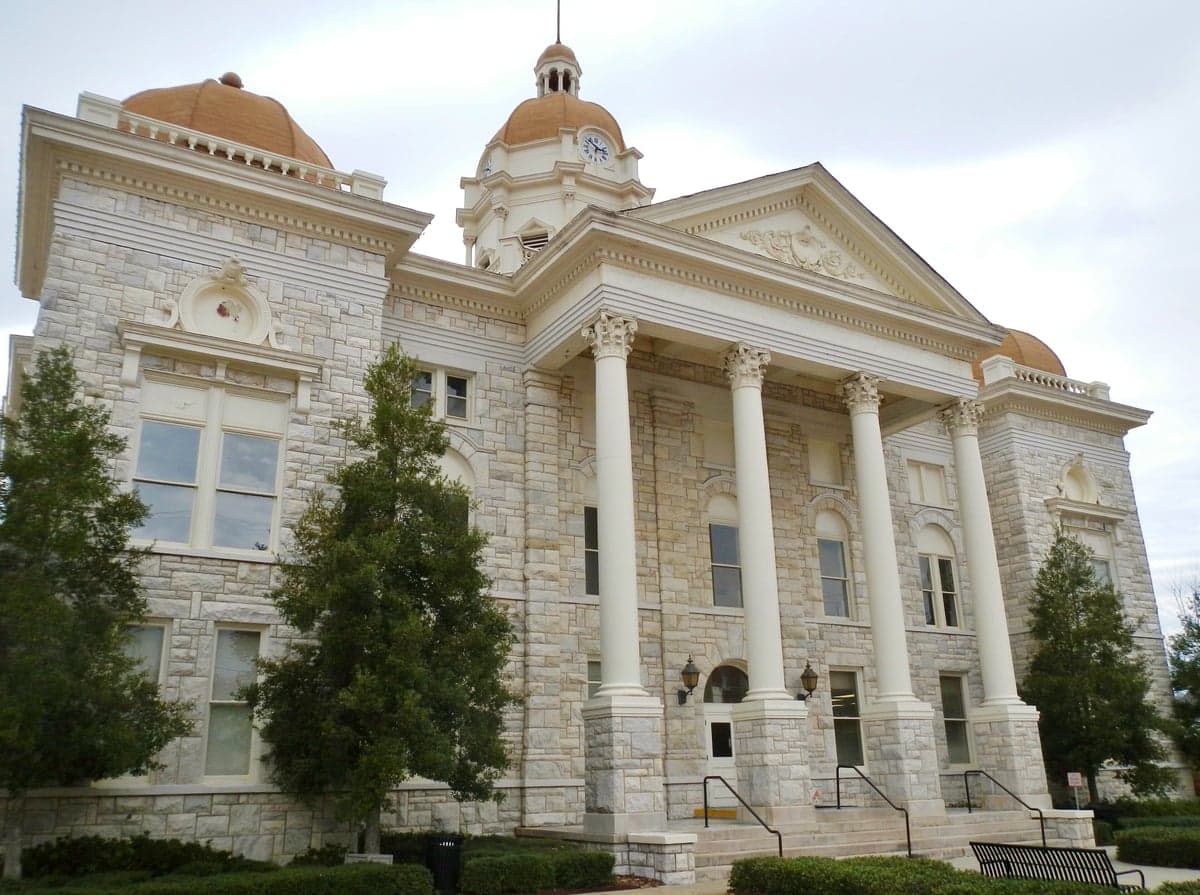
Photo: Wikipedia
Demographics of Shelby County
Affluence Level in Shelby County
An upper-middle-class area. Household wealth, education levels, and homeownership run ahead of national benchmarks.
People of Shelby County
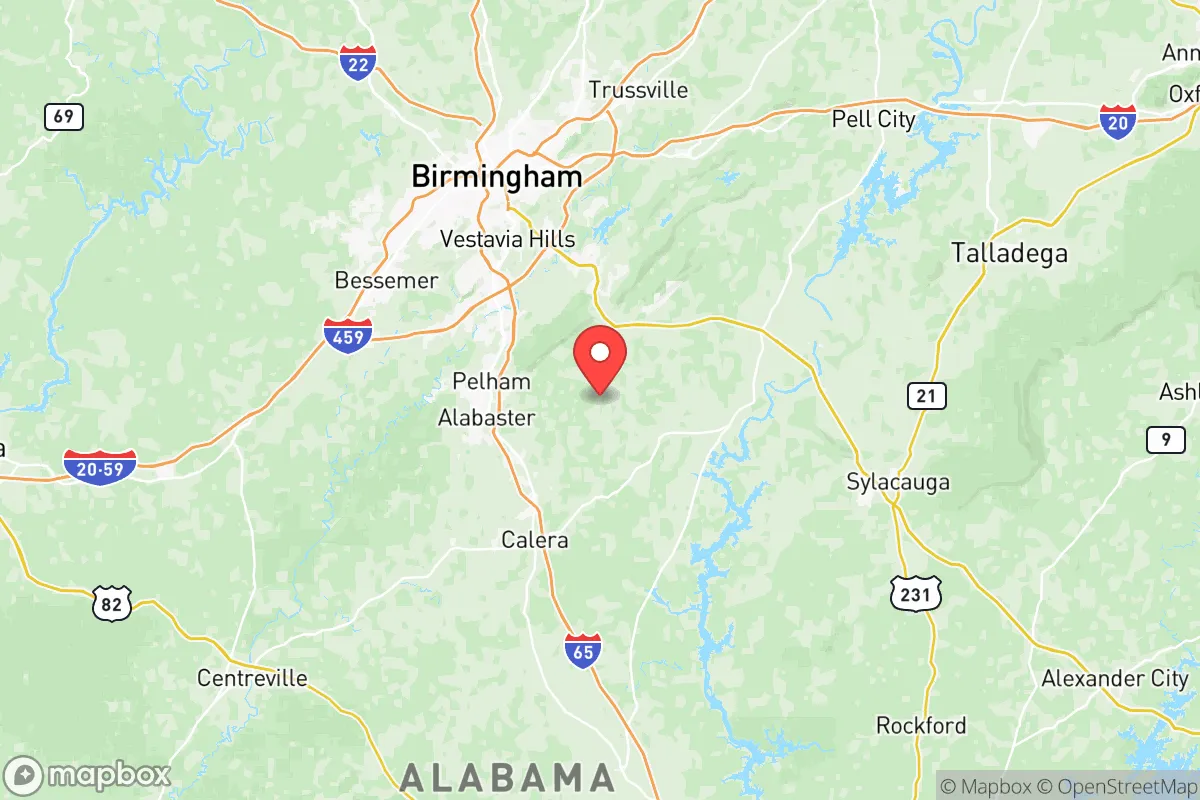
Shelby County, Alabama, is a predominantly white, college-educated, and politically conservative suburban stronghold where 74% of the 226,955 residents identify as white, 13.1% as Black, and 7.4% as Hispanic. Its population is characterized by high household incomes, low crime rates relative to neighboring Jefferson County, and a strong sense of place rooted in its rural past but defined by its rapid, planned suburban growth. The county’s identity is less about a single historic town and more about a network of affluent, family-oriented communities like Hoover, Alabaster, and Chelsea, which have absorbed waves of domestic migrants from Birmingham and other parts of the South.
Settlement & growth (pre-1960)
Before American settlement, the area now known as Shelby County was part of the ancestral homeland of the Muscogee (Creek) people, who lived in scattered villages along the Coosa and Cahaba rivers. The region was sparsely populated by European standards, with the Creek Confederacy controlling the land through a system of towns and hunting grounds. After the Creek War (1813–1814) and the subsequent Treaty of Fort Jackson, the Creeks ceded vast tracts of land, including most of present-day Shelby County, to the United States. The first white settlers—primarily Scots-Irish and English yeoman farmers—arrived in the 1820s, drawn by cheap, fertile land in the Cahaba Valley. They established small, self-sufficient farms and built the county’s earliest settlements: Columbiana (the county seat, founded 1826), Montevallo (a center for education and commerce), and Wilsonville (a river town on the Coosa).
Through the antebellum period, Shelby County’s economy was a mix of subsistence agriculture and limited cotton production, worked by a small population of enslaved Black people. By 1860, enslaved individuals made up about 30% of the county’s population, a lower proportion than in the Black Belt counties to the south. The Civil War and Reconstruction devastated the local economy, but the county slowly recovered through timber and small-scale mining. The late 19th century brought the Birmingham Industrial Boom, which pulled many white and Black workers into the northern edge of the county, particularly into what is now Hoover and Helena. These areas were then rural crossroads, but the proximity to Birmingham’s steel mills and coal mines created a steady stream of domestic migrants—mostly from other parts of Alabama and the Deep South—seeking industrial work. The county’s population remained small and predominantly rural through the 1950s, with fewer than 30,000 residents as late as 1960.
Modern era (post-1965)
The 1965 Hart-Cellar Act had a minimal direct impact on Shelby County, as the area never became a primary destination for post-1965 immigrants. The county’s foreign-born population remains low at just 2.9%, far below the national average. Instead, the defining demographic force of the modern era has been domestic suburbanization. Beginning in the 1970s and accelerating through the 1990s, white, middle-class families fled Birmingham city limits—driven by school desegregation orders, rising crime, and urban decay—and poured into Shelby County’s unincorporated areas and small towns. This “white flight” transformed the county from a sleepy rural outpost into one of Alabama’s fastest-growing and wealthiest counties.
The most dramatic growth occurred in Hoover, which incorporated in 1967 and exploded from a few hundred residents to over 84,000 by 2020. Hoover’s development was anchored by the Riverchase master-planned community and the Riverchase Galleria mall, which became a regional retail and employment hub. Alabaster and Pelham followed a similar trajectory, annexing land along the Interstate 65 corridor and building sprawling subdivisions, big-box retail, and new schools. Chelsea, once a tiny farming community, became a bedroom suburb for Birmingham professionals in the 2000s, with its population surging from under 2,000 in 2000 to over 14,000 by 2020. Calera, at the county’s southern edge, has also grown rapidly, attracting both commuters and industrial employers.
The county’s Black population, which was historically concentrated in rural areas and small towns like Vincent and Harpersville, has grown modestly to 13.1%, but remains lower than the state average. Most Black residents live in the older, less affluent parts of the county or in the southern rural communities. The Hispanic population (7.4%) has grown steadily since the 1990s, driven by construction, landscaping, and poultry processing jobs. Hispanic families are most concentrated in Pelham and Alabaster, where a small but visible commercial corridor of Mexican grocery stores and taquerias has emerged. East/Southeast Asian residents (1.4%) and Indian-subcontinent residents (0.6%) are a small but growing presence, largely professionals working in engineering, healthcare, and technology at Birmingham-area employers like UAB and Honda Manufacturing of Alabama in nearby Lincoln.
The future
Shelby County’s population is projected to continue growing, driven by continued domestic in-migration from other parts of Alabama and from out-of-state families seeking good schools, low taxes, and a conservative political environment. The county is not tribalizing into distinct ethnic enclaves; rather, it is homogenizing into a broadly white, upper-middle-class suburban landscape, with Hispanic and Asian populations slowly assimilating into the dominant culture. The foreign-born population will likely remain low, as the county lacks the dense urban job networks and ethnic infrastructure that attract large immigrant flows. The Black population share is expected to remain stable or decline slightly, as most Black in-migration in the Birmingham region is directed toward Jefferson County or the city of Birmingham itself.
The biggest demographic wildcard is the aging of the existing population. Many of the families who moved to Shelby County in the 1980s and 1990s are now empty-nesters, and their adult children are increasingly priced out of the housing market. This could slow growth in the 2030s unless the county attracts younger families from outside the region. The cultural identity of Shelby County is likely to remain conservative, Christian, and family-oriented, with a strong emphasis on public schools, youth sports, and church involvement. New arrivals—whether from California, the Rust Belt, or other parts of the South—tend to be absorbed into this existing culture rather than changing it.
For someone moving in now, Shelby County offers a stable, predictable, and prosperous environment where the population is largely homogeneous in income, education, and political outlook. The county is not a melting pot of diverse cultures, but a well-maintained suburb where the primary demographic trend is the continued expansion of the white professional class into ever-newer subdivisions. The future is more of the same: steady growth, low diversity, and a strong sense of community built around schools, churches, and the shared experience of suburban life in the Sun Belt.

* Values derived from national, state, county, city and local statistics and may differ in a specific area. Last updated: 2026-05-08T00:09:53.000Z
Narrative content on this page is AI-generated and may contain mistakes. Verify any details that matter before acting on them.
ReloMaps may earn a commission from affiliate links at no extra cost to you.

