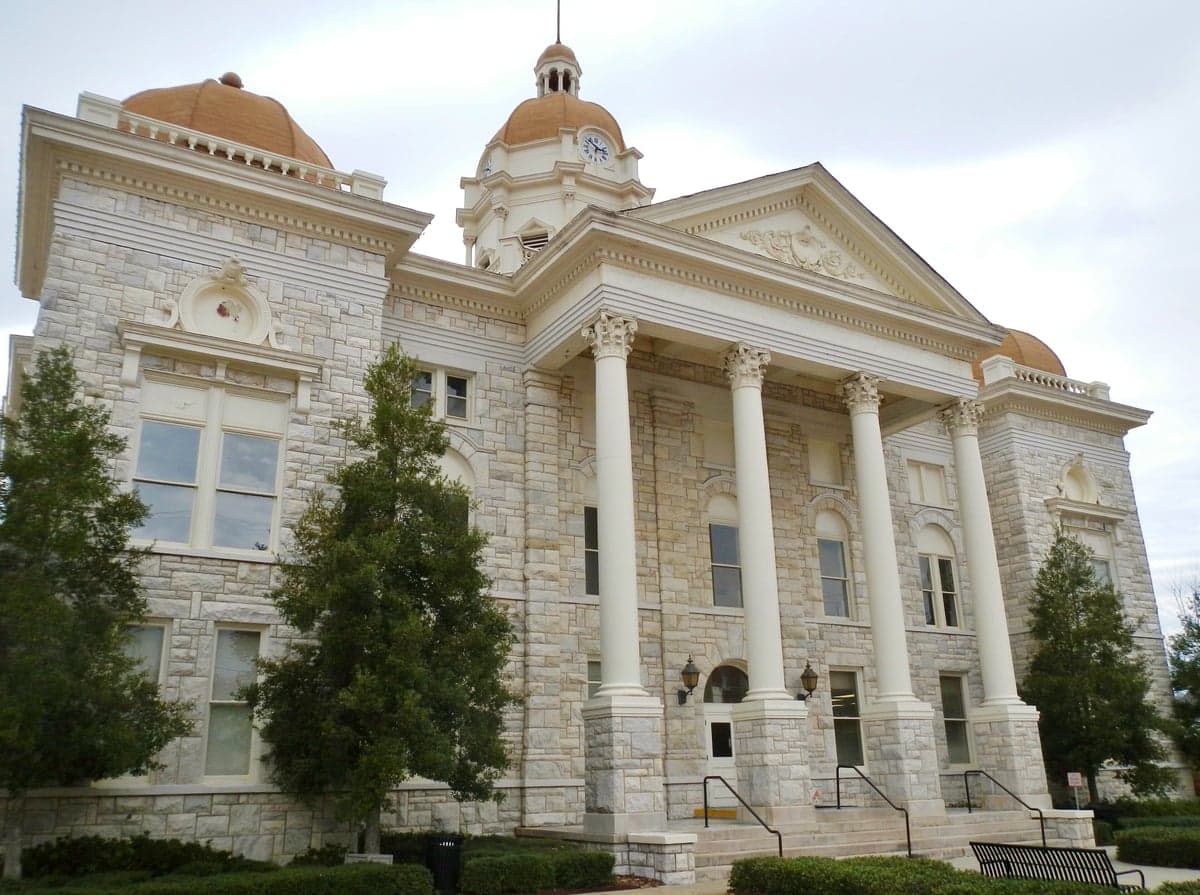
Photo: Wikipedia
Political ClimatePolitical Climate in Shelby County
Showing district-level results — no local-only data available.
Local Political AnalysisPolitical Analysis of Shelby County
Shelby County, Alabama, is about as rock-ribbed Republican as you’ll find anywhere in the state, with a Cook PVI of R+20 that puts it a solid six points to the right of Alabama as a whole (R+14). That’s not just a number on a map—it reflects a deep, consistent conservative majority that’s held firm through wave elections and demographic shifts. If you’ve lived here a while, you remember when the county was even more lopsided, but the core hasn’t budged: this is a place where limited government, personal responsibility, and Second Amendment rights aren’t just talking points, they’re the baseline expectation. The trajectory is stable, though you can see subtle cracks forming in the bedroom communities closest to Birmingham, where out-of-state transplants sometimes bring different voting habits.
How it compares
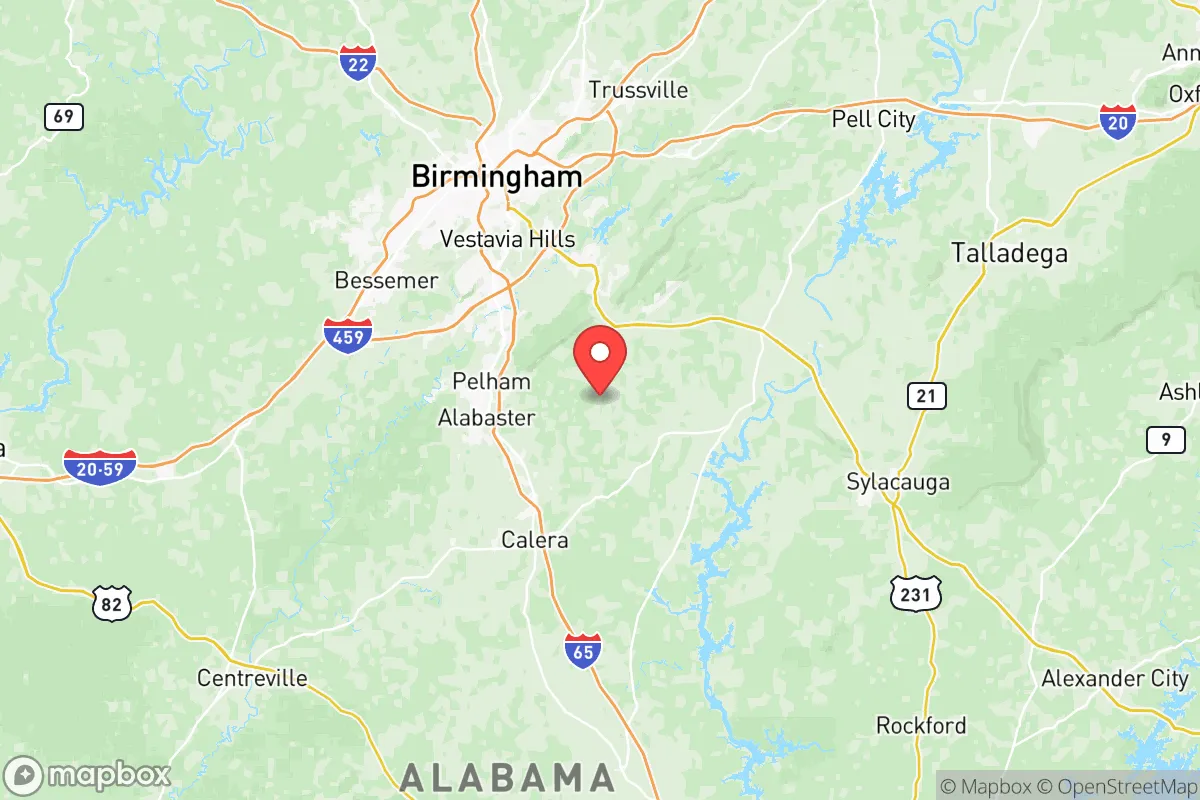
Compared to the rest of Alabama, Shelby County is the conservative anchor of the state’s suburban ring. While Alabama as a whole leans R+14, Shelby’s R+20 means it’s reliably redder than even most of the state’s rural counties. The real contrast shows up inside the county itself. Pelham and Alabaster are the most reliably conservative, with precincts that routinely deliver 70-75% Republican votes—these are the areas where you see “Don’t Tread on Me” flags flying alongside the Stars and Stripes. Columbiana and Wilsonville in the northern part of the county are even deeper red, often hitting 80% GOP. The swing precincts—if you can call them that—are in Hoover’s Shelby County portion and parts of Vestavia Hills, where a mix of younger professionals and out-of-state arrivals can push Republican margins down to the low 60s. That’s still solidly red, but it’s a warning sign for anyone paying attention: those areas are where progressive ideas about government overreach into schools and property rights first get a foothold. The rest of the county, especially the rural stretches toward Harpersville and Vincent, hasn’t budged an inch.
What this means for residents
For folks living here, the political climate means local government stays out of your business. Zoning is minimal, taxes are low, and the sheriff’s office doesn’t play games with constitutional carry or property rights. You can build a shed without a permit in most unincorporated areas, and the school board isn’t pushing critical theory nonsense—they’re focused on basics and discipline. The downside is that as Birmingham’s influence creeps south, you see more pressure for “regional planning” and transit taxes that sound like a backdoor to bigger government. The county commission has held the line so far, but it takes vigilance. If you’re worried about government overreach, Shelby County is still a safe harbor, but you need to keep an eye on those Hoover precincts—they’re the canary in the coal mine.
Culturally, Shelby County is distinct from the rest of Alabama in its affluence and suburban character, but the values are the same: church, family, and freedom. You won’t find the coastal Alabama libertarian streak or the Black Belt’s Democratic legacy. What you get is a straight-talking, pro-business, pro-gun community where the biggest political fights are over school funding and road projects—not social experiments. The long-term outlook is cautiously optimistic, but only if residents stay engaged and don’t let the Birmingham spillover redefine what “conservative” means in this corner of the state.

State Political ClimatePolitical Climate in Alabama
State Political AnalysisPolitical Environment in the State
Alabama is a deeply conservative state with a Cook PVI of R+14, meaning it votes about 14 points more Republican than the national average. The dominant coalition is a mix of traditional Southern Democrats who have shifted to the GOP, evangelical Christians, and rural voters who prioritize gun rights, low taxes, and limited government. Over the last 10-20 years, the state has moved steadily rightward, with Democrats now only competitive in a handful of majority-Black counties and the Birmingham metro area. The 2024 presidential race saw Donald Trump win the state by over 30 points, and Republicans hold supermajorities in both chambers of the legislature.
Urban vs. rural divide
The political map of Alabama is starkly divided between its rural, conservative countryside and its few urban centers. The Birmingham metro area, particularly Jefferson County, is the state's lone blue stronghold, driven by a large Black population and younger professionals in suburbs like Homewood and Mountain Brook (though the latter is reliably Republican). Montgomery and Mobile lean Democratic due to their sizable Black communities, but the surrounding counties—like Elmore and Baldwin—are deep red. The fastest-growing parts of the state are the Gulf Shores and Auburn-Opelika areas, both of which are heavily Republican and attracting retirees and families from more liberal states. Rural counties like Winston and Blount routinely vote 80%+ Republican, while the Black Belt counties—Greene, Lowndes, Wilcox—vote 80%+ Democratic. This geographic split means state politics are dominated by rural and suburban conservatives, with urban Democrats having little influence outside of local offices.
Policy environment
Alabama's policy environment is among the most conservative in the nation. The state has no state income tax on retirement income, a flat 5% income tax on wages, and one of the lowest property tax rates in the country—typically under 0.5% of assessed value. The regulatory posture is business-friendly, with right-to-work laws and minimal zoning restrictions outside major cities. Education policy is a flashpoint: the state has a robust school choice program, including the Alabama Accountability Act which provides tax credits for private school tuition, and a new Education Savings Account (ESA) program passed in 2024 that gives families up to $7,000 per child for homeschooling or private school expenses. Healthcare is limited, with the state refusing Medicaid expansion, leaving many rural hospitals struggling. Election laws are strict: voter ID is required, absentee ballot drop boxes are banned, and early voting is limited to in-person absentee only. The state also passed a 2021 law making it a felony for election officials to send unsolicited absentee ballot applications. On social issues, Alabama has a near-total abortion ban (the Human Life Protection Act of 2019) and a 2022 law banning gender-affirming care for minors.
Trajectory & freedom
Alabama is trending toward more personal freedom in several key areas, though the direction is uneven. On gun rights, the state passed constitutional carry in 2022, allowing permitless carry of concealed firearms—a major expansion of Second Amendment liberty. On parental rights, the Parental Rights in Education Act (2022) requires schools to notify parents of any medical or mental health services offered to their children and bans classroom instruction on sexual orientation or gender identity in K-5. Medical freedom took a hit with the 2023 ban on gender-affirming care for minors, which some conservatives see as government overreach into family medical decisions, but most view as protecting children. Property rights are strong, with no state-level rent control and minimal eminent domain abuse. Taxation has become slightly more burdensome: a 2023 grocery tax cut was passed, but the state still has one of the highest combined state-local sales tax rates in the country (often over 10% in cities like Birmingham and Huntsville). The biggest concern for freedom-minded residents is the state's heavy reliance on federal dollars—Alabama receives about $1.50 back from the federal government for every $1 paid in taxes, which creates long-term dependency and potential leverage for federal mandates.
Civil unrest & political movements
Alabama has seen relatively little civil unrest compared to other states, but there are notable flashpoints. The 2020 George Floyd protests in Birmingham and Mobile led to some property damage and clashes with police, but were far smaller than in Atlanta or Portland. The state has a strong Second Amendment sanctuary movement, with over 30 counties passing resolutions declaring they will not enforce federal gun laws they deem unconstitutional. Immigration politics are heated but not chaotic: the state passed the strict HB 56 in 2011, which was largely gutted by courts, but remains a symbol of the state's hardline stance. There is no sanctuary city policy anywhere in Alabama. Election integrity controversies flared after 2020, with the state legislature passing the Alabama Election Protection Act in 2021, which banned curbside voting and limited ballot harvesting. Organized activist movements are small: the left is concentrated in Birmingham and Montgomery, with groups like Alabama Arise pushing for Medicaid expansion, while the right is dominated by the Alabama Policy Institute and local gun rights groups. A new resident would notice a general lack of visible political activism outside of election season—most people keep their politics private in daily life.
Projection
Over the next 5-10 years, Alabama will likely become more conservative in its state-level politics, but the demographic shifts are worth watching. The Huntsville metro area is booming, driven by defense and aerospace jobs, and attracting a mix of out-of-state transplants from California and Texas. These newcomers tend to be moderate Republicans or libertarian-leaning, which could soften the state's hardline social conservatism over time. The Gulf Coast, particularly Baldwin County, is seeing rapid growth from retirees fleeing high-tax states, reinforcing the Republican majority. Meanwhile, the Black Belt continues to lose population, shrinking the Democratic base. The biggest wildcard is the state's education policy: if the ESA program succeeds, it could attract more families seeking school choice, further solidifying the conservative coalition. However, the state's refusal to expand Medicaid will continue to strain rural hospitals, potentially driving younger residents to leave for states with better healthcare access. Expect the legislature to push further on parental rights, school choice, and gun rights, while avoiding any tax increases. A new resident moving in now should expect to find a state that is stable, safe, and increasingly free in personal liberties, but with limited public services and a healthcare system that requires private insurance or out-of-pocket payment.
For a new resident, the bottom line is this: Alabama offers a high degree of personal freedom—low taxes, strong gun rights, school choice, and minimal government interference in daily life—but you must be self-reliant. The state will not provide extensive public services, and the healthcare system is thin outside of Birmingham and Huntsville. If you value limited government, traditional values, and a community where your neighbors share your worldview, Alabama is a solid choice. Just be prepared to drive for your doctor, pay for private school if you want options, and accept that the political direction will remain firmly conservative for the foreseeable future.
* Values derived from national, state, county, city and local statistics and may differ in a specific area. Last updated: 2026-05-08T00:09:53.000Z
Narrative content on this page is AI-generated and may contain mistakes. Verify any details that matter before acting on them.
ReloMaps may earn a commission from affiliate links at no extra cost to you.

