Photo: Wikipedia
Demographics of Alakanuk, AK
Affluence Level in Alakanuk, AK
A low-income area with significant economic hardship. Household wealth and educational attainment are well below national averages.
People of Alakanuk, AK
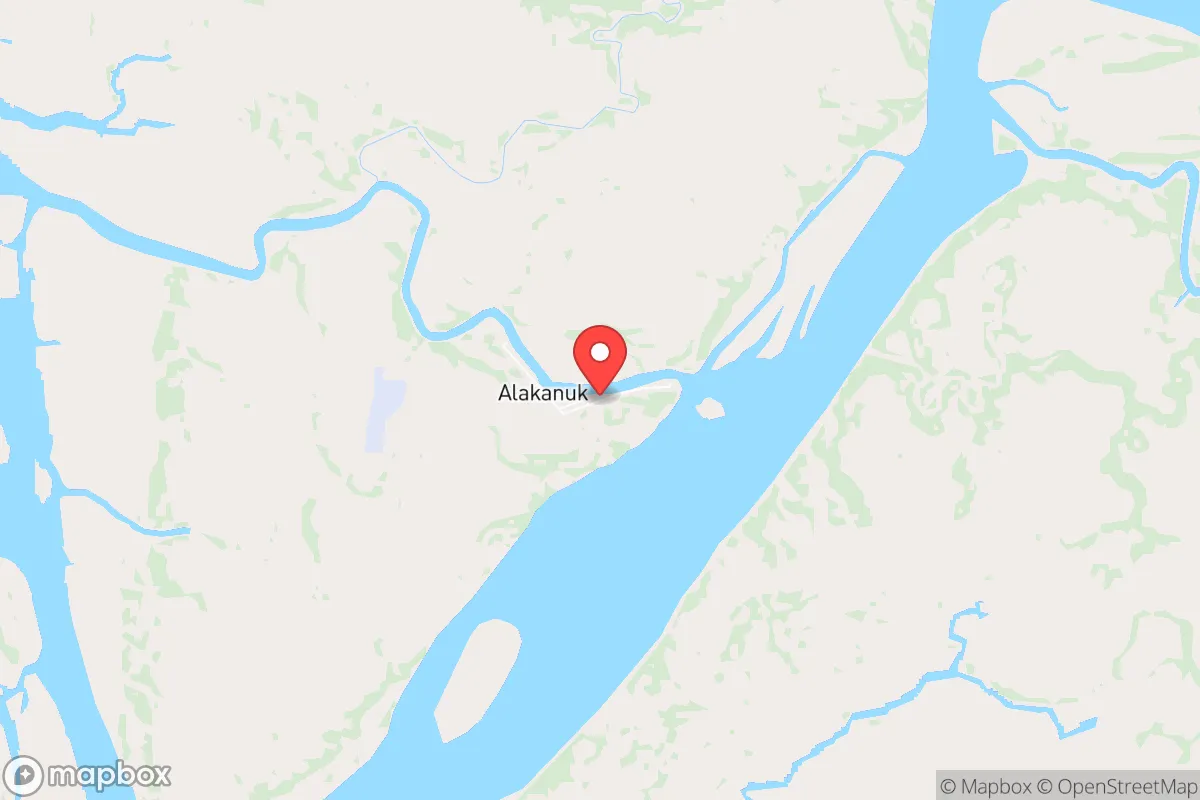
Today, Alakanuk, Alaska, is a predominantly Alaska Native community of 997 residents, with 0.0% of the population identifying as White, Hispanic, Black, Asian, or Indian. The city is a Yup’ik village on the Yukon River’s north bank, near the Bering Sea coast, where subsistence fishing and hunting remain central to daily life. Its population is dense for a rural Alaska village, with a strong cultural identity rooted in Yup’ik language and traditions, and a median age of roughly 22 years. The community is tight-knit, with nearly all residents sharing a common heritage, making it one of the most ethnically homogeneous places in the United States.
How the city was settled and grew
Alakanuk was not founded by outside settlers or colonial powers; it is a traditional Yup’ik village that has existed for centuries as a seasonal fishing and trading site along the Yukon River. The name “Alakanuk” means “the wrong way” in Yup’ik, referencing a nearby river channel. The first permanent year-round settlement formed in the early 20th century, when Yup’ik families from surrounding areas began to concentrate here due to the establishment of a school and a post office in the 1930s. The original core of the village, known locally as Old Village, sits along the riverbank and was built by extended Yup’ik family groups who relied on salmon, seal, and moose. A second wave of growth occurred in the 1950s and 1960s, when the Bureau of Indian Affairs built a new school and housing, drawing families from smaller, more remote fish camps into the village. This expansion created the Upper Village area, where newer homes and the school are located, while Lower Village remained the historic heart with older, traditional dwellings. No land grants or non-Native industries drove settlement; the population has always been entirely Yup’ik, with no significant in-migration from outside groups.
Modern era (post-1965)
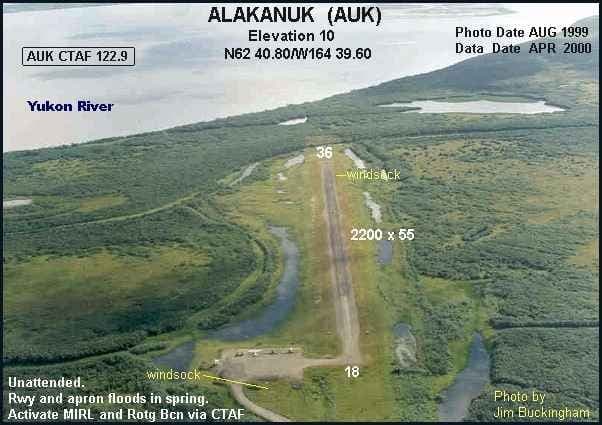
Since the 1970s, Alakanuk’s population has remained overwhelmingly Yup’ik, with no measurable foreign-born or non-Native residents. The Alaska Native Claims Settlement Act (ANCSA) of 1971 created the Yukon Delta Fisheries Development Association, which brought some economic structure but did not alter the village’s ethnic composition. The Alakanuk Native Store and the Yup’ik Cultural Center in the Central Village district serve as hubs for community life. The post-1965 era saw a gradual shift from semi-nomadic seasonal camps to permanent village residence, driven by the expansion of the school system and state-funded infrastructure like the water treatment plant and the clinic. The Airport Subdivision, a small cluster of homes near the airstrip, was built in the 1980s to accommodate growing families. Despite these changes, the population has not diversified: the 0.0% White and 0.0% Hispanic figures reflect that Alakanuk remains a culturally and linguistically Yup’ik village, with English as a second language for many elders. The college-educated share is just 0.9%, reflecting the village’s focus on subsistence skills and local employment in the school, store, and tribal government.
The future
Alakanuk’s population is projected to remain stable or grow slowly, driven by high birth rates among Yup’ik families. The village is not homogenizing or tribalizing into distinct enclaves—it is already homogeneous. The key demographic trend is a slight aging of the population as younger adults leave for education or jobs in larger hubs like Bethel or Anchorage, though many return. The New Housing Area, a recent development of modern homes on the village’s eastern edge, is absorbing young families, while Old Village retains elders and traditional homes. There is no immigrant community to speak of, and no assimilation pressure from outside groups. The next 10-20 years will likely see continued reliance on subsistence fishing and state-funded services, with the population remaining entirely Yup’ik. Climate change, however, poses a threat: erosion and flooding along the Yukon River may force relocation of parts of Lower Village, which could reshape settlement patterns.
For someone moving in now, Alakanuk is a place where community is defined by shared Yup’ik heritage, subsistence living, and isolation from mainstream American culture. It is not a destination for those seeking diversity, economic opportunity, or modern amenities—it is a village where tradition, family, and the river dictate daily life. New residents must be prepared for a subsistence-based economy, limited infrastructure, and a population that is nearly 100% Alaska Native, with no significant non-Native presence.

* Values derived from national, state, county, city and local statistics and may differ in a specific area. Last updated: 2026-04-19T19:13:26.000Z
Narrative content on this page is AI-generated and may contain mistakes. Verify any details that matter before acting on them.
ReloMaps may earn a commission from affiliate links at no extra cost to you.

