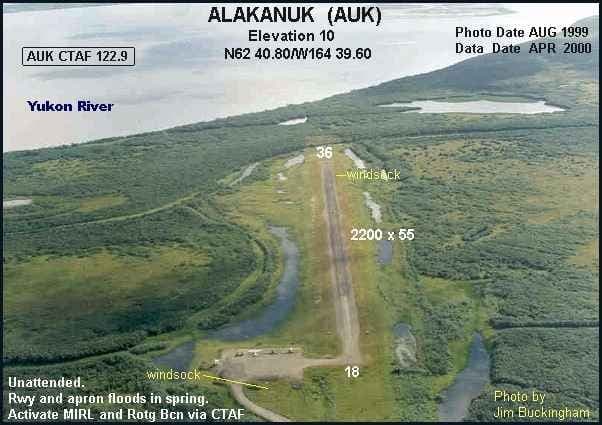
Photo: Wikipedia
Strategic Assessment of Alakanuk, AK
Strong survivability profile. Good buffer from population centers, with manageable environmental and tactical risks.
What does the Strategic Assessment tell us?
Our Strategic Assessment grades tactical survivability of an area. Major population centers, military targets, fallout zones, natural disasters, and border exposure all drive risk — lower exposure means a more defensible position in a crisis.
This is heavily inspired by Joel Skousen's Strategic Relocation book. Highly recommended you checkout the book ($)What does this tell us?
Our Strategic Assessment grades tactical survivability of an area. Major population centers, military targets, fallout zones, natural disasters, and border exposure all drive risk — lower exposure means a more defensible position in a crisis.
This is heavily inspired by Joel Skousen's Strategic Relocation book. Highly recommended you checkout the book ($)Strategic Pillars

Key Distances
Regional Safe Places
Below is our recommended "safe zones" in Alaska and the surrounding area based on our strategic heuristics. For most people, it's unrealistic to live in a “safe zone” full-time due to work, family or other personal reasons. They tend to be more rural. However, many of these areas are perfect for second homes and retreat properties that double as a vacation home or even a short-term rental.
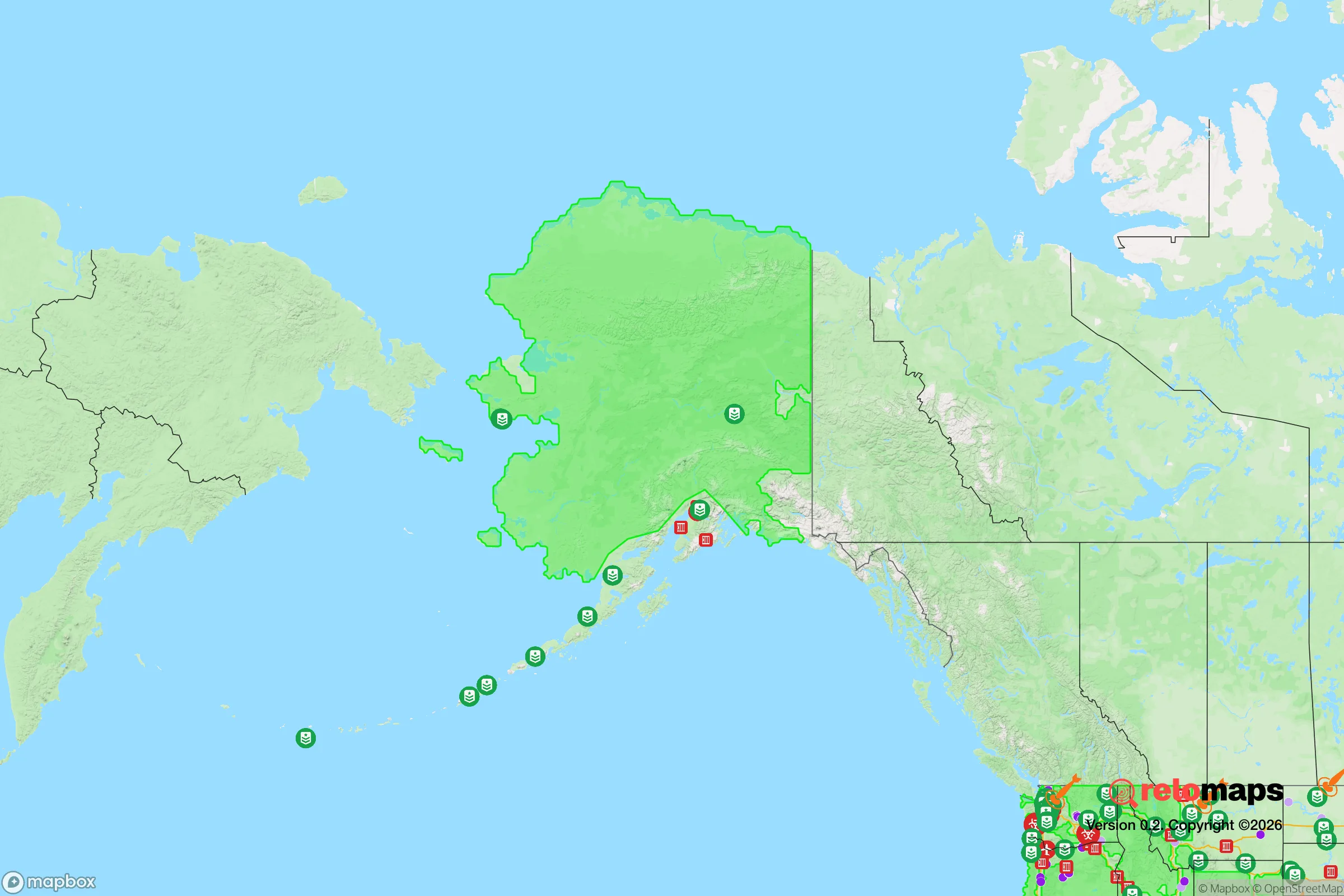
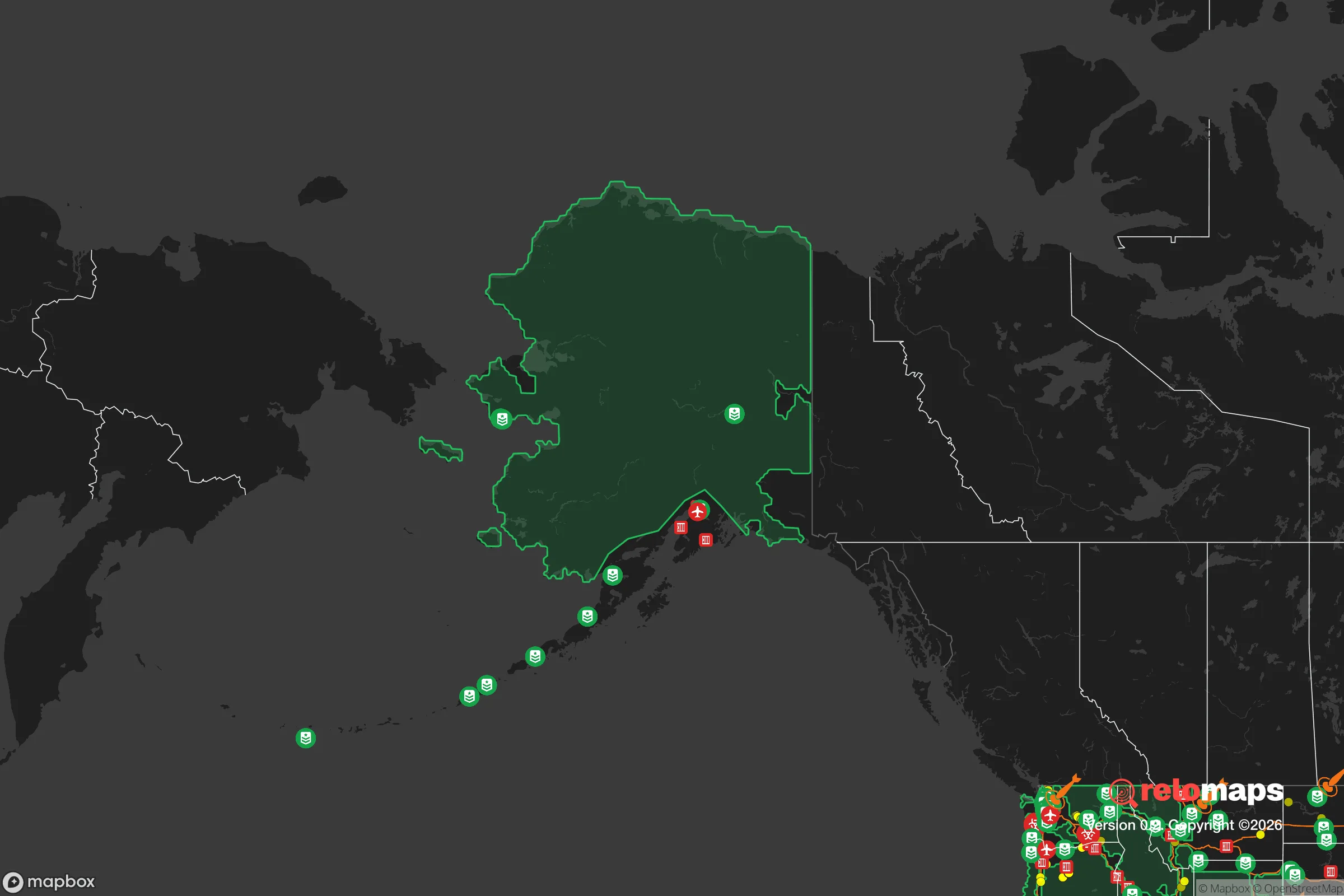


Important Note: For informational purposes only. This does not mean nothing bad ever happens in the green zones. Please use common sense. This is based on public data and modeled with AI. We tried to take a conservative approach but mistakes happen. We update this regularly as new information becomes available.
Solar Generator Recommendations
Backup power matters more here than in safer locations. We've picked three solar generators across budgets and capacity tiers — start with the budget unit if you only need a few essentials, or step up if you want to run a fridge and HVAC for days at a time.

Jackery Portable Power Station Explorer 300
Budget OptionPower on the Go: Weighing only 11 lbs, it's convenient to set up and store with book-sized foldable solar panels

BLUETTI Portable Power Station AC180
Designed for both indoor and outdoor scenarios, AC180 is highly capable as it has a robost capacity and continuous output power.

EF ECOFLOW DELTA Pro Ultra Power Station
Upgraded PickEcoFlow DELTA Pro Ultra is a whole-home energy system designed to grow with your family. Integrated with the Smart Home Panel 2, it scales to meet your evolving energy needs — keeping your home powered, intelligent, and secure through every stage of life.
We earn a commission, at no additional cost to you.
Strategic Assessment Analysis
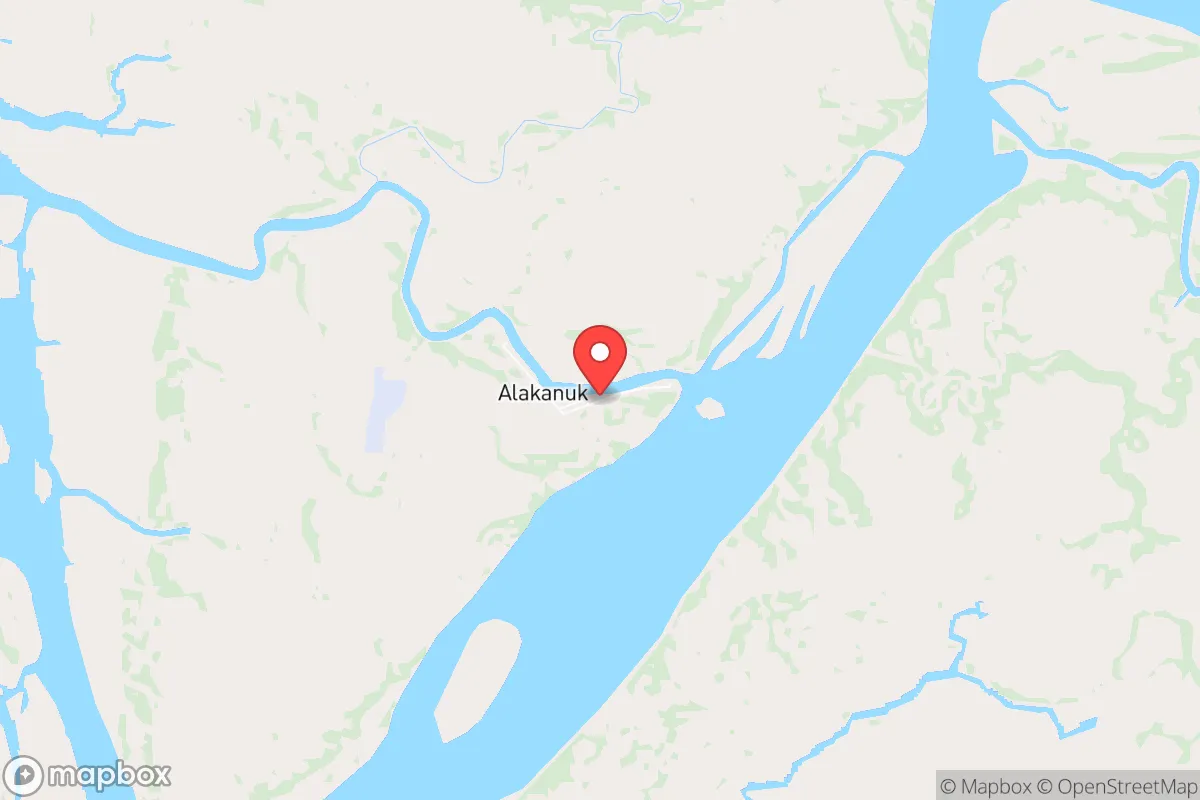
Alakanuk, Alaska, offers a strategic relocation option for those prioritizing physical separation from the risks of densely populated areas and major infrastructure targets. Situated on the northern bank of the Yukon River near its mouth on the Bering Sea, this remote Yup'ik village of roughly 700 residents provides a level of isolation that is nearly impossible to find in the Lower 48. For a prepper or survivalist concerned with civic unrest, mass casualty events, or fallout from major disasters, Alakanuk’s primary advantage is its sheer distance from the grid—no roads connect it to the rest of Alaska, and the nearest city of any size, Bethel, is over 100 miles away by air or river. This location inherently reduces exposure to the cascading failures of urban centers, making it a viable fallback for those willing to trade modern convenience for long-term security.
Geographic position and natural advantages for long-term survival
Alakanuk’s position at the edge of the Yukon-Kuskokwim Delta places it in one of the most sparsely populated regions in North America. The village is surrounded by tundra, wetlands, and countless sloughs, creating a natural buffer against unwanted movement—whether from people or wildlife. The Yukon River itself is a massive, reliable water source, and the delta’s ecosystem supports abundant fish (salmon, sheefish, pike) and migratory birds. For a relocator, this means a built-in food supply that doesn’t depend on grocery chains or supply chains. The area’s flat terrain and permafrost make large-scale agriculture difficult, but subsistence hunting and fishing are deeply ingrained in local culture, and a newcomer with basic skills can tap into that knowledge. The nearest major fallout-relevant landmark is the former military site at Cape Romanzof, about 60 miles northwest, but it’s a remote radar station with no active nuclear or industrial hazards. The real advantage is that Alakanuk is far from any strategic target—no major military bases, no nuclear power plants, no large ports or refineries within hundreds of miles. This isolation is a double-edged sword, but for someone seeking to avoid the chaos of a collapsing system, it’s a strong asset.
Risks, exposures, and proximity to fallout-relevant landmarks
While Alakanuk is far from urban fallout zones, it is not without its own risks. The village sits on low-lying tundra, making it vulnerable to flooding from the Yukon River during spring breakup or storm surges from the Bering Sea. Climate change has increased the frequency of these events, and the village has experienced erosion and flooding that threaten infrastructure. For a prepper, this means any long-term setup must account for waterborne hazards—elevated structures, flood-proof storage, and a plan for rapid evacuation by boat or air. The nearest potential fallout-relevant landmark is the old radar site at Cape Romanzof, but it’s a Cold War relic with no active nuclear materials. More concerning is the proximity to the Bering Strait, a potential chokepoint for geopolitical tensions involving Russia. While Alakanuk is 150 miles south of the strait, any major conflict in the region could bring military activity to the area. However, this is speculative and far less immediate than the risks of living near a major city like Anchorage or Fairbanks. The real exposure is logistical: the village relies on air and barge for fuel, medical supplies, and manufactured goods. A disruption to those supply lines—whether from a pandemic, economic collapse, or natural disaster—would hit hard. For a relocator, the key is to pre-position critical supplies (fuel, ammunition, medical gear) before any crisis, as resupply may be impossible for months.
Practical resilience for a relocator: food, water, energy, and defensibility
For a single individual or family willing to adapt, Alakanuk offers a high degree of practical resilience. Water is abundant from the Yukon River, but it requires treatment—boiling, filtration, or UV sterilization—due to natural sediment and potential contamination from upstream sources. Rainwater collection is viable during summer, but winter means relying on ice melt or stored water. Food security is strong if you’re willing to fish, hunt, and gather. The salmon runs are legendary, and a single family can put up hundreds of pounds of dried or frozen fish in a season. Moose and caribou are present but require travel and skill; small game like ptarmigan and hare are more accessible. Gardening is limited by the short growing season and permafrost, but raised beds with imported soil can produce hardy greens and root vegetables. Energy is the weak point. The village runs on diesel generators, and fuel is expensive—around $6–8 per gallon delivered. Solar panels work during the long summer days but are useless in winter darkness. A serious prepper would need a backup generator, ample fuel storage, and possibly a small wind turbine. Defensibility is excellent due to the isolation. The village is small, and everyone knows everyone; a newcomer would be noticed, but that also means you can build trust over time. The terrain offers no cover for a large force, and the river is a natural barrier. For a single person or a small family, the ability to lay low and live off the land is unmatched in the U.S. The trade-off is a hard, communal lifestyle that requires learning Yup'ik traditions and accepting a pace of life far removed from modern convenience.
The overall strategic picture for Alakanuk is one of extreme trade-offs. It offers near-total separation from the risks of urban America—no riots, no grid collapse, no fallout from a major city attack. The natural environment provides reliable food and water, and the isolation makes it defensible against any but the most determined threat. However, that same isolation creates a dependency on pre-positioned supplies and a willingness to live without modern medical care, reliable electricity, or easy resupply. For a conservative-leaning relocator who values self-reliance and sees the current trajectory of the country as unstable, Alakanuk is a viable fallback—but only if you’re prepared for a life that demands physical labor, cultural adaptation, and a high tolerance for risk. It’s not a retreat for the faint of heart, but for those who can handle the cold, the mud, and the silence, it’s one of the few places left in America where you can truly disappear from the system.

* Values derived from national, state, county, city and local statistics and may differ in a specific area. Last updated: 2026-04-19T19:13:26.000Z
Narrative content on this page is AI-generated and may contain mistakes. Verify any details that matter before acting on them.
ReloMaps may earn a commission from affiliate links at no extra cost to you.

